IB Biology Unit 1
A
Cells:
The smallest unit of life
Living
Bacteria
One cell big
Protists
One cell big
Viruses:
not made up of cells
need a host to function
protein+dna/rna
A2.2 Cell structure
2.2.1: Cells as the basic structural unit of all living organisms
Cell theory:
All living organisms are made of cells
Multi or unicellular
Basic unit of life
Come from pre-existing cells
History of Cell Theory
Robert Hooke:
Colleague of Antoine
Physics, chemistry and biology
Named the cell
Tense relationship between Hooke and Newton
Hooke accused Newton of stealing his work
Matthias Schleiden
The Cell Theory
Botanist
Discovered every plant is made of cells
Theodor Schwann
Schwann cells
Studied animal cells
Discovered all animals were made of cells
The Cell theory
Zac Jensen:
First microscope
Antoine
discovered bacteria (animalcules)
Virchow
figured out that cells came from cells
Louis Pasteur
Did an experiment to prove that cells came from cells
A2.2.3 Microscope
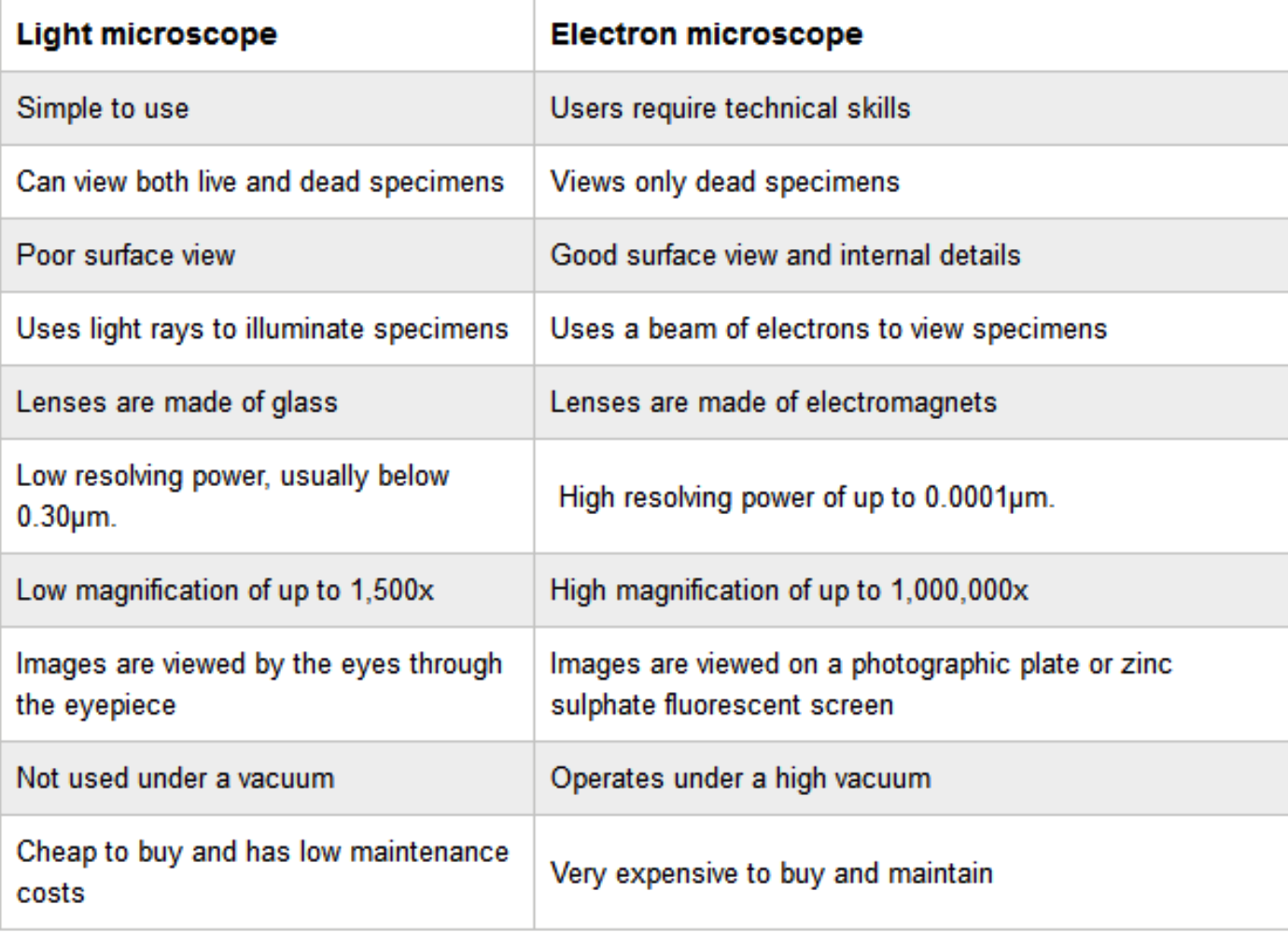
Developments in microscopy
Staining
Improve visibility
Uses dye or iodine
Immunofluorescence
made antibodies that bind to target areas and make them more visible
Freeze fracturing
Freeze the specimen using liquid nitrogen, causing it to crack, exposing the insides of the specimen. Able to reform it.
Cryogenic electron microscopy
Able to see the 3D structure of proteins
electron gun shoots electrons through the sample
high-tech camera catches the image and projects it
Specimen can be moving
Calculating magnification
Scale bar=μm, so convert ruler to μm
1mm = 1000 μm so 20mm = 20,000 μm
To calculate magnification
scale bar measurement/scale bar label = 20,000 μm/ 10μm
magnification = 2,000 times
Calculating actual size
measure the part of the image you are instructed to and divide it by the magnification
convert to the most appropriate units
measured length/magnification
ex: 80mm/90,000 = 8.9 × 10^-4mm OR 0.00089mm
converts to 0.89μm
Examples
A sperm cell has a tail 50μm long. A student draws it 75mm long. What is the magnification?
1. Convert to μm
75mm = 75,000 μm
2. Drawing length/scale bar label
= 75,000/50
= 1500x magnification
A2.2.4 Structures common to cells in all living organisms
Prokaryotes
Simplest type of cell
The oldest type of cell appeared about four billion years ago
The largest group of organisms
Unicellular organisms that are found in all environments
No nucleus
Eubacteria and Archaea
Simple cell structure without compartments
Instead of a nucleus, they have a nucleoid
Shapes
Cocci = Spherical
Bacillus = Rod shaped
Spirilla = Spiral
A2.2.5 Prokaryotic cell structure
1. Draw and Label (know at least 5)
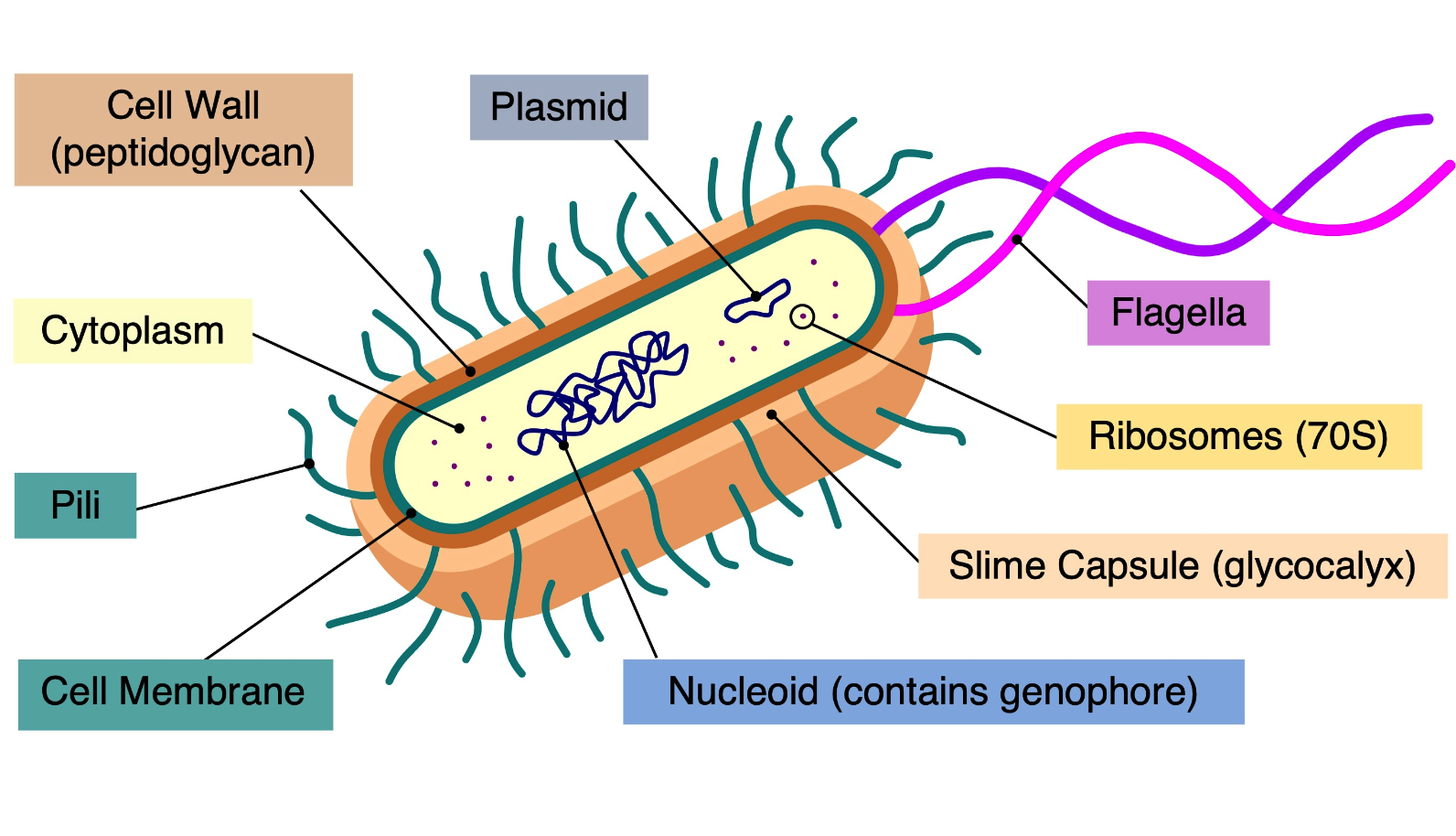
2. annotate (explain their functions)
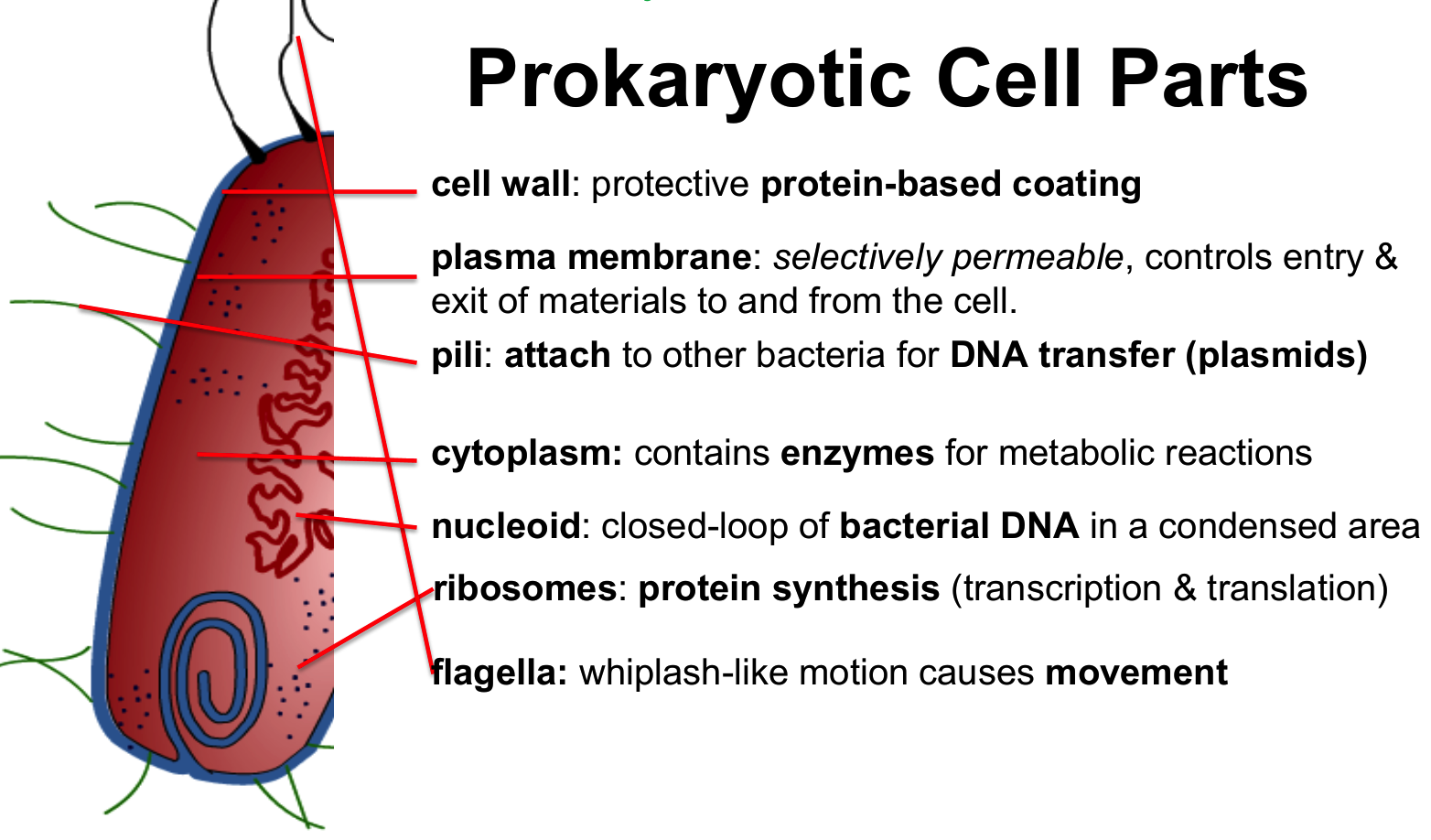
Peptidoglycan: The protein that makes up the cell wall of a prokaryotic cell
Pili: useful for conjugation (exchange of genetic material)
Plasmids: what is being exchanged through pilids
A2.2.6 Eukaryotic cells
Organisms whose cells have a nucleus
All animals, plants, fungi and many unicellular organisms are eukaryotes
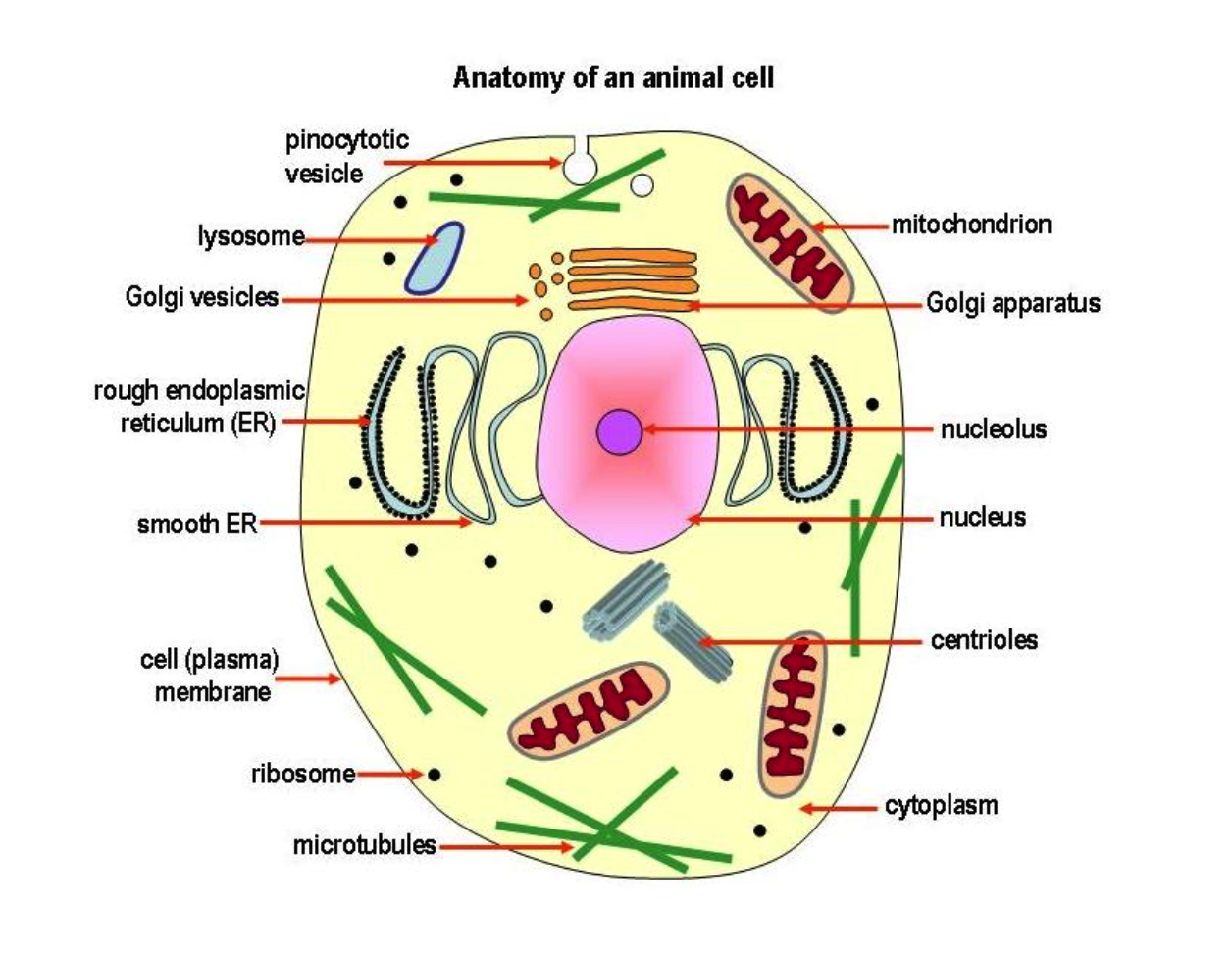
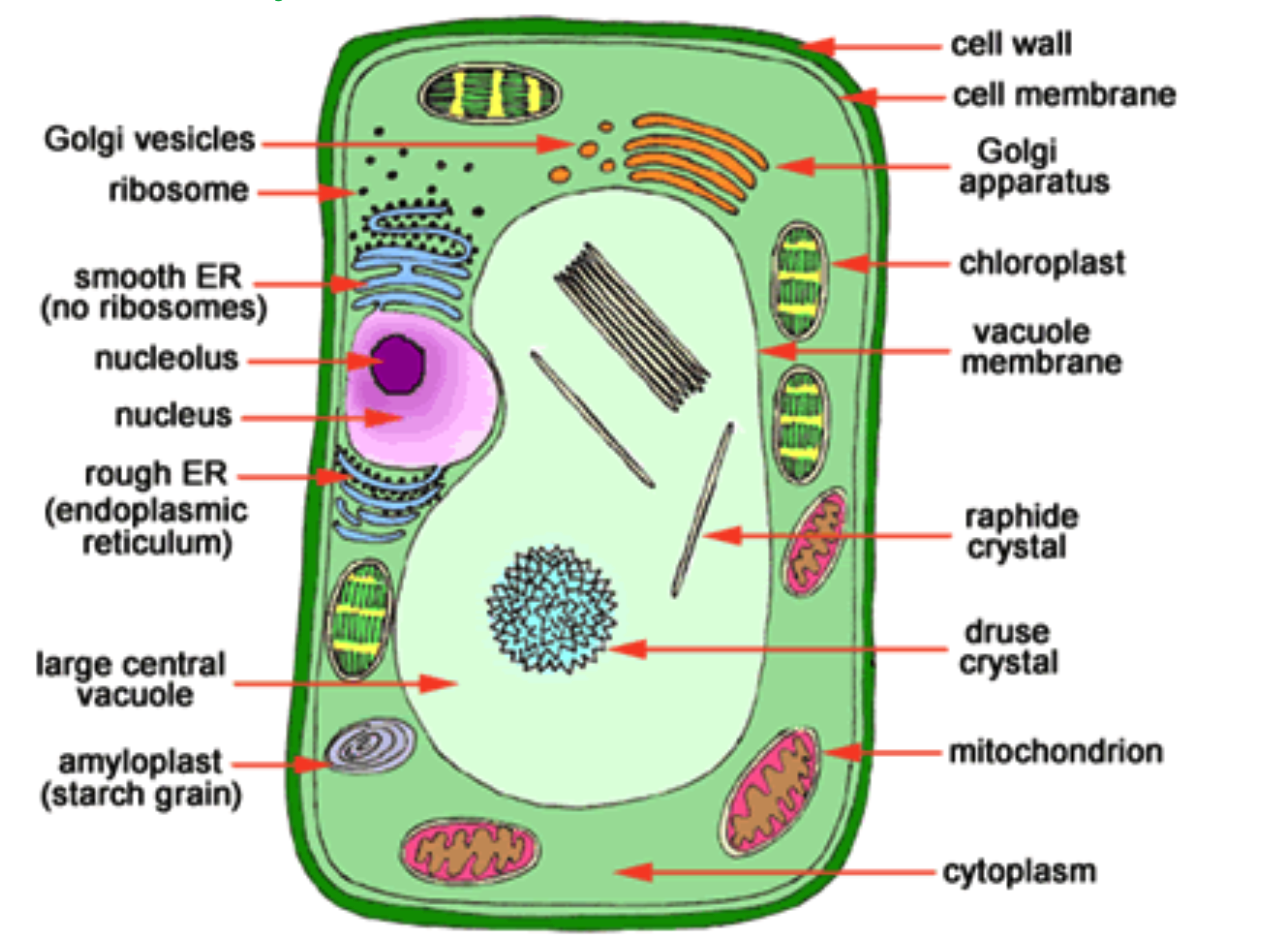
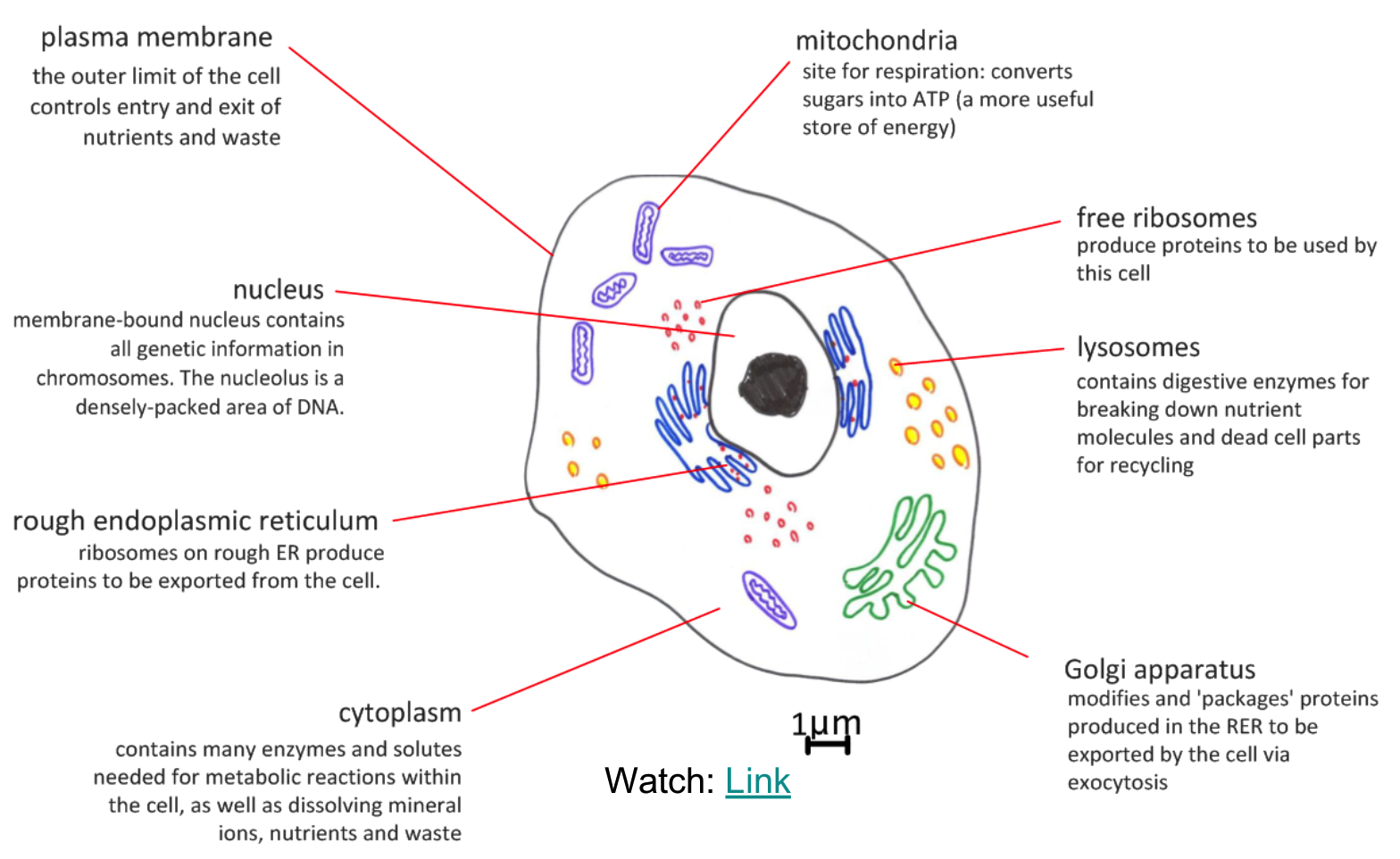
Cell Membrane
boundary of cell
gatekeeper
prevents entry or exit of molecules
phospholipid bilayer
permeable to oxygen and co2
impermeable to water and charged particle, must enter through special proteins embedded in the membrane
Nucleus
has chromosomes which make up most of the DNA in a cell
largest organelle
double layer membrane
mRNA, transcribed from DNA in nucleus exits through pores
can be multiple nuclei
Golgi apparatus
packaging and delivery of proteins
Lysosomes
simple, membrane bound organelles full of enzymes that digest engulfed bacteria and viruses and large molecules for recycling
Breaks down things that shouldn’t be in the cell
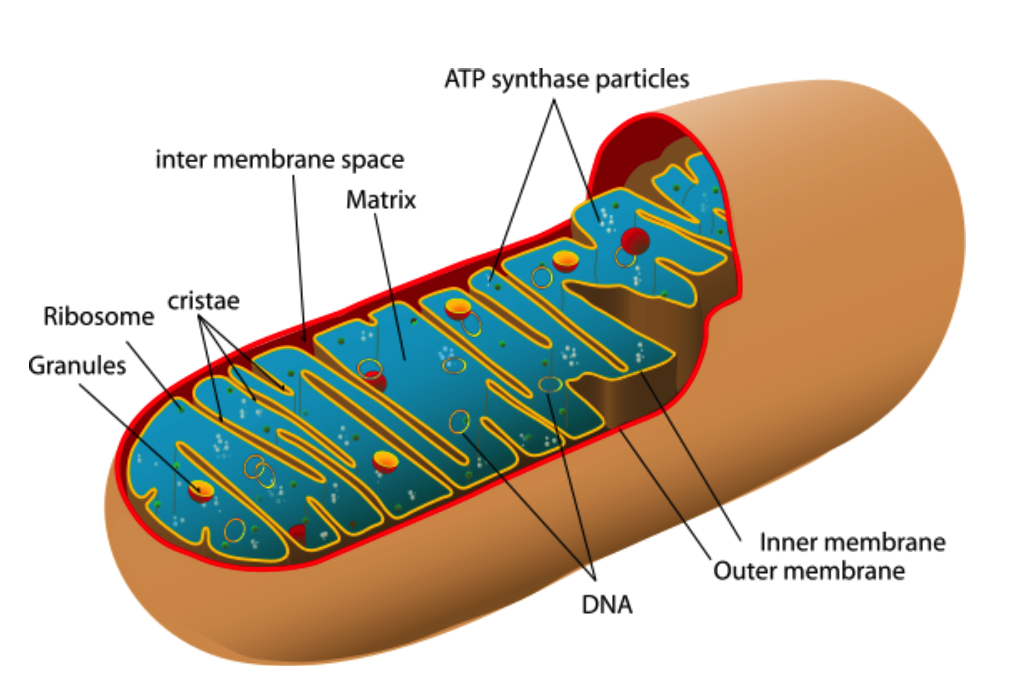
Mitochondrion:
Powerhouse of the cell
Has a smooth outer membrane and a folded inner membrane
Where aerobic respiration occurs
Converts sugars into ATP
Free ribosomes
80s sized in eukaryotes (70s size in prokaryotes)
Ribosomes in bacteria have different ribosomes
‘s’ is a unit
means bigger
Proteins synthesized for use within the cell (enzymes used in the cytoplasm)
Chloroplasts
Site of photosynthesis in plant cells
Stacks of thylakoids
exist in algae as well
Vacuoles and vesicles
Animal cells sometimes have small vacuoles (vesicles) for digestion
Unicellular organisms have contractile vacuoles for expelling water
plant cells have large vacuoles that hold water and food
vesicles are small lipid sacs used for transport
vacuoles are large
Centrioles
Bundles of microtubules found in animal cells
Pull stuff in the nucleus to the side
Help cells divide
Microtubules
Separate chromosomes in cell division and make up cilia and flagella
What centrioles are made out of
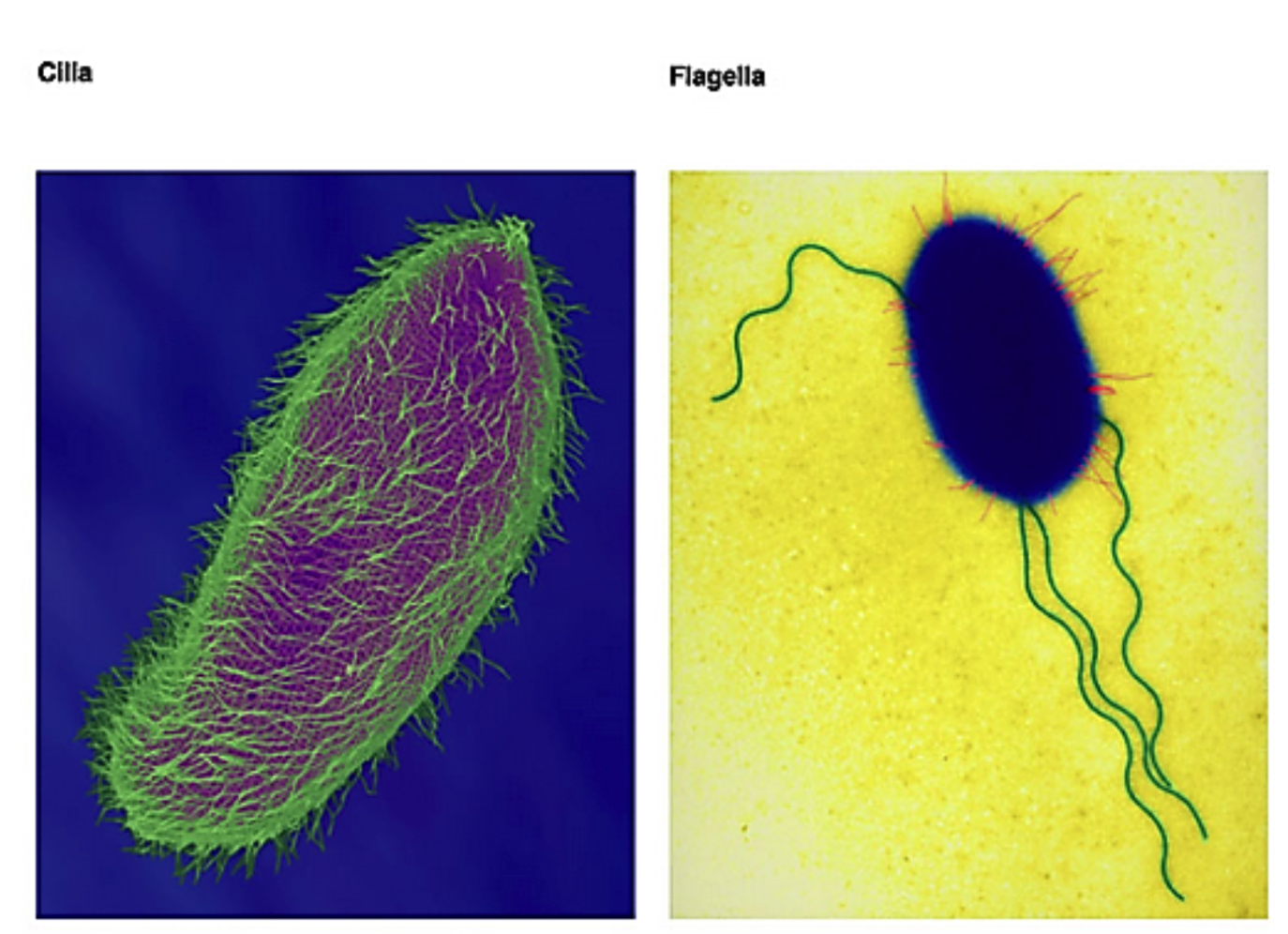
Flagella:
occur in bacteria
make bacteria move
occur in eukaryotic cells some times
Cillia:
Used for movement
only in eukaryotic
A2.2.7 Processes of life in unicellular organisms
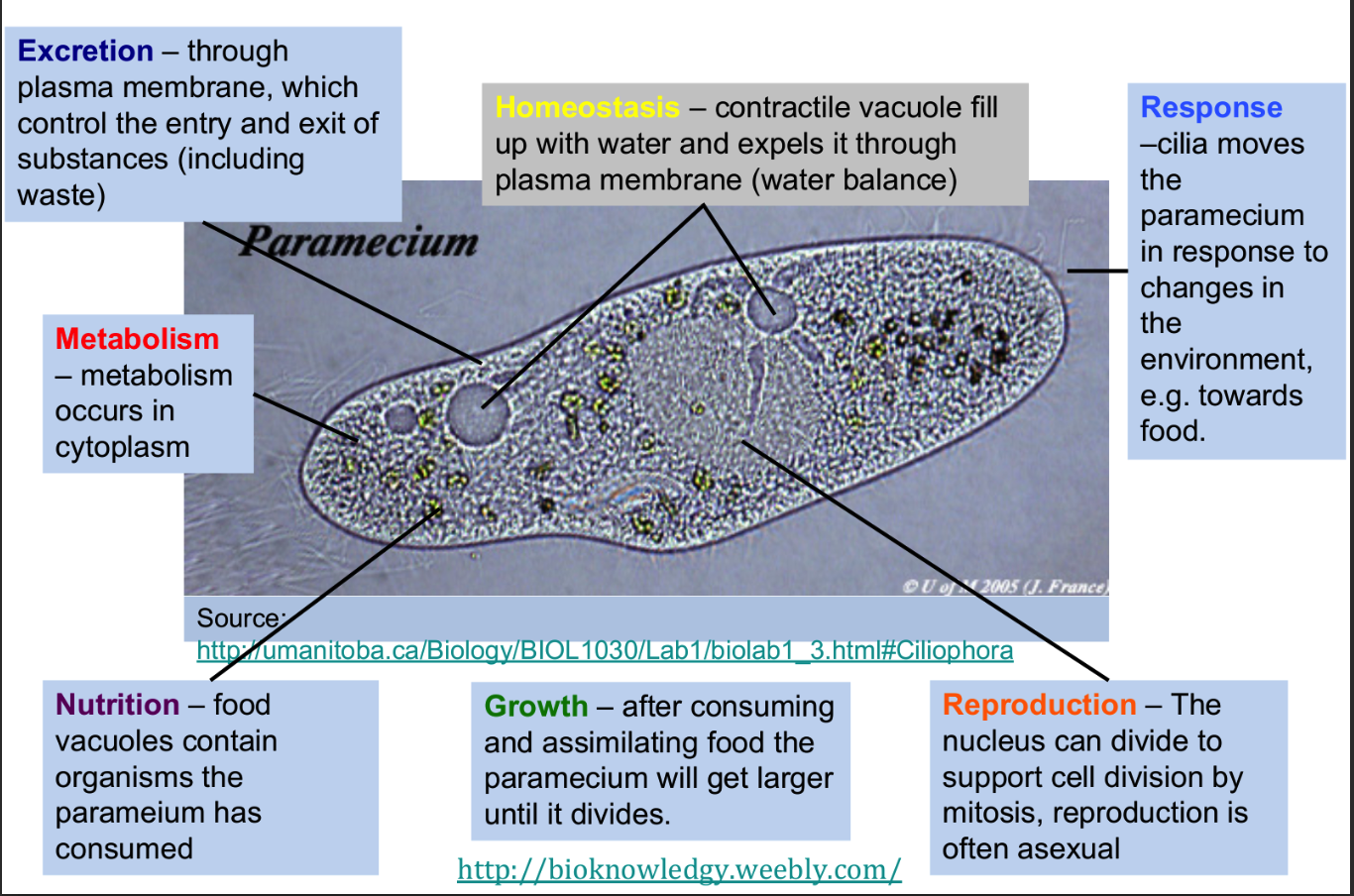
Functions of Life
Metabolism
Reproduction
Homeostasis
Response
Excretion
Nutrition
Growth
Paramecium
Heterotroph
surrounded by cilia
take in food through specialized membranous feeding groove called a cytostome
food particles are enclosed in vesicles
solid wastes are removed through an anal pore while liquid through urine
essential gasses enter and exit the cell via diffusion
paramecia divide asexually (fission) although horizontal gene transfer can happen via conjugation (pili)
A2.2.8 Differences in eukaryotic cell structure between animals, fungi, and plants
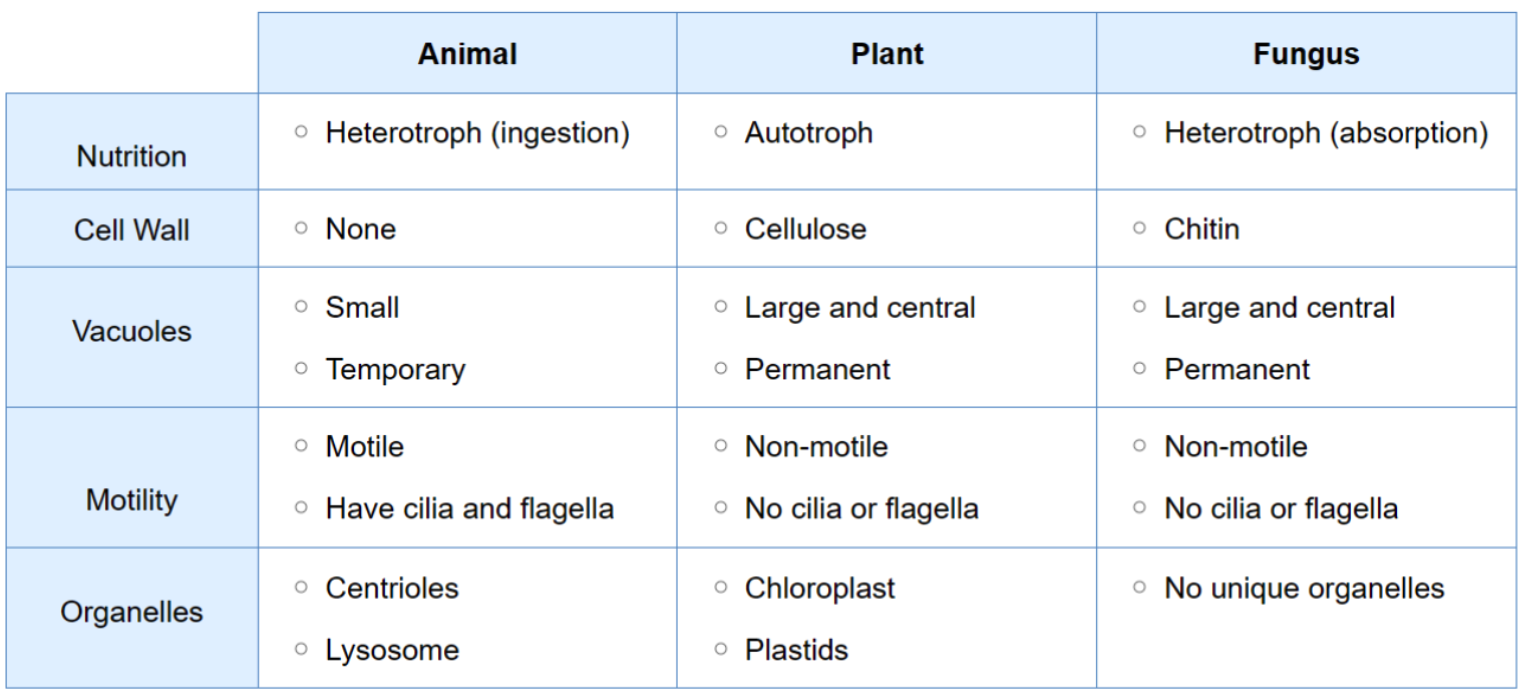
Eukaryotes have been classified into kingdoms, based on key structural and functional differences
Animal:
no cell wall and undertake heterotrophic (ingestion) nutrition
Plant:
have a cell wall (cellulose) and undertake autotrophic nutrition (photosynthesis)
Fungi:
Have a cell wall made of chitin and undertake heterophic nutrition (absorption)
Protist:
Any eukaryotic organism that does not belong to the animal, plan, or fungal kingdoms (hetero and autotrophic)
A2.2.9 Atypical cell structure in eukaryotes
Red blood cells don’t have a nucleus
Striated muscle
Multinucleate
Composed of long muscle fibres that can measure 300mm or more and are larger than regular cells
Atypical, as each muscle fibre contains hundreds of nuclei, and each cell does not function independently
Aseptate fungi
Normal fungi have thread-like structures
does not have individual/discrete cells
Phloem
Sieve tube element
Comparison cell
Because sieve tubes do not contain a nucleus
Sieve tube elements
Found in plants and transports liquid nutrients in phloem
Lack a nucleus and have very few ribosomes
B Organelles and compartmentalization
B2.2.1 Eukaryotic organelles as discrete subunits of cells that are adapted to perform specific functions.
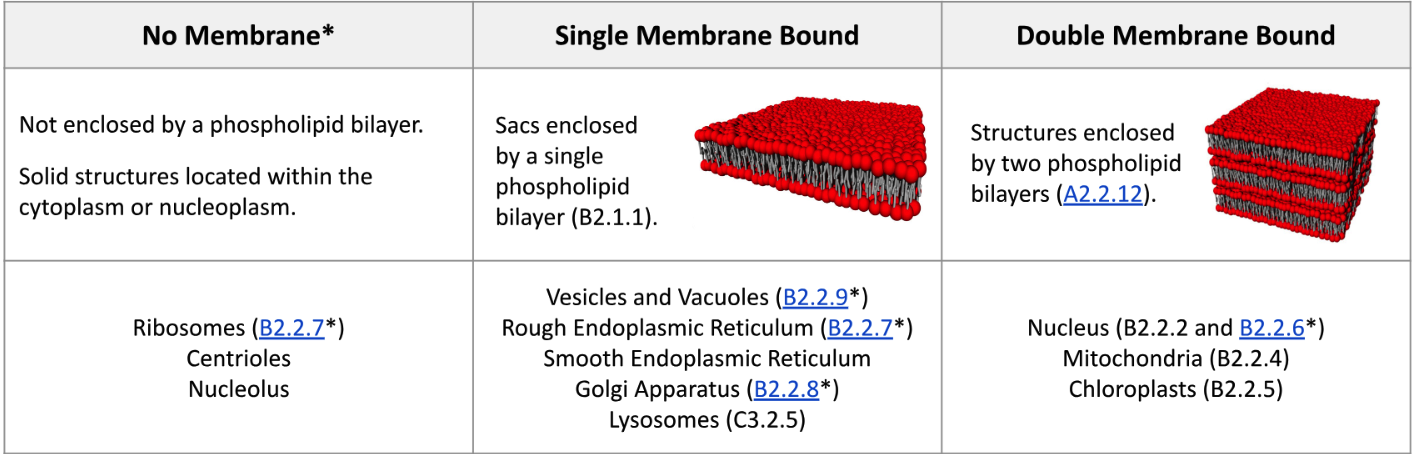
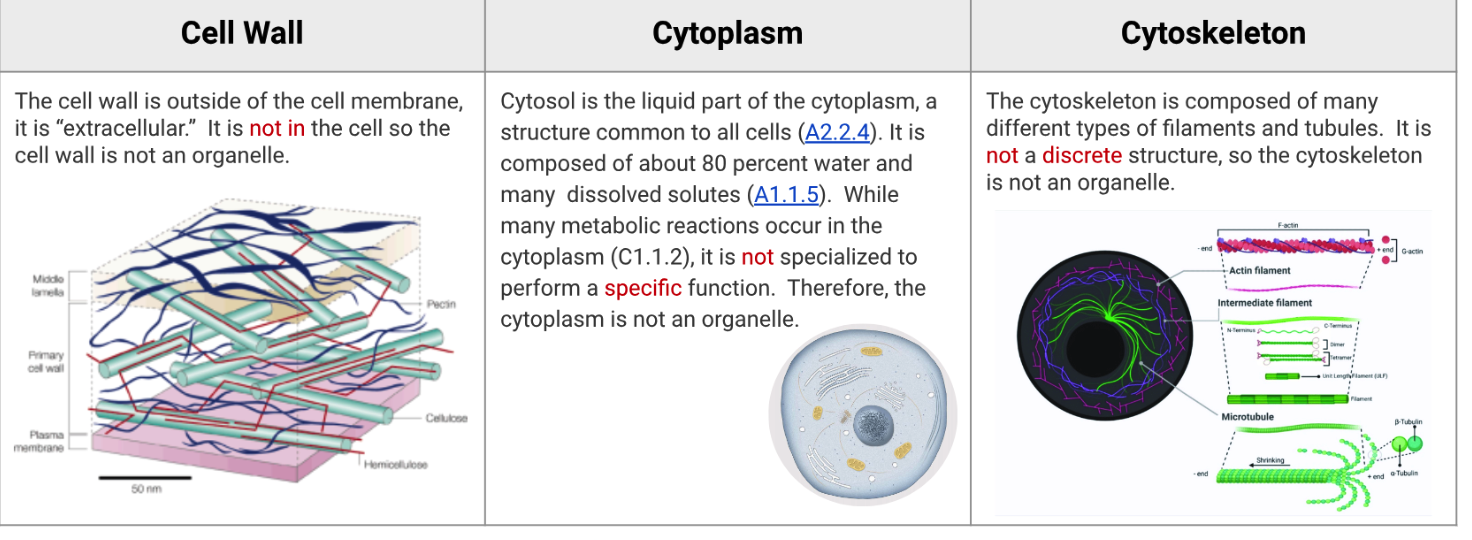
NOS Progress in science often follows the development of new techniques
Differential centrifugation
Separation technique that includes spinning things very quickly
Used for cell fractionation
separates organelles
works because different stuff has different densities
B2.2.2
Eukaryotes have their DNA safe inside the nucleus.
Allows for multiple linear chromosomes, which efficiently pack the whole DNA.
In eukaryotes DNA needs to be transcribed into RNA before it can leave the nucleus.
Allows for modification of the RNA before translation.
Does not occur in prokaryotes
B2.2.3
Advantages of compartmentalization in cytoplasm cells
Enzymes and metabolites can be concentrated in a small space, increasing the chance for collision between active site and substrate
Substances that can damage cells can be isolated within a membrane, protecting remaining structures from degradation
Conditions, such as pH, can be maintained at an optimal value for a particular reaction
Large areas of membrane can become dense with proteins for a specific process
B2.3.1
Following fertilisation, an unspecialised zygote will divide and develop into a mass of specialised cells (early embryo) via differentiation
This process is driven by the release of gene-regulating chemicals
(transcription factors) called morphogens
In humans, 220 distinct highly specialised cell types have been recognised
All specialised cells and the organs constructed from them have developed as a result of differentiation
B2.3.2
Properties of stem cells
Undifferentiated
cells with the ability to divide endlessly and differentiate along different pathways
A single cell that can replicate itself or differentiate into many cell types
No job
All cells in an organism share the same genome
Some cells differentiate, that is grow and mature into different specialized cells
By only activating some of the genes in the genome during differentiation, cells can become specialized cells
Video notes
What?
cells that are undifferentiated, no job or function
Why are they useful?
potential to become all other kinds of cells
replaces dead cells
regenerative medicine
How many types?
tissue specific (adult)
replace existing cells in organs
totipotent
differentiate into limited types of cells
embryonic
pluripotent
can differentiate into any type of cell
induced pluripotent
can become any cell in the body
artificially created from adult stem cells and can differentiate into many other cells
Why is their use controversial?
certain religious groups are against using potential life for research and medical research
All cells in an organism share the same genome (entire set of genetic
instructions)
Some cells differentiate , that is grow and mature into different specialized
cells
By only activating some of the genes in the genome during differentiation,
cells can become specialized cells
B2.3.3
B2.3.3
Location and function of stem cell niches in adult humans
sites in the body where a pool of adult stem cells are maintained in preparation for future proliferation and differentiation
in bone marrow, hair follicles, heart, intestines, and brain
bone marrow
give rise to different types of blood cells (erythrocytes - red blood cell, and leukocytes - white blood cell)
commonly used to treat leukemia
Hair follicles
have a range of epidermal stem cells that are used for hair growth, skin innervation, vascularization and wound repair
treat severe burns and hair regrowth
B2.3.4
Totipotent
can differentiate into any type of cell
zygote
Pluripotent
can differentiate into many types of cells but not all
Multipotent
can differentiate into a few closely related types of cells
bone marrow
Unipotent
can regenerate but can only differentiate into their associated cell type
Liver stem cells can only make liver stem cells
B2.3.5
Cell size as an aspect of specialization
Red blood cells need to squeeze through narrow capillaries and are small
neurons need to transmit signals throughout the body and can be very long
striated muscle fibres consist of fused muscle cells
A human ovum (egg) is one of the largest cells, while sperm is very small
B2.3.6 surface area to volume ratios and constraints on cell size
surface-to-area-to-volume ratios and constraints on cell size
The larger the organism, the more exchange has to take place to meet its needs.
substances move in/out of a cell through the plasma membrane
Big SA:V = big movement across membrane
Small SA: Vol = little movement across membrane
When volume increases, so does surface area, but not to the same extent
As a cell gets larger, the SA: vol ratio gets smaller
if the ratio gets too small, the particles won’t be able to enter and exit the cell fast enough