cardio 12- Detailed Lecture Notes on Stroke Treatment and Research Challenges
Stroke Pathophysiology
Stroke is characterized by acute onset with sudden reduction in blood supply to the brain, leading to potential brain damage. It can be classified into two major types: ischemic strokes, caused by a blockage, and hemorrhagic strokes, caused by bleeding. Approximately 1.2 billion neurons can be lost in the average stroke, which translates to about 1% of the adult human brain's total neuron count (around 100 billion). Initial brain damage occurs quickly (e.g., 10% of damage within the first hour), highlighting the need for rapid intervention.
Time-dependent treatment effectiveness: After 6 hours, the mismatch is gone (mismatch refers to difference in size of core and pernumbra, over time the core spreads), indicating no benefit from reperfusion therapy due to cell death already occurring. Early identification of the stroke type and time of onset is critical for effective treatment.
Importance: Identifying whether tissue can still benefit from blood flow restoration is critical to prevent long-term disability.
Stroke treatment strategies;
Primary prevention (before stroke)- aims to stop it happening in the first place by reducing the risk factors.
Medication to decrease stroke risk factors which include- Anti-platelet drugs, anti-coagulants, anti-hypertensives to manage conditions like hypertension, high cholesterol and prevent blood clot formation which are risks factors of stroke.
Lifestyle modifications like diet changes and exercise and smoking cessation.
Educating the public to recognise signs of stroke.
Acute treatment- Changes how stroke develops, only treatment is reperfusion (restoring blood flow.)
Thrombolysis - pharmacological breakdown of the clot - tPA breaks down blood clots by converting plasminogen into plasmin, an active enzyme that dissolves fibrin—the main protein component of clots helping restore blood flow. tPA is more effective when given less 4.5h after stroke and it reduces the risk of the patient being dead or dependent at 3 months by 16%.
problem of tPA: only a small portion of patents treated
Increased risk of haemorrhage
Reperfusin itself can be detrimental - can cause inflammation and oxidative stress which is more damaging to brain.
Some clots are tPA resistant (platelet rich) making it ineffective at reperfusion. There’s a high occlusion rate (clot broken down but creates a blockage again) and you can’t keep giving tPA
Hence new treatments of stroke are needed.
Thrombectomy- physically removing clot (endovascular therapy.)
needs suitably trained doctors that can insert a catheter from the femoral artery all the way to the site of occlusion in the brain and requires a well organised clinical service.
Studies have shown that thrombectomy can significantly improve recovery when performed within 6 to 24 hours of symptom onset.
Availability and access to this treatment can vary greatly depending on hospital resources and geographic location, leading to disparities in treatment administration. (We have the treatment but it is not available to all patients)
Rehabilitation (after stroke)- (restore functionality) help people get better providing physiotherapy of speech and language therapy- supportive care cause there is no pharmacological treatment post-stroke.
Secondary prevention- introduction of drug regimen to prevent a second stroke.
In addition to primary prevention strategies and medications additionally drugs like aspirin (blood thinner)
Stroke treatment research :
Some clots are tPA resistant because they contain more complex fibrin structures and more platelets- making it harder for breakdown.
Some cots are hard to pull out via thrombectomy because they are fibrin rich.
Thromboinflammation and Stroke: Role of VWF and ADAMTS13
1. Weibel-Palade Bodies (WPBs):
WPBs are storage granules found in endothelial cells (the inner lining of blood vessels).
They contain important molecules involved in hemostasis and inflammation, most notably von Willebrand factor (VWF).
2. Mechanism of Thromboinflammation:
When the endothelium is damaged, WPBs (Weibel-Palade Bodies) release VWF (Von Willebrand factors)into the bloodstream.
VWF forms multimers that bind to platelets and neutrophils, promoting clot formation and inflammation- contributing to thromboinflammation relevant to ischemia strokes.
ADAMTS13 is an enzyme that cleaves ultralarge VWF multimers, limiting clot formation.
However, wild-type ADAMTS13 is not fully active under physiological conditions and may not effectively prevent thrombosis.
Therapeutic Development – caADAMTS13:
Researchers developed a constitutively active form of ADAMTS13 (caADAMTS13), which can continuously cleave VWF multimers.
In mouse models of stroke caADAMTS13 was more effective than tPA at restoring blood flow which in turn reduces brain damage.
caADAMTS13 is a promising potential treatment for stroke and may enter clinical trials in humans.
Stroke Treatment research Challenges
The failure to translate treatments from research to practice is significant:
Researchers have aimed to target mechanisms involved in ischaemia pathophysiology (ie reduce ROS or glutamate secretion). O’Collins et al (2006) identified and tested 603 treatments for focal ischaemia that targeted its pathophysiology . 374 were effective in murine model . 97 went to clinical trial following murine testing and 18 without testing on murine. Only 1 and 3 respectively were effective in clinical trials.
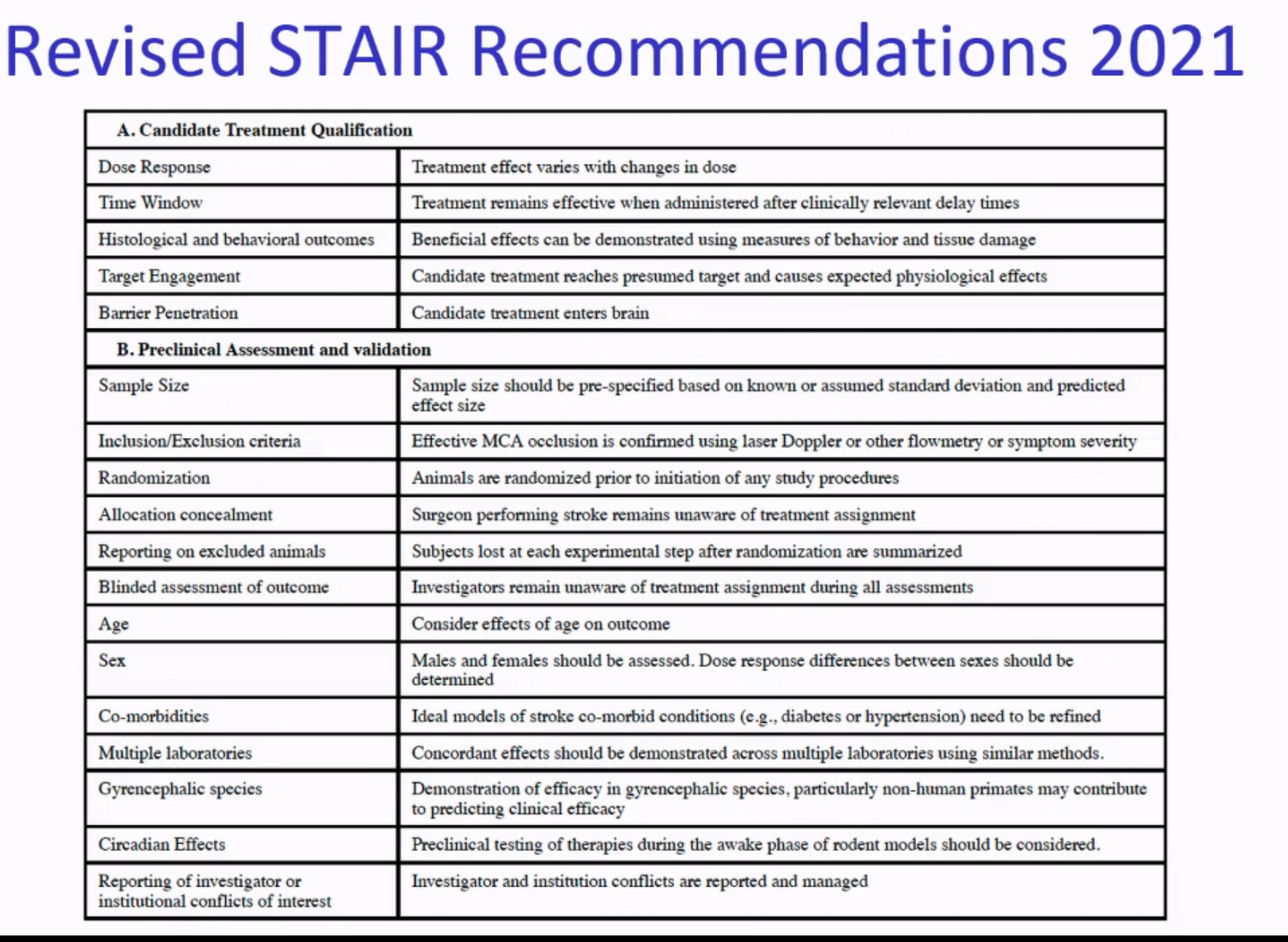
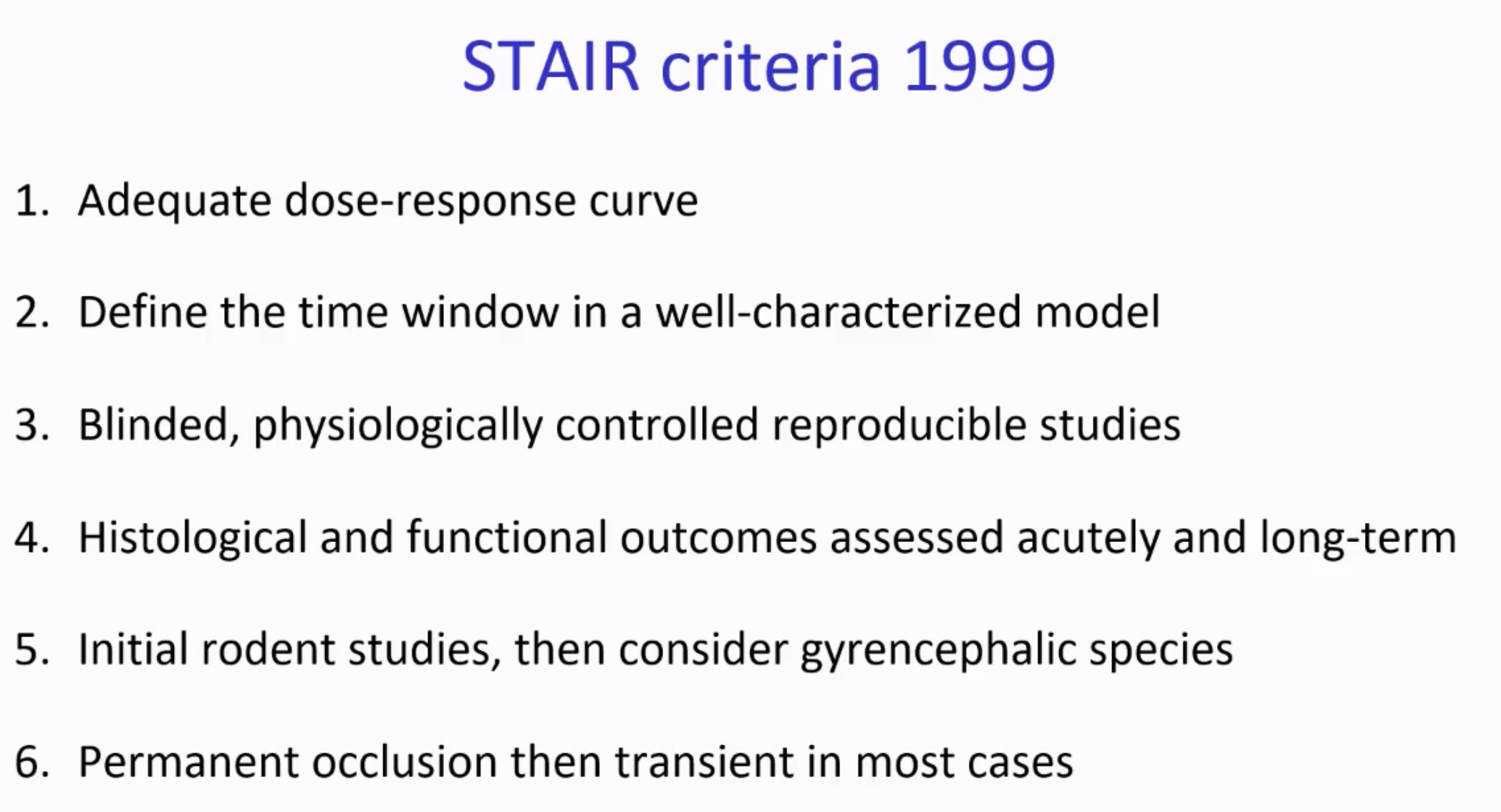
Subsequently a group of academic and industrial stroke experts published a series of papers recommending improvements in clinical and pre-clinical drug development for stroke.
Despite follow-up trials in 2009 and 2021 there is still no neuro-protective drug for stroke.
Recommendations for Future Research
Enhance quality of stroke research by adhering to updated guidelines:
Engage in rigorous, multi-site studies, replicating methods across diverse populations.
Consider the demographic and clinical diversity of patients affected by strokes, rather than modeling only on young male populations, which can skew results and efficacy.
The story of NXY-059 was an antioxidant that was bought and developed by AstraZeneca to become a stroke drug. AstraZeneca argued that the studies conducted on this drug met the stair criteria. Phase 2 trial of the drug showed more patients had fewer adverse stroke side effects. However a larger phase 3 trial showed that there was no significant difference between the placebo and the drug.
An article suggest that research should be done collaboratively and that murine stroke models should not be conducted on young male mice as they are not at high risk of strokes. Additionally the study also suggested that we avoid negative bias (no one publishes a report about a drug not being effective ) and that e should avoid using heterogenetic rats.
The research also address that rat models are also good as the core and penumbra and thrombolyis was found and effective (respectively.)