Autism
Autism: Where we are
Neurodevelopmental disorder
- Genetic Basis (Abrahams & Geschwind, 2008; Daly et al., 2012):
- concordance in identical twins ~90%
- rare genetic mutations (account for 10-20% of cases)
- multifactorial – 400-1000 risk genes? atypical brain development
- BUT currently no genetic or biological markers identified
- Diagnosis is behavioural
- defined set of criteria
- social communication, repetitve behaviours
Difficulty and problem with diagnosing autism
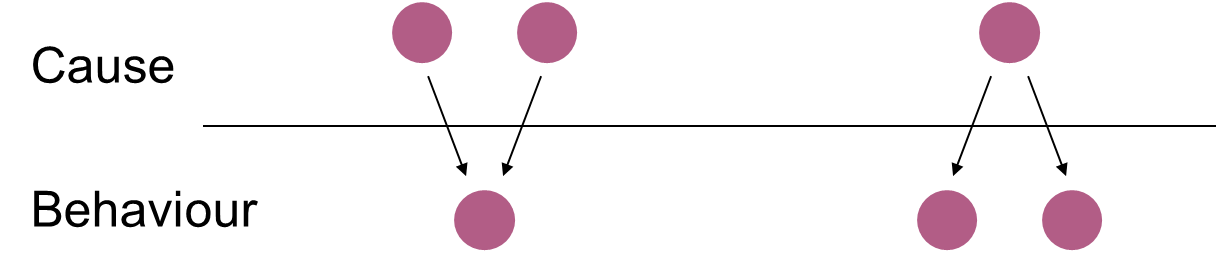
- different causes of the same behaviour (convergence)
- different manifestations of the same cause (divergence)
- ‘shopping list’ criteria
- leads to heterogeneity
- leads to treatment of symptoms, not cause
Prevalence
- Prevalence has hugely increased
- prevalence is not incidence
- incidence may be the same
Reasons for prevalence/increase of prevalence
- Autism has almost certainly always existed
- Change in the definition of autism
- More awareness
- Increased understanding of compensation
Heterogeneity
- Behavioural heterogeneity → autism spectrum
- varying in multiple dimensions
- severity of symptoms, pattern of symptoms
- manifestation of difficulties at different developmental stages and levels of general ability
- hard to identify biological and genetic factors
Cognition
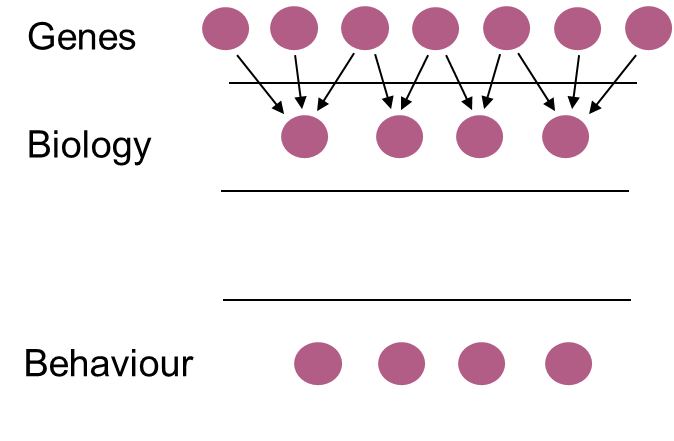
- point of greatest convergence in the causal chain → homogeneity
- describes the functions of the mind
- critical level to study autism
- allows range of behaviours to be linked to a unitary cause
Cognitive theories of autism
Social theories
- mentalizing/ToM – difficulty in representing another’s mental state as distinct from your own
- social motivation – social stimuli are not rewarding
- social attention – social stimuli are not given priority
- social perception – social stimuli are processed differently
Domain general theories
- executive function – weaker higher order control of thoughts and actions
- local bias – preference for processing local details
Cognitive theories of autism
- All attempt to explain a variety of behaviours
- BUT none appear sufficient to account for all behavioural manifestations across different individuals
- fractionation of autism at a cognitive level?
- Often assumed to be present in all individuals with ASD
- BUT it has also been suggested that cognitive heterogeneity may be more characteristic of autism than any single cognitive profile (Towgood et al., 2009)
- ‘the autisms’ at a cognitive level?
Local Bias
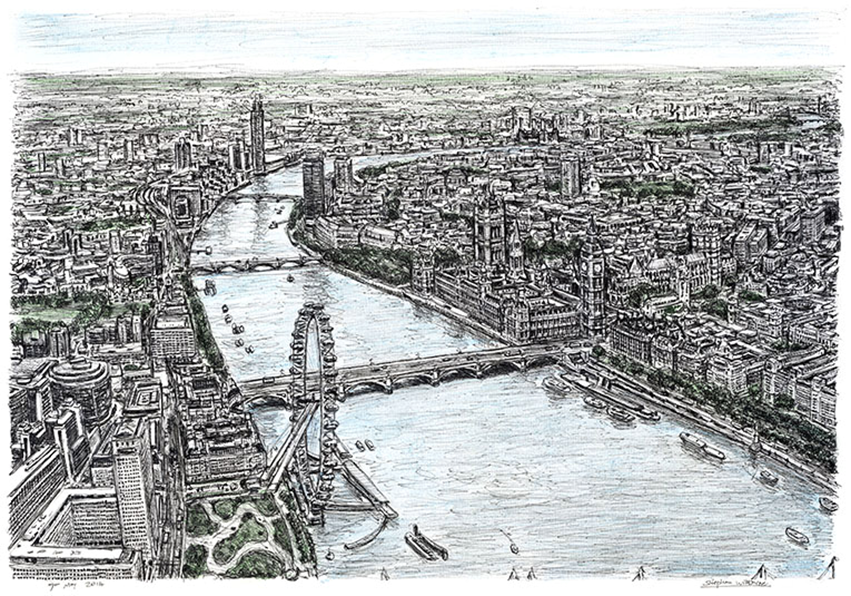
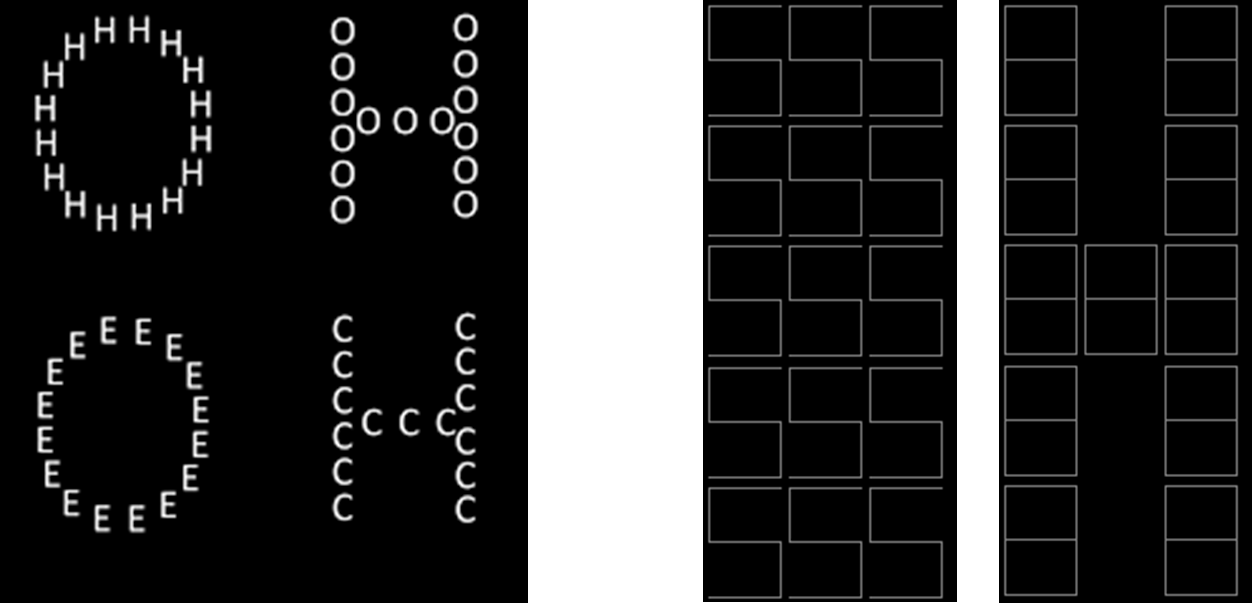
- <<Tendency to process local detail at the expense of global meaning<<
- an information processing style
- a continuum
- can be an advantage
- <<Attempts to explain certain non-diagnostic symptoms<<
- preoccupation with parts
- noticing small changes
- good rote memory
- literal mindedness
- <<Islets of ability<<
- ‘savant skills‘
- music, art, maths, perfect pitch
Cognitive Mechanism (Mann & Walker, 2003)
- difficulty ‘zooming out’
- difficulty broadening the spread of attention
- difficulty switching from local into global processing
- fits with parts of DSM-V
- ‘difficulty changing focus’
- ‘difficulty with transitions’
- ‘difficulty switching between activities’
- general switching problem or directional?
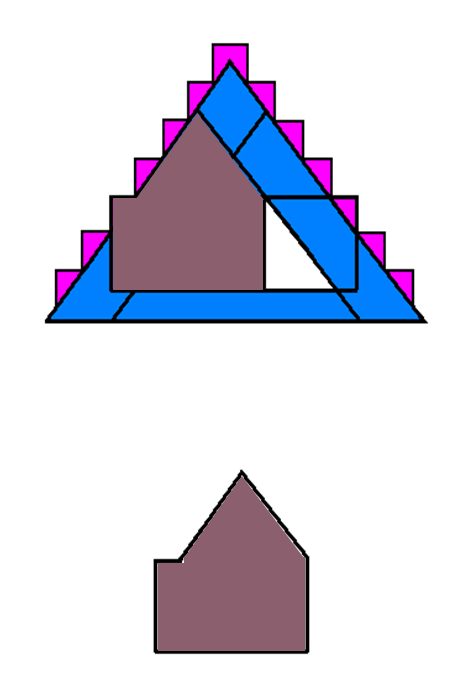
Visuo-spatial tests - Embedded Figures
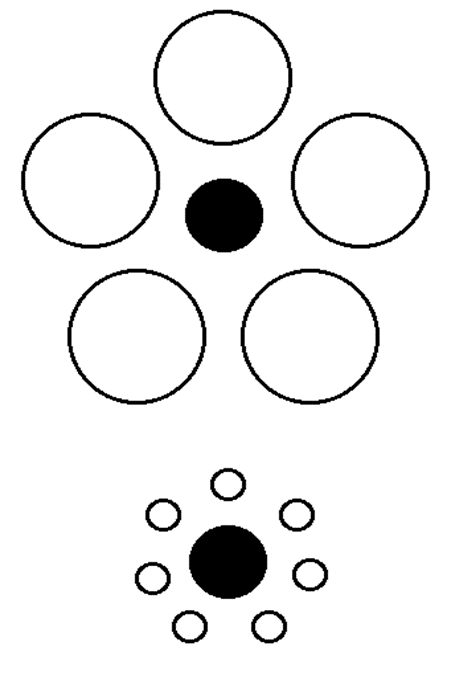
Visual perceptual tests - Visual Illusions
Navon letters - global processing task
Controversy
Variable findings
- some studies find differences, others don’t
- only true for some individuals?
- doesn’t explain diagnostic symptoms so that’s OK!
Top-down/bottom-up
- caused by basic sensory differences → Mottron et al. / Plaisted et al.
- caused by poor top down control? → Frith et al. / Happé et al.
- part and parcel of the same thing?
Theory of Mind
Mentalising
- allows us to predict behaviour on the basis of mental states (wishes, beliefs, feelings)
- ‘mind reading’ – not a theory but an everyday unconscious activity
- makes us better at understanding what other people are doing
- enables us to monitor the intentions of others/why they’re doing s/t
- Autistic children fail to understand mental states at an appropriate age
Mentalising difficulties
- Difficulty in representing another’s mental states as distinct from your own
- ‘mind blindness’
- not putting yourself into someone else’ shoes
- not recognising what another person thinks or feels
- not properly communicating
False belief
- requires prediction of action on basis of attribution of false belief to other person (not on basis of own belief or reality)
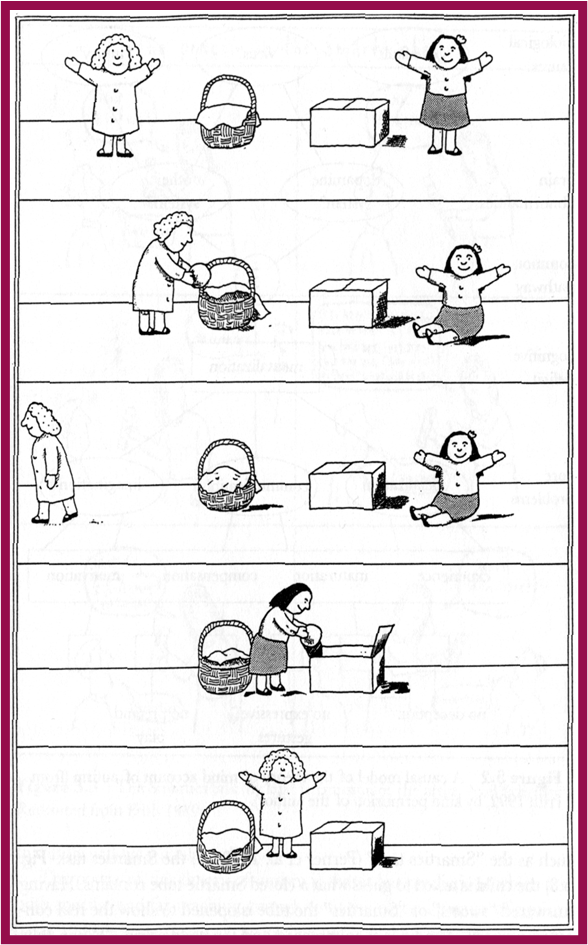
Autistic children fail to understand mental states at an appropriate age
- This impairment is specific to mental states rather than just processing alternatives
- Such as changes in physical states
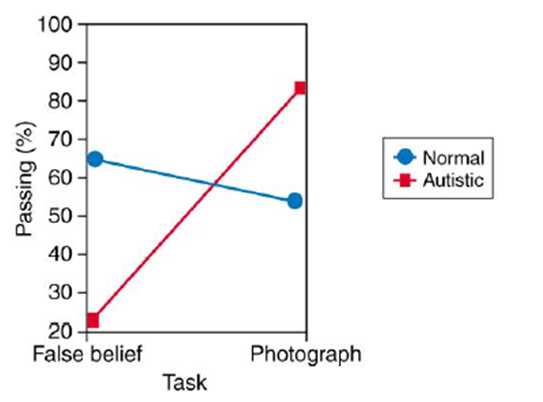
Mentalising
- most autistic people fail ‘theory of mind’ tests at an age when they should pass them
- in everyday life, their social and communicative difficulties fit a pattern of ‘mind-blindness’
- Hence, persistent difficulty in implicit Theory of Mind?
Older autistic individuals* often pass mentalizing tests ( *without co-occurring intellectual disabilities, and age appropriate verbal and non-verbal abilities)
- did they ever actually have ToM difficulties?
- can ToM be acquired, with long delay?
- can we still pick up more subtle difficulties in older autistic individuals who do not have co-occurring intellectual disabilities?
- is their ‘ToM’ really the same?
- implicit vs explicit?
- compensation? ‘hacking out’ a solution?
Animations - an advanced mentalising test (Abell, Happé & Frith, 2000)
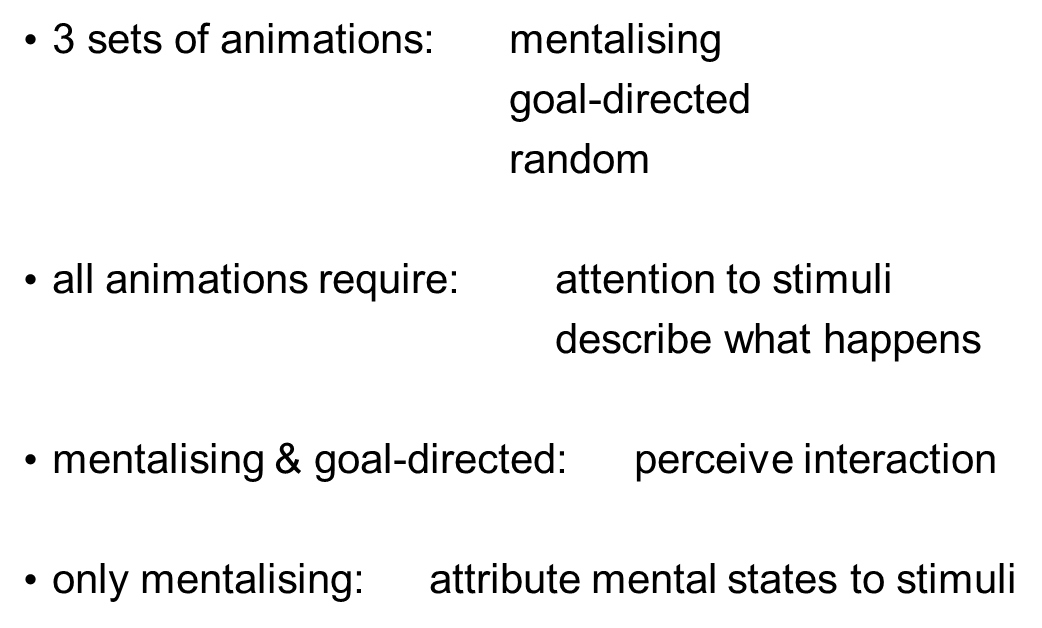
Animations - neural basis of ToM (Castelli, Frith, Happé & Frith, 2002)
- Volunteers scanned (fMRI) whilst watching animations
- Compare brain activity whilst thinking about mental states vs. goal-directed / random animations
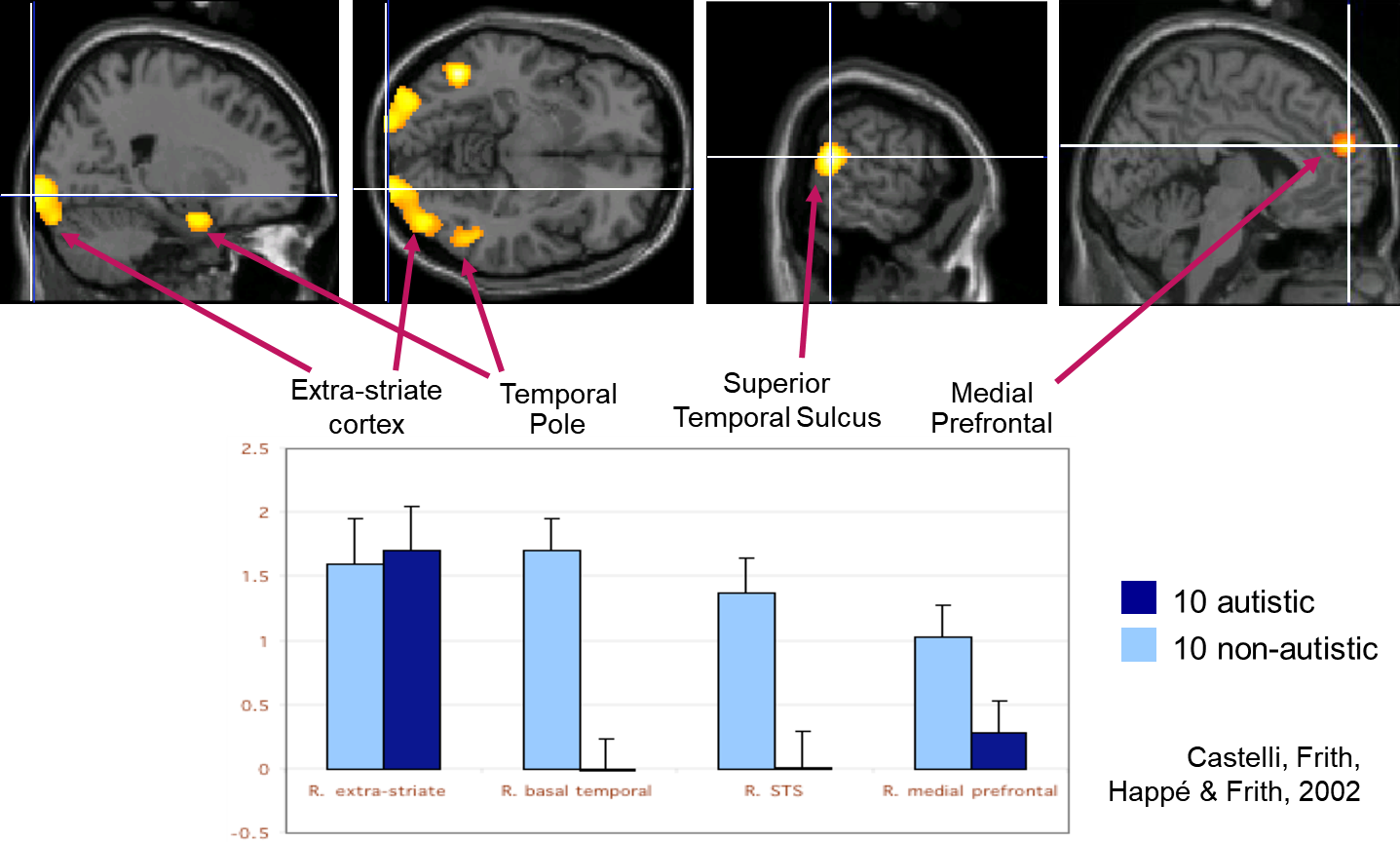
- Different patterns of activation in autistic and non-autistic participants
- mentalizing system is under-activated
- visual system is normally activated
- the same brain regions are activated by a host of other tasks
- Mentalizing ability seems to improve with age in autism, but subtle mentalizing difficulties are still present, both in terms of task performance and mentalizing-related brain activity
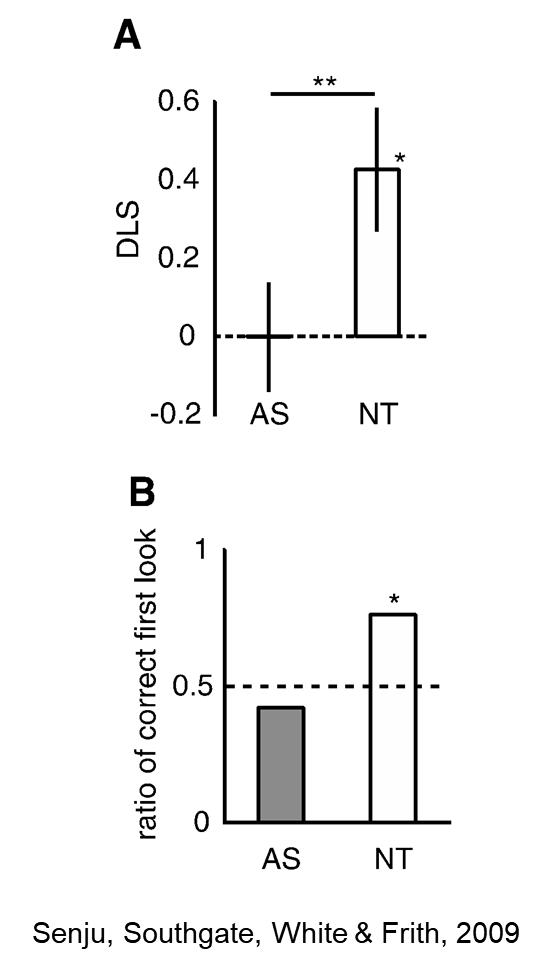
Difficulty in spontaneous ToM
- ASC adults show a difficulty in spontaneous mentalizing through anticipatory eye movements on the most basic of tasks despite passing them explicitly
- intact task performance does not equate to intact spontaneous mentalizing
- → compensation
Theory of Mind 2
- ToM difficulties in autism is specific to mental states
- implicit ToM is impaired even when explicit ToM performance is intact
- universality/heterogeneity of ToM?
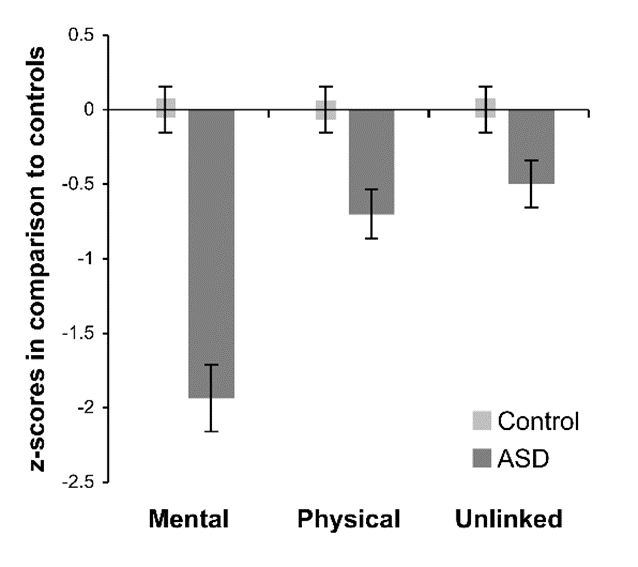
Strange stories (White, Hill, Happé & Frith, 2009)
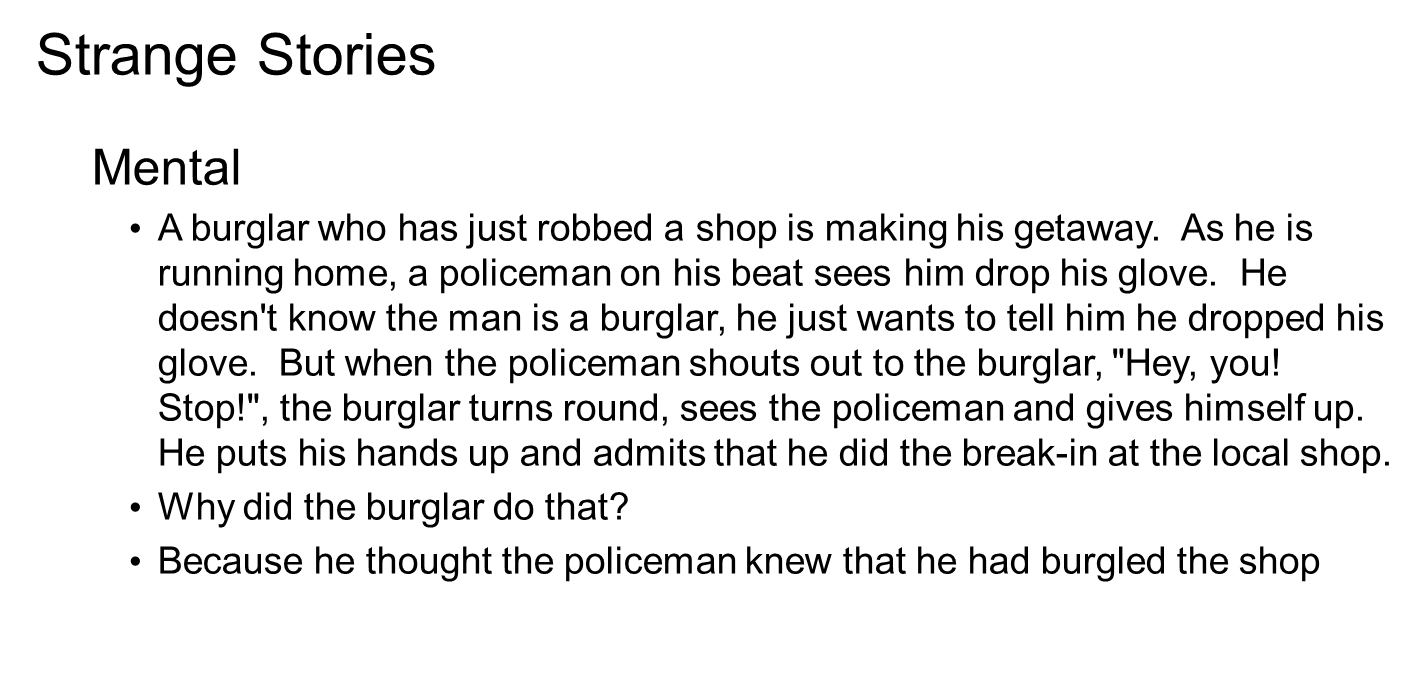
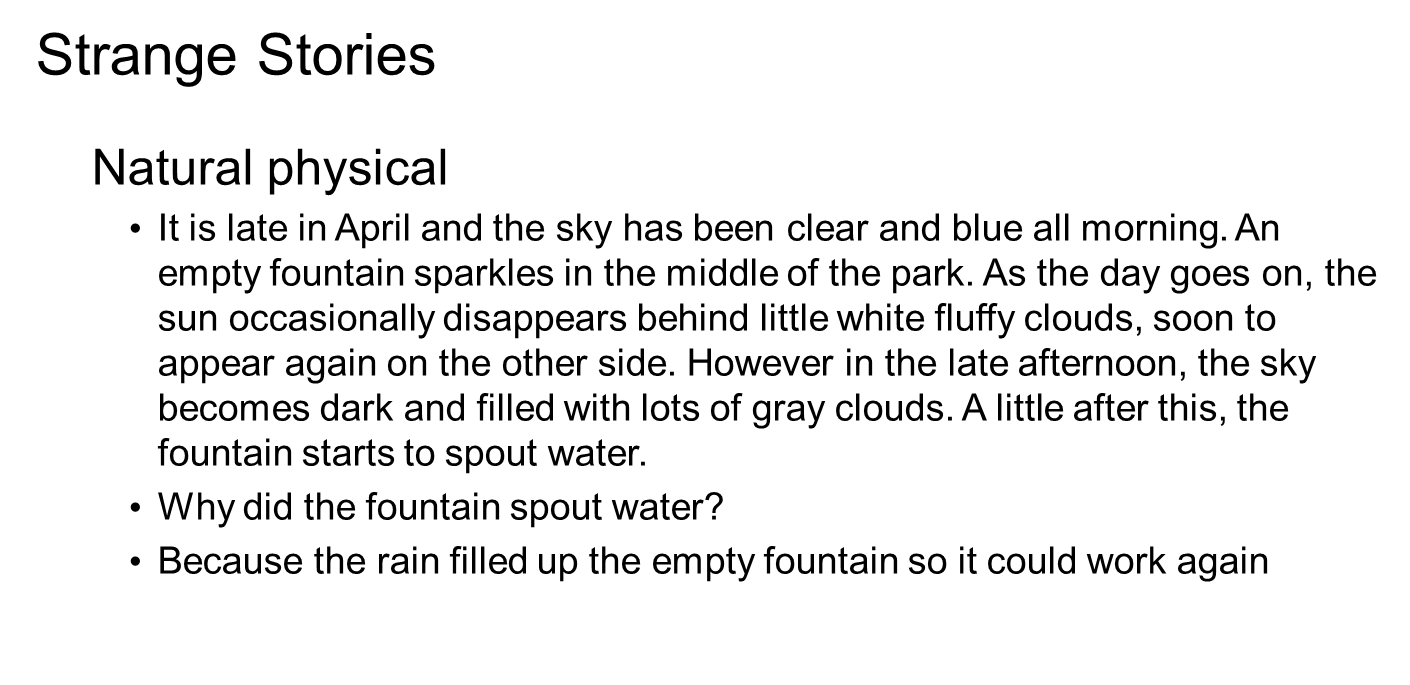
- ASC group show a marked difficulties on the mental state stories
- again, still able to detect ToM difficulties in these high-functioning individuals with ASD
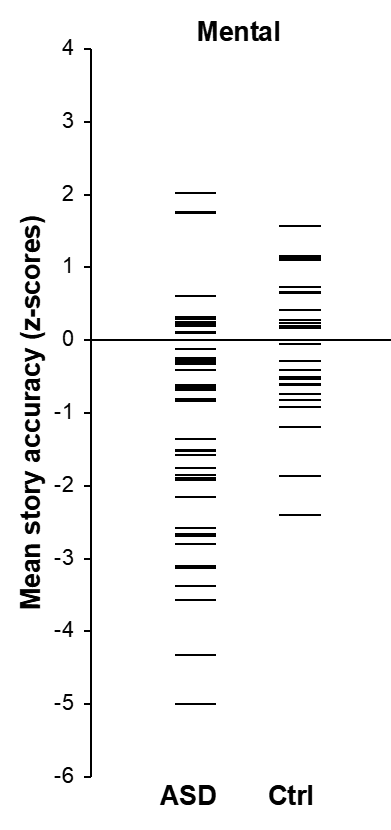
- Strange Stories - children
- most studies report group means
- what about individuals?
- distinct heterogeneity
- only some children with ASC show ToM difficulties?
- or some managing to compensate
- divide into ToM+ (good ToM) and ToM- (poor ToM)
Strange Stories - neural basis of heterogeneity (White, Frith, Rellecke, Al-Noor & Gilbert, 2014)
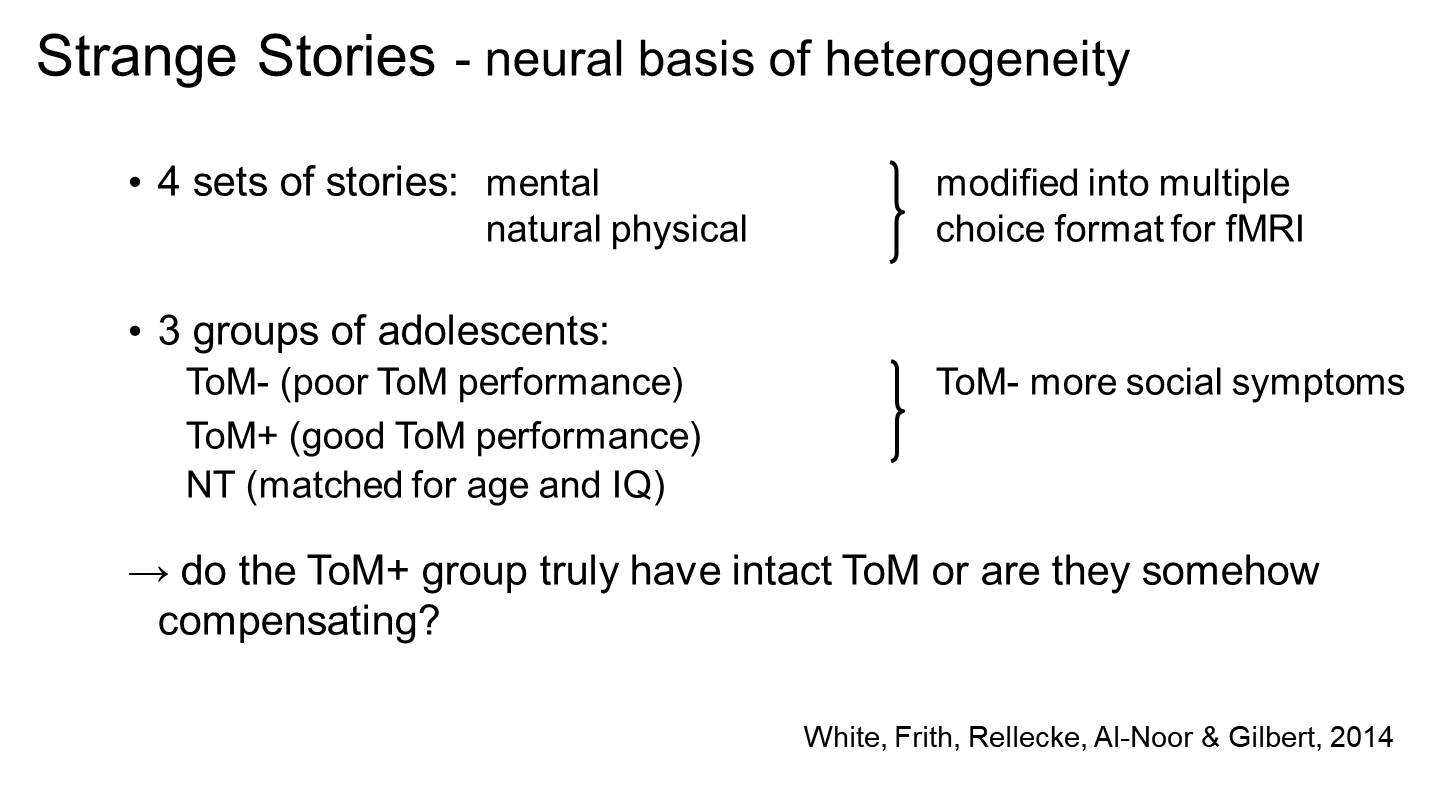
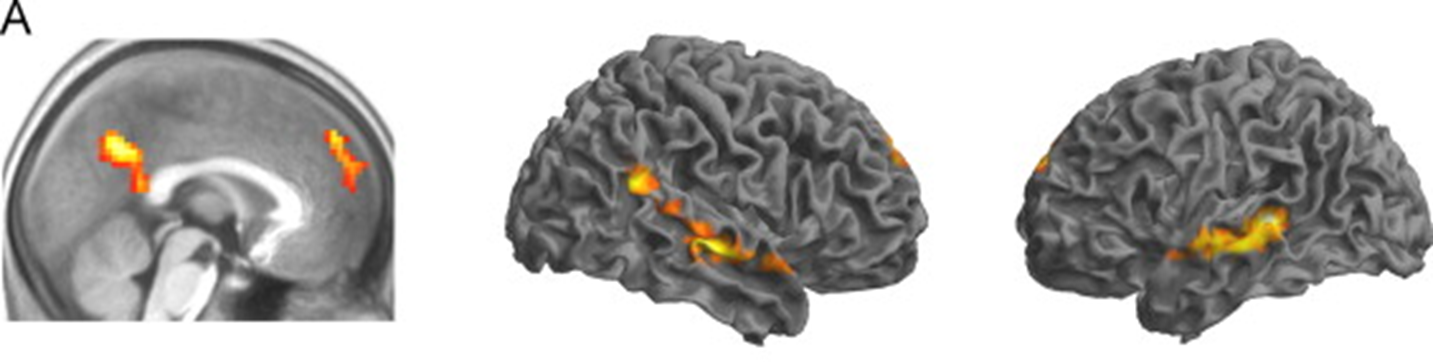
- mental vs. nature stories
- across whole sample
- mPFC, PCC, bilateral TPJ-temporal poles
- use these regions in an ROI analysis
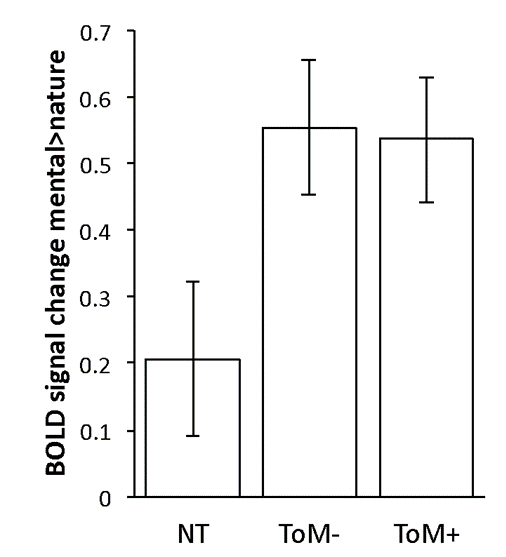
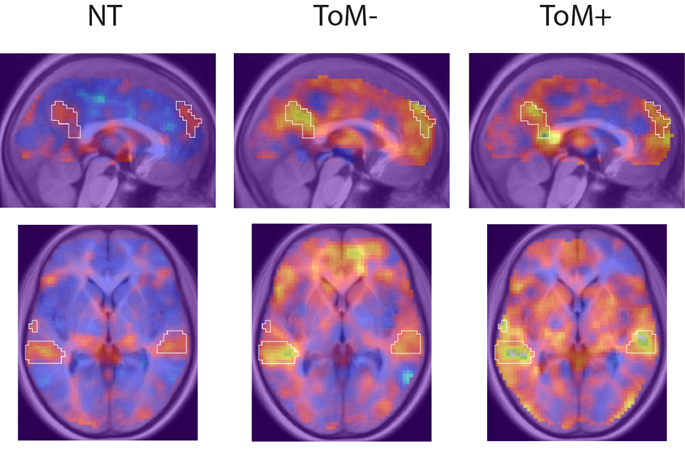
- atypical brain activity in mentalising network in autism
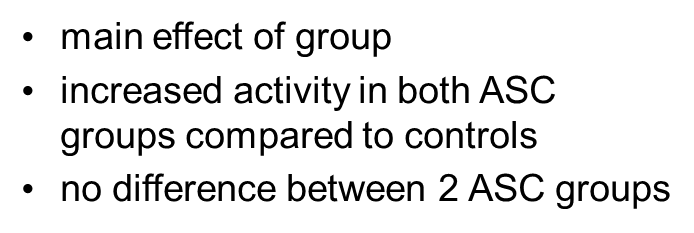
- regardless of performance on explicit tests
- ToM impairment universal feature of autism?
- ToM as a neurocognitive phenotype of socio-communicative difficulties
- lends credence to clinical intuition of unifying specific impairment in autism
- compensation (explicit test performance) –how is it achieved?
- despite underlying mentalizing difficulties
- occurring spontaneously early on?
- little effect on socio-communicative symptoms
Compensation (Lai et al., 2016; Livingston & Happé, 2017; Hull et al 2017)
- discrepancy definitions
- difference between explicit and implicit mentalizing
- different between mentalizing ability and behaviour
- behavioural - camouflaging/masking – female presentation of autism
- possible mechanisms
- refer to a vast memory bank of behavioural contingencies gathered from environment
- executive functions/top down control (see Johnson, 2012)
- verbal reasoning skills
- intelligence/general non-specific resources
- cost of compensation
- time – slow responses – ‘missed the moment’
- exhaustion
- self-awareness – stress/anxiety – mental health
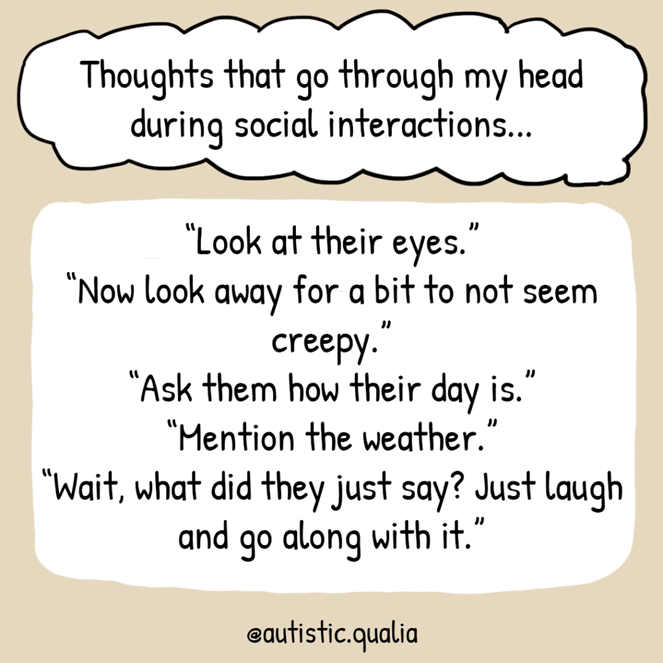
Summary: ToM
- ToM difficulties in autism is specific to mental states
- Implicit ToM difficulties appear to be universal in autism – implicit ToM appears to be affected even when explicit ToM performance is intact
- Explicit ToM performance intact in a subgroup from early in development despite atypical ToM-related brain activity
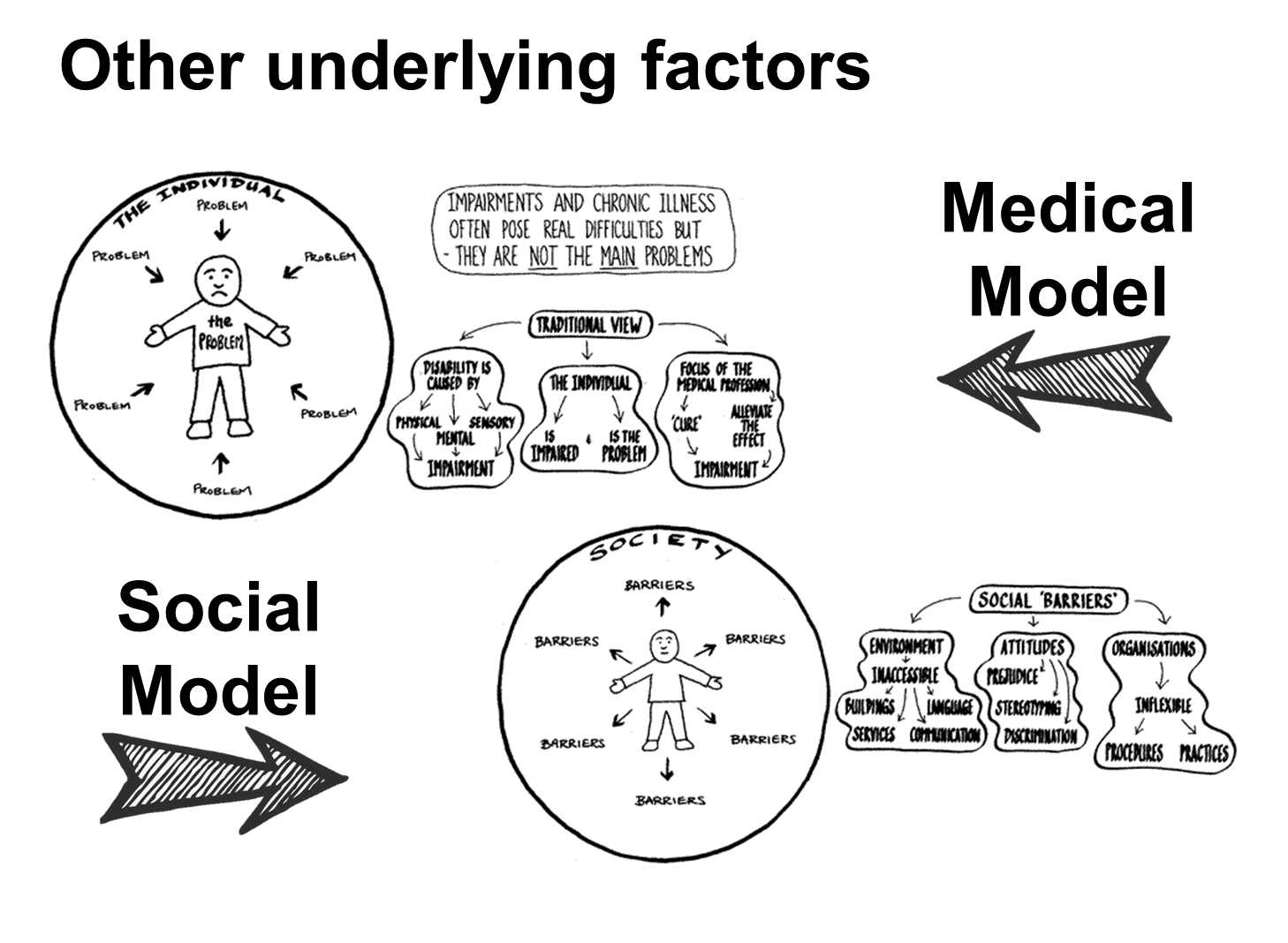
The Double Empathy Problem (Edey et al., 2016)
- Social impairments faced by autistic individuals not only due to impaired cognition, but also due to breakdown of mutual understanding, empathy and reciprocity.
- Non-autistic individuals find autistic individuals’ spontaneous reactions to social event difficult to interpret
- Non-autistic observers rate behaviour of autistic people significantly less favourably.
- Information transfer along diffusion chains: significantly more decline in detail retention in mixed autistic-non autistic chains v/s autistic only and non autistic only chains.
- Autistic individuals better at attributing mental states to animations created by other autistic individuals than those created by other non-autistic individuals.
- Non-autistic participants were better at attributing the correct mental state to the triangles over all, but better at mentalizing for animations generated by other non-autistic participants versus those generated by other autistic participants
Conclusion
- Autism is currently defined by behaviour
- We need cognitive theories to explain particular behaviours
- Local bias accounts for superior abilities and other non-diagnostic features
- ToM impairment is universal and long-lasting, accounts for social and communication symptoms
- Cognitive theories help us to understand autism and have led to new knowledge about the brain
- Socio-communicative difficulties autistic individuals face may not be only due to ‘autistic cognition’ but due to a breakdown in reciprocity between autistic and non-autistic individuals