Mangrove Wetlands
Vocabulary:
Mangroves: are wetland ecosystems found in The Bahamas
Halophytes: salt tolerant
Detritus: fallen leaves
Anoxic: oxygen deficient
Mangrove Wetlands are found:
Inland in low-lying areas
fresh or brackish water lakes
ponds
along coastal areas
Where along coast:
shallow seawater
low wave energy
leeward
Why do mangrove swamps smell like rotten eggs
Mangrove mud is anoxic. Decomposition occurs by anaerobic bacteria which produces hydrogen sulfide gas.
Importance of Wetlands
Flood control: reduces flooding
Coastal production: break waves helping to reduce inland flooding and erosion
Water supply: replenishes groundwater supply
Nursery: help protect juveniles
Habitat: promotes biodiversity
Climate control: wetland plants absorb carbon dioxide and produce oxygen through photosynthesis
Mangrove Plants
There are 4 types:
red mangrove
black mangrove
white mangrove
buttonwood
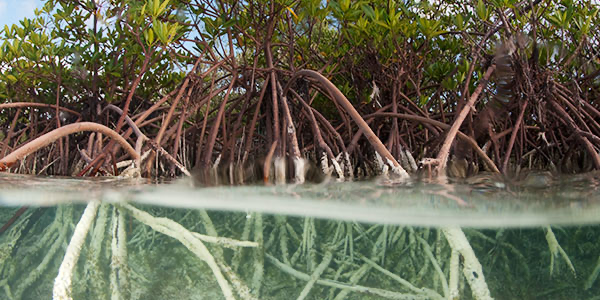
Red Mangrove (Rhizophora mangle)
The most water loving
Grow along the shore
Parts of Red Mangrove (Adaptions)
Prop roots: The extend from the trunk and branches, to stabilize the tree in the soft mud
Lenticels: Breathing pores that provide air to the root system
Thick waxy cuticle: conserves water as it reduces transpiration rate
Descriptions of the red mangrove
Leaves are large with pointed tips
Flowers with four white pointed petals
Propagule fruit
Black Mangrove (Avicenna germinans)
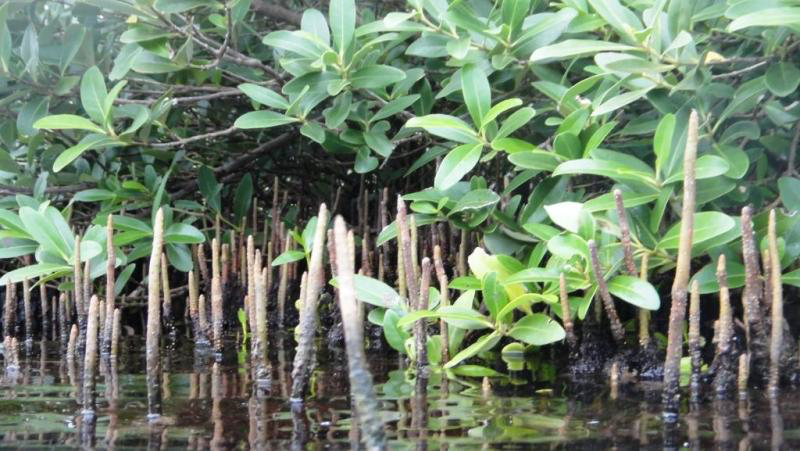
Grows on the shoreline
Landward of the red mangrove
Have very dark ‘blackish bark’
Most salt tolerant
Parts of Black Mangrove (Adaptions)
Special roots pneumatophores: vertical breathing roots with lenticels
Salt excretion: excrete salt through salt glands
Descriptions of the Black mangrove
Pale green, pointed leaves
Small white flowers have 4 petals
Produce green teardrop-shaped fruit
White Mangrove (Laguncularia racemosa)
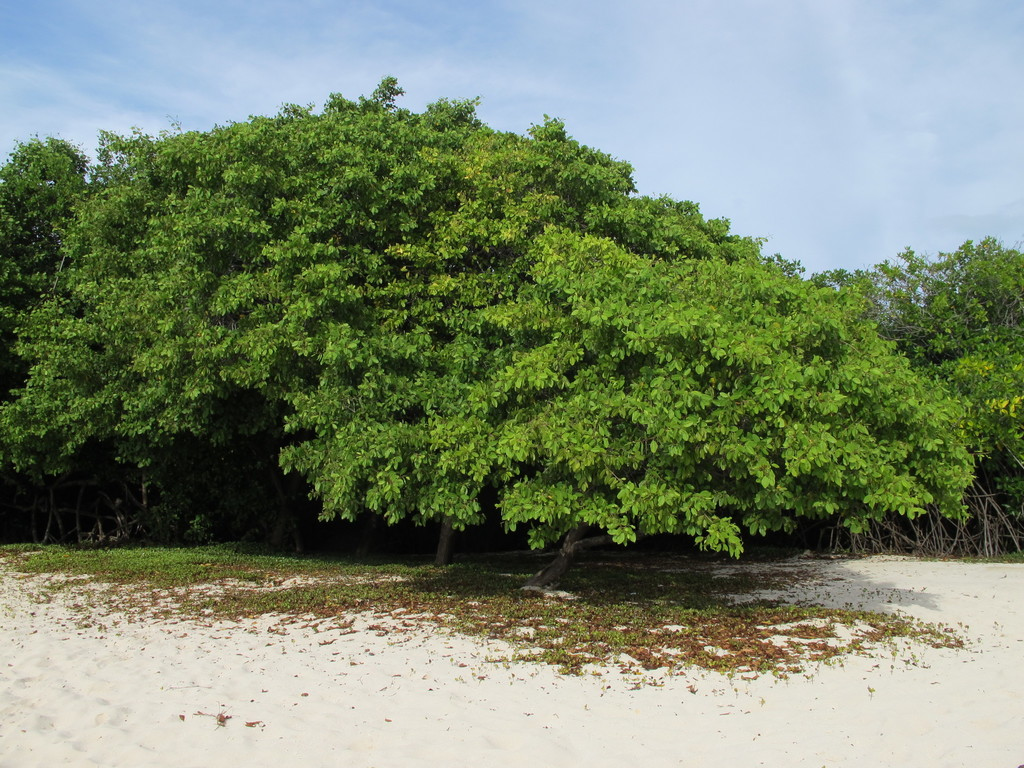
Grow further inland
Tends to be less salt tolerant
Parts of White Mangrove (Adaptions)
Sometimes have pneumatophores
Descriptions of the White mangrove
Leaves have rounded tips
Sugar glands
Buttonwood (Conocarpus erectus)
Not true mangroves
Do not have special root adaptations
Parts of Buttonwood(Adaptions)
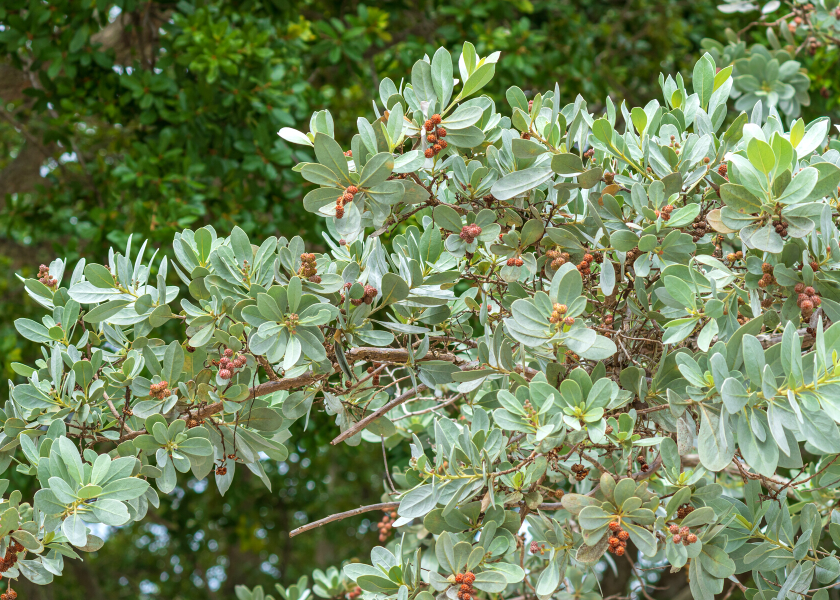
Leaves may be green or silver
Button-shaped fruit
Flowers in puffball clusters
Mangrove Zonation
Red mangrove: closest to the water
Black mangrove: muddy
White mangrove: marshy
Buttonwood: dry terrestrial