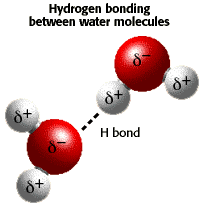
water has %%polar covalent bonds%% between the oxygen and hydrogen atoms because O is %%more electronegative%% than H, resulting in %%polarity%% (unequal sharing of e-)
* ^^polar covalent bond^^: partial negative charge around oxygen atoms and partial positive charge around H atoms
the partial negative of one oxygen atom is attracted to the partial positive charge of another water molecule’s hydrogen atom
* ^^hydrogen bond^^: chemical bonding between a hydrogen atom and N, F, or O (oxygen is most relevant here!!)
*
properties caused by hydrogen bonds:
* ^^cohesion^^: attraction between two water molecules
* ^^adhesion^^: attraction between water molecules and different molecules
* capillary action: when the adhesion to the walls is stronger than the cohesive forces between the liquid molecules
* ^^high surface tension^^: water molecules attract one another, as each molecule forms a bond with the ones in its vicinity
* ^^high specific heat^^: formation of hydrogen bonds means that more energy (heat) is required to break apart the hydrogen bonds to boil water
* moderating climate: water can absorb and release large amounts of energy due to its high heat capacity
* expanding upon freezing: ice has a lower density than liquid water, so ice floats and water expands when frozen
* hydrogen bonds cause there to be more space between water molecules in a solid state than when in a liquid state
* good solvent: water’s partially positive and partially negative ends cause it to be able to readily dissolve ionic compounds and other polar molecules (only polar!!!)
pH
^^pH (power of hydrogen)^^: measures the concentration of H+ ions in a solution
* formula for pH: pH= -log [H+]
* pH < 7: acidic, pH > 7: basic, pH = 7: neutral
* higher [H+] = lower pH (more acidic) and lower [H+] = higher pH (more basic)
the pH of a water-based solution depends on how many of the water molecules are dissociated (separated into H+ and OH-)
buffers: crucial in maintaining relatively constant pH levels in living cells; can form acids or bases in response to changing pH levels in a cell
Macromolecules
Biological Macromolecules
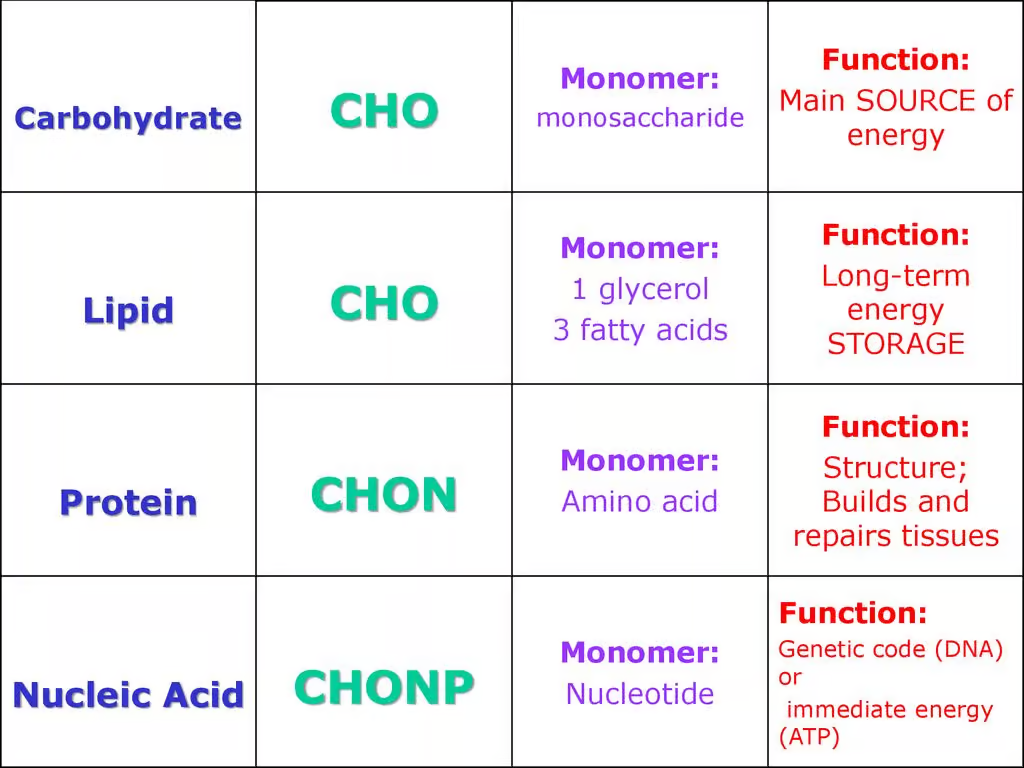
biological macromolecules necessary for life are (primarily) made of 6 elements: nitrogen, carbon, sulfur, phosphorous, hydrogen, and oxygen
properties of the essential elements:
* carbon (“backbone” of these molecules)
* extremely versatile
* has 4 valence e-
* can form single, double, or triple bonds
* can form linear, branched, or ring-like structures
* found in all types of macromolecules
* oxygen:
* has 6 valence e- (like sulfur)
* typically forms two bonds
* found in all types of macromolecules
* sulfur:
* has 6 valence e- (like oxygen)
* typically forms 2 bonds
* usually found in proteins
* nitrogen:
* has five valence e- (like phosphorous)
* usually forms 3 bonds
* found in nucleic acids and proteins
* phosphorous:
* has five valence e- (like nitrogen)
* usually forms 3 bonds
* found in nucleic acids and some lipids
* hydrogen:
* has one valence e-
* forms a single bond
* found in all types of macromolecules (sometimes not drawn in macromolecule structures)
*
structure and function of a macromolecule are determined by its monomers and how the monomers are linked
* monomer: the building block of a macromolecule; sometimes come together to form polymers
* polymers: large-chain molecules made from repeating units of smaller molecules called monomers
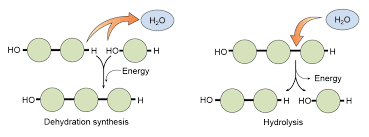
monomers are liked together through dehydration synthesis and broken apart through hydrolysis
* dehydration synthesis: the creation of larger molecules from smaller monomers where a water molecule is released
* hydrolysis: the chemical breakdown of a compound due to a reaction with water
*
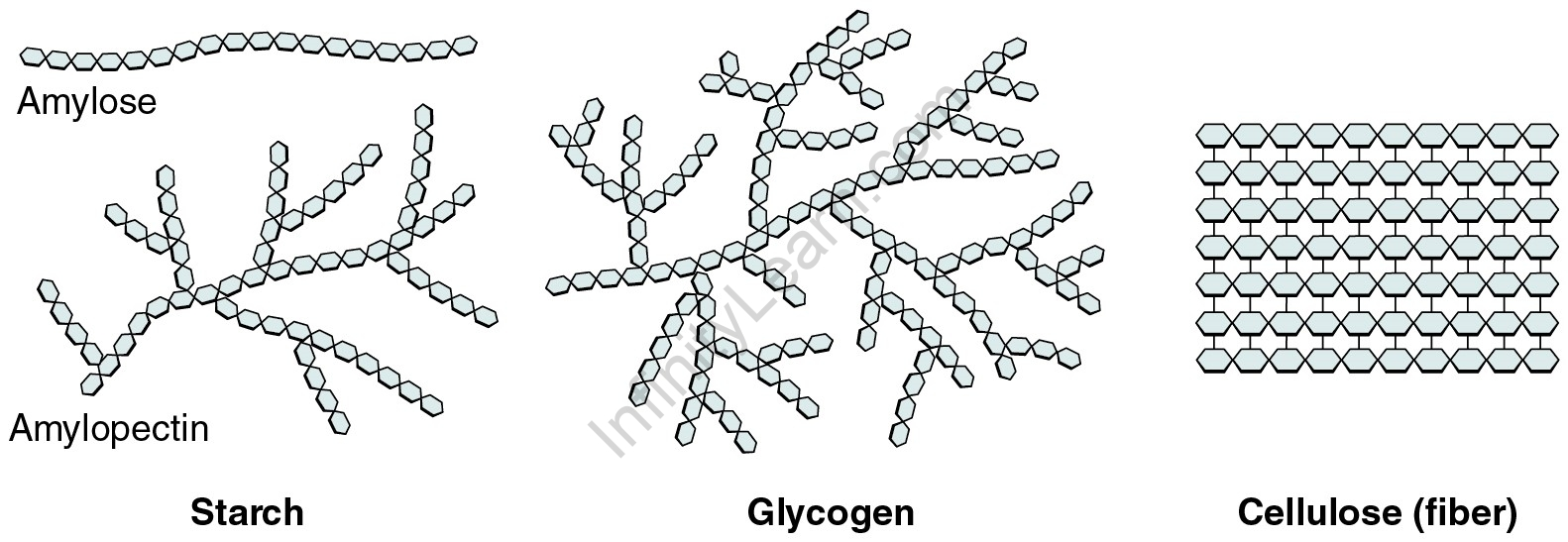
carbohydrates: polymers of sugar monomers; used to store energy (ex. starch) and provide structural support (ex. cellulose)
* how the sugar monomers are linked will determine the structure and function of the carbohydrate
* sugars can be linked linearly or branched; links between carbs used for energy storage are different links than those used for structural support carbs
*
* polysaccharides: a carbohydrate (e.g. starch, cellulose, or glycogen) whose molecules consist of a number of sugar molecules bonded together
* monosaccharides: carbohydrate molecules that cannot be broken down by hydrolysis into simpler (smaller) carbohydrate molecules
lipids: nonpolar macromolecules used in energy storage, cell membranes, and insulation
* fatty acids: monomer of lipids
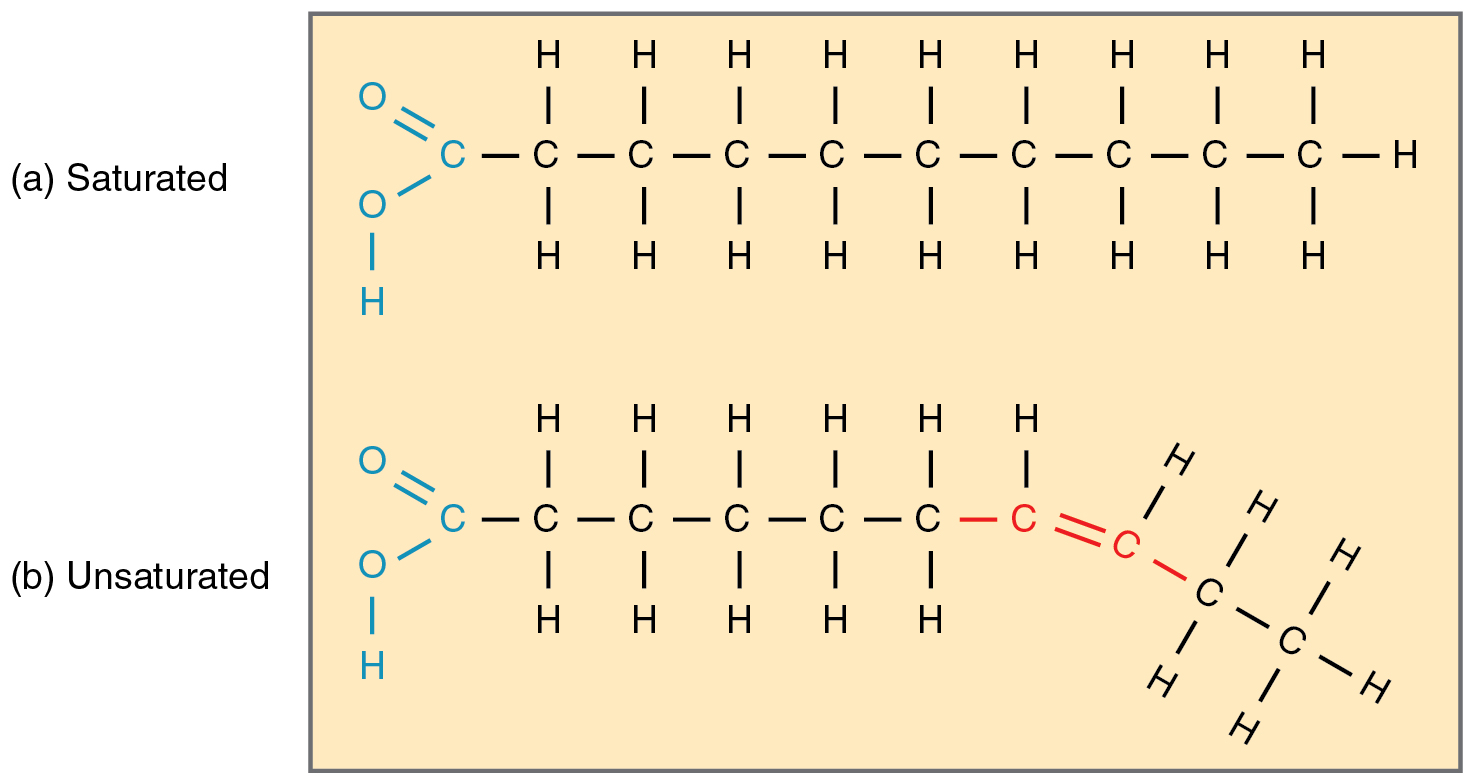
* saturated: has the maximum number of C-H bonds; solid at room temp.; usually found in animals
* unsaturated: fatty acids with at least one C=C double bond; liquid at room temp.; usually found in plants
* level of saturation in fatty acids will determine how a lipid functions
*
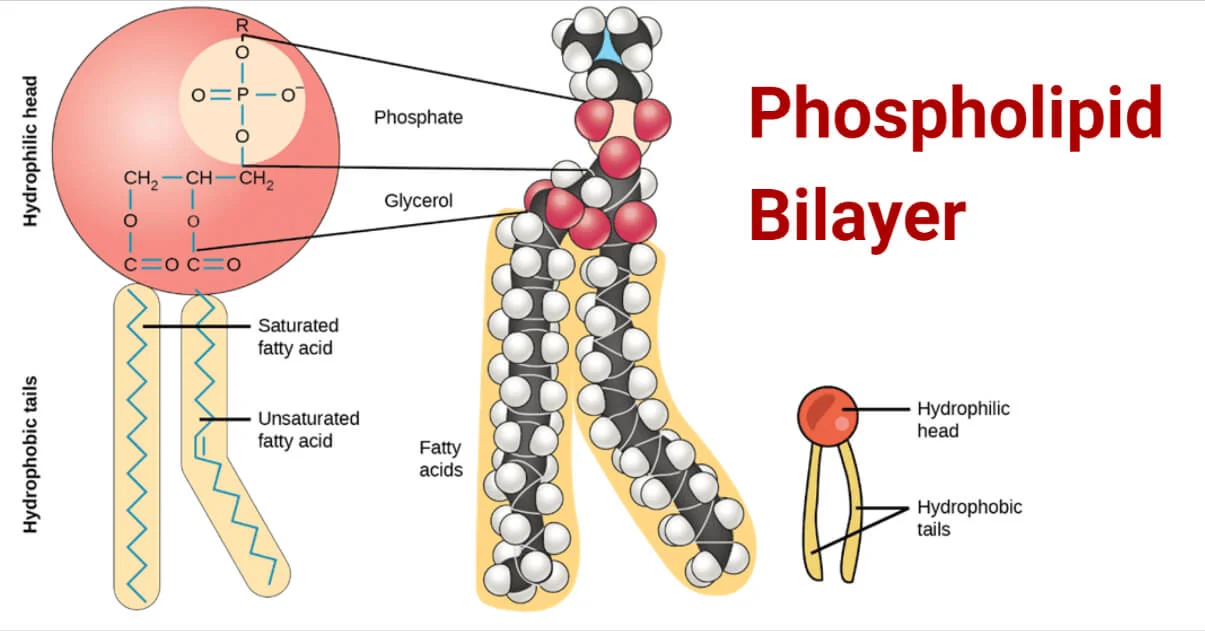
* phospholipids: important in cell membranes; built from a glycerol molecule, two fatty acids, and a phosphate group
* amphipathic: have both hydrophobic and hydrophilic regions
* fatty acids are nonpolar and phosphate is polar causing it to be amphipathic
*
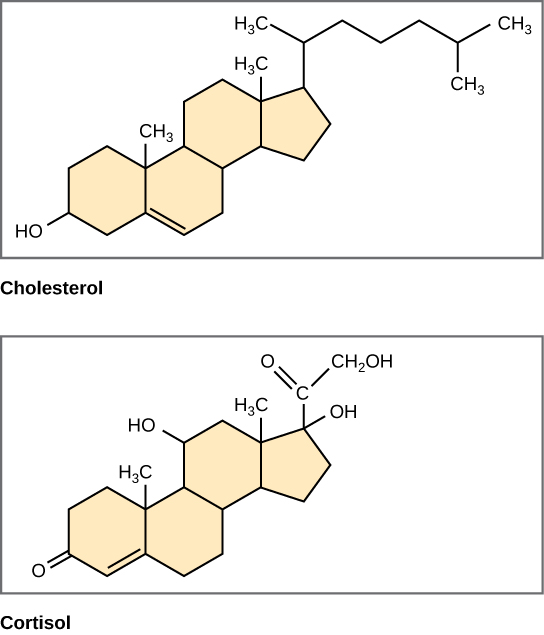
* steroids: relatively flat, nonpolar molecules usually formed by modifying cholesterol molecules
* ex. estradiol, testosterone, and cortisol
*
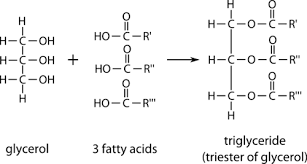
* triglycerides: a type of fat that circulates in your blood
*
proteins: polymers of amino acids; used in enzyme catalysis, maintaining cell structure, cell signaling, cell recognition, and more
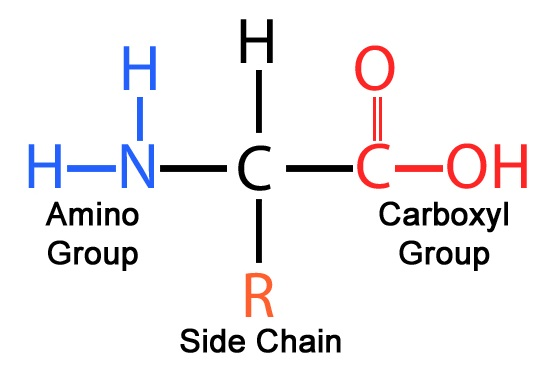
* amino acid: contains an amino group, a carboxyl group, a hydrogen atom, and a side chain (r-group)
* r-group: each of the 20 amino acids has a specific side chain, known as an r-group, that is also attached to the α carbon
*
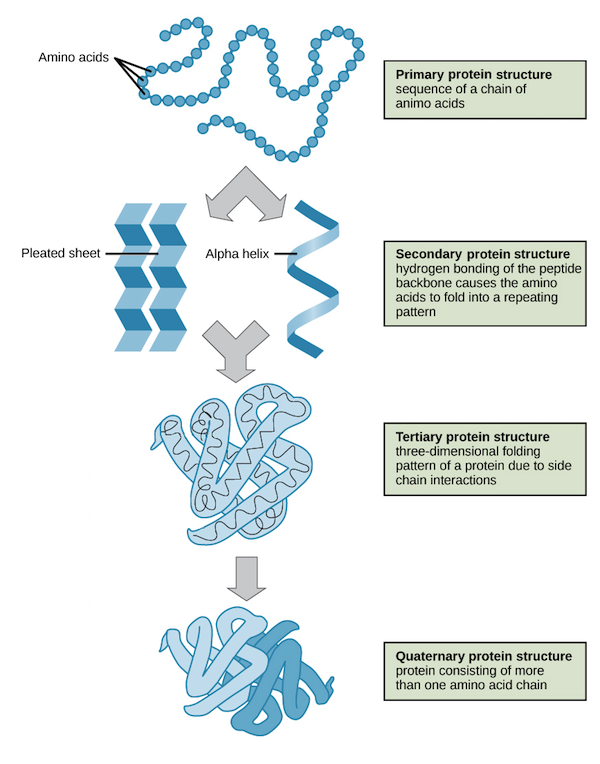
* protein structure: there are four levels to protein structure
* primary structure: polypeptide chain
* polypeptide: amino acids joined by peptide bonds
* resulting polypeptide chains have directionality with an amino (NH2) terminus and a carboxyl (COOH) terminus
* the order of the amino acids in the polypeptide chain will determine the primary structure of the protein
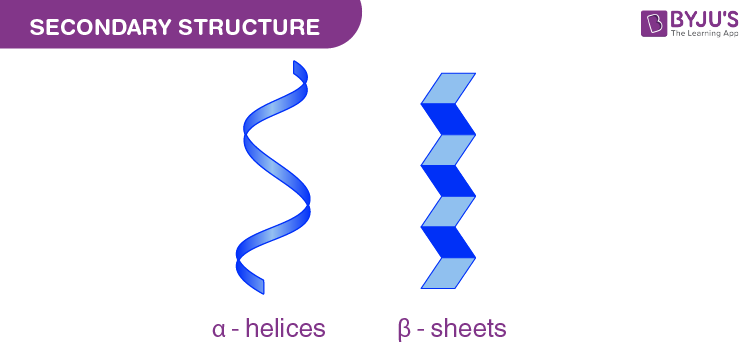
* secondary structure: alpha helix and beta sheet
* the formation of h-bonds between adjacent amino acids on the polypeptide chain (after the primary structure is formed!!) will determine the secondary structure of the protein
* alpha helix: right hand-helix conformation in which every backbone N−H group hydrogen bonds to the backbone C=O group of the amino acid located four residues earlier along the protein sequence
* beta sheet: consists of beta strands connected laterally by at least two or three backbone hydrogen bonds, forming a generally twisted, pleated sheet
*
* tertiary structure: 3-D folded shape of the protein
* usually determined by hydrophilic/hydrophobic interactions between r-groups in the polypeptide
* more stable tertiary structures will have hydrophilic r-groups on the surface (facing the water from the cell environment) and the amino acids with the hydrophobic parts be turned inwards (away from the water)
* may include disulfide bridges between sulfur atoms
* chaperonins: special proteins that assist with folding a polypeptide into its 3-D shape
* quarternary structure: multiple subunits of 3-D structures
* multiple polypeptide chains are joined together to form the complete protein and function as a unit
* ex. hemoglobin, which has three subunits in its quaternary structure
*
nucleic acids: polymers of nucleotides; function as the carrier of genetic material
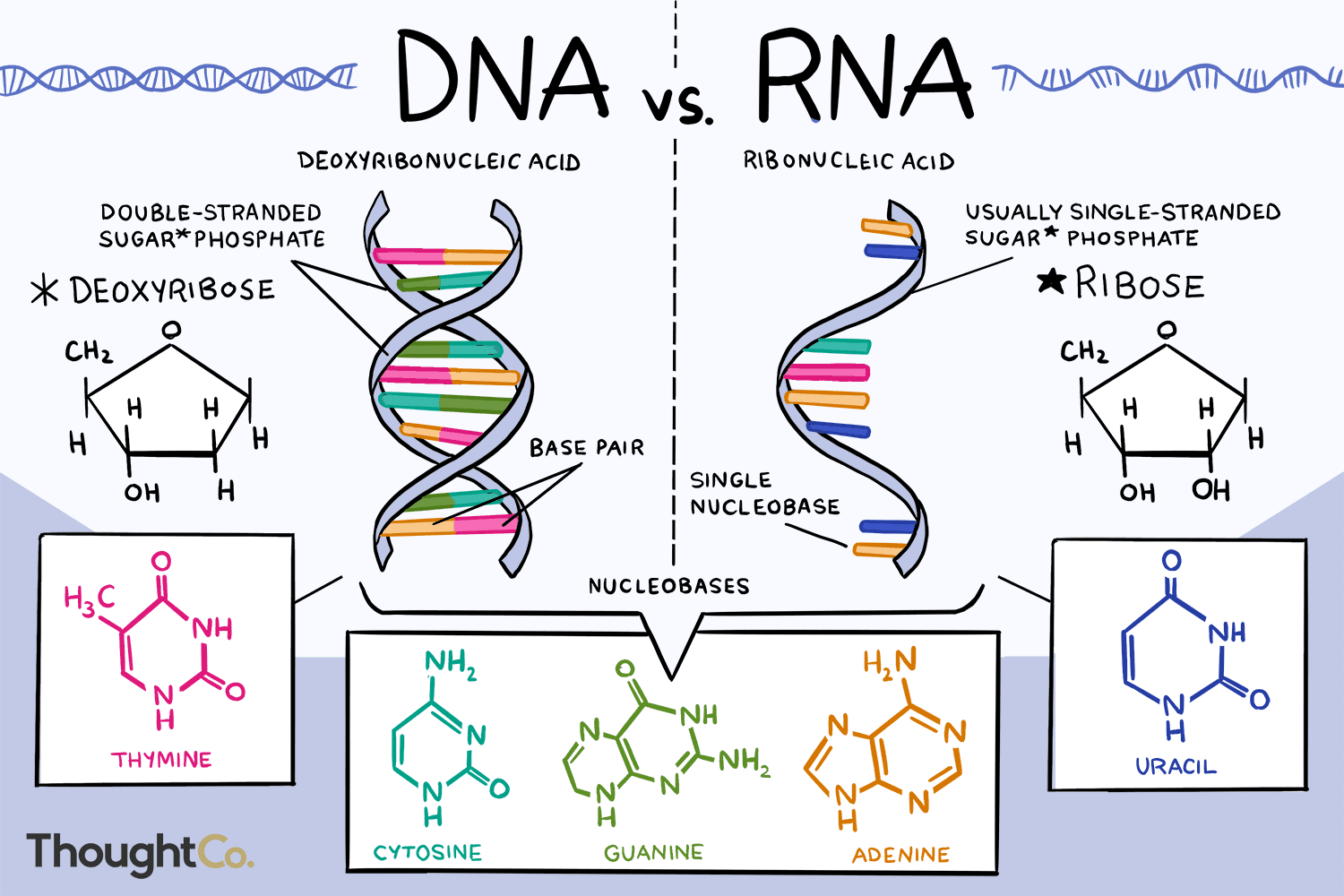
* nucleotides: DNA and RNA; consist of a five-carbon sugar, a nitrogenous base, and a phosphate group
* five-carbon sugar: deoxyribose (DNA) or ribose (RNA)
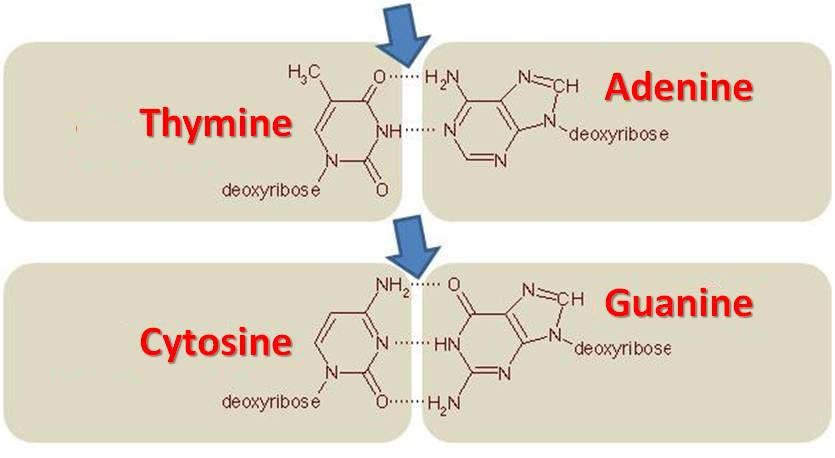
* nitrogenous bases: adenine, thymine (DNA), cytosine, guanine, and uracil (RNA)
* nucleotides have directionality so that the phosphate group is always attached to the 5’ carbon in the sugar and the 3’ carbon always has a hydroxyl group where new nucleotides can be added
*
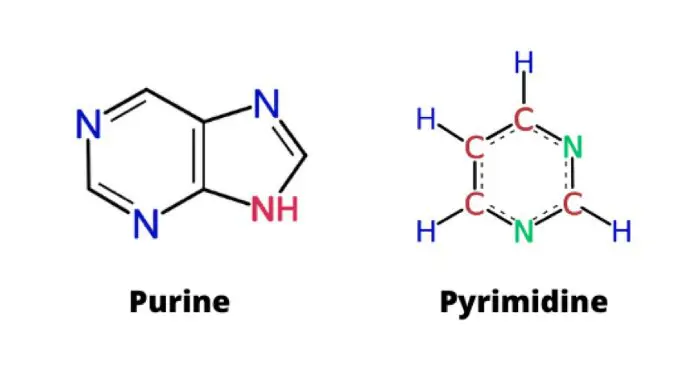
* pyrimidines: class of macromolecule that includes thymine, uracil, and cytosine
* purines: class of macromolecule that includes adenine and guanine
*
* nitrogenous base-pairs are specific (only C-G and A-T or A-U)
* adenine and thymine form 2 hydrogen bonds
* guanine and cytosine for 3 hydrogen bonds
*