Human influences on ecosystems (4.15-4.25)
There has been a great rise in productivity of land in the past years due to many factors
%%Factors contributing improved Food Production:%%
- Increased use of machinery
- Fertiliser to improve yield quality and quantity
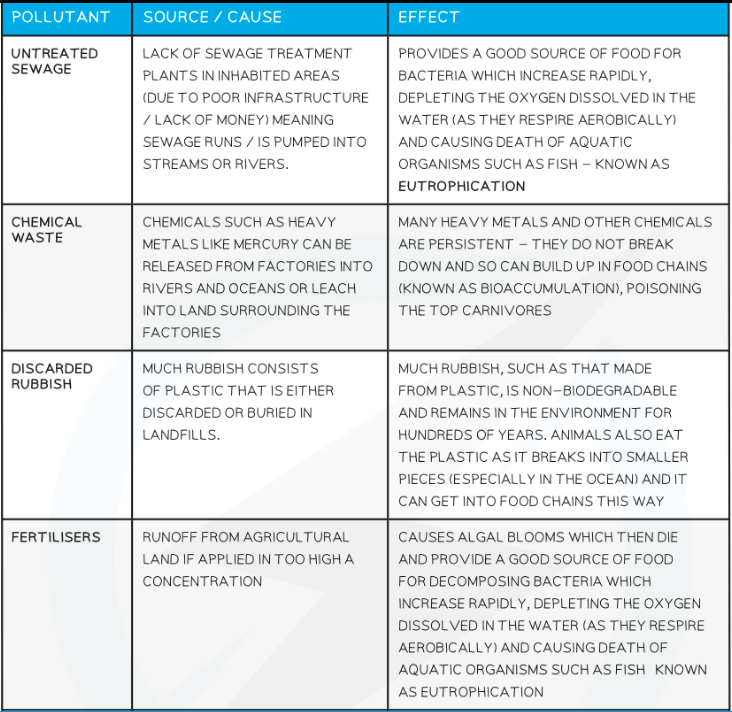
- Use of insecticides and herbicides
→Kill insects to prevent damage to crops
→Herbicides decrease the competition for resources
- Selective breeding
- Monoculture
%%Monoculture%%: on a given area of agricultural land only one type of crop is grown
| Advantages | Disadvantages |
|---|---|
| Specialised harvesting techniques; one type of machinery needed | Poor biodiversity |
| Varieties with desired characteristics can be matched to conditions | Spread of disease; Crops susceptible to the same diseases |
| Same mineral and nutrient requirements | Damages soil/ drains soil of nutrients |
| Increase in pests |
**%%Crop rotation: %%**the successive cultivation of different crops in a specified order on the same fields
- Maintains soil fertility
- Reduces build up of pests
- Reduced need for pesticides and fertilisers
%%Intensive Farming:%% Large number of livestock kept in a smaller area than needed
- Reducing the energy output/wastage the siza and yeild of livestock increases
- Animals are kept in small areas to restrict movement and reduce heat/energy loss
- Fed high energy foods to increase their mass and reduce waste
Advantages; Economic, Provides food security
Disadvantages; Faster spread of disease, Ethical concerns
%%Famine:%% Wide spread scarcity of food
Causes of Famine:
- The rapid rate of population increase
- Soil erosion and desertification
- Economic pressure/Poverty
- Unequal distribution of food
- Drought/ Flood
- War
%%Habitat Destruction%%
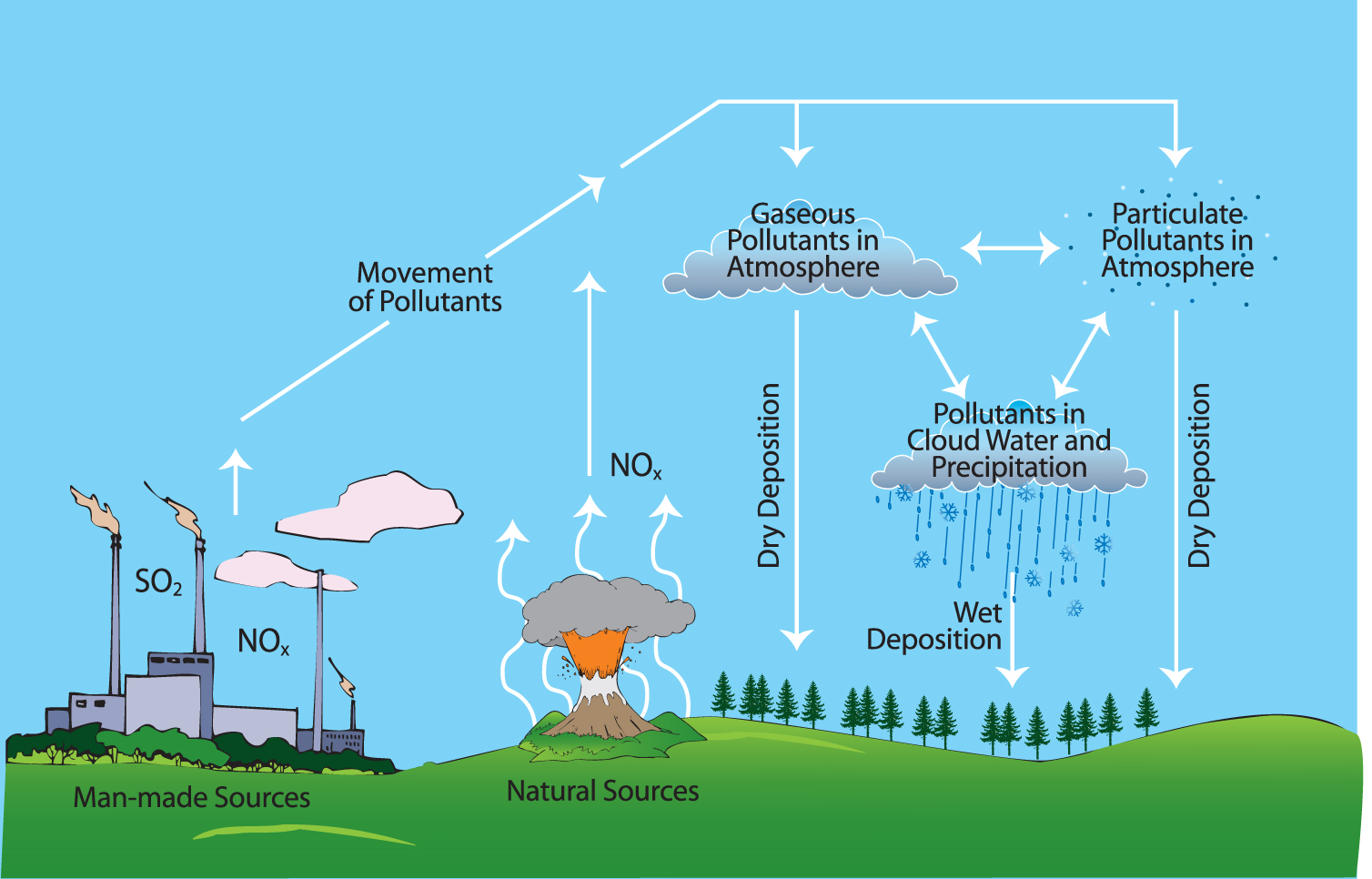
%%Acid rain:%%
- Caused by sulphur dioxide (burning fossil fuels) and nitrogen oxides (nitrogen reacting hot engines), as they dissolve and cause acid rain
- Damages trees and plants, and kills fish and other river life
→ Prevention: catalytic converters, in factories slaked lime neutralizes these acidic oxides and use of flue-gas desulfurization
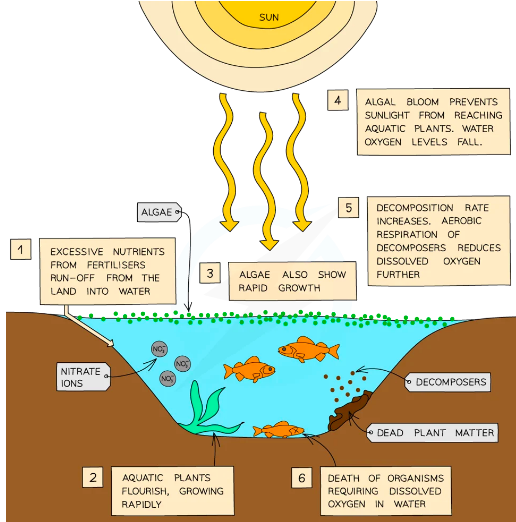
%%Eutrophication: %%
- Fertilisers put in soil by farmers
- Fertilisers with nitrates / detergents with phosphates leach into rivers and lakes after rain
- Water plants grow more than usual
- They block sunlight and kill plants underneath
- They die and sink to bottom
- Bacteria/fungi decompose remains using the O2 and decreasing the O2 concentration
- Fish and other creatures die from oxygen depletion
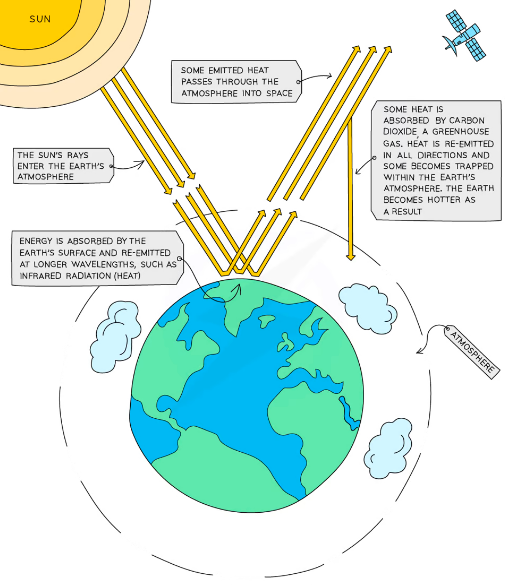
%%Global Warming:%%
- Increase in average temperature of the Earth
- Started at the same time as humans began burning fossil fuels
- Scientists believe fossil fuels are causing this – not proven yet
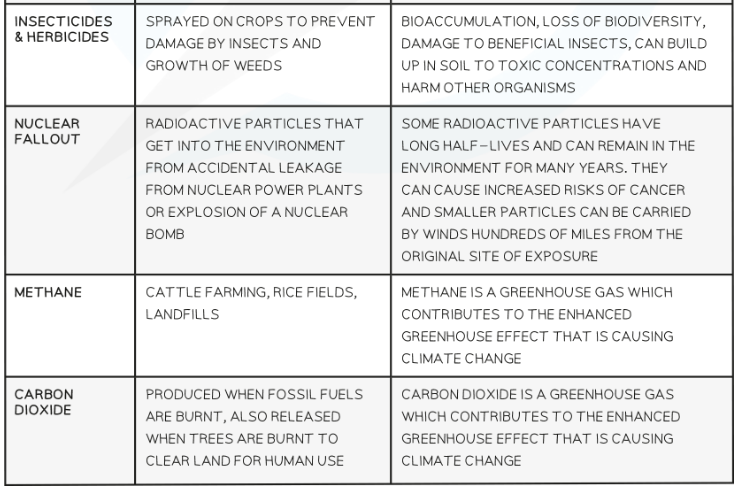
- Increase in carbon dioxide and methane concentrations in the atmosphere cause an enhanced greenhouse effect the leads to climate change
%%Negative impact of female contraceptive hormones in water courses:%%
- Reduced sperm count in men and feminisation of aquatic organisms
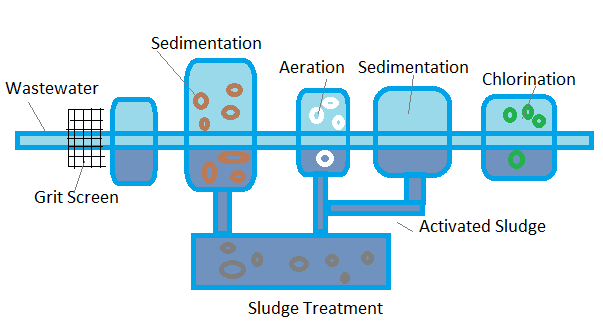
%%Sewage treatment:%%
- Large objects such as sticks are screened out
- Suspended grit is allowed to settle in the grit settling chamber’
- Organic matter is digested via the ‘sludge digester’ and allowed to settle in the ‘sludge settling tank’
- The remaining liquid goes into an aeration tank which contains stones that have microorganisms on the surface to digest other remaining organic matter
- Water passes out and may be chlorinated to kill any remaining bacteria
%%Conservation%%
%%Extinction:%% The dying out or extermination of a species. Some factors that may cause extinction are:
- Climate change
- Habitat destruction
- Hunting
- Pollution
- Introduced species
An endangered species of animal or plant that is seriously at risk of extinction
%%Conservation of Species:%%
It is important to conserve endangered species in order to prevent extinction
- Monitoring and protecting habitats
- Education
- Captive breeding programes
- Seed banks
- Conservation programmes