3. MOVEMENT INTO AND OUT OF CELL
Transport Mechanisms Overview
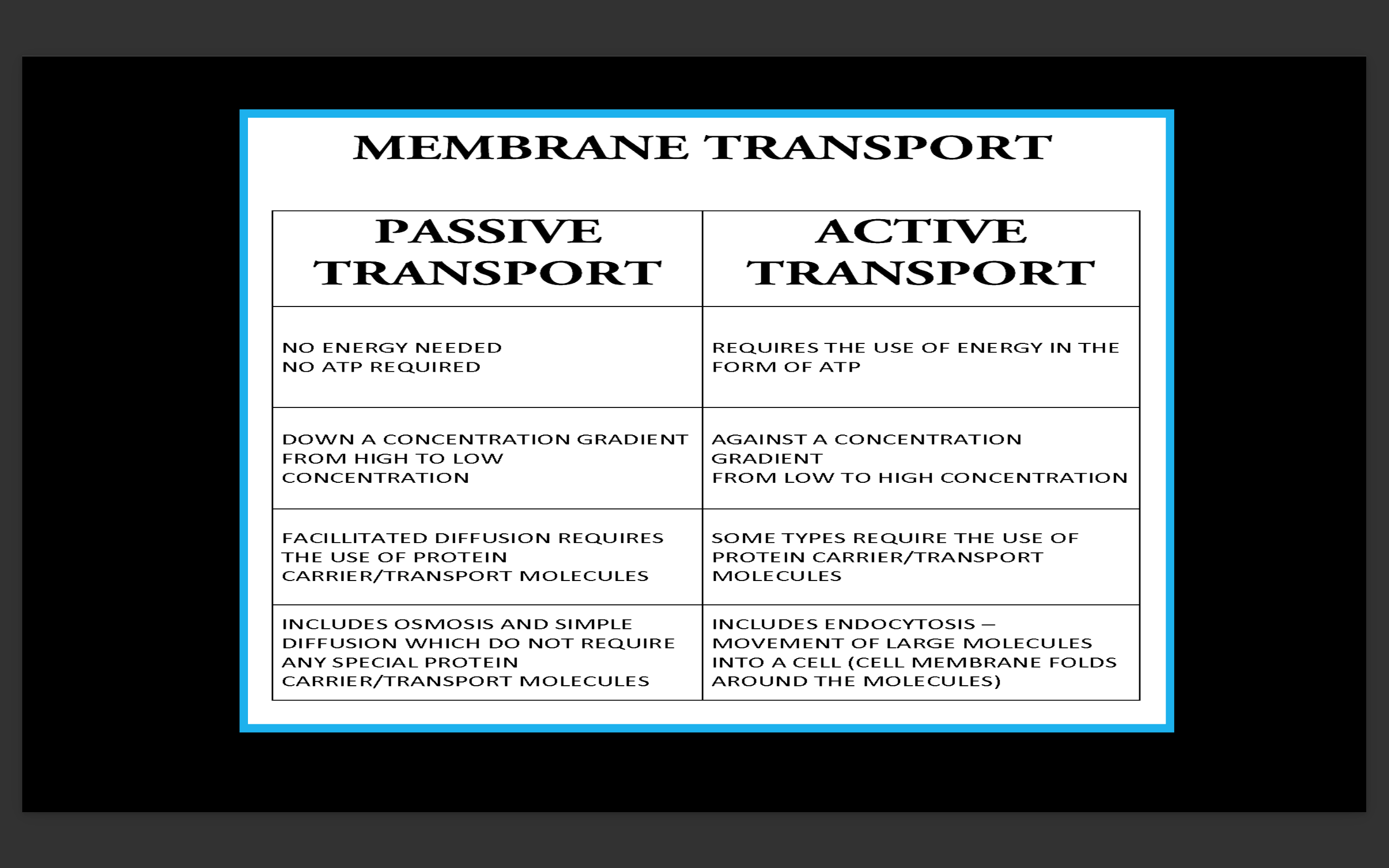
Three primary transport mechanisms:
Passive Transport
Osmosis
Active Transport
Passive Transport
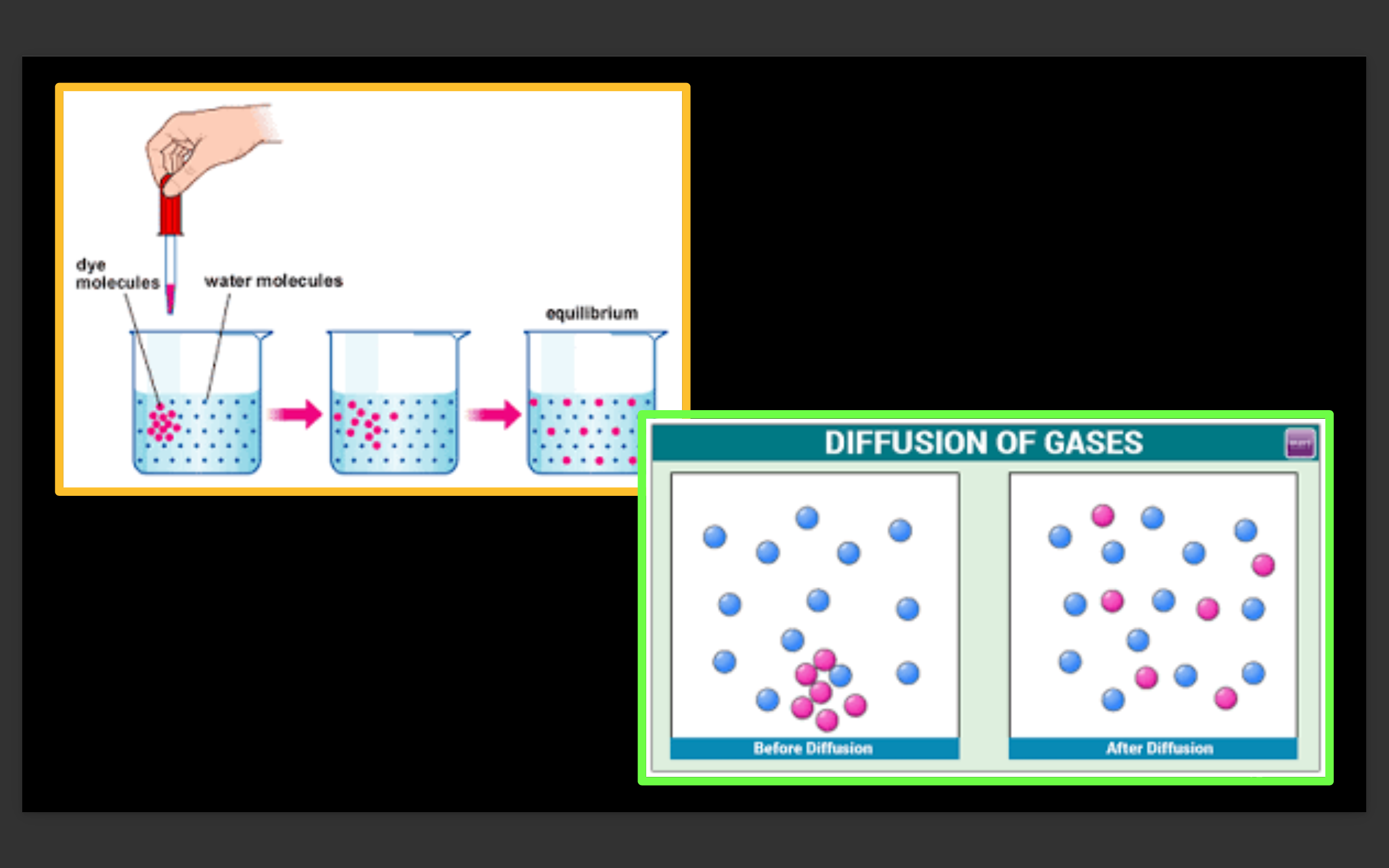
Diffusion
You can see particles moving from a high concentration to a low concentration area to achieve equilibrium (concentration is equal). This is how oxygen and carbon dioxide move in and out of cells.
Example = oxygen & carbon dioxide movement
Osmosis
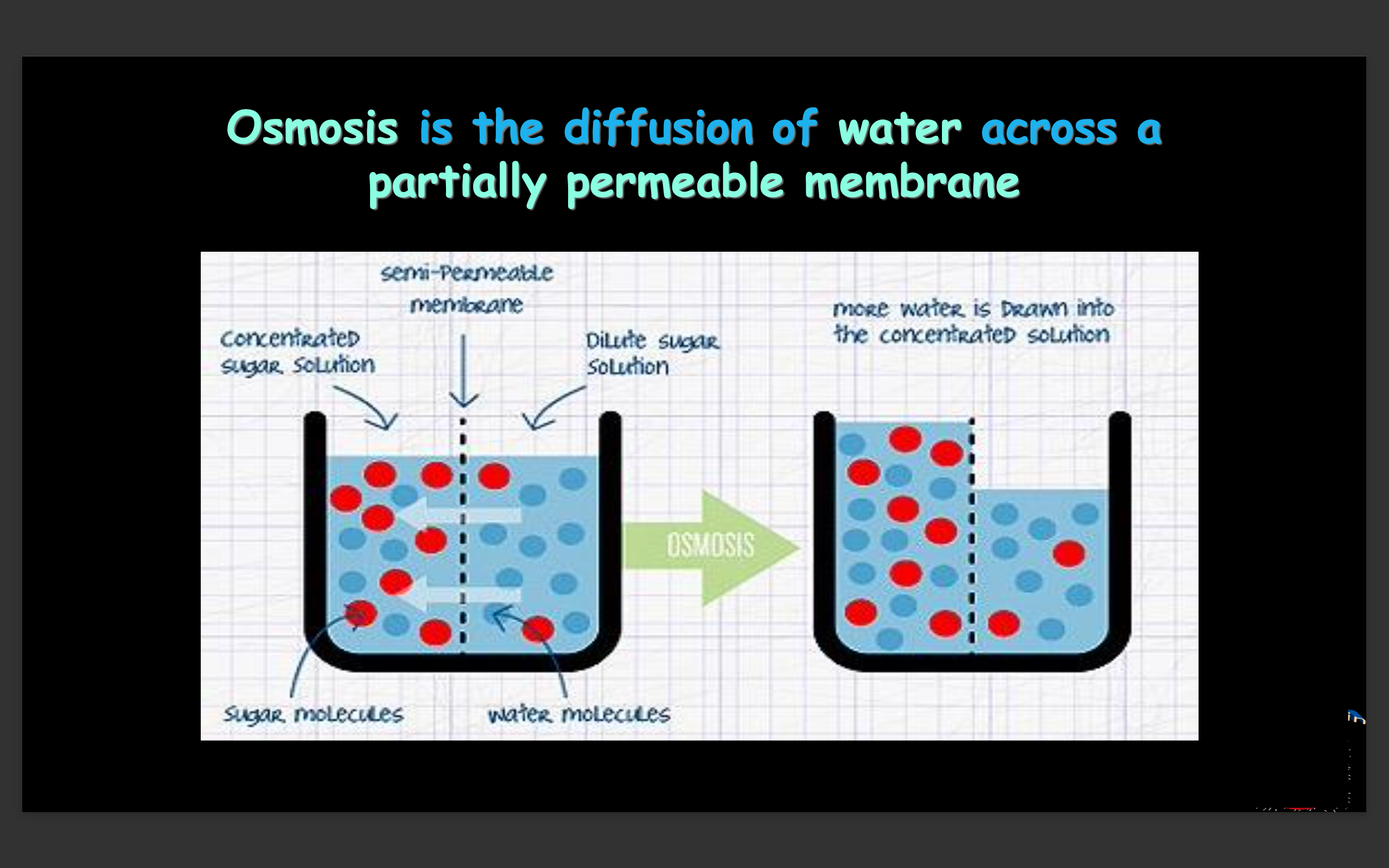
Water moving from a high water potential to a low water potential across a partially permeable membrane. Osmosis allows water particles to pass, blocks larger particles and applies to both animal and plant cells. This process affects animal and plant cells differently - animal cells can burst or shrivel, while plant cells become turgid or flaccid.
Effects of Osmosis
Animal Cells
High Water Potential
Water enters cell
Potential cell expansion/bursting
Low External Water Potential
Water exits cell
Cell shriveling possible
Plant Cells
High Water Potential
Water enters cell
Cell becomes turgid
Cell wall prevents bursting
Low Water Potential
Water exits cell
Potential plasmolysis
Plant wilting occurs
Active Transport
Active Transport is the movement of particles from a low concentration to a high concentration. Movement of molecules/ions against concentration gradient. Requires energy from cellular respiration.
Example = root hair cells & human small intestine
Active & Passive Transport