LECTURE 13: Cognitive Behavioral Therapy for Panic Disorder
overview
cognitive behavioral therapy for panic disorder
education & monitoring
introduction
learning to record panic and anxiety
negative cycles of panic and agoraphobia
panic attacks are not harmful
breathing skills
thinking skills
exposure
facing physical symptoms
facing feared activities
facing agoraphobic situations
planning for the future
medications
accomplishments, maintenance, and relapse prevention
cognitive behavioral therapy
cognitive behavioral therapies (CBT) are an intervention based on a combination of both behavioral (BT) and cognitive theories (CT)
BT: problem behaviors are learned and can be modified through the application of learning principles
CT: cognitions mediate between environmental events and behavior/emotion
aims to modify maladaptive behavioral and cognitive patterns
focus on present functioning rather than childhood history
treatment components
education and monitoring
physiological component (depending on the disorder)
cognitive component
behavioral component
relapse prevention
significant roles for
self-monitoring
homework between sessions
panic disorder
the fear of repeated panic attacks
panic attack: sudden, intense fear response accompanied by physical symptoms
common across all anxiety disorders
can be cued or uncued
CBT FOR PANIC DISORDER
education & monitoring
introduction
learning to record panic and anxiety
negative cycles of panic and agoraphobia
panic attacks are not harmful
breathing skills
thinking skills
exposure
facing physical symptoms
facing feared activities
facing agoraphobia situations
planning for the future
medications
accomplishments, maintenance, and relapse prevention
CBT FOR ALL TYPES OF ANXIETY
typically contain
education & monitoring
relaxation skills (breathing, mindfulness, PMR, etc.)
cognitive restructuring
exposure
relapse prevention
education & monitoring
introduction and learning to record panic and anxiety
daily mood record & panic attack record
first thing we do in a CBT session is review monitoring
progress report
used to track treatment progression
useful for both clinician and client
negative cycles of panic and agoraphobia
interrupting this cycle can help with new learning that physical symptoms of panic are not harmful
changing thoughts can change the results (panic attack vs. return to baseline)
psychoeducation: PANIC ATTACKS ARE NOT HARMFUL
breathing skills
education about anxiety-breathing link
over breathing
chronic hyperventilation
indicators
feeling short of breath
feeling like suffocating ]
chest pain or pressure
frequent yawning, sighing, or air gulping
breathing quickly and shallowly when frightened
physiological effects
increased oxygen in blood (but not tissue)
less oxygen to the brain
decreased carbon dioxide
leads to panic
thinking skills
thoughts ← → emotions
thoughts mediate between events and emotions
identifying thoughts
what am I afraid of?
and if that were to happen, then what?
reevaluate odds of negative outcome
targets over estimation of likelihood of negative outcomes
challenges your perspective
targets catastrophic thinking about inability to manage negative outcomes
exposure
facing physical symptoms
observe reduction in anxiety (“habituation”) with continued exposure to feared symptoms, activities, and situations
rationale
face symptoms directly so learn not harmful and can tolerate
system assessment
identify which exercises produce symptoms similar to those in panic attacks
create hierarchy
rank similar exercises according to anxiety level
practice
work way up hierarchy
facing feared activities
facing agoraphobic situations
planning for the future
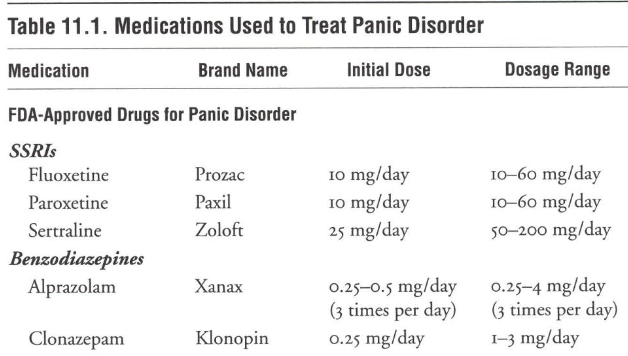
medications
accomplishments, maintenance, and relapse prevention