Attraction and Affiliation
Physical attraction
biases in “isms”
first impressions based on appearance
impressions can be formed within 100 ms, the longer this perception is held the harder it is to change
these evaluations link to all situations where we make judgements on others
Discrediting celebrities/ politicians through appearances
Personalities and Bodies
Sheldon’s somatotypes

Hu et al. (2018) - pervasive first impressions
explored the origins of spontaneous first impressions, proposing the "Trait Inference Mapping" (TIM) model, which suggests that these impressions are formed through associative mappings between facial appearance and trait representations, acquired through cultural learning and physiological responses
Pope et al (1999)
observations appear to represent a "male analog" of earlier studies examining female dolls, such as Barbie. Together, these studies of children's toys suggest that cultural expectations may contribute to body image disorders in both sexes.
Landy and Sigall (1974)
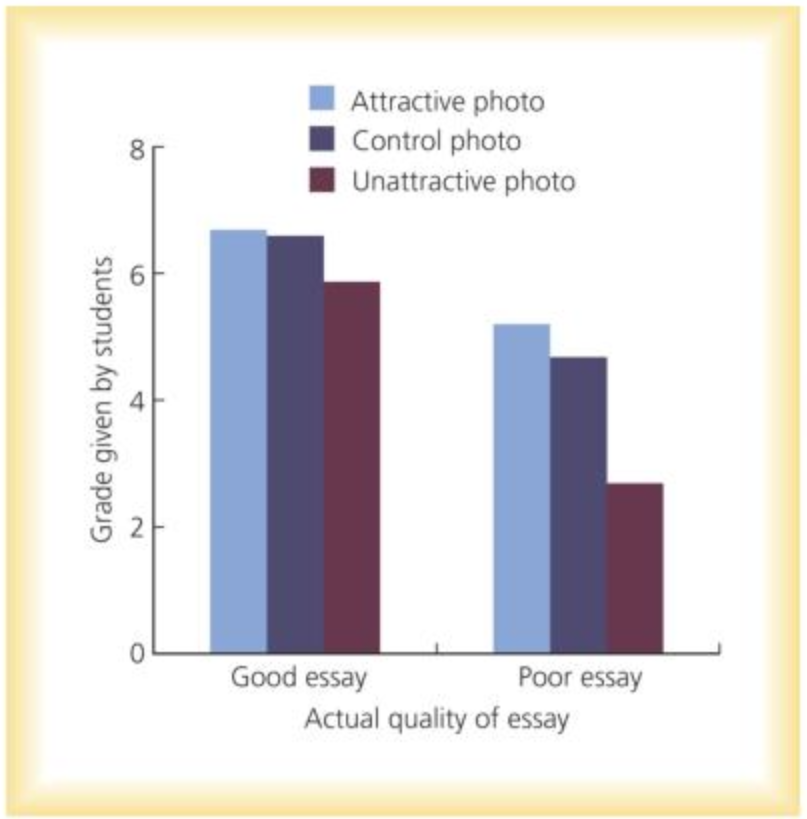
Effects of attraction on essay marks
Facial attraction
Facial symmetry
people prefer faces where the left and right side are well matched
According to evolutionary psychologists this is because it suggests good health
Average faces
typical faces
similarities to self
Attractiveness is a culture dependent ‘fashion’ (Langlois et al 2000)
Cunningham (1986)
Key Findings:
Neotenous Features (Youthful Traits) – Large eyes, small nose, and full lips were rated as highly attractive, supporting the idea that youthfulness is a key factor in attractiveness.
Mature Features – Some level of maturity (e.g., prominent cheekbones) was also seen as attractive, suggesting a balance between youthfulness and adult femininity.
Expressive Features – High eyebrows and a wide smile were associated with positive emotions and were preferred by men.
Cultural Consistency – While there were some variations, the study found cross-cultural consistency in attractiveness preferences, suggesting biological or evolutionary influences.
Rhodes (2006)
Key Findings:
Facial Symmetry – Symmetrical faces were generally rated as more attractive. This supports the idea that symmetry is a sign of genetic quality and good health.
Averageness – Faces that were closer to the population average were perceived as more attractive. Averageness is thought to indicate genetic diversity and stability.
Sexual Dimorphism – Masculine male faces and feminine female faces were often found attractive, but preferences varied based on cultural and individual differences.
Evolutionary Perspective – The findings align with evolutionary theories suggesting that attractiveness preferences may have evolved to signal reproductive fitness.
Waist hip ratio
missed slides
Evolutionary perspectives
Attraction is a tool for maximising the possibility of their genes being passed on
Females are heavy investors while males are not. Females are pickier about males, and adopt the man with resources (Chu, Hardaker and Lycett 2007)
Buss 1989, conducted a survey on 10,000 adults in 37 cultures, 33 countries
buss hypothesised and found that females want resources and men want youth.
Many studies disagree with these findings
Kramer et al (2023)
Key findings:
Attractive defendants were judged differently based on the crime type:
Less guilty for murder → Attractive individuals were perceived as less likely to commit violent crimes.
More guilty for sexual assault → In cases of sexual offenses, attractiveness increased perceived guilt, possibly due to stereotypes about charm and manipulation.
No effect for robbery → Attractiveness did not significantly influence guilt judgments for robbery.
The effects were small and uncertain, meaning while attractiveness had some impact, it was not a strong or consistent bias.
Supports the "What is Beautiful is Good" stereotype, but also shows that this bias is crime-dependent rather than universally positive.
Conclusion:
Facial attractiveness can influence legal judgments, but its effect depends on the nature of the crime. Attractive individuals may benefit from bias in some cases (e.g., violent crimes) but face harsher judgment in others (e.g., sexual offenses).
Would you like details on their methodology or implications?
Jeremy Meeks case
Perceived attractiveness from public meant he was treated very differently to other offenders
Development of friendships
similarity
reciprocity
similarity in appearance
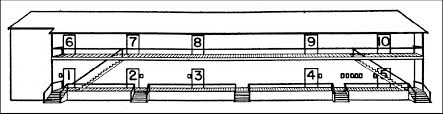
Festinger, Schachter and Back (1950)
Key Findings:
Physical proximity increases friendships – People who lived closer together (e.g., next-door neighbors) were more likely to form friendships than those who lived farther apart.
Functional distance matters – Residents near staircases or mailboxes (high-traffic areas) had more acquaintances because they encountered more people.
Mere exposure effect – Repeated contact with the same individuals increased liking and familiarity, leading to stronger social bonds.
Conclusion:
The study demonstrated that proximity and repeated interactions play a crucial role in forming social relationships. This finding has influenced research in social psychology, showing that friendships and social networks are often shaped by physical and situational factors, rather than just personal similarities.
Proximity can enhance liking
proximity allows:
Familiarity (exposure effect)
Jorgensen et al 1978: strangers’ face liked more with repeated exposure
Moreland and beach (1992):
ngl gave up at this point - look to see if the slides have been posted ever, should be lecture 14