Recovery
Recovery: the main aim of the recovery process is to restore the body to its pre-exercise state
Different aspects of recovery can occur at different rates, and recovery rate also depends on the type of activity (high-intensity, team sports or endurance)
Involves the removal of by-products and replenishing of fuels
Tools to measure recovery:
POMS (profile of mood states) - a psychological assessment tool that evaluates an individual's mood states such as tension, depression, anger, fatigue and confusion.
RESTQ-Sport (recovery-stress questionnaire) - a questionnaire designed to measure the balance between an athlete's recovery and stress. Determines whether an athlete is recovering adequately from training
SRSS (short recovery and stress scale) - a short, more practical tool assessing recovery and stress levels in athletes. Consists of a brief self-report items that measure different aspects of physical and mental stress and recovery.
Indicators of recovery:
Physiological
Symptomatic
Psychological
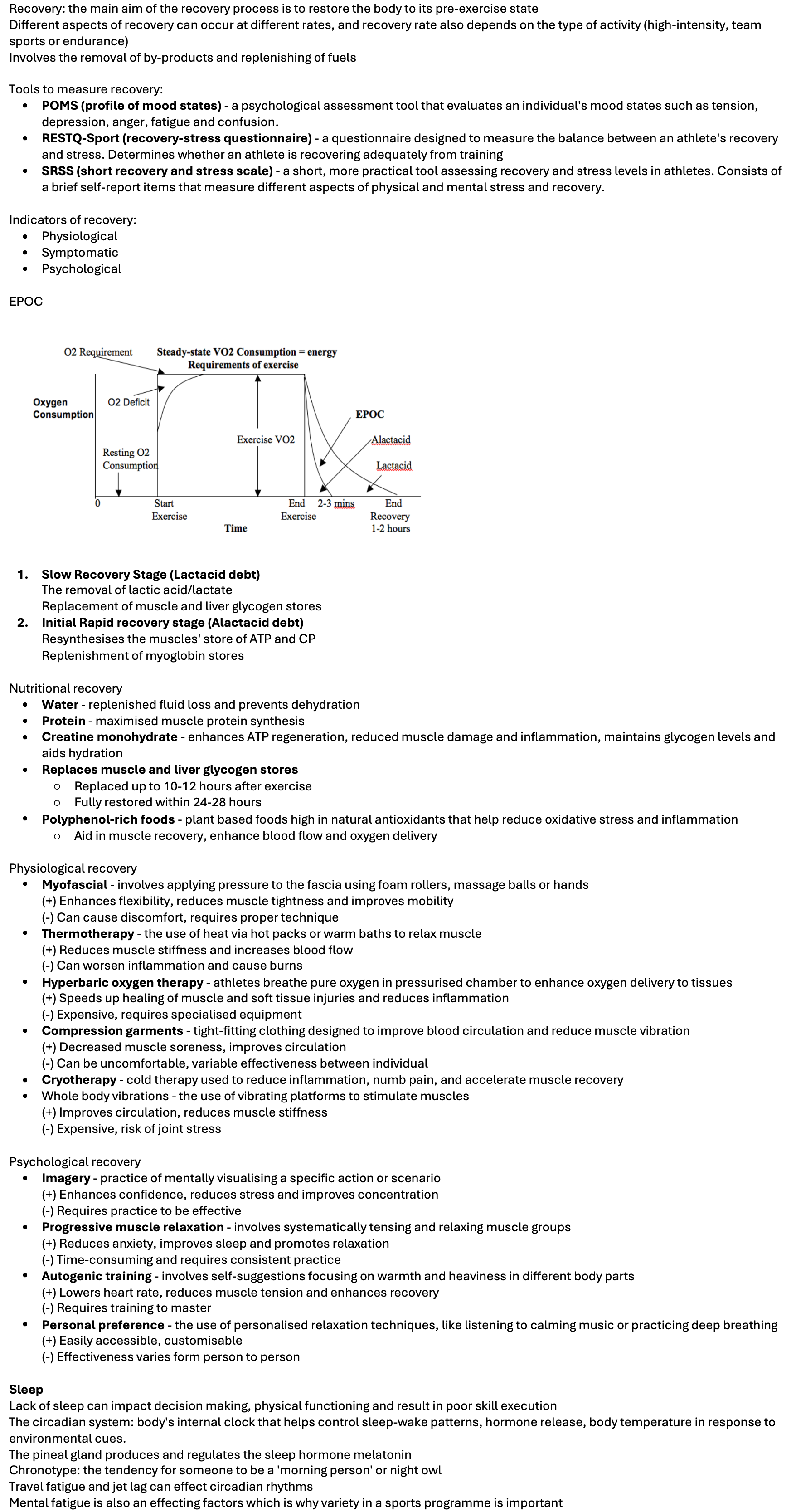
EPOC
Slow Recovery Stage (Lactacid debt)
The removal of lactic acid/lactate
Replacement of muscle and liver glycogen stores
Initial Rapid recovery stage (Alactacid debt)
Resynthesises the muscles' store of ATP and CP
Replenishment of myoglobin stores
Nutritional recovery
Water - replenished fluid loss and prevents dehydration
Protein - maximised muscle protein synthesis
Creatine monohydrate - enhances ATP regeneration, reduced muscle damage and inflammation, maintains glycogen levels and aids hydration
Replaces muscle and liver glycogen stores
Replaced up to 10-12 hours after exercise
Fully restored within 24-28 hours
Polyphenol-rich foods - plant based foods high in natural antioxidants that help reduce oxidative stress and inflammation
Aid in muscle recovery, enhance blood flow and oxygen delivery
Physiological recovery
Myofascial - involves applying pressure to the fascia using foam rollers, massage balls or hands
(+) Enhances flexibility, reduces muscle tightness and improves mobility
(-) Can cause discomfort, requires proper technique
Thermotherapy - the use of heat via hot packs or warm baths to relax muscle
(+) Reduces muscle stiffness and increases blood flow
(-) Can worsen inflammation and cause burns
Hyperbaric oxygen therapy - athletes breathe pure oxygen in pressurised chamber to enhance oxygen delivery to tissues
(+) Speeds up healing of muscle and soft tissue injuries and reduces inflammation
(-) Expensive, requires specialised equipment
Compression garments - tight-fitting clothing designed to improve blood circulation and reduce muscle vibration
(+) Decreased muscle soreness, improves circulation
(-) Can be uncomfortable, variable effectiveness between individual
Cryotherapy - cold therapy used to reduce inflammation, numb pain, and accelerate muscle recovery
Whole body vibrations - the use of vibrating platforms to stimulate muscles
(+) Improves circulation, reduces muscle stiffness
(-) Expensive, risk of joint stress
Psychological recovery
Imagery - practice of mentally visualising a specific action or scenario
(+) Enhances confidence, reduces stress and improves concentration
(-) Requires practice to be effective
Progressive muscle relaxation - involves systematically tensing and relaxing muscle groups
(+) Reduces anxiety, improves sleep and promotes relaxation
(-) Time-consuming and requires consistent practice
Autogenic training - involves self-suggestions focusing on warmth and heaviness in different body parts
(+) Lowers heart rate, reduces muscle tension and enhances recovery
(-) Requires training to master
Personal preference - the use of personalised relaxation techniques, like listening to calming music or practicing deep breathing
(+) Easily accessible, customisable
(-) Effectiveness varies form person to person
Sleep
Lack of sleep can impact decision making, physical functioning and result in poor skill execution
The circadian system: body's internal clock that helps control sleep-wake patterns, hormone release, body temperature in response to environmental cues.
The pineal gland produces and regulates the sleep hormone melatonin
Chronotype: the tendency for someone to be a 'morning person' or night owl
Travel fatigue and jet lag can effect circadian rhythms
Mental fatigue is also an effecting factors which is why variety in a sports programme is important