Macromolecules
Macromolecules are made of carbohydrates, lipids (fats), proteins, and nucleic acids. All life depends on the properties of these four classes of organic, or carbon-based, compounds. Macromolecules are responsible for the body's structure and functions, including energy storage, insulation, growth, repair, and communication.
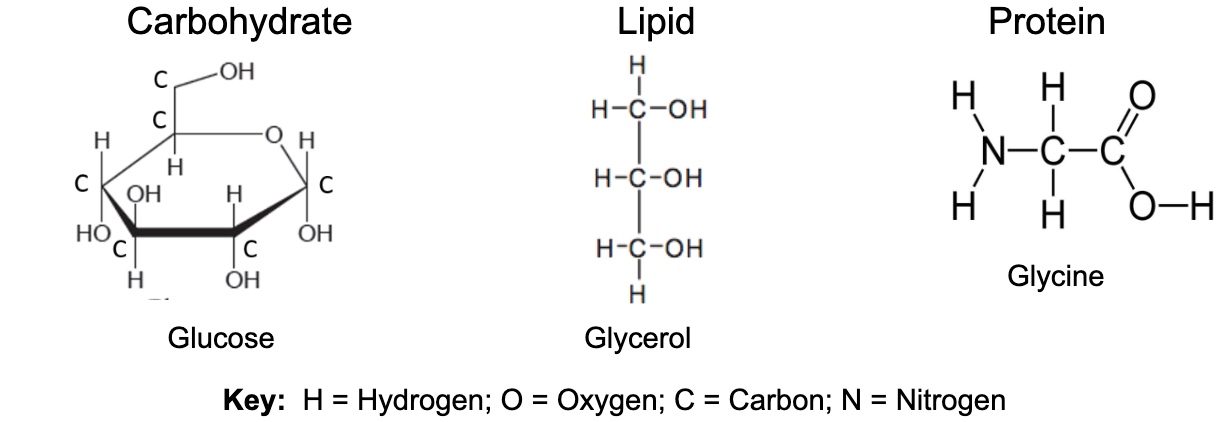
All macromolecules are made up of smaller, repeating monomer units. For carbohydrates, these units are called glucose, and for lipids, they are called glycerol. For protein, the small monomer units are called glycine.
All of the macromolecules listed are made up of the same elements; carbon, hydrogen, oxygen, and nitrogen. The main difference between these macromolecules is that they all have different structures.