module 14: population and environmental sociology
first note: climate change is real and scary. 97% of climate scientists agree with this. it’s not even worth arguing with ppl that don’t believe in climate change.
plastic in the ocean: our oceans are filling up with plastic
if we don’t change, there will be more plastic than fish in the ocean than 2050
right now each of us eats a credit cards worth of micro-plastic every week
overfishing: we’re fishing faster than fish can make babies
personal fishing is okay
corporations mass hunting fish is the problem. their nets can be as long as 7 miles and have to be controlled by drones. they have satallite to hunt schools of fish. ships are floating factories. they scoop up EVERYTHING
biological sustainable fish stock - a bunch of specific fish in a area. in 1974 90% of fish stocks were sustainable. today only 60% are sustainable.
running out of sand: we can only use a certain types of sand to make glass and concrete
sand is such a valuable research that there are sand mafia
sand is the 2nd most consumed resource after water
running out of soil:
we’ll be at cautastrophic soil loss in 60 years
soil has to be created??? created by animal poop or when plants and animals die
when you cut down trees and plants, soil isn’t held in place anymore. flood, wind, and other stuff makes soild go away and leaves bedrock
thankfully, there are ways to make food without soil. it’s planted in water in an indoor farm
running out of rare earth minerals:
used in electronics
out of rare earth minerals in the year 2050
even now some companies are mining trash dumps
running out of fresh water:
none of us can live without fresh water
we do have the ability to take salt out of water but right now only super rich countries can do it
ex: cape town was the first major global city to run out of water in 2017
why do ppl ruin the envrionment? it’s human nature. it’s not an excuse! we know that it isn’t due to ___ factor because we can look at countries without them and still have a destroyed environment. we reproduce, run out of food, starve, die, and start again.
textbook:
fracking: used to recover gas and oil which is very profitable but not good for the environment
demography: study of populations
fertility rate: measure of children born
mortality rate: measure of ppl dying
population composition: demogrpahic profile of a population
sex ration: number of men for every 100 women
population pyramid: popultion distribution by sex and age
malthusian therory: 3 factors that control human population that exceeds earth’s carrying capactity. he calls these positive checks bc they increase mortality rates. preventitive checks control population by reducing fertitlity rates.
carrying capacity: how many people can live in a given area considering the amount of available resources.
positive checks: war, famine, disease
preventitive checks: celibacy and birth control
however, humans didnt repeat the cycle bc of tech, medicine, and ontraception
zero population growth: number of people entering a population through birth or immigration is equal to the number of people leaving it via death or emigration
cornucopian theory: human ingenuity can resolve any environmental or social issues that develop
democratic transition theory: future population growth will develop along a predictable four-stage model
mortality rates are high and life expectancy is short
birth rates are high while infance mortality and the death rates drop. life expectancy increases
only occurs in a industrialized society. birth rates decline while life expectancy increases. death rates continue to decrease
postindustrial era of society. birth and death rates are low, ppl are healthier, and population stabilizes. overall population may even decline
urbanization: study of the social, political, and economic relationships in cities
suburbs: communities surrounding cities
exurbs: communities existing outside the ring of suburbs that have wealthier families that have resources to lengthen their commute.
all three combline a metropolis
white flight: migration of economically secure white people from racially mixed urban areas and towards the suburbs.
gentrification: members of the middle and upper classes enter and renovate city areas that have been historically less affluent while the poor urban underclass are forced by resulting price pressures to leave those neighborhoods for increasingly decaying portions of the city
55% of world’s ppl live in urban areas
human ecology: functionalist field of study that looks at the relationship between people and their built and natural physical environments
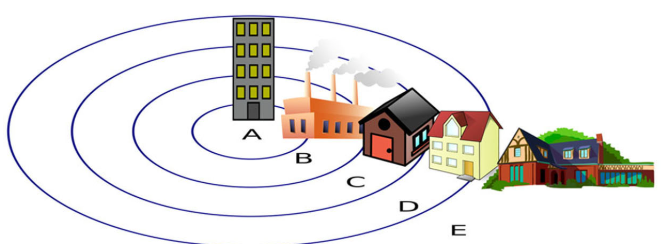
concentric zone model:
environmental sociology: studies the way humans interact with their envrionment
environmental racism: way in which minority neighborhoods are burdened with a disproportionate number of hazards, including toxic waste facilities, garbage dumps, and other sources of environmental pollution and foul odors that lower the quality of life and health