3. Population, Sample and Sampling
Population: The entire group of research interest from which a sample is drawn & to which the researcher will seek to generalise the results of the investigation
→ typically has one or more characteristics in common
Sample: A subset or part of the population that is selected for research purposes.
→ researchers attempt to generalise the results obtained from the sample as to the population from which it is drawn.
→ important that the sample accurately reflects the entire population of interest.
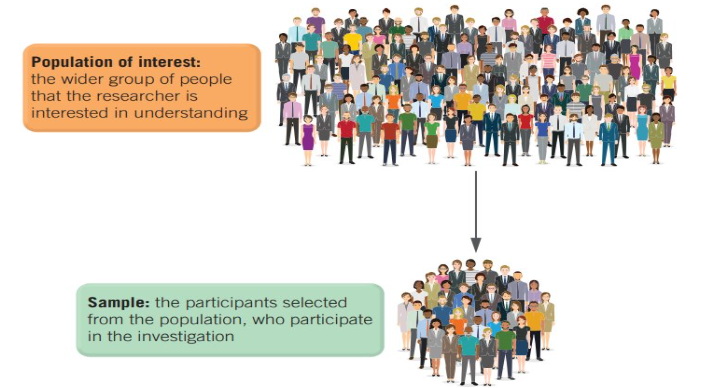
Sampling: The process by which a subset or part of the population is selected for investigation
→ Representative sample: sample that closely resembles the population which it is drawn in key characteristics
→ Biased sample: sample that does not adequately resemble the key characteristics of the population it is drawn from.
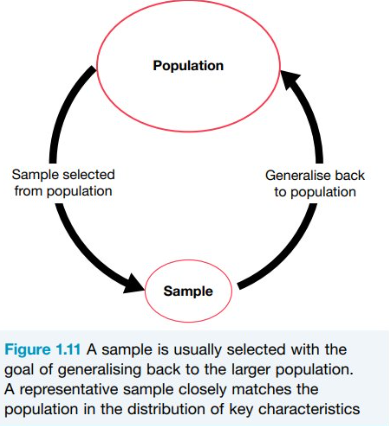
Law of large numbers: Suggests that as sample size increases, the characteristics of the sample more closely reflects with teh attributes f the population from which the sample was drawn.
Sampling techniques: (ensure quality and usefulness)
Random sampling:
Ensures every member of the population of research interest has an equal chance of being selected to be part of the sample.
$ Sample gained this way will more likely be representative of the population of interest, and participant variables will be distributed in sample in the same proportion as in population.
Adv→ Ensures highly representative sample
Lim→ Difficult, time consuming, impossible or unethical to obtain names of all members of population.
Stratified sampling
Selecting a sample from a population comprised of various subgroup, in such a way that each subgroup is represented.
Strata: subgroups
Stratum: Sample from subgroup
Sampled by the same proportions as they occur in the population of interest
Adv→
Enable researcher to sample specific groups within population for comparison purposes.
important subgroups of population are ensured fair representation
large enough stratified sample is probably representative of population, improving external validity.
eg/ diff organisations, race
Dis→
Can only be carried out if complete list of target populations are available
time-consuming and complex procedure
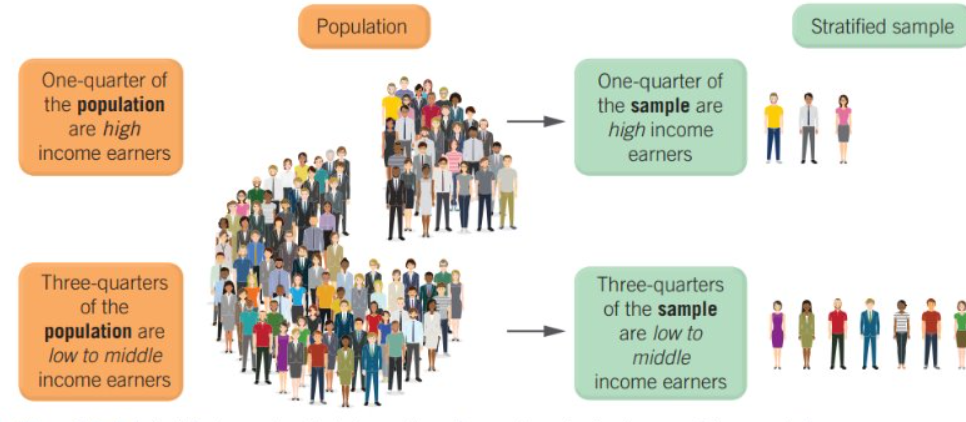
Stratified random sampling:
Identifying all people within each stratum of research interest and randomly selecting samples of a set size within each stratum
Adv→ random sampling from appropriately sized proportions of strata ensure high degree of representatives.
Lim→ time consuming, complex and difficult to achieve.
Convenience sampling: (non probability sampling)
Selecting participants who are readily or easily available
Adv→ quick and easy way of selecting participants
Lim→ produce biased sample