3.9: Social, Cognitive, & Neurological Factors in Learning
Cognitive learning: involves mental processes such as attention and memory; thoughts, perceptions, and expectations
may be learned through observation/imitation
may not involve any external rewards/require a person to perform any observable behaviors

Tolman’s Experiment:
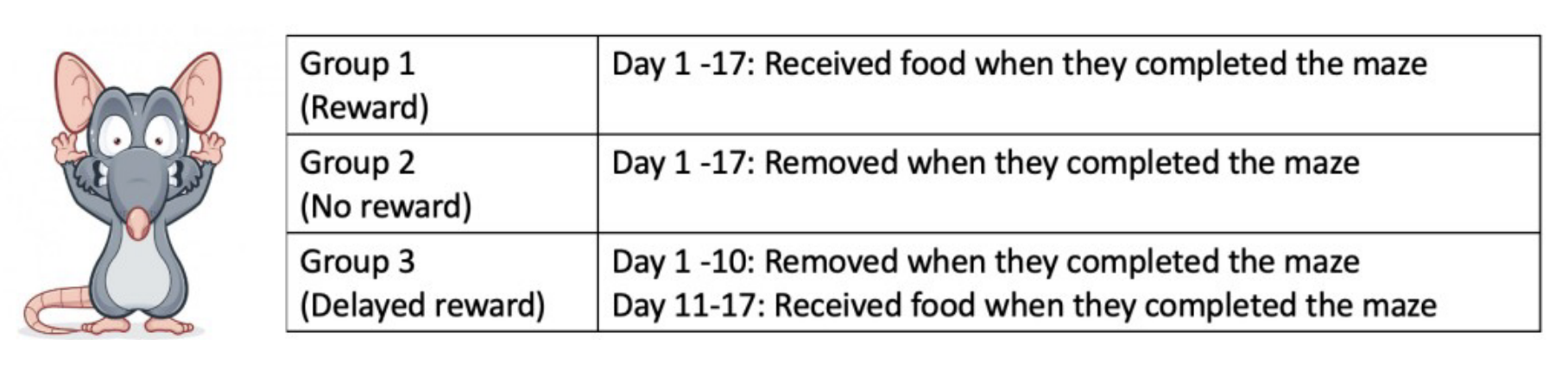
Latent learning: learning that is acquired without conscious effort, awareness, intention, or reinforcement and is not manifested as a change in performance until a specific need for it arises
learning can occur w/o reinforcement
⬇
Cognitive maps: a mental representation of a physical space
we learn spatial layouts of environment by exploration — even if not reinforced for exploring
Insight learning: learning that occurs when the solution to a problem occurs without any association, consequence, or model being presented
a sudden reorganization of perceptions
conscious
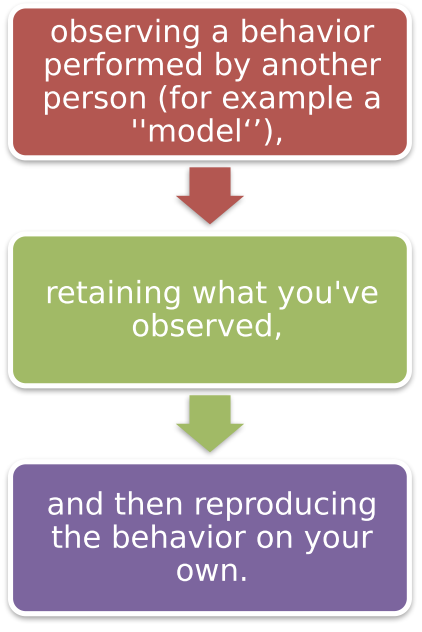
Observational learning: learning new behavior by watching a model perform that behavior and imitating it
Modeling: process of observing/imitating
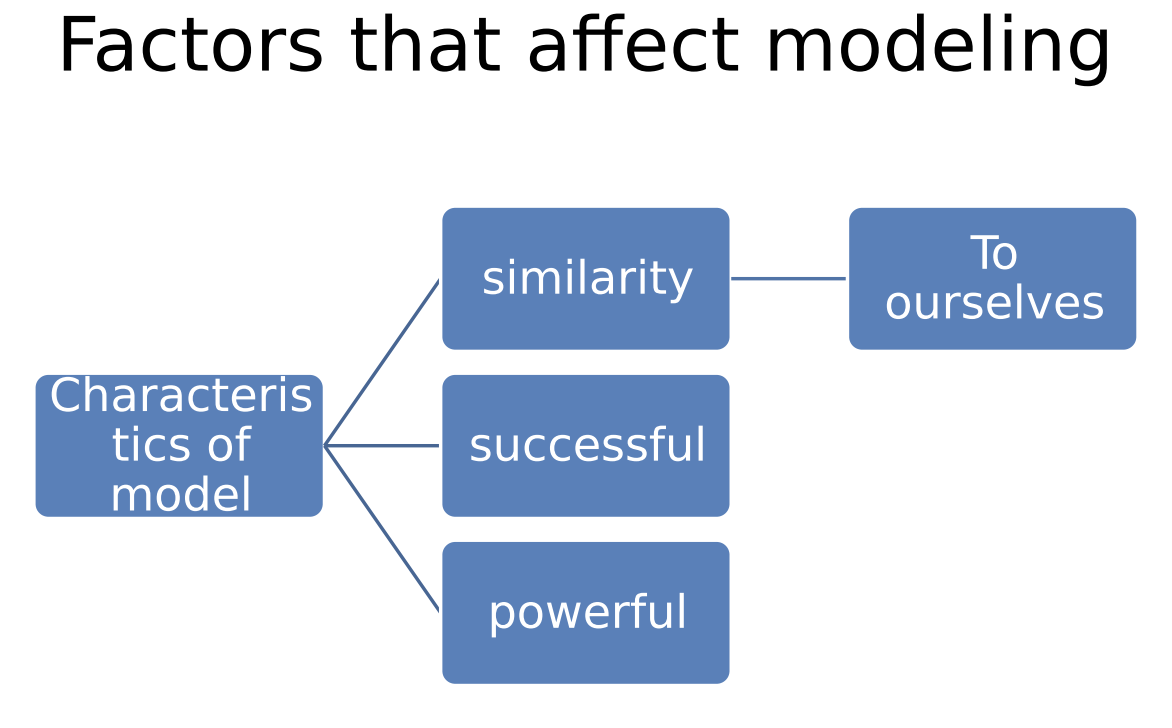
Mirror neurons: neurons that fire when an animal/person performs an action & observes that same action being performed by another
connected to observational learning and empathy
around the frontal lobes
theory of mind
*its not all actions
Prosocial behaviors: positive, constructive, helpful behavior
Antisocial behaviors: negative, destructive, harmful behavior