Food and Agriculture
Food Security:
Availability - Resource needs to be available
Access - Money, war, farming, malnutrition
Utilization - Correct balance of diet, hidden hunger (health problems)
Stability - all year around- available, food access, good diet.
Genetically Modified Organisms (GMO)
Selective breeding- Mating organisms to receive a desired trait.
Wolf to dogs, teosinte (grass) to corn.
Mutation breeding- creating new traits, radiation exposure, or adding chemicals.
Increased production, tolerance to weather, reduced seed size, and earlier maturity.
Genetic engineering (most recent) *Non-GMOS refers to this in products.
DNA (gene) from an animal added to another animal
Can take out or add a gene through the procedure
Agua advantage salmon- growth hormone was altered to increase growth rate.
CRISPR- clustered regularly interspaced short palindromic repeats
Protein holds RNA. RNA (Ribonucleic acid) is a single-stranded molecule in the body that carries many functions in living cells.
RNA matches with certain sequences of DNA.
It was approved in 2003 for medical alteration. Rid of sickle cell.
Used to alter genes
Pros:
less insecticides
Reduces footprint- less farmland
Grow medications
Pathogen resistant crops
Farmers increased profit
More food/ less poverty
Reduce malnutrition
Put important nutrients in food
Cons:
Hybridization with wild organisms
Companies may bias health study
Expensive
Larger farms benefit more
Not developed
Traditional farming: Family-owned, small amount of land, diversity of crops, relies on rain.
Industrial farming: Large corporation, large amount of land, intention is to profit, one crop per season, genetically engineered, use irrigation
Crop biodiversity: different forms of the same crop. Is decreasing. Ex. red/green tomato
Salinization: Build up salt. Irrigation systems caused the build-up of salt through the use of freshwater. The water evaporates, leaving the salt behind.
Subsidence- Land sinking. This is due to the pumping of groundwater. Air fills the gaps left by pumping.
Harbor Bosch Process: a chemical reaction that converts nitrogen and hydrogen into ammonia- a colorless, toxic liquid or gas.
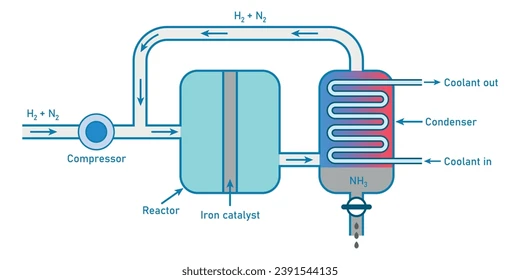
NH3 = explosive
In the soil:
Mircos- bactericas/fungal
Plants absorb through roots
Organic vs Synthetic Fertilizers:
Organic (naturall) - feeds the soil
Synthetic(man-made)- feeds the plant
Eutrophication: process that occurs when a body of water becomes enriched with nutrients, leading to an overgrowth of algae and other plant life.
Algae bloom naturally occurs. The overgrowth of algae can cover the surface of the water, blocking sunlight and killing plants at the bottom.
Dead zones- Not enough oxygen due to algae bloom, causing organism to suffucate.
Pesticides- Man-made chemicals used to kill pests.
starting to NOT work because of natural selection.
Pests are evovling, becoming immune.
Kills indiscrimilaty, wanted pests as well.
Releases more pollutants into the atmosphere.
Pesticide Atrazine- selectively control annual grasses and broadleaf weeds before they emerge.
Changes the sex of certain animals. Frogs.
Reduce birth weight
Cause birth defects
Sustainable Agriculture
Intercropping: Healthy pest communities
Pest Control: Genetically engineered, trap pests.
Limited tilling: Slit on top of soil, plant seed, then close.
Crop rotation: Soil health, pest control, minamizes weed outcome.