Colonial Society
British Patriotism
Britain prided itself on being the world’s most advanced and freest nation
Naval and commercial power
Strong representative Parliament
Common law, language, and religion
Warred with France for much of the 18th century
This combined with reliance on British manufactured goods gave colonists greater sense of national identity
Concept of liberty was central to this identity
Government in the Colonies
British adopted a policy of salutary neglect due to being preoccupied in Europe
Left colonies mostly to govern themselves
Most of power stayed with elected assemblies like the House of Burgesses
These assemblies didn’t represent everyone
Only White men who owned property were allowed to vote
Voting was restricted to specific religions in some colonies
The Enlightenment
Started with French thinkers and spread around
Sought to apply the scientific method based on research and experimentation to political and social life
John Locke and the idea of “natural rights” (life, liberty, property)
Benjamin Franklin embodied Enlightenment ideas
Many Enlightenment thinkers adopted Deism
Belief that God withdrew after creating the world, leaving it to function according to scientific laws without divine intervention
Greatly impacted the U.S.
The Great Awakening
Series of religious revivals through colonies
Led by ministers like George Whitefield
Religious leaders were concerned that colonists were becoming less devoted to Christianity
Sermons emphasized personal faith, spiritual equality, and the right to question traditional authority
“Sinners in the Hands of an Angry God” by Johnathan Edwards
Revival preachers said anyone could have a direct relationship with God
French & Indian War
Colonies were a battleground for European power struggles
Middle Ground: Borderland between the French and British empires where various native groups and colonists lived side by side
Britain and France wanted predominant control of North America + lucrative fur trade
French teamed up with native trading partners to fight the British
Also part of the Seven Years’ War
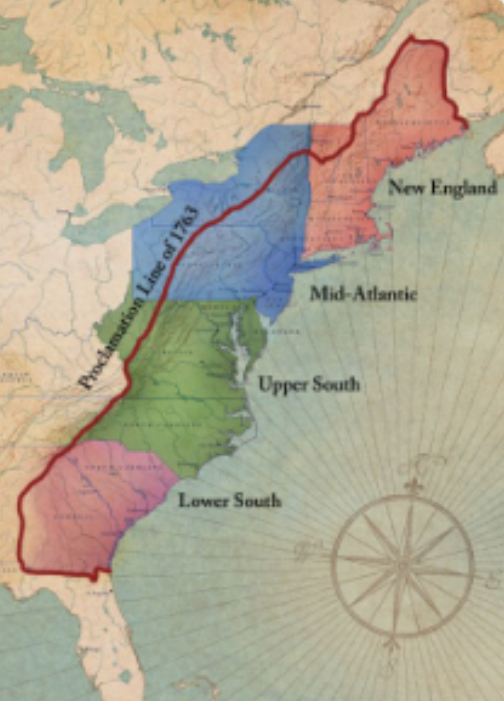
Proclamation Line
Indians of the Ohio Valley and Great Lakes launched a revolt against British rule ~1763
Called Pontiac’s Rebellion
British government issued the Proclamation of 1763
Prohibited further colonial settlement west of Appalachian Mountains
Enraged colonists, so most (included George Washington) ignored it