lecture 3: water and ocean structure
chapter 6 from the oceanography textbook
properties on seawater
how this affects the ocean structure
surface
vertical
why learn about the physical environemnet
the envirnoment shapes and constraints the biological community
and hte environemnt is constantly changing
properties of seawater
the properties of water control its physical movement throughout the ocean
seawater is salty, which will affect its physical properties
the water molecule
hydrogen and oxygen atoms are held together by covalent bonds
convalent bonds are bonds that have shared electorns
the water molecule has an angular shape → polar molecule
can separate other charged elements (e.g. salt)
easy to dissolve
water moelcules bond with each other to form a structure
what holds this structure?
the positive (H atom) is attracted to the negative end (O atom) to form a hydrogen bond
important resulting properties
cohesion → water moelcules stick together to form high surface tension
adhesion → water molecules stick to other materials
the water properties affects the movement of plankton
to plankton, water is viscous and sticky, like moving through syrup
watch video in the slide
reynolds number (look up further details on that)
cilia and flagella generate thrust, which keeps them moving through the viscous surroundings
finish watching the video
heat vs temperature
heat: how many molecules are vibrating and how rapidly they vibrate
a cup of hot water has higher heat compared to a cup of cold water
temperature: how rapidly they vibrate
a flame of a candle has a higher temperature than a cup of water
a cup of water has a higher heat compared to a flame
water has a high heat capacity
heat capacity → heat required to rais (or lower) the temperature of a substance
water has high heat capacity
water can absorb (or release) large amounts of heat while changing relatively little in temperature
more heat energy is required to break hydrogen bonds during heating
heat energy is slowly released when hydrogen bonds form during cooling
three states of water
in the same amount of space, ice has 24 H2= molecules while liquid water has 27 molecules. ice expands 9% as it forms
pure water becomes less dense as it freezes
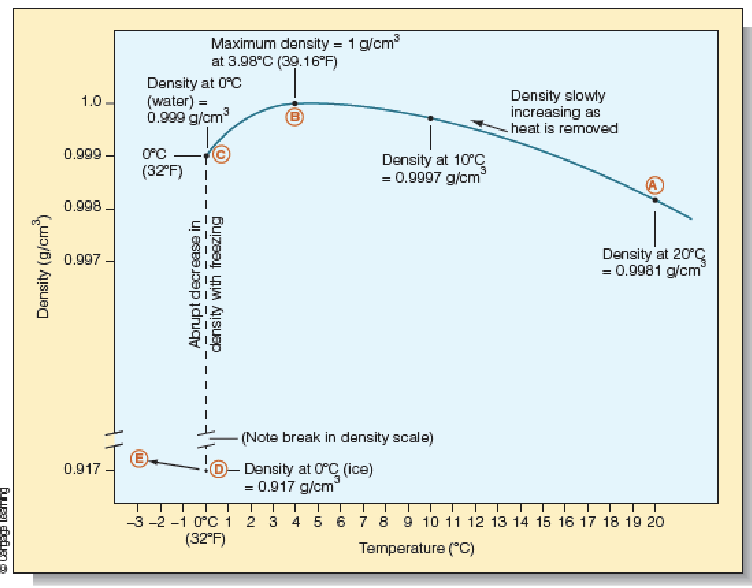
above 4 degrees, water beocmes denser aas temperature decreases; this is because the hydrogen bonds start forming, creating a more dense lattice, and more bonds
below 4 degrees, water becomes less dense as it freezes
from points C to D, heat energy is rmeoved to change the state, where hydrogen bonds are formed between all the water moelcules
heat is removed, but the temperature of the water does not change
this is called latent heat of fusion
it also happens when water changes form liquid to gas (latent heat of vaporisation), but we are not going through this
salt affects the density of water
salt lowers the freezing point of water, as it interferes with the formation of the ice lattice
salt affects ocean circulation
the oce that froms in the poles form saltwater is pure water. salts from the seawater remains in the water column, leaving behind very cold and salty water (dense water)
the ice formed will float on the ocean surface. The dense water will sink to the ocean floor
this is part of what drives teh global movment of deep ocean currents, also called thermohaline circulation
the properties of water will affect the overall structure of the ocean
surface gradients
vertical gradients
global surface temperature gradients
this can be seen in gradient maps and easy to see, where the equator is warmer than the poles
the salinity dips at the eqautor (graph in slide 20) due to to increased rainfall through out the equator
the ocean can regulate teh temperature of the earth due to its high heat capacity, and atmospheric and ocean
heat is distributed by ocean currents. more about this next lecture
why do we care about density
density control the horizontal and vertical movement of seawater
density is a function of temperature (cold = more dense), salinity (saltier = more dense) and pressure (depth) (more pressure = more dense)
complex relationship between temperature and salinity on density
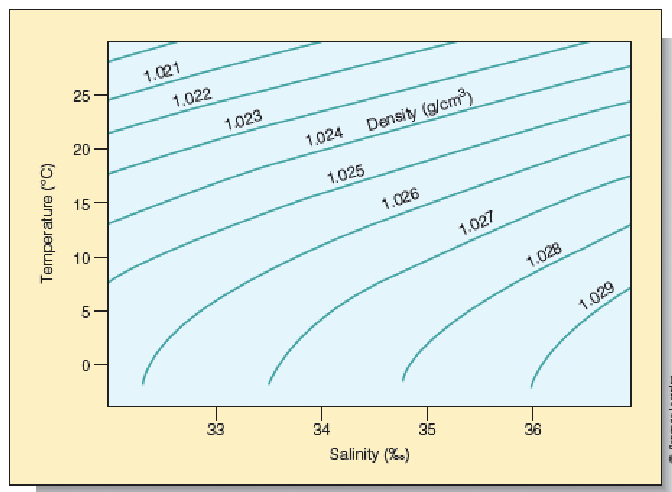
the same density of water can have different combination of temperature and salinity
density separates water masses
water masses are a volume of water with distinct density (temperature and salinity)
oceanographers use a temperature-salinity (T-S) graph to differentiate between water masses
vertical strucutre of the ocean
density shapes teh vertical strcutre of the ocean
density increases with depth
at a certain depth, there is a strong change in density, which separates the surface and deep zone. This layer is called teh pycnocline
when there are layers of water masses in the ocean separated by different densities, this is called stratification
does not always happen (more examples later)
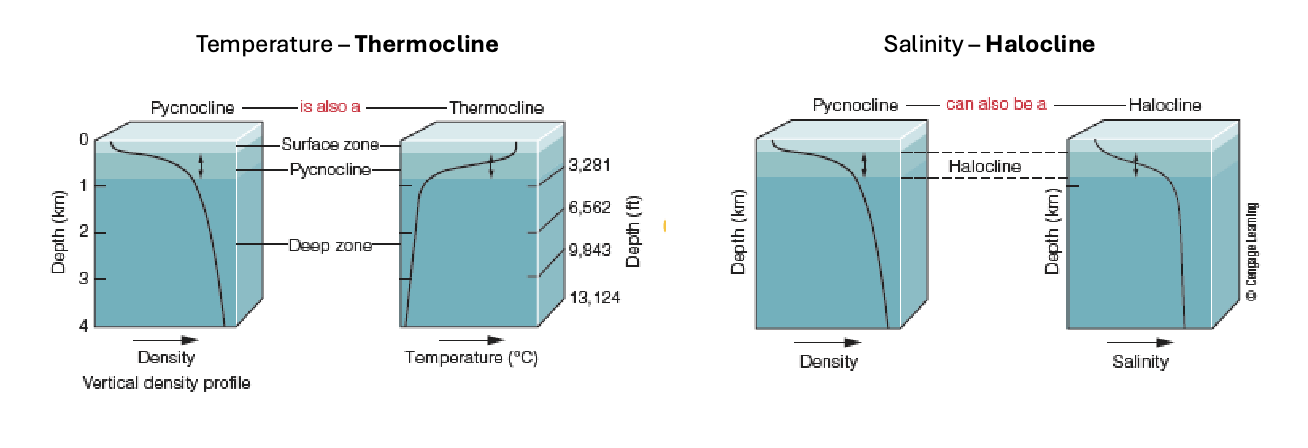
as we go deeper, teh salinty of the water increases
the sharp decrease in temperature is called a thermocline
teh sharp increase density is called pycnocline
how do we study the vertical structure of the ocean?
electronic sensor called a CTD
measures temperature and salinty with depth
can also have additional sensors for dissolved oxygen, pH light, etc.
real time vertical profiles (top to bottom) of the water mass
in a CTD rosette, there are bottles called Niskin bottles for water sampling, which can close at various depth after being programmed for it
within these pycnocline, bogger animals can easily move between these layers, however, some plankton types will not be able to move across these layers as the conditions may be too extreme (phytoplankton) and stick to the surface. zooplankton though have vertical dial migration
latitude affects stratitification
teh latitude will affect the surface ocean temperature. At mid-latitude and polar regions, there are also seasonal changes
inthe summer there is a definite strong pycnocline.
int he winter/mid latitudes, the pycnocline is more of a gradual change/more mixing between the water masses
light
why is light important?
photosynthesis
primary production
vision
ligth wavelengths are absorbed in the water
red light is absorbed first
blue light is absorbed last
light penetration in the ocean
by 200-250 meters ish, light is startig to be lost
sea level is the euphotic zone (sunlight)
where phytoplankton is able to photosynthesize
0 - 200 m
dysphotic zone (twilight)
there is light but not enough for photosynthesis to occur
200 - 1000 m
aphotic zone
sunlight is not able to reach this depth at all
1000 and more m
what can affect light availability?
in coastal zones, rain and terrestrial run off can affect ligth availability in neritic zones
in oceanic zones, maybe the latitude, so in the e equator there is constant sun, and in the poal regions, there isnt constant sun all year round
neritic x oceanic zones: light
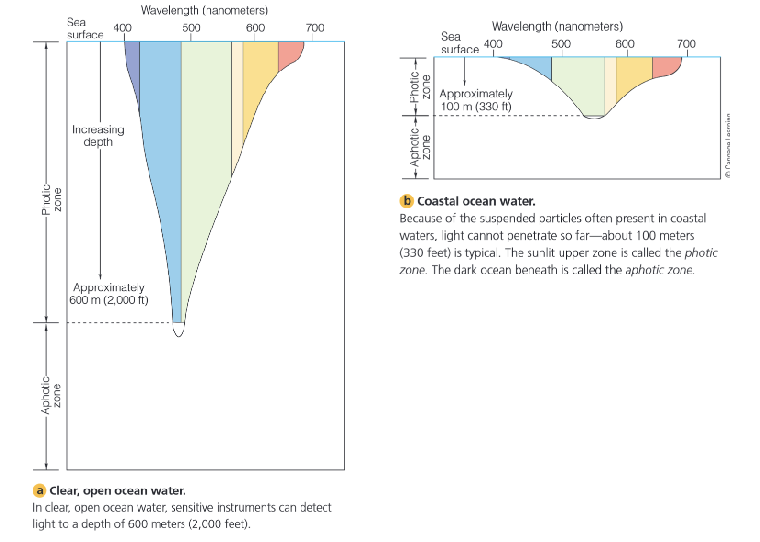
light attenuation: gradual decrease in light intensity nd irradiance as it passes through a medium
high light attenuation: rapid decrease in light
low ligth attenuation: slow decrease in light
teh open water has low light attenuation
the coastal waters have high light attenuation
what affects light attenuation?
dissolved organic matter
phytoplankton
total suspended matter (particles)
all these points above absorbs and scatters light
coastal darkening → when the water gets darker and darker
this is because of more run off (terrestrial, rain)