Section 5: puberty
Puberty: Time when animal becomes sexually capable of producing fertile gametes and exhibiting adult reproductive behavior.
Female: Usually considered first estrus
Should not be confused with REPRODUCTIVE MATURITY (sexual maturity) that point where the animals reached its maximum reproductive potential
Ex. Conception rates increased if heifers are bred on second estrus rather than first.
Gilts ovulate more at the second and third estrus than first.
Ewe lambs have a shorter breeding season than mature ewes and ovulate less.
Male: Appearance of enough sperm in ejaculate to impregnate females
Again fertility will continue to increase as male ages and sperm production will increase for sometime after puberty.
Ex. Young males in a pasture mating system should be given fewer females to breed than mature males.
Species | Average age at puberty |
Sheep | 5-9 months |
Pigs | 3-7 months |
Cattle | 10-20 months |
Horses | 15-24 months |
Age at puberty is influenced by several factors.
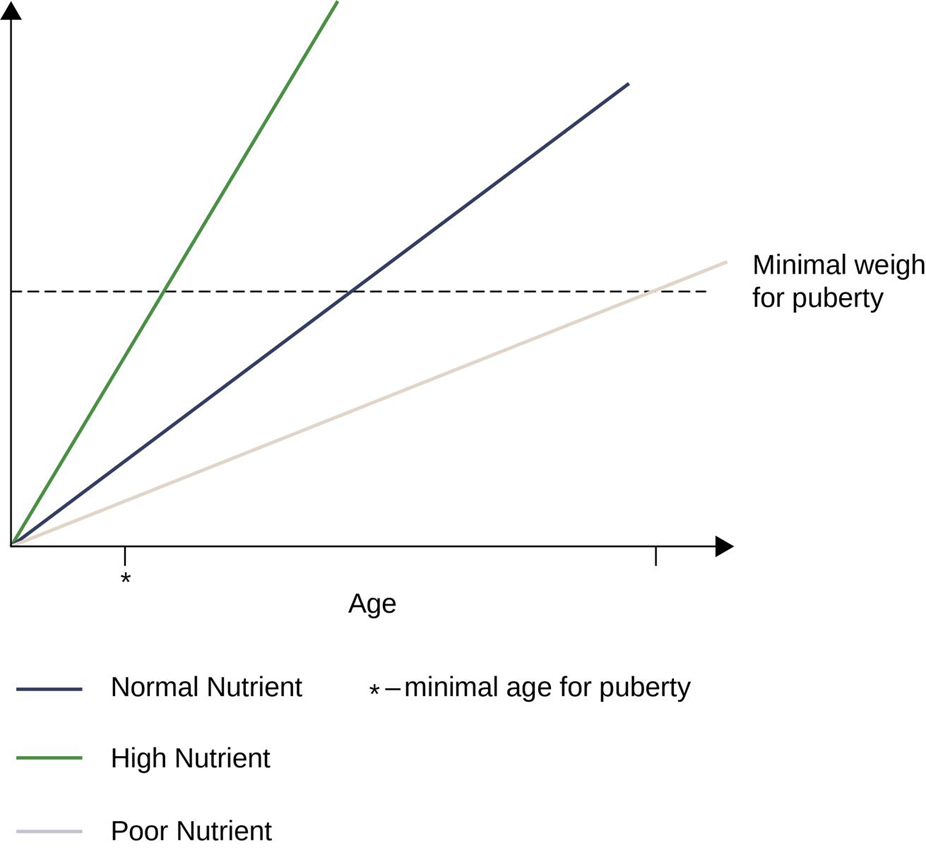
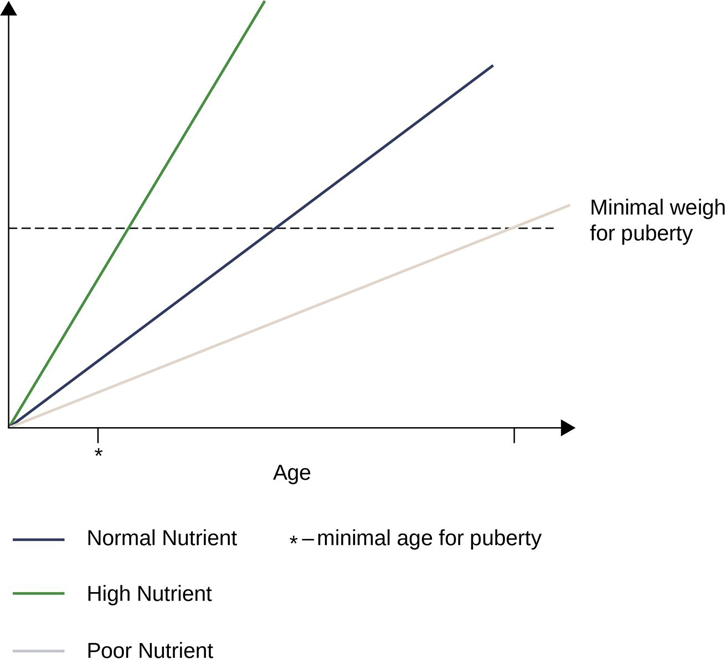
Body weight must be sufficent for puberty to occur even if age is reached.
Inadequate nutrition will delay puberty.
Breed can influence age and size at puberty.
Dairy heifers reach puberty at younger age(11-12 months) and a lower % of adult weight(35%) than beef heifers(14-15 months and 45-55% weight).
Brahma based breeds reach puberty later than Bos taurus breeds.
In sheep Romanovs are younger and smaller at puberty.
In pigs a Chinese breed called Meishan reaches puberty at less than half the age of Western breeds.
Decreasing age at puberty is profitable to producers because animals can start returning investment earlier and total lifetime production will be increased.
Selection for decreased age at puberty can be made. The heritability of age at puberty is much higher than other reproductive traits
A useful marker for age at puberty is scrotal circumference.
Sires with large scrotal circumference tend to have progeny with decreased age at puberty.
Larger scrotal circumference indicates higher LH and FSH secretion which induces puberty in males and females.
Puberty occurs because of increased LH and FSH secretion stimulates the gonads to increase activity.
In prepubertal animals gonadotropin secretion is very low especially LH.
LH is more sensitive to the negative feedback of steroids before puberty than after.
In males the decreasing inhibition of LH by testosterone allows LH secretion to increase. LH increases testosterone.
Testosterone Effects:
Increases sperm production.
Stimulates accessory sex gland growth.
Increases male sexual behavior.
Produces male secondary sex characteristics.
FSH secretion also increases in males around puberty. This stimulates Sertoli cell function.
Takes several weeks from time of testosterone increase until fertile sperm are present in ejaculate.
In females estrogen has a powerful negative effect on LH before puberty. As puberty approaches this effect weakens and LH increases.
The increased LH allows follicles to develop to larger stages and produce more estrogen.
Higher estrogen levels eventually start the positve feedback effect and produce a LH surge.
This LH surge causes an ovulation but no estrus occurs because the animal has not seen progesterone before.
At the second ovulation the female will show estrus and be considered pubertal.
Other factors influencing age at puberty.
Environmental Effects on Puberty
Heat stress will delay puberty in heifers.
Confinement raised gilts reach puberty at much older ages and heavier weights than those raised outdoors.
Seasonal breeding species must reach the proper size during the right season or else puberty will be delayed.
Fall born lambs do not reach puberty until about 1 year old.
By the time fall born lambs reach the right size and weight it is spring.
Sheep are short day breeders and the increasing daylength will inhibit LH secretion until the next fall.
Research has shown ewe lambs need to see a period of long days followed by short days to reach puberty.
Presence of intact adult males can decrease age at puberty.
Boar exposure often used to induce earlier puberty in gilts (about 160 days of age).
Ram exposure can induce puberty in ewe lambs.
These effects on prepubertal females due to exposure to adult males are caused by pheromones.
Pheromone: chemical substance used to communicate between members of the same species
Pheromones given off at estrus are detected by males.
Detected by Vomeronasal organ in roof of mouth.
The only pheromone isolated from farm species is the one given off by boars.
It is unknown if exposure to females will affect age at puberty in males.
Effects of nutrition
Poor nutrition can delay puberty by inhibiting LH secretion.
Body weight is more important than age in determining when puberty occurs.
minimal age must be reached but small body size may delay puberty
Poor nutrition will delay puberty in males similar to females.
After puberty male reproductive performance less affected by nutrition than females.
Follow the energy
Energy Used for
growth
maintenance
storage
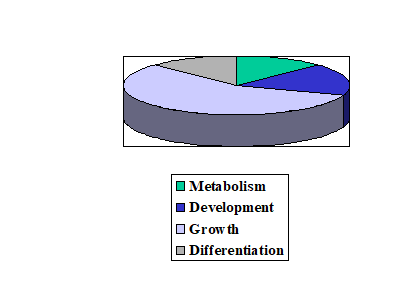
Energy Utilization