Chapter 33 notes part 3 Page 1857-1871
Caring for Hospitalized Adolescents
Adolescents may or may not express fears due to various factors such as their developmental stage, previous experiences with healthcare, or cultural norms. It is important to create a safe and trusting environment where adolescents feel comfortable expressing their concerns.
Educate adolescents honestly, tailoring explanations to their cognitive level to ensure they understand their condition and treatment plan:
Younger adolescents: Provide concrete explanations using simple language and visual aids.
Older adolescents: Use abstract concepts, encouraging them to ask questions and participate in decision-making.
Respect their need for privacy by providing private rooms and ensuring confidentiality when discussing sensitive issues. Always knock before entering their room and respect their personal space.
Encourage visits from friends to minimize separation anxiety and maintain social connections. Facilitate virtual visits if in-person visits are not possible.
Prepare a mutually agreeable schedule that includes their preferences while incorporating required nursing care. This collaboration provides them with increased control over their daily routine and promotes cooperation.
Refer to Table 33.2 for additional nursing considerations, which provides specific guidelines for addressing the unique needs of hospitalized adolescents.
Providing Basic Care for Hospitalized Children
Basic care includes general hygiene, oral care, and nutritional care, all essential for maintaining the child's overall health and well-being during hospitalization.
Young children depend on adults for self-care due to their limited physical and cognitive abilities. Nurses and parents must work together to meet their needs.
If parents are present, allow them to provide care to decrease the child's stress and promote a sense of normalcy. Encourage parental involvement in all aspects of care.
Older children may perform hygiene measures themselves with some assistance. Provide supervision and guidance as needed, promoting independence and self-esteem.
General Hygiene Measures
Maintain healthy skin, hair, and teeth through regular hygiene practices. Good hygiene prevents infection and promotes comfort.
The skin's primary function is to protect underlying tissues from injury and infection. Maintaining skin integrity is crucial for preventing complications.
Skin injury may occur during:
IV line insertion and maintenance: Use proper techniques to minimize trauma to the skin.
Dressing removal: Gently remove dressings to avoid skin tears.
Positioning in bed: Reposition frequently to prevent pressure ulcers.
Diaper changes: Keep the skin clean and dry to prevent diaper rash.
Electrode patch use and removal: Use skin-friendly adhesives and remove patches carefully.
Maintaining restraints: Ensure restraints are properly padded and monitored to prevent skin breakdown.
Risk factors for skin problems include impaired mobility, protein malnutrition, edema, incontinence, sensory loss, anemia, and infection. Identify and address these risk factors to prevent skin breakdown.
Assess the skin during bath time for any signs of redness, irritation, or breakdown. Early detection can prevent more serious complications.
Bathing
Bathing is a common daily hygiene measure that removes dirt, sweat, and bacteria from the skin.
Nurses ensure bathing is done safely and hygienically, following established protocols and guidelines.
Adhere to safety principles to prevent falls, burns, and aspiration of water during bathing. Never leave the child unattended.
Never leave a child alone in a bathtub due to the risk of drowning.
Use gentle, pH-balanced soap with moisturizer if there is a need to rehydrate the skin. Avoid harsh soaps that can dry out the skin.
Note any conditions requiring special considerations:
Paralysis: Use assistive devices and techniques to prevent skin breakdown.
Loss of sensation: Monitor closely for signs of skin injury due to inability to feel pain.
Surgical incisions: Keep incisions clean and dry to prevent infection.
Skin traction/cast: Ensure proper alignment and padding to prevent skin breakdown.
External lines (IV lines, urinary catheters, feeding tubes): Keep insertion sites clean and dry to prevent infection.
Alterations in skin integrity: Use appropriate wound care products and techniques.
Pay attention to ears, skin folds, neck, back, and genital area for skin integrity, as these areas are prone to moisture and friction.
See Table 33.5 for developmental considerations:
Infants: Use sponge or tub baths for those unable to sit unaided; support the infant's body, ensure appropriate water temperature, and avoid talcum powder, which can cause respiratory irritation.
Toddlers: Bathe at the bedside or in a regular bathtub, depending on their health condition. Provide toys and distractions to make bath time more enjoyable.
School-age children/adolescents: May prefer a shower if safe and available; provide privacy and encourage independence.
Assess family preferences and home practices for hygiene, such as time of day, rituals, special equipment, and allergies. Incorporate these preferences into the plan of care.
Assess the amount of assistance parents might require and address learning needs. Provide education and support to empower parents to care for their child.
Follow general guidelines for bathing any patient regarding equipment, room temperature, privacy, and products like deodorant and lotion. Ensure all supplies are readily available and the environment is safe and comfortable.
Providing Hair Care
Lying in bed can cause hair to become matted and tangled, leading to discomfort and potential skin irritation.
Avoid pulling the child's hair when combing or brushing. Use gentle strokes and patience.
Use commercial detangling solutions if necessary to loosen knots and tangles.
Washing is often done during the daily bath for infants. Use a mild shampoo and rinse thoroughly.
Typically, shampooing once or twice a week is sufficient for younger children to maintain cleanliness without drying out the hair.
Adolescents may need more frequent shampooing due to increased sebaceous gland secretion, which can lead to oily hair.
The frequency of shampooing also varies based on the child's condition (e.g., diaphoresis). Children who sweat excessively may require more frequent shampooing.
Shampooing may be done at the bedside with adapted equipment, at a sink, or in a tub or shower, depending on the child's mobility and condition.
Commercial no-rinse shampoos may be available for children who are unable to tolerate traditional shampooing methods.
Monitor the child's safety when using a tub or shower to prevent slips, falls, or burns. Provide supervision and assistance as needed.
Consider the child's ethnicity for hair care; for example, children of African descent may use a broad-toothed comb and specialized hair products to maintain healthy hair.
Ask parents to bring preferred products from home to ensure the child is comfortable and familiar with the products being used.
Encourage parents to help with braiding or plaiting to maintain the child's cultural identity and promote bonding.
Providing Oral Hygiene
Oral hygiene is an important part of basic care, preventing dental problems and promoting overall health.
Wipe the infant's gums with a wet cloth after each feeding to remove milk residue and prevent the buildup of bacteria.
Assist children in brushing and flossing their teeth after each feeding or meal and before bedtime to maintain good oral hygiene.
Provide special attention to oral hygiene for immunosuppressed children, who are at higher risk for oral infections:
Use soft toothbrushes and moistened gauze sponges to prevent bleeding and trauma to the gums.
Inspect the oral cavity for breakdown, such as sores or lesions, and report any abnormalities to the healthcare provider.
Nutrition
Adequate nutrition is necessary for growth, development, and tissue repair. Nutritional needs vary based on age, activity level, and medical condition. Infants require frequent feedings and specific nutrients for brain development, while older children need a balanced diet to support growth spurts and energy levels.
Hospitalized children may experience a loss of appetite, affecting nutritional status. Factors contributing to decreased appetite include pain, stress, medication side effects, and changes in the hospital environment. Monitoring food intake and identifying the underlying causes of poor appetite are crucial.
This can be compounded by nausea, vomiting, and NPO restrictions. Nausea and vomiting can result from medications, treatments, or anxiety. NPO (nothing by mouth) orders may be necessary before or after certain procedures, limiting nutritional intake. Consider antiemetics to manage nausea and alternative routes of nutrition when NPO orders are prolonged.
The hospitalized child may adopt feeding habits that do not fit their age or stage of development. Regression to earlier feeding behaviors, such as refusing solid foods or wanting only pureed textures, can occur. Understanding the reasons behind these changes and providing appropriate support is important.
Readoption of these feeding habits should be accommodated when possible. Flexibility in meal choices and routines can help children feel more comfortable and in control, promoting better nutritional intake.
Clinical Reasoning Alert: Relieve pain and nausea before meals are served. Effective pain and nausea management can significantly improve a child's appetite and ability to eat.
Providing Nutritional Care
Schedule procedures or treatments away from mealtimes if possible. Minimizing disruptions during meal times can reduce stress and improve a child's willingness to eat.
Refusing to eat may be related to separation anxiety or a child's attempt to control the situation. Addressing emotional needs can positively impact a child's eating habits. Provide reassurance, involve parents in meal times, and offer choices to increase their sense of control.
Encourage gentle persuasion instead of force to assist with intake; force can lead to food aversion. Coercing a child to eat can create negative associations with food, leading to long-term feeding problems. Use positive reinforcement and create a pleasant eating environment.
Give the child choices about what to eat to reinforce their sense of control. Offering a variety of healthy options and allowing children to select their preferences can increase their willingness to eat.
Remind parents that the child's appetite will probably improve as their condition improves. Reassure parents that fluctuations in appetite are normal during illness and recovery. Focus on providing nutrient-rich foods and fluids, and monitor for signs of dehydration or malnutrition.
Teaching Guidelines 33.2 provides tips for promoting nutrition in the hospitalized child:
Check for diet restrictions and if intake and output are being monitored. Understanding dietary limitations and monitoring fluid balance are essential for safe and effective nutritional care.
Encourage the child to eat their favorite foods. Familiar foods can provide comfort and increase a child's appetite.
Assist with eating or drinking as necessary and be present to promote socialization. Providing assistance and creating a social atmosphere during meals can improve intake.
Offer small amounts of fluid and finger foods frequently instead of large quantities at one time. Frequent, small offerings can be easier for children to manage, especially if they have a reduced appetite or nausea.
Offer fluids at different temperatures for variety. Varying the temperature of fluids can make them more appealing.
Remember that children can ingest greater amounts of thin liquids than thicker liquids. Thin liquids are generally easier to swallow and tolerate.
Include ice chips as fluid intake, noting that 1 cup of ice equals a half-cup of water. Ice chips can be a refreshing way to increase fluid intake.
Use straws and brightly colored utensils. Making meal times more visually appealing can stimulate appetite.
Offer the child choices from the menu. Giving children options empowers them and increases the likelihood they will eat.
Talk with the dietitian to address any special preferences. A dietitian can provide tailored recommendations and address specific nutritional needs.
Offer praise for what they eat or drink. Positive reinforcement encourages better eating habits.
Never punish the child for not eating or drinking. Punishment can create negative associations with food and exacerbate feeding problems.
Encourage older children to help keep track of what they eat and drink. Engaging older children in tracking their intake can promote awareness and responsibility.
Providing Play, Activities, and Recreation for Hospitalized Children
Play is an important component of the child's plan of care. Play provides emotional support, reduces anxiety, and promotes normal development during hospitalization. Different types of play include unstructured play, therapeutic play, and play as part of nursing care.
Many facilities have playrooms with age-appropriate toys and activities; some have separate areas for adolescents. Playrooms offer a safe and stimulating environment for children to engage in play. Separate areas for adolescents cater to their unique developmental needs.
Take Note: Avoid using the term "playroom" for older school-age children and adolescents; use "activity room" or "social room." Using age-appropriate terminology respects the developmental stage of older children and adolescents.
Some children may not be able to use these facilities due to activity restrictions or isolation. Children with certain medical conditions may have limitations on their activities. Isolation precautions may prevent children from accessing communal play areas.
Ensure opportunities for unstructured play are provided to all children who can engage in play. Unstructured play allows children to explore their creativity, develop social skills, and cope with stress.
Therapeutic play may be used to teach children about their health status or to allow them to work through issues in their lives. Therapeutic play utilizes play activities to address emotional and psychological needs related to illness and hospitalization.
Take Note: Keep the bed or crib and playroom as "safe" places. Perform invasive procedures in the treatment room, if possible. Never perform any nursing interventions in the playroom, no matter how nonthreatening they may appear to the nurse. Maintaining safe zones helps children feel secure and reduces anxiety associated with medical procedures.
The nurse's greatest ally in the hospital in relation to atraumatic care is the CLS (Child Life Specialist). Child Life Specialists are trained professionals who use play, education, and support to minimize the stress and anxiety of hospitalization for children and their families.
They not only prepare the child for procedures but also provide activities and events to encourage play and normal growth and development. CLS professionals play a critical role in promoting atraumatic care by preparing children for medical procedures, providing emotional support, and facilitating play and recreational activities.
Providing Unstructured Play
Encourage unstructured play as it allows children to control events, ideas, and relationships. Unstructured play allows children to make choices, express themselves, and develop social skills.
Encourage parents to bring small toys and stuffed animals from home. Familiar items from home can provide comfort and security during hospitalization.
Children also enjoy receiving small new toys as surprises. New toys can provide a distraction from the stress of hospitalization and offer opportunities for play and creativity.
Many children enjoy diversional activities such as board games, electronic games, reading, and watching TV. Diversional activities can help children relax, reduce anxiety, and pass the time during hospitalization.
Quiet activities appropriate to the child's developmental level provide the opportunity for play and encourage the use and development of fine motor skills even if the child is confined to bed. Activities like coloring, puzzles, and building blocks can promote fine motor skills and cognitive development while accommodating activity restrictions.
Infants and toddlers enjoy manipulating blocks and playing with stacking toys. These activities support sensory exploration, hand-eye coordination, and problem-solving skills.
Preschoolers may enjoy coloring, dollhouses, or playing with plastic building blocks such as Legos. These activities promote creativity, imagination, and fine motor skills.
School-age children and adolescents may enjoy playing video games, putting together a puzzle, or building a model geared toward their developmental level. These activities provide entertainment, cognitive stimulation, and a sense of accomplishment.
Play as Part of Nursing Care
Use play as appropriate while providing routine nursing care. Integrating play into nursing care can make procedures less stressful and more engaging for children.
Examples:
To increase range of motion in a school-age child in traction, have the child throw a soft sponge ball or beanbag ball into a hoop and compete against the child. This activity makes therapy fun and motivating, while also improving physical function.
To increase deep breathing, encourage the child to blow bubbles or blow a whistle. Deep breathing exercises can improve respiratory function and prevent complications like pneumonia.
To increase intake of fluids, help the child create a graph to chart the number of glasses of fluids they drink over a period of time. Visual tracking can help children monitor their progress and stay motivated to drink fluids.
Award the child a sticker, baseball card, special pencil, or other small item if they reach a certain level. Positive reinforcement can encourage children to participate in their care and achieve their goals.
When using play as part of nursing care, it is important to evaluate the outcome of play; play used in the manner described previously should enhance the child's outcome. Evaluating the effectiveness of play interventions ensures that they are beneficial and contribute to positive patient outcomes.
For example, for the child blowing bubbles, determine whether this activity enhanced coughing and deep breathing. Assessing whether the bubble-blowing activity improved coughing and deep breathing helps determine if the intervention was effective in promoting respiratory function.
Therapeutic Play
Therapeutic play is nondirected and focuses on helping the child cope with feelings and fears. It allows children to express emotions and work through anxieties in a safe and controlled environment.
Health care professionals use therapeutic play to help the child deal with the physical and psychological challenges of illness and hospitalization. This approach recognizes that hospitalization can be a traumatic experience for children and aims to mitigate its negative effects.
Supervised play with medical equipment in the hospital environment can help children work through their feelings about what has happened to them. Allowing children to interact with medical tools in a playful manner can reduce fear and increase understanding.
In a large hospital or a children's hospital, the CLS typically coordinates these activities. The Child Life Specialist is trained to facilitate therapeutic play sessions tailored to the child's needs.
Goals include maintaining normal living patterns, minimizing psychological trauma, and promoting optimal development of the child. Therapeutic play aims to support the child's overall well-being during hospitalization.
If a CLS is not available, the nurse provides this type of activity. Nurses can incorporate therapeutic play techniques into their care to address the child's emotional needs.
There is a greater emphasis on the developmental and psychosocial implications of illness and hospitalization and validation of the child's voice. Therapeutic play recognizes the importance of acknowledging the child's feelings and experiences.
In emotional outlet play or traumatic play, the child acts out or dramatizes real-life stressors. This type of play allows children to process difficult emotions and experiences in a non-threatening way.
For example, using a wooden hammer and pegs, a soft sponge ball, or boxing gloves can allow the child to express anger over separation from family and friends. These activities provide a physical outlet for pent-up emotions.
Commercial toys such as anatomically correct dolls and puppets have removable parts so children can see various organs of the body. These tools can help children understand their bodies and medical conditions in a concrete way.
Sometimes, younger children “talk” to puppets and dolls, allowing them to express their feelings to a nonthreatening “person” about a specific situation or what they want from the health care provider. Puppets and dolls can serve as intermediaries, allowing children to communicate their needs and feelings more easily.
For example, the Shadow Buddies dolls mentioned earlier in the chapter provide a way of coping with a specific condition. These dolls are designed to resemble children with specific medical conditions, providing a sense of normalcy and support.
The company creates an ostomy buddy who has a stoma, a cancer buddy with thinning hair and a chest catheter for chemotherapy treatments, and a heart buddy who has a chest incision and a repaired heart (Shadow Buddies Foundation, n.d.). These dolls help children cope with the physical and emotional challenges of their conditions.
Other types of therapeutic play include drawing and supervised "needle play."
Drawing is a way for the child to express their thoughts and feelings. Art therapy can be a powerful tool for processing emotions and experiences.
Supervised "needle play" assists children who must undergo frequent blood work, injections, or intravenous procedures. Allowing children to practice medical procedures on dolls can reduce anxiety and increase understanding.
A doll can receive an injection as the child works out their anger and anxiety. This allows the child to be in control and express their feelings about medical procedures.
Keep in mind safety and the child's growth and development level before planning this type of directed play; an adult must always be present. Safety is paramount, and activities should be tailored to the child's developmental stage.
Promoting School Work and Education During Hospitalization
Promote school work while the child is in the hospital. Maintaining a connection to school can provide a sense of normalcy and routine during hospitalization.
Determine the amount of school work that can be done by assessing the child's condition, the availability of teachers, and the family situation. The child's medical condition and available resources will influence their ability to participate in school work.
Many children's hospitals have teachers; there may be classrooms too. These resources provide structured educational support for hospitalized children.
These teachers work closely with the child's school to continue school work as the child's condition permits. Collaboration between hospital teachers and the child's school ensures continuity of education.
Hospitals without an educational staff will rely on parents to coordinate with the child's school. Parents may need to advocate for their child's educational needs and coordinate with school staff.
Parents may bring in schoolbooks and the child's homework for completion while in the hospital. Providing familiar school materials can help the child feel connected to their normal routine.
This connection to the child's school helps maintain normalcy for the child and minimizes the disruption of everyday life. Maintaining a sense of normalcy can reduce anxiety and promote well-being.
Nurses and other health care providers, such as social workers, should help facilitate this process. Health care professionals can play a supportive role in ensuring the child's educational needs are met.
Family Members' Needs
Many factors may influence the family's reaction to the child's hospitalization. Hospitalization can be a stressful experience for families, and various factors can influence their response.
Parents or caregivers and siblings experience many emotions when a child is hospitalized, including disbelief, anger, guilt, fear, anxiety, frustration, and depression. These emotions are normal reactions to the stress of hospitalization.
Visiting restrictions, unexpected changes in the child's health status, lack of information or understanding of their child's condition, and difficulty accessing support may further exacerbate these feelings, making it essential for healthcare professionals to address the concerns of families and provide appropriate resources.
Important questions that will affect how siblings deal with the hospitalization of the child include:
Was the admission an emergency?
Emergency admissions can be particularly jarring for siblings, who may experience heightened anxiety due to the sudden and unexpected nature of the event. Understanding the circumstances surrounding the admission can help tailor support for siblings.
Were there previous admissions, and how did the siblings perceive those hospitalizations?
Prior experiences shape perceptions. If previous hospitalizations were perceived negatively, siblings might exhibit increased anxiety or resentment. Conversely, positive past experiences could foster resilience and understanding. Assess these perceptions to address any lingering concerns.
How serious is the illness or trauma?
Siblings need age-appropriate information about the severity of the child's condition. Transparency, balanced with sensitivity, helps them process the situation accurately and reduces the likelihood of misinformation fueling their fears.
Is the prognosis known?
Sharing the prognosis, when available, allows siblings to prepare emotionally for potential outcomes. If the prognosis is uncertain, acknowledge the ambiguity while emphasizing ongoing care and support.
Addressing Parents' Needs
Assess the factors that may influence the family's reaction to the child's hospitalization and plan the care of the child to accommodate some of these issues.
Factors such as cultural background, socioeconomic status, and family dynamics can significantly impact how families cope with hospitalization. Tailoring care plans to address these factors enhances the family's ability to support the child.
Encourage families to have support systems in place before, during, and after hospitalization.
Strong support networks—including extended family, friends, and community resources—provide emotional and practical assistance during challenging times. Facilitate connections with these networks to alleviate parental stress.
Help parents and caregivers to work through their feelings in order to decrease anxiety, thus decreasing the child's anxiety level.
Parental anxiety can directly affect a child's emotional state. Provide counseling, support groups, and relaxation techniques to help parents manage their emotions effectively.
The philosophy of family-centered care places the family at the core of care; the family is the primary and continuing provider of care for the child.
Family-centered care recognizes the family's expertise in understanding the child's needs. Involve families in decision-making, care planning, and daily care routines to empower them and enhance the child's well-being.
Practice family-centered care, which addresses the child's and family's needs and preferences, and increases the child's and parents' satisfaction with the health care setting (American Academy of Pediatrics, Committee on Hospital Care, Institute for Patient and Family-Centered Care, 2012, reaffirmed 2018).
Implement policies and practices that support family involvement and shared decision-making. Regularly evaluate family satisfaction to identify areas for improvement.
Encourage parents to room-in with the child throughout the hospital stay, if possible.
Rooming-in promotes bonding, reduces separation anxiety, and allows parents to participate actively in their child's care. Provide comfortable accommodations and necessary amenities to facilitate rooming-in.
Facilities can be designed to welcome family participation; For example, having charging ports, internet, and printers or scanners available and providing extra meals and beds for the parents can encourage parents to participate in care.
Consider the physical environment's impact on family well-being. Design spaces that are welcoming, functional, and conducive to family interaction and relaxation.
View the parents as vital members of the health care team and partners in the care of the child who is ill.
Recognize and respect parental expertise. Foster collaborative relationships built on trust, open communication, and shared goals.
Addressing Siblings' Needs
Address the siblings' possible feelings of guilt.
Siblings may feel guilty about their sibling's illness, wondering if they could have prevented it or if they are somehow responsible. Provide reassurance, normalize their feelings, and offer opportunities for open communication.
Use educational materials, allow time for visits, send photographs back and forth between siblings, and allow siblings to talk on the phone.
Tailor interventions to meet siblings' developmental needs. Educational materials can clarify medical information, while visits, photos, and phone calls maintain connections and reduce feelings of isolation.
Child and Family Teaching
Not all experiences with hospitalization are negative; in fact, the experience may enhance the child's and family's coping skills, bolster self-esteem, and provide new socialization experiences.
Highlight potential positive outcomes to instill hope and resilience. Acknowledge the challenges while emphasizing opportunities for growth and development.
It may allow the child to master self-care skills and provides an opportunity for the child and family to learn new information.
Encourage active participation in self-care activities to promote independence and self-efficacy. Provide educational resources tailored to the child's and family's learning styles.
Parents may learn more about their child's growth and development skills as well as additional parenting or caregiving skills, resulting in improved parenting abilities.
Offer parenting education and support groups to enhance caregiving skills and promote positive parent-child interactions.
In addition, the child's overall health may be improved because of the hospital stay if the child receives current immunizations and the parents learn more about health care practices.
Utilize hospitalization as an opportunity to address preventive care needs, such as vaccinations and health screenings. Educate families about evidence-based health practices to promote long-term well-being.
The overall goals of child and family teaching are to minimize the child's and family's stress, educate them about treatment and nursing care in the hospital, and ensure the family can provide appropriate care at home on discharge.
Emphasize the importance of education in empowering families to manage their child's health effectively. Tailor teaching strategies to meet individual learning needs and preferences.
Providing support before, during, and after hospitalization may minimize stress.
Implement comprehensive support programs that extend from pre-admission to post-discharge. Continuity of care ensures families feel supported throughout the continuum of care.
Preadmission programs can introduce the child and family to the setting.
Preadmission tours, informational sessions, and welcome packets familiarize families with the hospital environment and procedures. This reduces anxiety and promotes a sense of control.
During the hospital stay, forming partnerships with the child and family, using strategies to promote coping, and providing appropriate preparation for procedures, tests, and surgery serve to decrease stress.
Foster collaborative relationships built on trust, open communication, and shared decision-making. Employ strategies such as distraction, relaxation techniques, and age-appropriate explanations to minimize stress during medical interventions.
Educating the Child and Family
Assess the child's and family's knowledge of the illness and hospital experience.
This provides a baseline for teaching.
Conduct thorough assessments to identify knowledge gaps and tailor education accordingly. Utilize various assessment methods, such as questionnaires, interviews, and observation, to gather comprehensive information.
Include hospital rules in child and family teaching.
Clearly communicate hospital policies and procedures to ensure compliance and promote a safe environment. Provide written materials and visual aids to reinforce key information.
Behavioral changes in hospitalized children often disturb parents or caregivers.
Normalize behavioral changes as a common response to stress and unfamiliar surroundings. Educate parents about expected behaviors and strategies for managing challenging situations.
Determine the child's usual patterns of behavior and explain to the parents about the child's reaction to hospitalization.
Understanding the child's baseline behavior helps differentiate typical reactions from those indicative of distress. Provide reassurance and guidance to parents in interpreting and responding to their child's behavior.
Encourage the family to maintain consistent discipline even while in the hospital to provide structure for the child as well as to prevent discipline issues after discharge.
Maintaining consistent discipline provides a sense of security and predictability for the child. Reinforce positive behaviors and redirect negative behaviors using age-appropriate techniques.
Also discuss how siblings may react to the hospitalization, and provide appropriate teaching to the siblings.
Address siblings' emotional needs through education, counseling, and support groups. Encourage open communication and provide opportunities for siblings to express their feelings and concerns.
Every interaction the nurse has with the child or family provides an opportunity for teaching.
Capitalize on teachable moments to reinforce key concepts and address emerging questions. Use clear, concise language and visual aids to enhance understanding.
Explain the purpose of even simple procedures such as vital signs assessment to the child and family.
Transparency builds trust and reduces anxiety. Explain the rationale behind routine procedures and involve the child and family in the process whenever possible.
Provide ongoing information about the child's illness or trauma, treatment plan, and expected outcomes.
Keeping families informed empowers them to participate actively in their child's care. Regularly update families on progress, address concerns, and provide opportunities for clarification.
Chapter 30 provides general principles related to teaching children and their families.
Preparing the Child and Family for Discharge
Discharge planning begins on admission.
Initiate discharge planning early to ensure a smooth transition to home care. This includes assessing the family's resources, identifying potential barriers, and developing a comprehensive care plan.
The nurse assesses the family's resources and knowledge level to determine what education and referrals they may need.
Conduct a thorough assessment of the family's ability to provide safe and effective care at home. This includes evaluating their knowledge of the child's condition, available resources, and support systems.
On discharge, children and their parents or caregivers receive written instructions about home care, and a copy is retained in the medical record; these instructions are individualized for the child.
Provide clear, concise, and individualized discharge instructions that address the child's specific needs. Ensure the family understands the instructions and has the resources to implement them effectively.
Generally, discharge instructions should include:
Follow-up appointment information
Guidelines about when to contact the health care provider or nurse practitioner (e.g., new or worsening symptoms or indications that the child is not improving)
Diet
Activity level allowed
Medications, including dose, times to be given, route, adverse effects, and special instructions; any prescriptions should be included
Information on additional treatments the child requires at home
Specific dates for when the child may return to school or day care
Names and phone numbers of agencies the family has been referred to, such as durable medical equipment providers
Provide comprehensive information to facilitate a seamless transition to home care.
Provide and review educational booklets that give basic health information or general care for a child with a particular disease.
Utilize educational resources to reinforce key concepts and promote understanding. Select materials that are age-appropriate, culturally sensitive, and easy to understand.
Media such as videos may also be used, if available.
The ability to watch a procedure over and over is helpful to some families.
Incorporate multimedia resources to enhance learning and engage families. Videos, interactive modules, and online tutorials can supplement traditional teaching methods.
Explain, demonstrate, and request a return demonstration of any treatments or procedures to be done at home.
Ensure the family can safely and competently perform necessary treatments or procedures. Provide hands-on training, supervised practice, and ongoing support.
Provide a written schedule if the child is to receive multiple medications, tube feedings, or other medical treatments.
A structured schedule promotes adherence and reduces the risk of errors. Provide clear instructions and visual aids to support accurate implementation.
For complicated cases, a written teaching plan may be used to provide continuity of child/family education between various nurses.
A collaborative teaching plan ensures consistent messaging and coordinated care. Involve all members of the healthcare team in developing and implementing the plan.
As the family attempts to perform each task, document whether the caregiver continues to require assistance or prompting with the task or whether they can perform the task independently.
Accurate documentation facilitates communication and continuity of care. Track progress, identify persistent challenges, and adjust the teaching plan as needed.
Parents of children with multiple medical needs may benefit from a trial period of home care.
This occurs while the child is still in the hospital, but the parents or caregivers provide all of the care that the child requires.
A trial period allows families to practice and refine their caregiving skills in a supportive environment. This builds confidence and reduces anxiety before discharge.
Support the family and praise their accomplishments during this trial period.
Positive reinforcement encourages continued effort and fosters a sense of accomplishment. Offer encouragement, acknowledging the challenges they face and celebrating the small victories achieved in their caregiving journey.
Key Concepts
Nursing care of the child occurs in a variety of settings, from acute care in a hospital to well and ill care in community settings, such as health care providers' offices, schools, places of worship, health departments, community centers, and even within the child's own home. This broad spectrum ensures comprehensive support for the physical and emotional well-being of children, addressing both immediate health needs and long-term development.
Within each setting, the nurse incorporates basic nursing care with specific strategies to help promote positive outcomes for the child, family, and community as a whole. These strategies are tailored to the unique environment and the specific needs of the child, ensuring that care is both effective and sensitive to the child's circumstances.
Advantages of community-based care, especially home care, include shorter hospital stays and decreased health care costs. Shorter stays reduce the risk of hospital-acquired infections and promote faster recovery. Decreased costs benefit both the family and the healthcare system. The major advantage of home care is the comfort and family support it provides, promoting an improved quality of life for these children. Home care allows children to remain in a familiar, nurturing environment, reducing anxiety and promoting emotional well-being.
Caring for children at home not only improves their physical health but also allows for adequate growth and development while keeping them within their family. This holistic approach ensures that the child's developmental needs are met alongside their medical needs, fostering a sense of normalcy and security.
Community-based nurses focus on the practice of nursing that provides personal care to children and families in the community. They act as a bridge between the hospital and the home, ensuring continuity of care and providing support where it is needed most.
These nurses focus on promoting and preserving health as well as preventing disease or injury. This involves educating families about preventive measures, monitoring the child's health status, and intervening early to address potential problems.
They help children and their families cope with illness and disease. This includes providing emotional support, managing symptoms, and coordinating access to needed resources.
They are direct providers of care as well as advocates and educators working to minimize and remove barriers to allow the child to develop to their full potential. They empower families to make informed decisions about their child's health and well-being, ensuring that the child has every opportunity to thrive.
Due to the short lengths of stay in acute settings and the shift to home care for children with complex health needs, discharge planning and care coordination have become important nursing roles. These roles ensure that children receive seamless care as they transition from the hospital to the home, reducing the risk of complications and promoting recovery.
Discharge planning provides a comprehensive plan for the safe discharge of a child from a health care facility and for continuing safe and effective care at home. This plan includes detailed instructions for medication administration, wound care, and other treatments, as well as information on when to seek medical attention.
Care coordination focuses on coordinating health care services while balancing quality and cost outcomes. This involves working with multiple providers to ensure that the child's needs are met in a timely and cost-effective manner.
Both contribute to improved transitions from hospital to home for children, their families, and the health care team. Improved transitions reduce stress and anxiety for families, promote adherence to treatment plans, and improve overall outcomes.
In all of the varied settings where health care is administered, nurses provide well care, episodic ill care, and chronic care. This comprehensive approach ensures that children receive the right care at the right time, regardless of their health status.
They work to promote, preserve, and improve the health of children and families in these settings. This involves providing education, counseling, and support, as well as administering medications and performing other medical procedures.
Goals of the nurse in the home care setting include promoting, restoring, and maintaining the health of the child. This involves assessing the child's needs, developing a care plan, and implementing interventions to achieve desired outcomes.
Home care focuses on minimizing the effects of the illness or disability and providing the child or family with the means to care for the illness or disability at home. This empowers families to take an active role in their child's care and promotes independence.
Nurses in the home care setting are direct providers of care, child and family educators, child and family advocates, and case managers. They wear many hats to ensure that the child and family receive the support they need.
Disadvantages to home care include intrusion on family privacy. This can be a concern for some families, and nurses must be sensitive to this issue and respect the family's boundaries.
Caring for children with complex medical needs can be overwhelming for some families, and financial issues related to home care can become a large burden to families. Nurses can help families access resources to alleviate these burdens.
Nursing in the home care setting can be challenging. Nurses must be able to work independently, make critical decisions, and adapt to changing situations.
The focus is on meeting the child's physical and psychological needs while involving the family. This requires strong communication and collaboration skills.
Health care professionals provide the support, empowerment, education, and expertise in caring for the child that families need. They act as a lifeline for families, providing guidance and support every step of the way.
Stressors associated with hospitalization and illness include separation from family and routines; fear of an unknown environment; potential for pain, bodily injury, or mutilation; and loss of control. These stressors can have a significant impact on the child's emotional and psychological well-being.
Responses of children to the general stressors of hospitalization include anxiety, fear, anger, guilt, and regression. Understanding these responses can help nurses provide appropriate support and interventions.
The responses of children and families to illness and hospitalization can be influenced by the age and developmental level of the child, their perceptions of the situation, previous experiences, separation from family and peers, coping skills, and the preparation and support provided by the family, facility, and health care providers. A comprehensive assessment of these factors is essential for developing an individualized care plan.
Family-centered care and atraumatic care are philosophies that pay special attention to the concerns of the family and child during hospitalization. These philosophies guide nursing practice, ensuring that care is both compassionate and effective.
Providing support to children who are hospitalized and their families is critical for minimizing stress. Support can take many forms, including emotional support, education, and practical assistance.
Whatever the reason for admission, preparation for admission is vital. Preparation can help reduce anxiety and promote a sense of control.
Upon admission to the hospital or outpatient unit, orient the child and family to the unit, discuss unit policies and routines and the personnel who will be involved in the care of the child, and begin child/family teaching. This provides a foundation for a positive healthcare experience.
Establish a trusting, caring relationship with the child and family. This is the cornerstone of effective nursing care.
Let the child and family know what will happen and what is expected of them. Transparency builds trust and reduces anxiety.
Obtain information about the child's history, routines, and reason for admission. This information is essential for developing an individualized care plan.
Obtain baseline vital signs and height and weight, and perform a physical assessment. This provides a baseline for monitoring the child's condition.
Each health care setting has its own policies and procedures for this. Nurses must be familiar with these policies and procedures to ensure safe and effective care.
Due to their age and developmental level, children may be vulnerable to harm, and the nurse must use appropriate safety measures in caring for children (e.g., identification of children, use of restraints and transportation, basic hygiene measures). Safety is always a top priority.
These measures need to address developmental risks, such as that the infants, toddlers, and preschoolers require close supervision, and the nurse must avoid leaving small objects within reach. Vigilance is essential to prevent accidents and injuries.
Play, including therapeutic play, is an important strategy to prepare children for hospitalization and to help them adapt to the effects of illness and hospitalization. Play allows children to express their feelings, cope with stress, and learn about their condition.
It provides an emotional outlet, opportunities for teaching and learning, and the ability to become familiar with a situation and improve physiologic abilities. Play is a powerful tool for promoting healing and well-being.
A CLS is a specially trained individual who is a member of the child's multidisciplinary team. Child Life Specialists (CLS) use play, education, and support to minimize the stress and anxiety of hospitalization for children and their families.
They work in conjunction with the child's health care providers and parents to foster an atmosphere that promotes the child's well-being. Collaboration is key to providing comprehensive care.
Parents may experience anger or guilt related to the hospitalization of their child. Nurses should be sensitive to these emotions and provide support and counseling.
Discharge planning begins on admission. Early planning ensures a smooth transition to home care.
Each interaction with the family is an opportunity for child and family teaching. Maximize these opportunities to empower families to care for their child at home.
Provide and review discharge instructions with the child and primary caregiver. Ensure that the instructions are clear, concise, and individualized to the child's needs.
Use educational booklets or media such as videos that give basic health information or general care for a child with a particular disease. These resources can reinforce key concepts and promote understanding.
Explain, demonstrate, and request a return demonstration of any treatments or procedures to be done at home. This ensures that the family can safely and competently perform necessary tasks.
Provide a written schedule if the child is to receive multiple medications, tube feedings, or other medical treatments. A structured schedule promotes adherence and reduces the risk of errors.
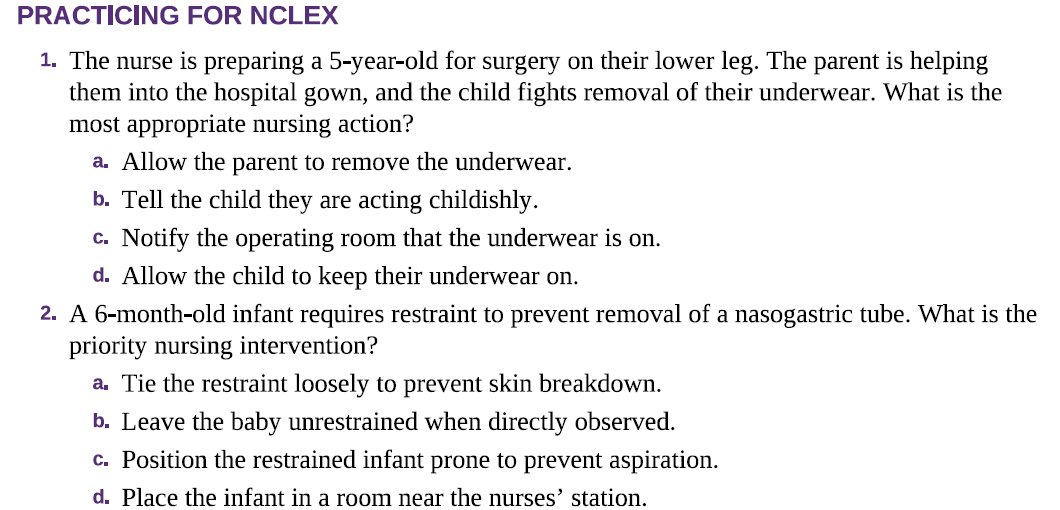
1. 5-year-old resisting removal of underwear before lower leg surgery:
✅ Correct Answer: a. Allow the parent to remove the underwear.
Rationale:
A 5-year-old may feel vulnerable, embarrassed, or frightened in a hospital setting. Allowing the parent to remove the underwear supports the child’s comfort and promotes cooperation while maintaining necessary preoperative protocol.
d (allowing the child to keep underwear on) is not appropriate because it can interfere with surgical sterility or access.
b (telling the child they’re acting childish) is disrespectful and dismissive.
c (notifying the OR) delays addressing the child's needs; it is not a proactive solution.
2. 6-month-old infant requiring restraint to prevent NG tube removal:
✅ Correct Answer: d. Place the infant in a room near the nurses’ station.
Rationale:
The priority nursing intervention with any restraint—especially in infants—is frequent monitoring to prevent injury, suffocation, or circulation issues. Placing the infant near the nurses' station allows continuous observation and rapid response if needed.
a (tying loosely) risks the restraint being ineffective.
b (leaving unrestrained) contradicts the clinical need for a restraint.
c (positioning prone) increases aspiration and suffocation risk—infants should never be restrained in the prone position.
✅ Final Answers:
a
d
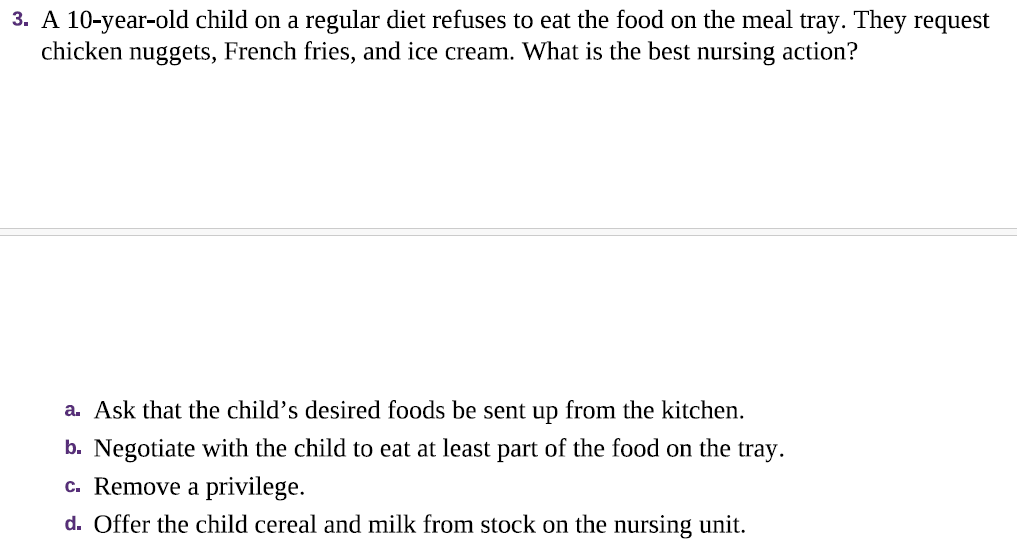
✅ Correct Answer: d. Offer the child cereal and milk from stock on the nursing unit.
Rationale:
The nurse should offer a reasonable and nutritious alternative that is readily available and within the child's dietary restrictions. Cereal and milk are appropriate, simple options that can be quickly provided without disrupting meal service or reinforcing poor eating behavior.
Why the other options are incorrect:
a. Ask that the child’s desired foods be sent up from the kitchen:
❌ Not appropriate; giving in to specific (often unhealthy) demands undermines the meal plan, increases workload, and may reinforce manipulative behavior.b. Negotiate with the child to eat at least part of the food on the tray:
❌ While this may seem reasonable, negotiation can create power struggles and stress. Offering a calm, nutritious option is more effective.c. Remove a privilege:
❌ Punishing a child for not eating is inappropriate and may create anxiety or negative associations with food.
Key NCLEX Concept:
Support the child’s nutritional intake using developmentally appropriate, non-punitive, and feasible alternatives—never force, punish, or excessively accommodate poor dietary requests.
✅ Final Answer: d. Offer the child cereal and milk from stock on the nursing unit.
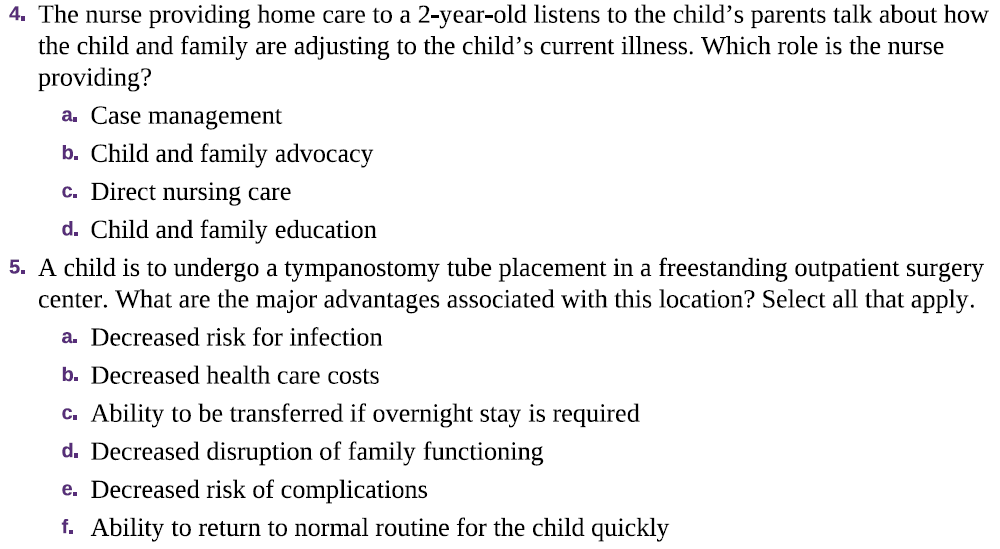
4. Nurse listening to parents adjusting to a child’s illness — What role is the nurse providing?
✅ Correct Answer: b. Child and family advocacy
Rationale:
By actively listening and supporting the family's emotional and psychological adjustment, the nurse is acting as an advocate, ensuring the family's voice is heard and their needs are respected. Advocacy includes supporting, informing, and standing up for both the child and family during healthcare experiences.
a. Case management focuses on coordinating services, not emotional support.
c. Direct nursing care involves physical care tasks, not listening and emotional support.
d. Child and family education would involve teaching or giving information, which is not the action described here.
5. Advantages of tympanostomy in a freestanding outpatient surgery center (Select all that apply):
✅ Correct Answers:
b. Decreased health care costs
d. Decreased disruption of family functioning
f. Ability to return to normal routine for the child quickly
Rationale:
Freestanding outpatient surgery centers are designed to:
Minimize costs due to shorter stays and focused care.
Reduce disruption by allowing same-day discharge and avoiding hospital admission.
Facilitate a quick return to routine, which benefits pediatric patients' emotional and developmental well-being.
Why the other options are incorrect:
a. Decreased risk for infection → ❌ Not necessarily true; risk depends more on sterile technique than location.
c. Ability to be transferred if overnight stay is required → ❌ Outpatient centers generally lack the infrastructure for overnight care or transfers.
e. Decreased risk of complications → ❌ Complication rates depend on procedure, not location alone.
✅ Final Answers:
4. b
5. b, d, f