Google Project Management Certificate Program - Introduction
Defining Project Management
Project management: applying knowledge, skills, tools, and techniques to meet project requirements and achieve the desired outcome.
People may be project managing daily without realizing it.
This course will teach you how to hone those skills to become a truly great project manager.
Project management spans many industries and company types.
It doesn't require deep technical knowledge.
Any job or life experience can help build skills for a project management career.
Defining a Project
A project is a unique endeavor involving:
A set of unique deliverables.
A temporary pursuit with a defined beginning and end.
Essentially, a project is a series of tasks aimed at achieving a desired outcome through:
Collaboration.
Careful planning to maintain schedule and budget.
Defining Project Management
Project management is critical for both large and small projects.
It can be broken down into:
What: Application of knowledge, skills, tools, and techniques to meet project requirements.
Why: Ensures projects deliver expected outcomes on time and within budget, adding value to the business.
How: Vital to a project's success through structured planning and execution.
What does a project Manager Do: Oversees project planning, execution, monitoring, and closure, ensuring that objectives are met while balancing scope, time, and cost constraints.
Planning and organising.
Managing tasks efficiently.
Budgeting and controlling costs.
Skills Listed For A Project Manager
creating monthly status reports,
helping to implement new and necessary technologies,
tracking work plans and performance metrics,
assisting other members of the operations team on given projects, and ensuring timely responses to requests for information.
Value Add by Project Managers
Prioritisation- Project managers add value to their teams and organizations through effective prioritization of tasks required to complete a project. They're experts at helping team members identify and break down large tasks into smaller steps.
Delegation- Project managers use delegation to add value to their teams and organizations by matching tasks to individuals who can best complete the work.
Effective communication- This refers to being transparent, which means being up front with plans and ideas and making information readily available.
How Project Managers Impact Organisations
Building a great Team- A successful project manager knows that and takes the time to understand each person’s motivations, strengths, and weaknesses. Project managers add value to the project by identifying the right team for the project and enabling the team to be successful and make decisions.
When you work to build a great team, you have to consider the skills needed for the project, as well as the resources available. Understanding the customer’s requirements helps shape the skills needed for your team.You can demonstrate how you feel about the team’s value by allowing them to have input and ask questions, and by addressing their needs as soon as possible.
Fostering Relationships and Communication- Taking the time to check in daily with your team, see how they’re doing, and ask if there is anything they need help with can go a long way towards making them feel valued and heard.
Managing the Project - A successful project manager sees the impacts of each process within the project and communicates those impacts to the team. This ensures that everyone working on the project understands their task goal as well as the big picture goal for the finished product.
Breaking down barriers- Sometimes, when you ask why something is being done a certain way, the response you get is, “Because we’ve always done it this way.” A project manager adds value to a project when they break down barriers, allow their team to innovate new ways to do things, and empower them to share ideas. As a project manager, you have to model ingenuity and collaboration, and encourage your team to do the same.
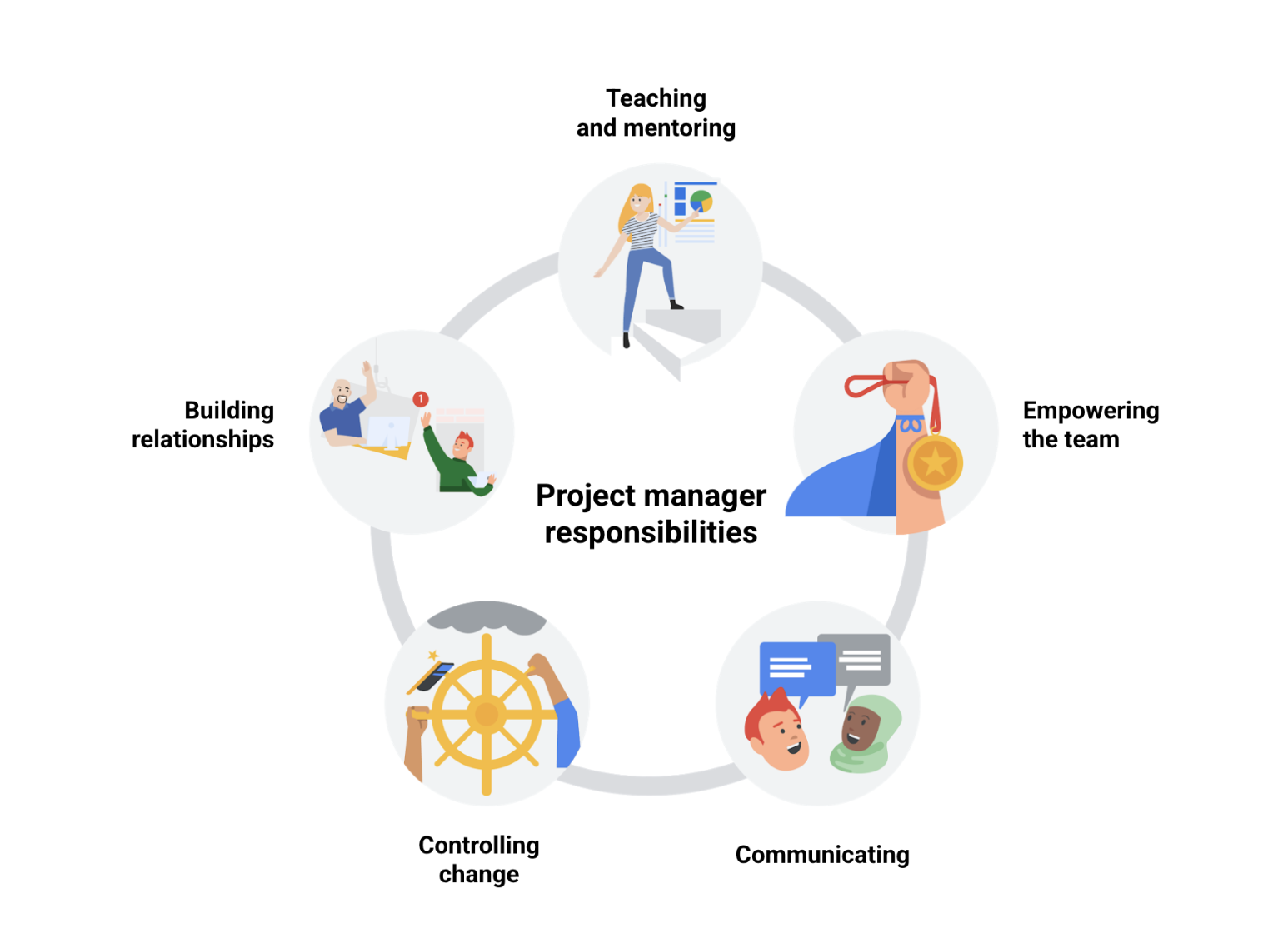
A Project Manager’s Role Within The Team
Managing tasks will help you hold your team members accountable by giving them ownership over specific pieces of the project.
Second, you'll need to ensure that issues and risks are tracked and visible, and be able to establish escalation paths. Now, by escalation paths, I mean that you should know how you will communicate risks to the right people at the right time.
Third, you'll need to understand and help teammates adopt the right workflows and project management styles. As the project manager, you'll likely have the best idea of which style is best for the work. It's your job to ensure that the team adheres to that style and the other systems in place
And fourth, you'll need to collaborate with other teams at the organisation to meet the requirements based on project, scope, schedule, and budget.
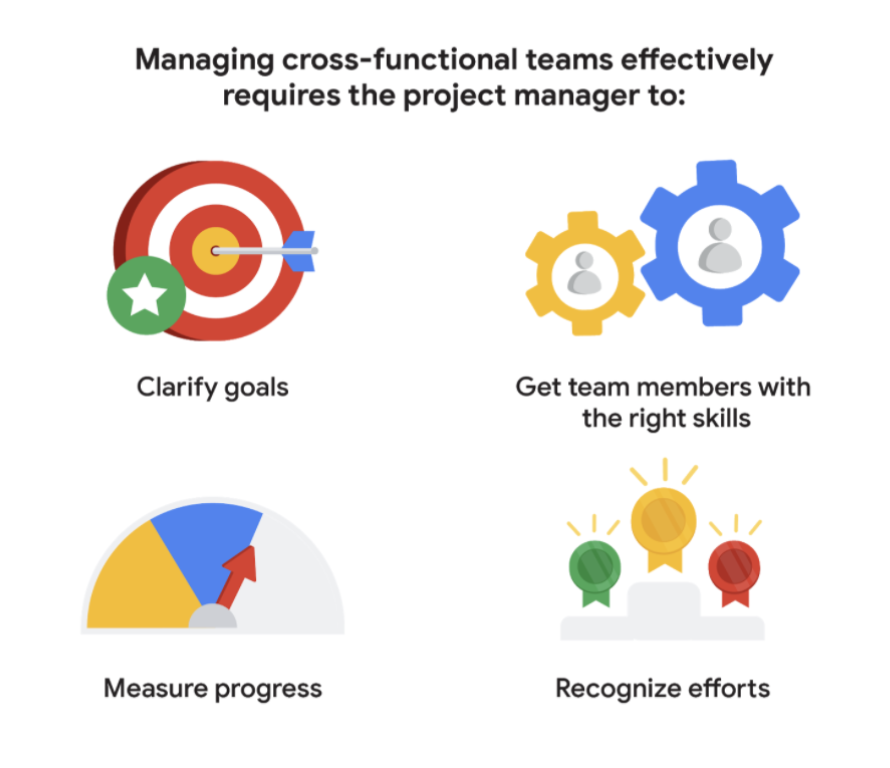
Core Skills Of A Project Manager
Enabling decision-making
Communicating and escalating
Flexibility
Strong organisational skills
Influencing Without Authority
which refers to a project manager's ability to guide teammates to complete their assigned work without acting as their direct managers. Key Interpersonal skills:-
Communication-
Negotiation
Conflict mediation
Understanding motivations.
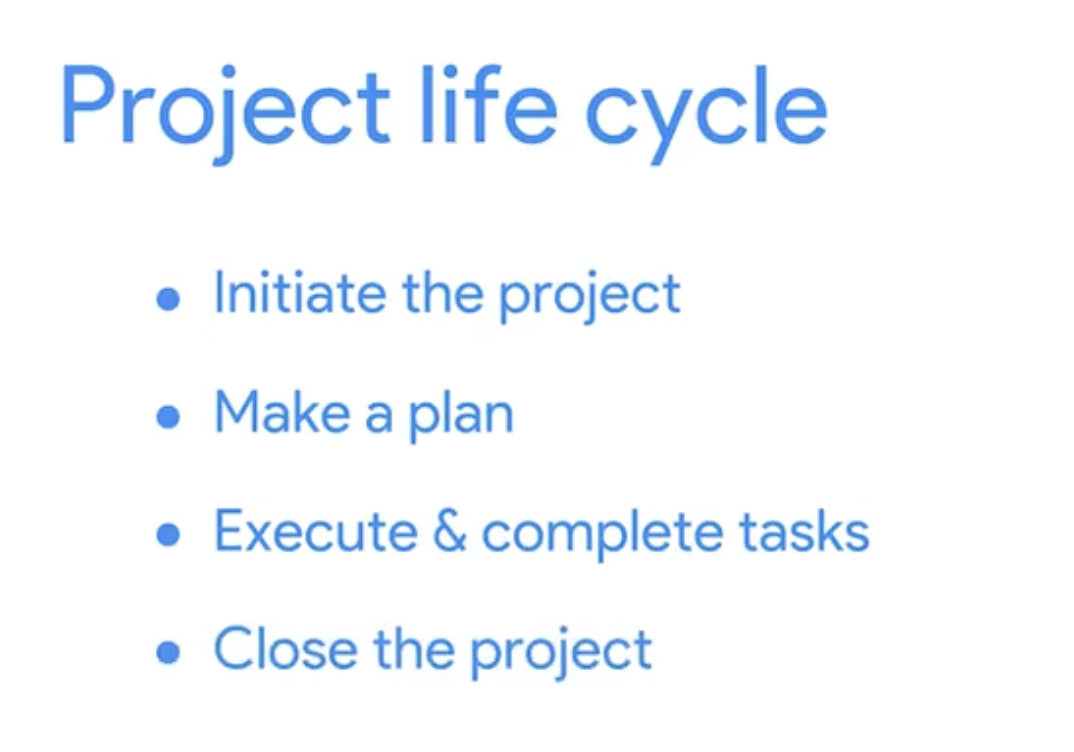
PROJECT LIFE CYCLE
Initiate the Project
This is the launchpad for the entire process of your project. In this phase, you'll define project goals and deliverables, identify the budget and resources you'll need, the people involved in your project, and any other details that can impact the successful completion of your project. You'll document all this information in one place to showcase the project's value, and hopefully get approval to move forward with it. Once the project is approved, it's time to get rolling.Make a Plan
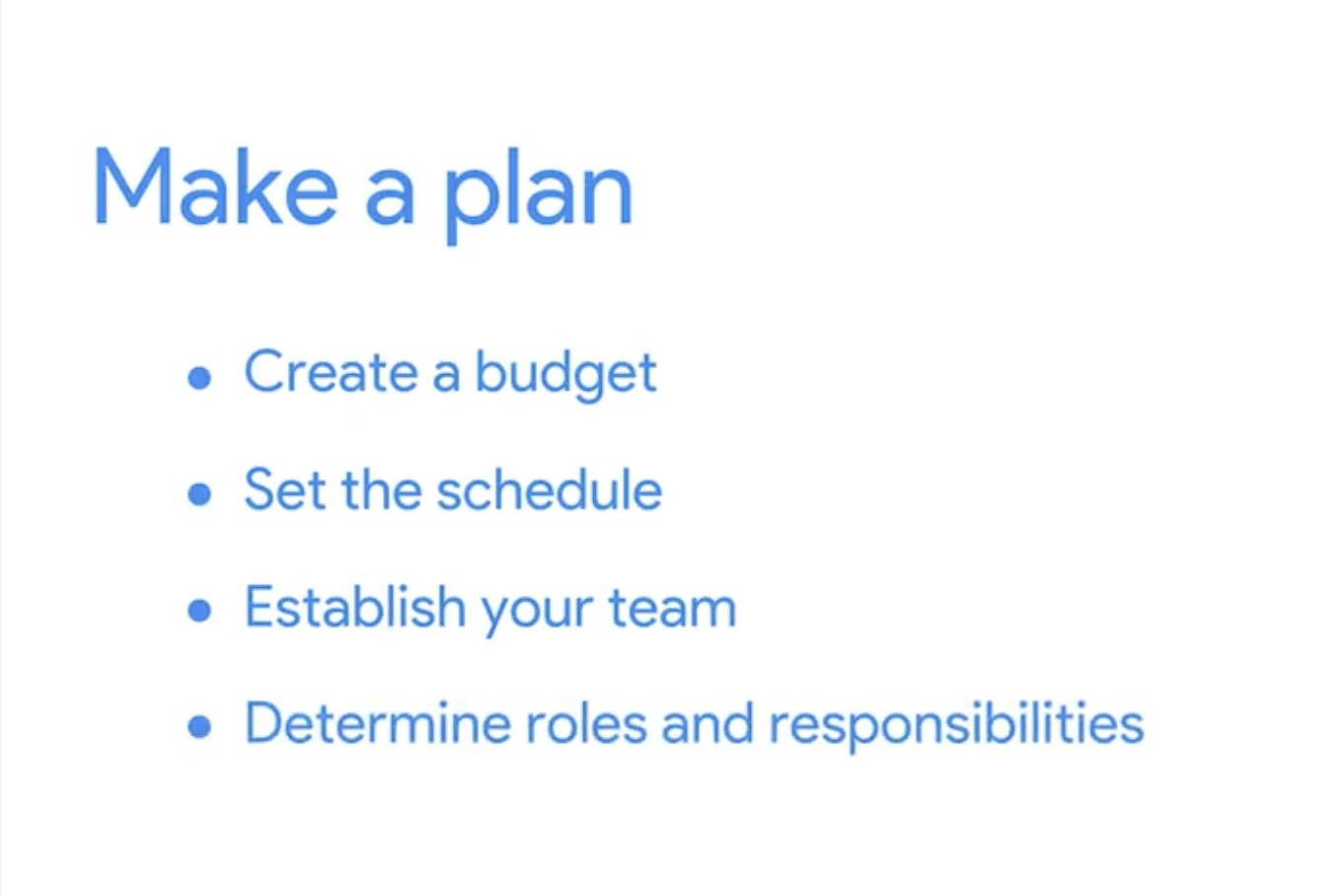
You'll make a plan for how you will meet the goals of your project. There are all kinds of ways to plan your project, and we'll get into some different methods and techniques later on. Right now, the important thing to know is that for every single project, creating a plan of how you're going to meet your goals is absolutely 100 per cent essential. Think about it. You can't hire a contractor to build a house without planning what it'll look like or how much you have to spend. These same considerations apply to any project that you manage. To be effective, your plan needs to include a lot of things. For example, a budget, a breakdown of all the tasks that you need to be completed, ways to communicate team roles and responsibilities, a schedule, resources, and what to do in case your project encounters problems or needs to change. That's just to name a few.Execute and Complete Tasks
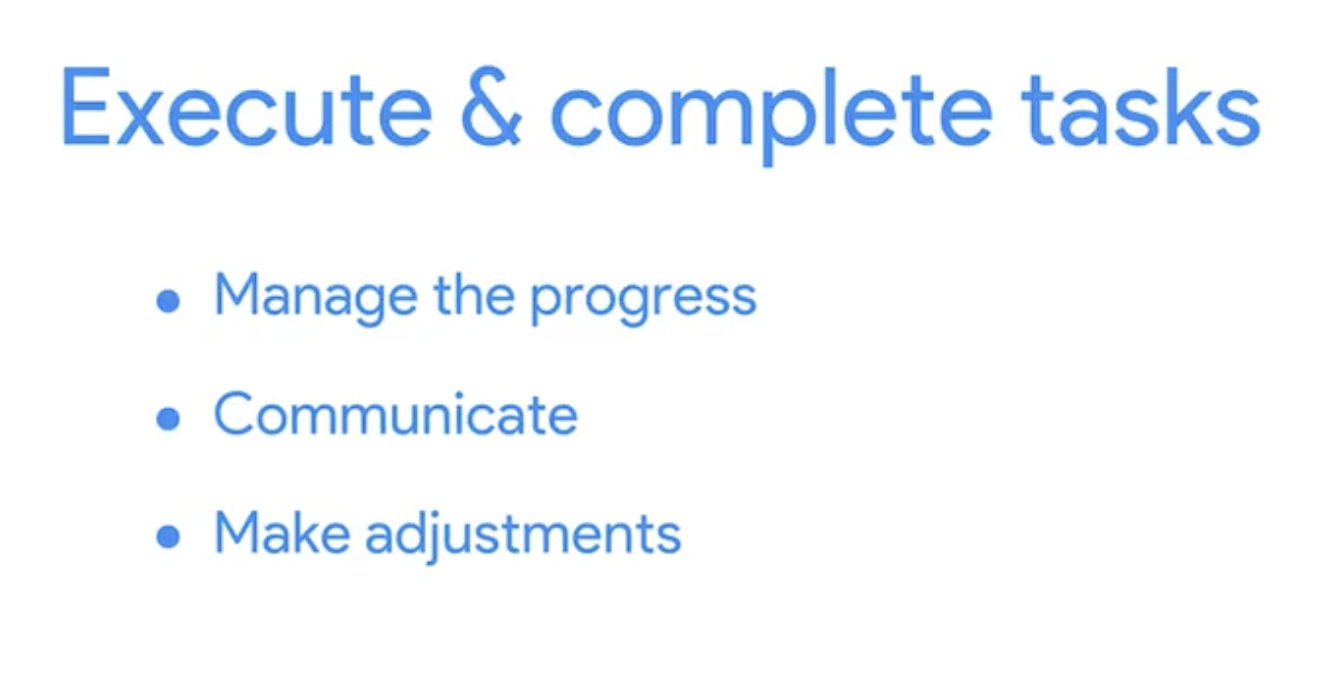
Once you have your plan in place, it's time to execute and complete those tasks. It's important to point out that your project team has the job of completing the project tasks. As a project manager, your role's a little different. While you might be in charge of completing certain tasks in the project, your primary tasks as the project manager are to monitor progress and keep your team motivated. You also remove any obstacles that might come up so that the tasks are executed well and on time.Close the Project
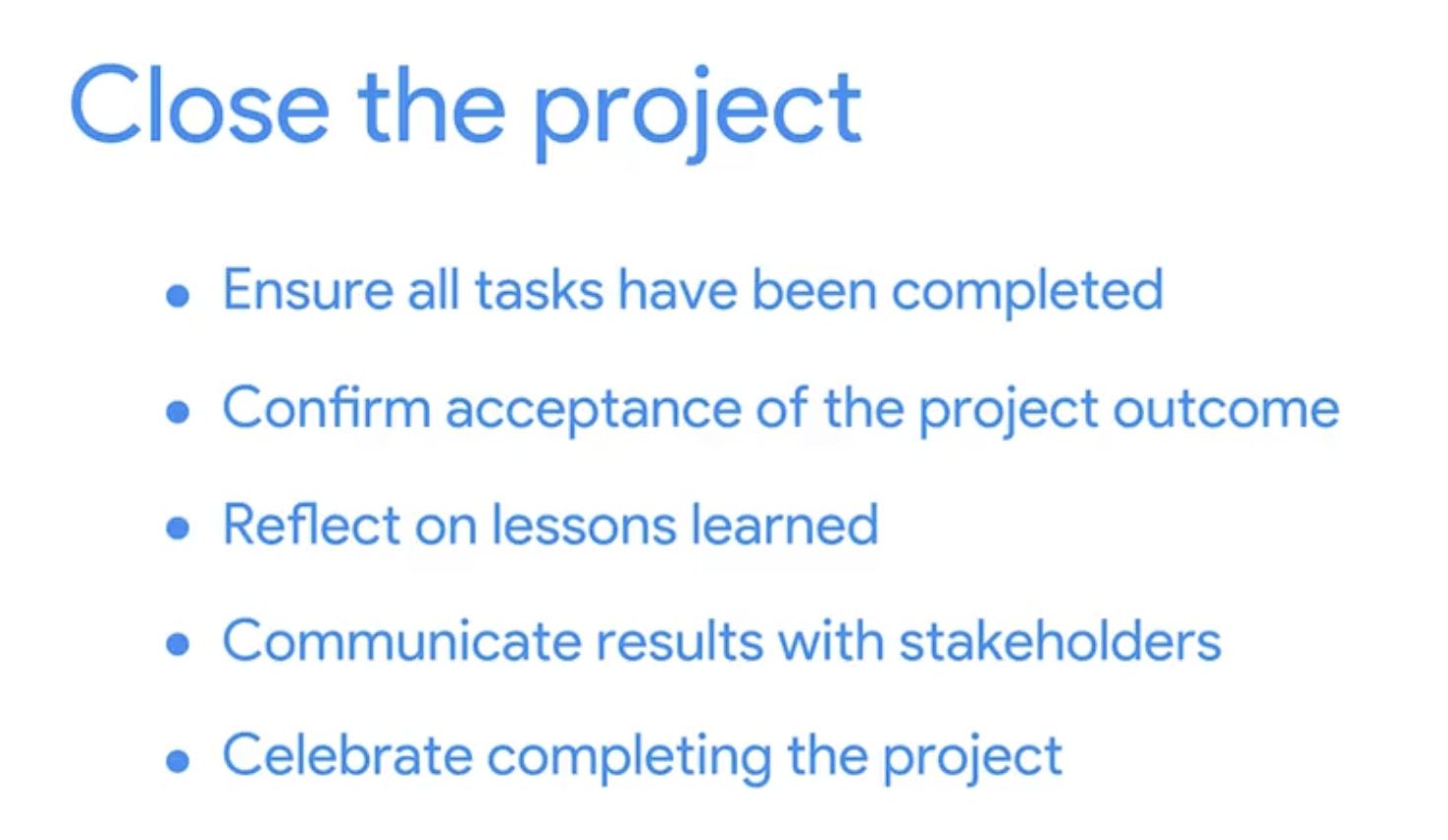
Finally, when all the tasks have been completed, all the resources have been accounted for, and the project has crossed the finish line, it's time to close the project. Why is it important to close? One big reason is that your team has a moment to celebrate all of their hard work. Closing the project is also a chance to evaluate how the project went. You can make a note of what worked and what didn't, so you can plan better for next time. Even if the project was a massive success, it's helpful to take time to reflect. Closing the project is also a great way to connect with anyone outside your team who may have had an interest in the project's goal. You can let everyone know what was completed and what you accomplished.

Lean and Six Sigma methodologies
Previously you learned about Agile and Waterfall project management approaches. Now, we will define some key concepts from Lean and Six Sigma methodologies. We will learn how these methodologies can be used to organize and manage your projects, and we will discuss which is the most effective for different kinds of projects.
Lean
Lean methodology is often referred to as Lean Manufacturing because it originated in the manufacturing world. The main principle in Lean methodology is the removal of waste within an operation. By optimizing process steps and eliminating waste, only value is added at each phase of production.
Today, the Lean Manufacturing methodology recognizes eight types of waste within an operation: defects, excess processing, overproduction, waiting, inventory, transportation, motion, and non-utilized talent. In the manufacturing industry, these types of waste are often attributed to issues such as:
Lack of proper documentation
Lack of process standards
Not understanding the customers’ needs
Lack of effective communication
Lack of process control
Inefficient process design
Failures of management
These same issues create waste in project management.
Implement Lean project management when you want to use limited resources, reduce waste, and streamline processes to gain maximum benefits.
You can achieve this by using the pillars of the Lean 5S quality tool. The term 5S refers to the five pillars that are required for good housekeeping: sort, set in order, shine, standardize, and sustain. Implementing the 5S method means cleaning up and organizing the workplace to achieve the smallest amount of wasted time and material. The 5S method includes these five steps:
Sort: Remove all items not needed for current production operations and leave only the bare essentials.
Set in order: Arrange needed items so that they are easy to use. Label items so that anyone can find them or put them away.
Shine: Keep everything in the correct place. Clean your workspace every day.
Standardize: Perform the process in the same way every time.
Sustain: Make a habit of maintaining correct procedures and instill this discipline in your team.
Within the Lean methodology, 5S helps you boost performance.
The final concept of Lean uses a Kanban scheduling system to manage production. The Kanban scheduling system, or Kanban board, is a visualization tool that enables you to optimize the flow of your team’s work. It gives the team a visual display to identify what needs to be done and when. The Kanban board uses cards that are moved from left to right to show progress and help your team coordinate the work.

Kanban boards and 5S are core methods of the Lean methodology. They can help you successfully manage your project. Now let’s analyze the Six Sigma method and learn when is the best time to use it.
Six Sigma
Six Sigma is a methodology used to reduce variations by ensuring that quality processes are followed every time. The term “Six Sigma” originates from statistics and generally means that items or processes should have 99.9996% quality.
The seven key principles of Six Sigma are:
Always focus on the customer.
Identify and understand how the work gets done. Understand how work really happens.
Make your processes flow smoothly.
Reduce waste and concentrate on value.
Stop defects by removing variation.
Involve and collaborate with your team.
Approach improvement activity in a systematic way.
Use this methodology to find aspects of the product or process that are measurable like time, cost, or quantity. Then inspect that measurable item and reject any products that do not meet the Six Sigma standard. Any process that created unacceptable products has to be improved upon.
Now that you understand both Lean and Six Sigma, let's see how they come together to improve the performance of your project!
Lean Six Sigma
After both Lean and Six Sigma were put into practice, it was discovered that the two methodologies could be combined to increase benefits. The tools used in Lean, such as Kanban boards and 5S, build quality in processes from the beginning. Products developed using Lean methods are then inspected or tested using Six Sigma standards. The products that do not meet these standards are rejected.
The largest difference between these methodologies is that Lean streamlines processes while Six Sigma reduces variation in products by building in quality from the beginning and inspecting products to ensure quality standards are met. You may find that one of these two methods—or using them both together—can improve the efficiency of your projects.