Ch 1 Anatomy
1.1 Form (Anatomy)/ Function (Phisiology)
Anatomy: studies the structure of the body and their relationships to one another
physiology: concerns the function of the body, how it works/ carries out life sustaining activities
Topics of Anatomy
Gross Anatomy:
Regional Anatomy- all structures (blood vessles, mussles, bones, nerves, etc) in a particular region of the body, such as the abdomen or leg
Systemic Anatomy- body structure studied system by system
ex: when studying cardiovascular system, you would examine the heart and blood vessels in the entire body
Surface Anatomy- study of internal structures as the relate to the overlying skin surface (ex: buldging muscles under skin; location of blood vessles to draw blood)
Microscopic Anatomy: studies structures requiring magnigying device to be seen
ex: cytology- considers cells of body; histology- study of tissures
Developmental Anatomy: traces structural changes that occur throughout the life span
Embryology- concerns developmental changes that occur before birth
Topics of Physiology
Renal Physiology: concerns kidney fuction/ urine production
Neurophysiology: explains workings of the nervous system
Cardiovascular Physiology: examines operation of heart/ blood vessels.
Principle of complementarity of structure and function: the idea that anatomy and physiology are inseparable because function relies on structure (form/function)
Practice Questions:
1. In what way does Physiology depend on anatomy?
The Principal pf Complementairity of stucure and function shows how Function (physiology) depends on the stucture/form of the body (anatomy). Form/Function
The operation or function of a structure is promoted or prevented by its anatomy. For example, oxygen and carbon dioxide are exchanged across the very thin membranes of the lungs but not across the much thicker skin.
2. Would you be studying anatomy or physiology if you investigated how muscles shorten? If you explored the location of the lungs in the boddy?
Muscles shortening is a physiology topic. Location of the lungs is an anatomy topic
Define.
Gastritis
Leukocyte
Nephropathy
1.2 The Body’s Orginization Ranges From Atoms to Entire Organism
Levels of Structural Organization
Chemical Level: at this level, atoms combine to form molecules who combine into organielss, the basic components of cells
Atoms → molecules → organelles -→ cells
Cellular Level: All cells share some common functions, but individual cells vary widely in size and shape, reflecting their unique fucntions in the body
Tissue Level: Tissues are groups of sumular cells that have a common function.
The 4 basic tissue types in human body:
Epithelial Tissue: covers body surface and lines its cavities
Muscle Tissue: provides movement
Connective Tissue: supports and protects body organs
Nervous Tissuerapid internal communication by transmitting electrical impulses
Organ Level:
Organ: a discrete stucture composed of at least 2 tissue types (4 is more common) that performs a specific function for the body (eg. Brain, liver, blood vessel)
functional center responisble for nessacery activity no other organ can preform
at this level, extremely complex functions can become possible.
Ex: stomach. Its lining is an epithelium that produces digestive jucies. The bulk of its wall is muscle, which chirns and mizes stomach contents (food). Its connective tissue reinforces soft muscular walls. Nerve Fibers inc. digestive activity by stimulating muscle to contract more vigorously.
Organ System Level:
Organs that work together to accomplish a common purpose make up an organ system.
ex: the heart + blood vessels of circulate blood to continously cary oxygyn and nutrients to all body cells.
Other Organ Systems of the Body:
integumentary
skeletal
muscular
nervous
endocrine
lymphatic (immune)
respitory
urinary
reproductive
Organismal Level: represents the total of structureal levels working together to keep us alive
4. What Level of Structural Organization is Typical of a cytologist’s feild of study?
Cytologists study the cellular level of organization
5. What is the correct structural order for the following terms: tissue, organism, organ, cell?
cell → tissue → organ → organism
1.3 What are the Requirements for Life?
All body cells are interdependent
The body’s organ systems and major functions
Integumentary system:
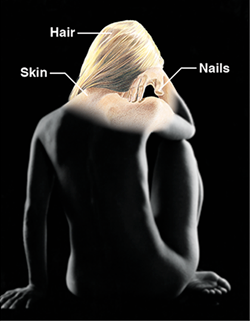
Forms the external body covering, and protects deeper tissues from injury
synthesizes vitamin D
houses cutaneous(pain, pressure, etc.) receptors and sweat/oil glands
Skeletal System::
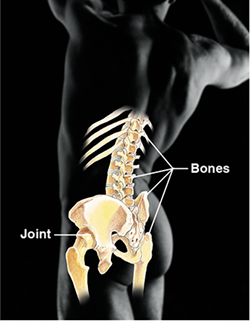
Protects/supports body organs
provides framework the muscles use to cause movement
blood cells are formed within bones
bones store mineral
Muscular System:
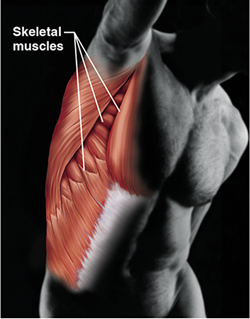
Allows manipulation of environment, locomotion, and facial expression
maintains posture
produces heat
Nervous System:
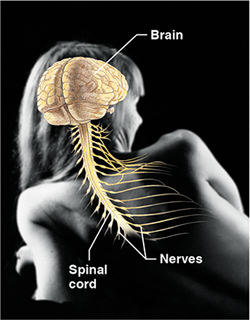
fast-acting control system of body
responds to internal & eternal changes by activating appropriate muscles & glands
Endocrine System:
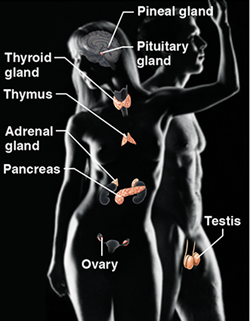
Glands secrete hormones that regulate processes (growth, preproduction, and nutrient use (metabolism)) by body cells
Cardiovascular System:
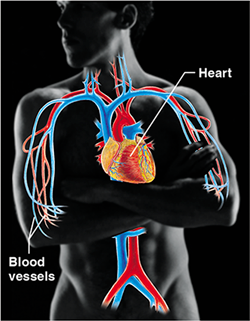
Blood Vessels transport blood, which carried oxygen, C02, nutrients, wastes, etc.
heart pumps blood
Lymphatic System/Immunity:
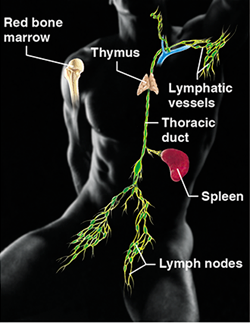
Picks up fluid leaked from blood vessels and returns it to blood
disposes of debris in lymphatic stream
houses white blood cells (lymphocytes) involved in immunity
Immune response mounts the attack against foreign substances within body
Raspatory System:
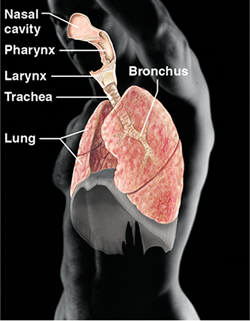
Keeps blood constantly supplied with oxygen + removes CO2
Exchanges occur through the walls of the air sacs of the lungs
Digestive System:
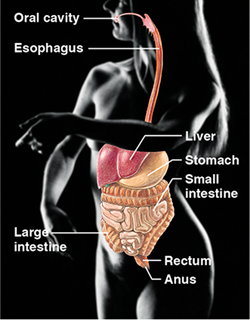
Breaks down food into absorbable units that enter the blood for distribution to body cells
Indigestible foodstuffs are eliminated as feces
Urinary System:
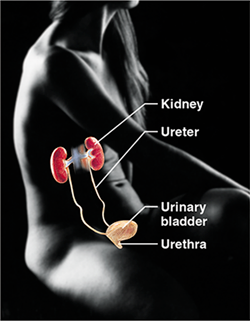
Eliminates nitrogenous wastes from the body
Regulates water, electrolyte, and acid-based balance of the blood
Male Reproductive System
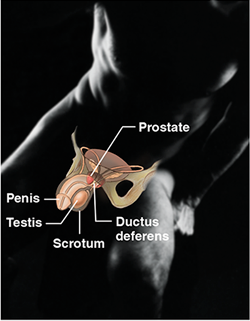
Overall function of production of offspring
Testes produce sperm and male sex hormone
male ducts and glands aid in delivery of sperm to female reproductive tracts
Ovaries produce eggs and female sex hormones
remaining female e structures serve as sites for fertilization & development of the fetus
Mammary glands of female breasts produce milk to nourish newborn
Female Reproductive System
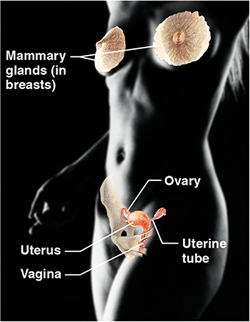
Testes produce sperm and male sex hormone, of sperm to the female reproductive tract
Ovaries, the remaining female structures serve as sites for Mammary glands of female breasts produce
Maintaining Boundaries
Every organism must maintain boundies so the internal enviorments remain seprate form the external.
In single-celled organisms, the external boundary is a limiting membrane that encloses its contents and lets in needed substances while restricting entry of potentially damaging or unnecessary substances.
Similarly, all body cells are surrounded by a selectively permeable plasma membrane.
Plasma membrane separates the Iintracellular fluid inside cells from the extracellular fluid outside. Part of the extracellular fluid (blood plasma) is enclosed in blood vessels. The remainder, the interstitial fluid, surrounds and bathes all of our cells.
Skin keeps our organs inside slayy
Movement: includes activities promoted by the muscular system, such as propelling ourselves form one place to another by running or swimming, and manipulating eternal environment with our fingers
Movement also occurs when substances such as blood, foodstuffs, and urine are propelled through internal organs of the cardiovascular, digestive, and urinary systems, respectively.
On the cellular level, the muscle cell’s ability to move by shortening is more precisely called contractility
Responsiveness, or excitability, is the ability to sense changes (stimuli) in the enviorment and then respond to them
Ex: if you cut your hand on broken glass, a withdrawal reflex occurs—you involuntarily pull your hand away from the painful stimulus (the broken glass).
Likewise, when carbon dioxide in your blood rises to dangerously high levels, chemical sensors respond by sending messages to brain centers controlling respiration, and you breathe more rapidly.
Digestion is the breaking down of ingested foodstuffs to simple molecules that can be absorbed into the blood. Nutrient-rich blood is then distributed to all body cells by the cardiovascular system.
one-celled organism such as an amoeba, the cell itself is the “digestion factory,” but in the multicellular human body, the digestive system performs this function for the entire body
Metabolism is a broad term that includes all chemical reactions that occur within body cells. This includes:
Catabolism (cataclysm = breaks things): the process of breaking down substances into simpler building blocks
Anabolism (the ana blows up): synthesizing more complex substances from simpler building blocks
Using nutrients and oxygen to produce (via cellular respiration) ATP
Excretion (exorcism)i: s the process of removing wastes, or excreta, from the body.
Several organs participate in this
Digestive system rids the body of indigestible food residues in feces, and the urinary system disposes of nitrogen-containing metabolic wastes, such as urea, in urine
CO2, a by-product of cellular respiration, is carried in the blood to the lungs, where it leaves the body in exhaled air
Reproduction: occurs at the cellular and organismal level
In cellular reproduction, the original cell divides, producing two identical daughter cells that may then be used for body growth or repair.
The reproductive system is directly responsible for producing offspring, but its function is exquisitely regulated by hormones of the endocrine system
Growth is an increase in size of a body part or organism as a whole. This is usually done by increasing the # of cells. However, individual cells can also inc in size when not dividing
Survival Needs
Nutrients: carbs→ energy; protein → building cell structure; fat→ reserve for energy-rich fuel; calcium→ bones
Oxygen
Water: 50-60% of body weight. Lose it from body by evaporation from lungs and skin and in body excretions
Normal body Temperature: if temp is < 37 C(98.6 F), then metabolic reactions slow
Appropriate atmospheric pressure: force of air exerts on the surface of the body. At high altitudes, where atmospheric pressure is lower and the air is thin, gas exchange may be inadequate to support cellular metabolism.
Questions
6. What separates living beings from nonliving objects?
Living organisms can maintain their boundaries, move, respond to environmental changes, digest nutrients, carry out metabolism, dispose of wastes, reproduce, and grow. While inanimate objects may exhibit some of these properties, they do not exhibit all of them.
7. What name is given to all chemical reactions that occur within body cells?
Living organisms can maintain their boundaries, move, respond to environmental changes, digest nutrients, carry out metabolism, dispose of wastes, reproduce, and grow. While inanimate objects may exhibit some of these properties, they do not exhibit all of them.
8. The image below shows tissue cells and part of a blood vessel. The cells’ nutrients and wastes are exchanged across an important boundary between two fluid compartments. Name the boundary (a) and the fluid in the compartments (b and c). Be specific.
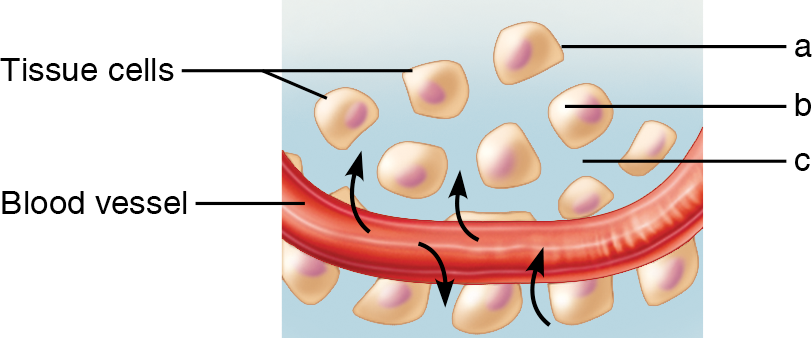
Boundary âaâ is the plasma membrane. Fluid compartment âbâ is intracellular fluid. Fluid compartment âcâ is interstitial fluid, which is part of the extracellular fluid
1.4 Homeostasis is Maintained by Negative Feedback
Learning outcomes
Define homeostasis and explain its significance.
Describe how negative and positive feedback maintain body homeostasis.
Describe the relationship between homeostatic imbalance and disease.
Axial Part: makes up the axis of body (head, neck, and trunk)
Appendicular part: consists of appendages (limbs), which are attached to body’s axis
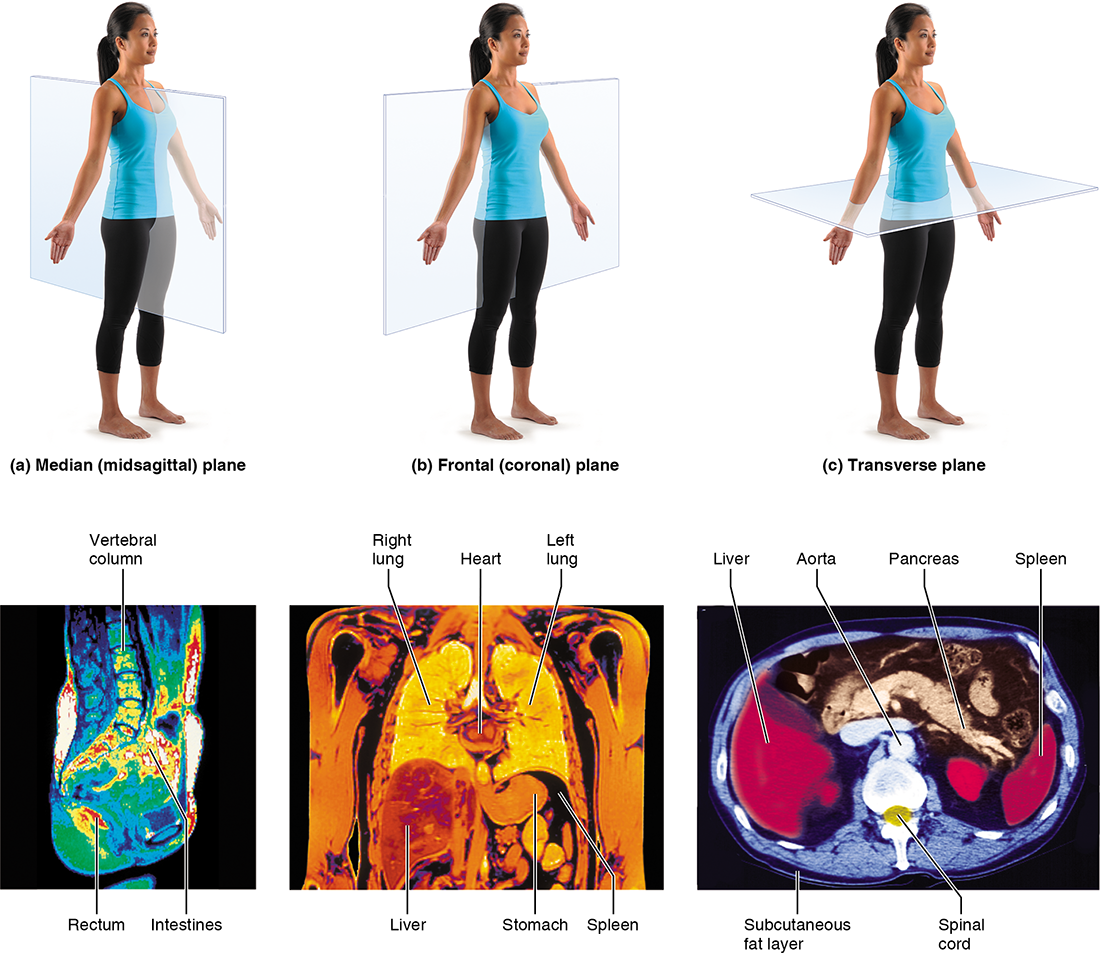

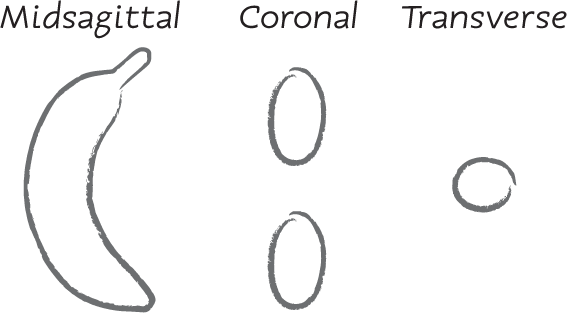
Sagittal Plan (“arrow”): a vertical plane that divides the body into left and right parts
a sagittal plane that lies exactly in the midline is called median plane/ midsagittal plane
all other sagittal planes, offset from the midline are parasagittal planes
Frontal Planes: like sagittal planes, lie vertically. However they divide the body into front and back
a frontal plane is also called a coronal plane (crown)
the crown sits on the front plane of your head
Transverse Plane: runs horizontally from left to right
also called a cross section
Oblique sections: cuts made diagonally between the horizontal and vertical planes.
1.6 Manhy internal Organs lie in the membrane-lined body cavities
Learning Outcomes
Locate and name the major body cavities and their subdivisions and associated membranes, and list the major organs contained within them.
Name the four quadrants or nine regions of the abdominopelvic cavity and list the organs they contain.
Dorsal Body Cavity
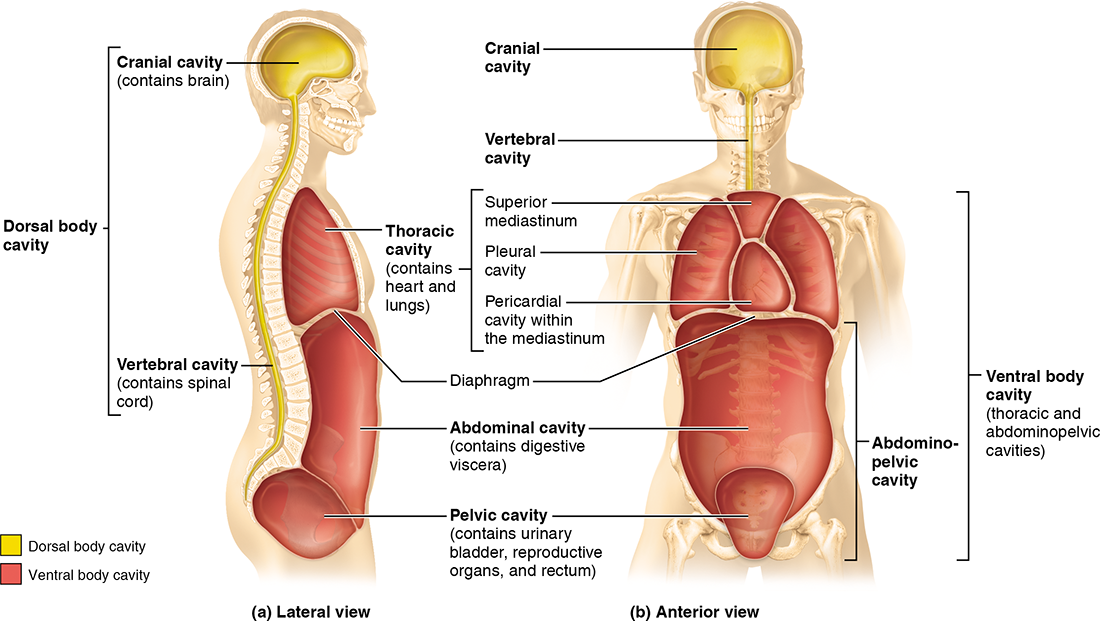
The dorsal body cavity, protects the fragile nervous system organs. It has two subdivisions:
cranial cavity,: located in the skull, encases the brain
Vertebral/spinal cavity: runs within the bony vertebral column, encloses the delicate spinal cord
the spinal cord is essentially a continuation of the brain, and the cranial and spinal cavities are continuous with one another.
Ventral Body Cavity
The more anterior and larger of the closed body cavities is the ventral body cavity. It has 2 subdivisions:
Thoracic Cavity: is surrounded by the ribs and muscles of the chest:
pleural cavities: each envelope a lung
pericardial cavity: encloses the heart and also surrounds the remaining thoracic organs (esophagus, trachea, and others).
Abdominopelvic cavity: by the diaphragm, a dome-shaped muscle important in breathing
superior portion, the abdominal cavity, contains the stomach, intestines, spleen, liver, and other organs
The inferior part, the pelvic cavity, lies in the bony pelvis and contains the urinary bladder, some reproductive organs, and the rectum
they are perpendicular one one another
Clinical Homeostatic Imbalance 1.2
When serous membranes are inflamed, their normally smooth surfaces become roughened. This roughness causes the membranes to stick together and drag across one another. Excruciating pain results, as anyone who has experienced pleurisy (inflammation of the pleurae) or peritonitis (inflammation of the peritoneums) knows.
Abdominopelvic Regions and Quadrants
The four abdominopelvic quadrants.
a transverse and a median plane pass through the umbilicus at right angles. The four resulting quadrants are named according to their positions from the subject’s point of view: the right upper quadrant (RUQ), left upper quadrant (LUQ), right lower quadrant (RLQ), and left lower quadrant (LLQ).
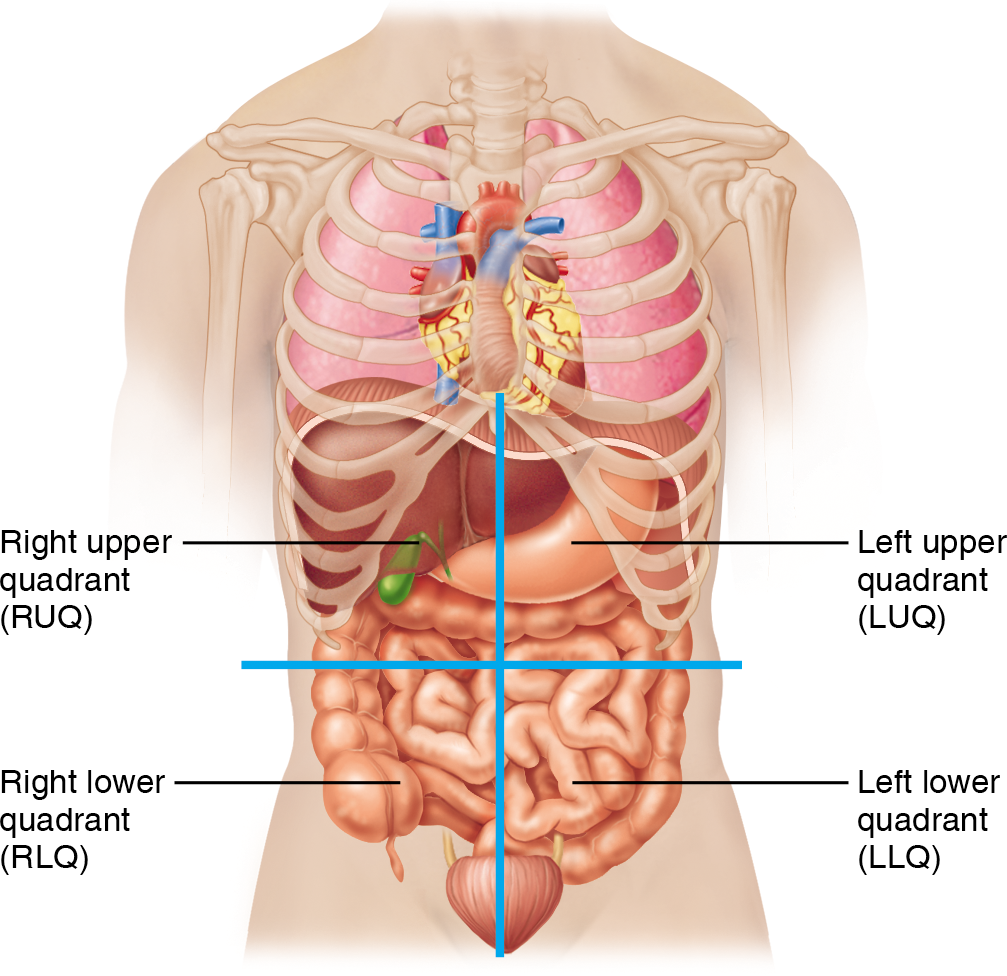
a transverse and a median plane pass through the umbilicus at right angles. The four resulting quadrants are named according to their positions from the subject’s point of view: the right upper quadrant (RUQ), left upper quadrant (LUQ), right lower quadrant (RLQ), and left lower quadrant (LLQ).
The nine abdominopelvic regions.
uses two transverse and two parasagittal planes. These planes, positioned like a tic-tac-toe grid on the abdomen, divide the cavity into nine regions
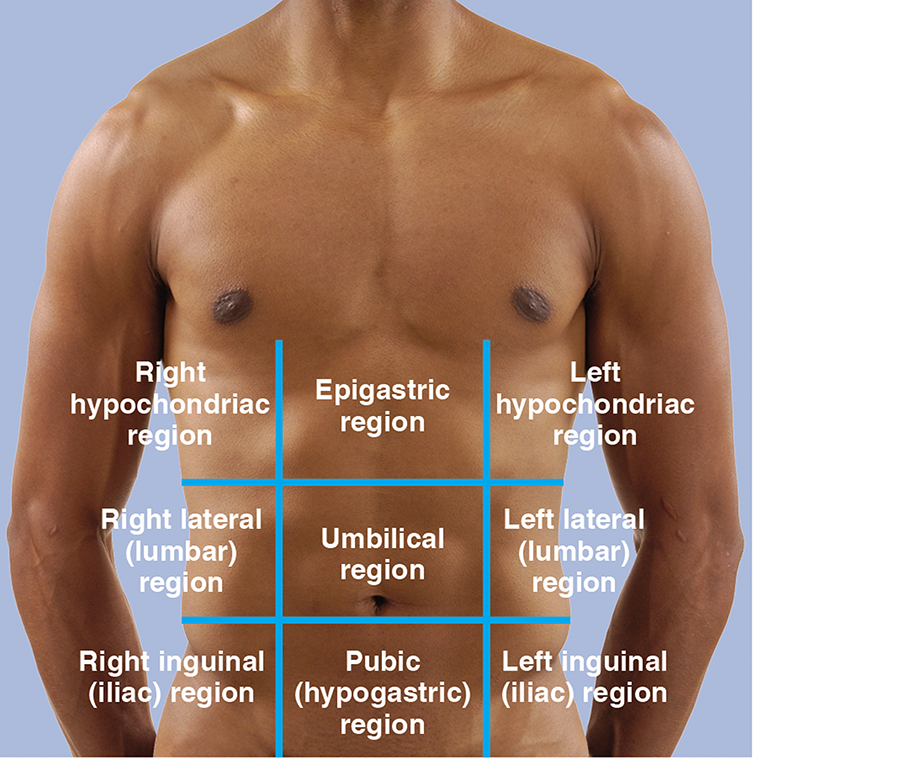
The umbilical region is the centermost region deep to and surrounding the umbilicus (navel).
The epigastric region is located superior to the umbilical region (epi = upon, above; gastri = belly).
The pubic (hypogastric) region is located inferior to the umbilical region (hypo = below).
The right and left inguinal, or iliac, regions (ing′gwĭ-nal) are located lateral to the hypogastric region (iliac = superior part of the hip bone).
The right and left lateral (lumbar) regions lie lateral to the umbilical region (lumbus = loin).
The right and left hypochondriac regions lie lateral to the epigastric region and deep to the ribs (chondro = cartilage).
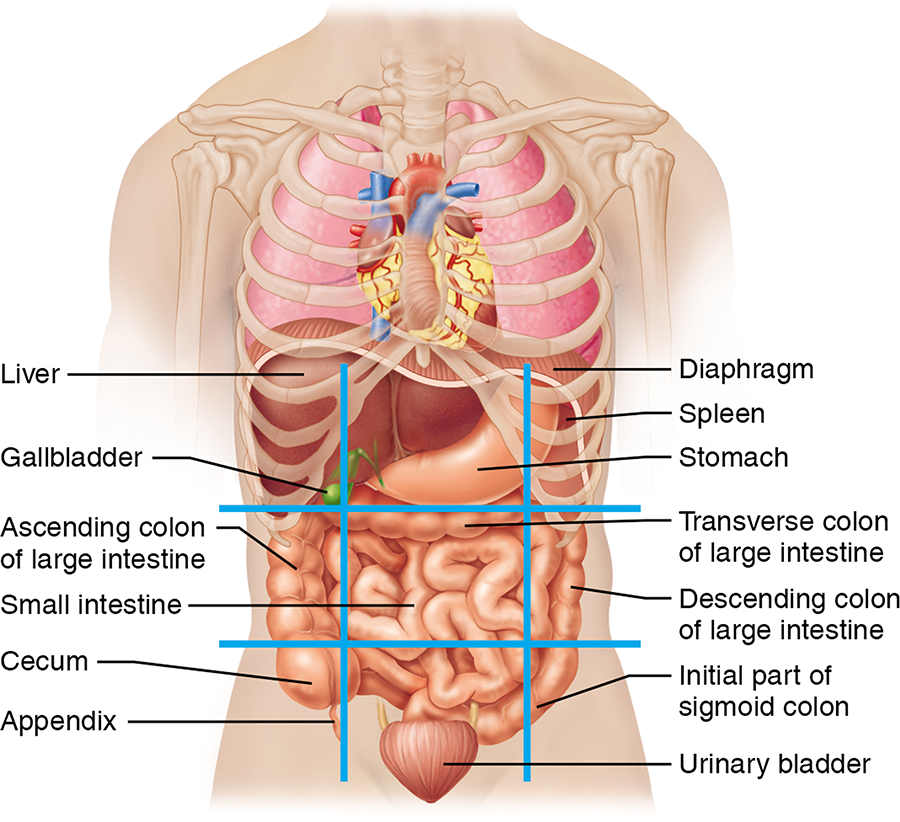
Other body cavities
Oral and digestive cavities. The oral cavity, commonly called the mouth, contains the teeth and tongue. This cavity is part of and continuous with the cavity of the digestive organs, which opens to the body exterior at the anus.
Nasal cavity. Located within and posterior to the nose, the nasal cavity is part of the respiratory system passageways.
Orbital cavities. The orbital cavities (orbits) in the skull house the eyes and present them in an anterior position.
Middle ear cavities. The middle ear cavities in the skull lie just medial to the eardrums. These cavities contain tiny bones that transmit sound vibrations to the hearing receptors in the inner ears.
Synovial cavities. Synovial (sĭ-no′ve-al) cavities are joint cavities. They are enclosed within fibrous capsules that surround freely movable joints of the body (such as the elbow and knee joints). Like the serous membranes, membranes lining synovial cavities secrete a lubricating fluid that reduces friction as the bones move across one another.
Questions
16. Of the uterus, small intestine, spinal cord, and heart, which is/are in the dorsal body cavity?
Of these organs, only the spinal cord is in the dorsal body cavity.
17. APPLY When you rub your cold hands together, the friction between them results in heat that warms your hands. Why doesn’t warming friction result during movements of the heart, lungs, and digestive organs?
As mobile organs (heart, lungs, digestive organs) work, friction is greatly reduced by the presence of serous fluid. Serous fluid allows the surrounding serous membranes to glide easily over one another.
18. PREDICT Joe went to the emergency room where he complained of severe pains in the lower right quadrant of his abdomen. What might be his problem?
As mobile organs (heart, lungs, digestive organs) work, friction is greatly reduced by the presence of serous fluid. Serous fluid allows the surrounding serous membranes to glide easily over one another.