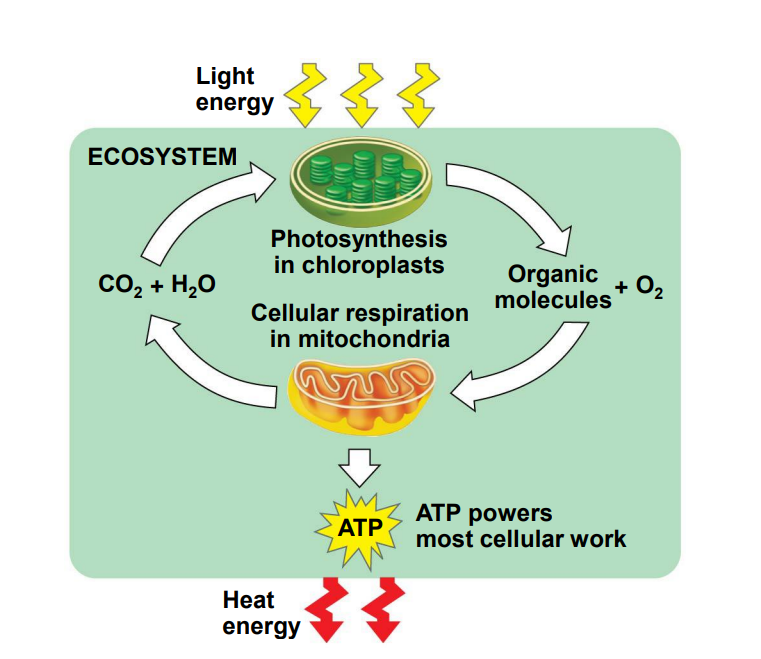
Photosynthesis , Light energy
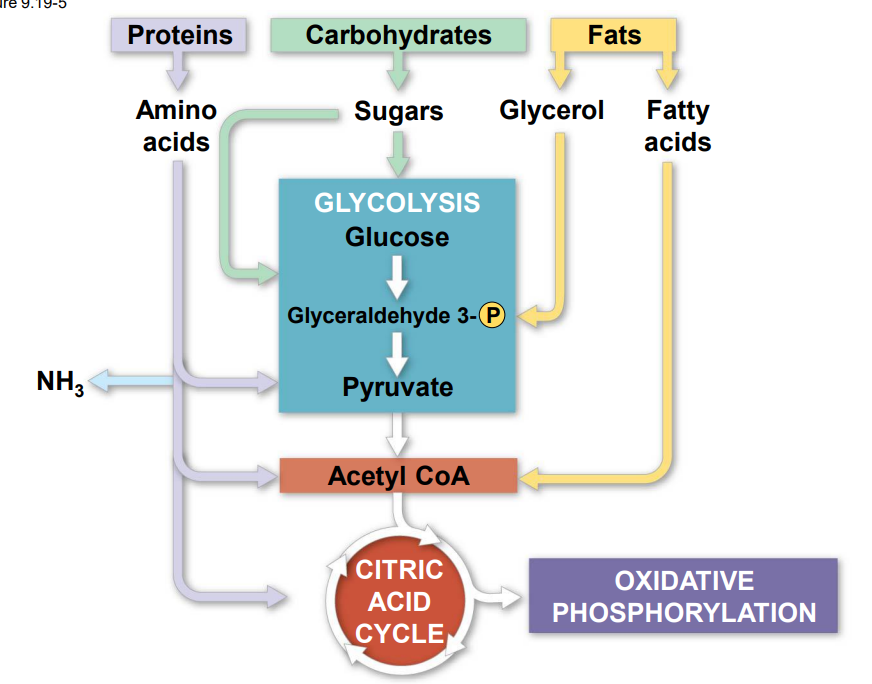
Catabolic pathways
Catabolic pathways release stored energy
election transfer plays major role in the pathways
central to cellular respiration
Catabolic pathways/production of ATP
breakdown of organic molecules is exergonic
Fermentation - partial degredations of sugars without O2
Aerobic respiration - consumes organic moledules and O2 and yields ATP
Anaerobic respiratoin - ^ consumes compounds other than O2
Cellular respiration includes both aeroni and anaerobic respitation but more often used referring to aerobic respiration

Principle of Redox
chemical reactions taht trasnfer electrons between reactants
called oxidation-reduation reactants of redox-reduction
In oxidation, a substance loses electrons or is oxidized
in reduction, substance gains electrons, or is reduced (positive charge is reduced)
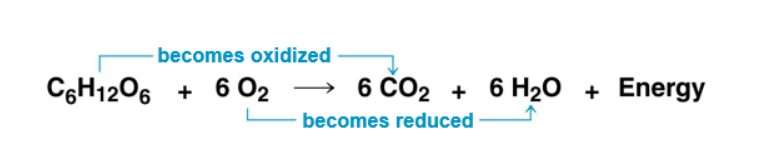
Oxidiation of organic fuel molecules during cellular respiation
During cellular respiation (such as glucose) is oxodized, and O2 is reduced
Energy harvest via NAD+, electron transport chain
in celular resp, glucose and other organic molecules are broken down in a series of steps
electrons from organic compounds are usually first transferred to NAD+, a coenzyme
each NAD+ (reduced form of NAD+) represents energy that is tapped to synthesize ATP
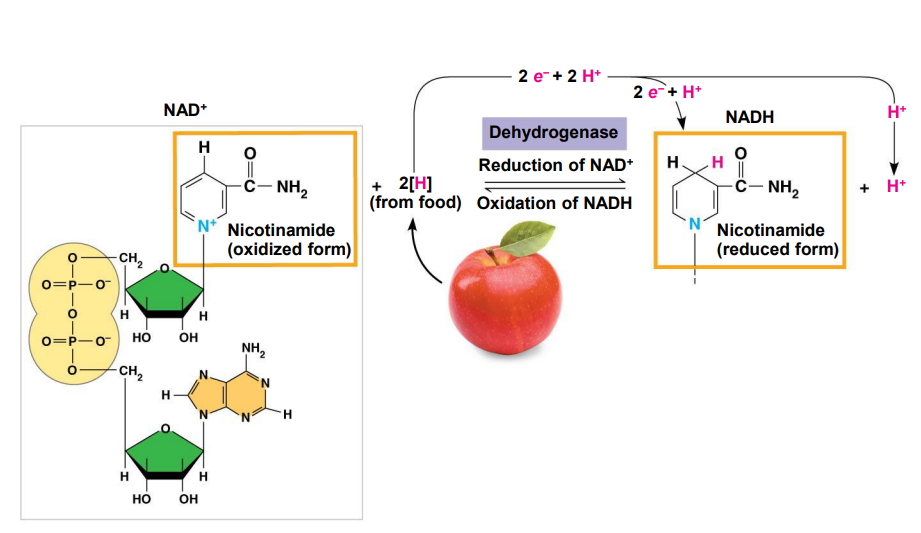
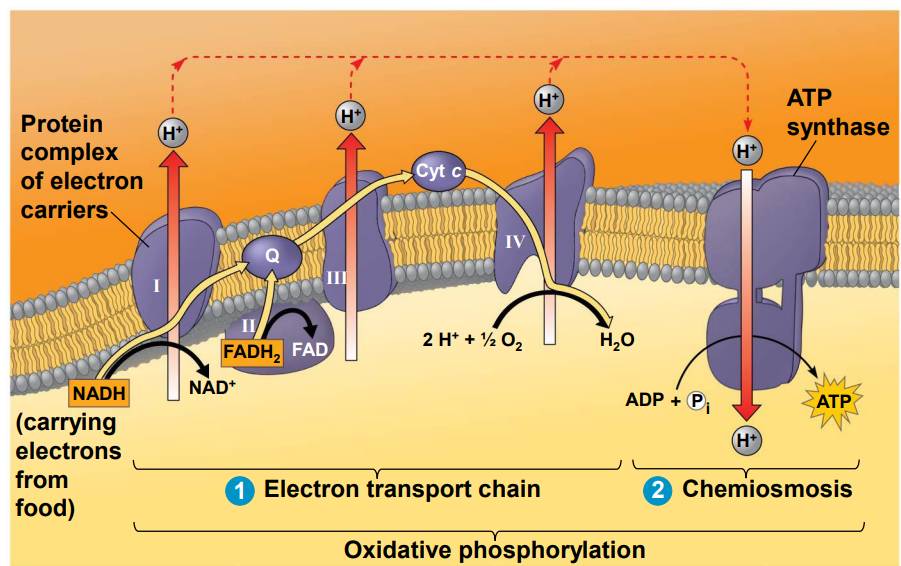
NADH passes through the electrons to the electron transport chain
the electron TC passes electtrons in a series of steps instead of one explosive reaction
O2 pulls electrons down the chain in an energy-yielding tuble
energy yielded is used to regen APT
Stages of cellular respiratin
The stages
Glycolosis (breaks down glucose into two molecules of pyruvate)
Citric Acid Cycle (completes the breakdown of glucose)
Oxidative Phosporylation (accounts for most of the ATP synthesis)
almost 90% of the ATP generates
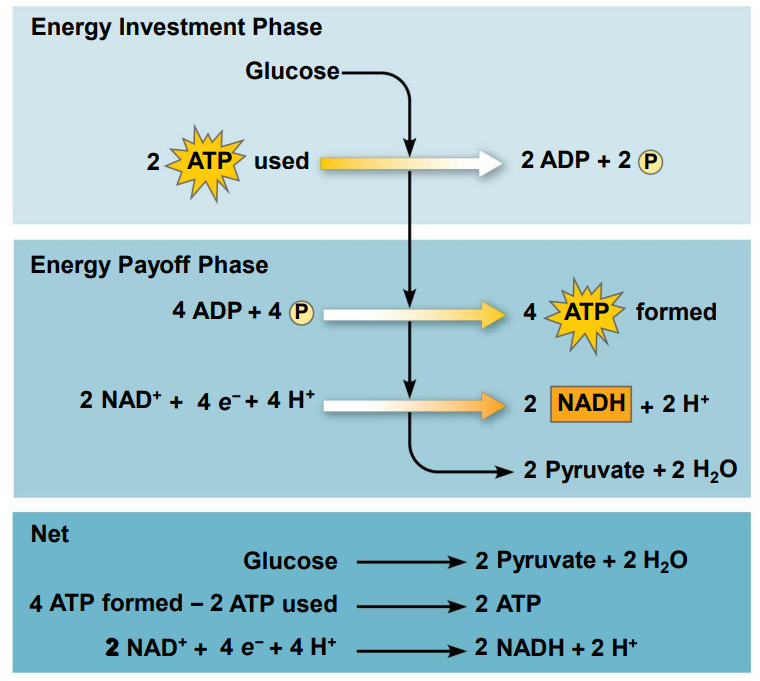
Glycolosis harvest chemical energy by oxidixing glucose to pyruvate
Breaks down glucose into two molecules of pyruvate
Glycolosis occurs in the cytoplasm and has two major phases
energy investment phase
energy payoff phase
occurs wether or not O2 is present
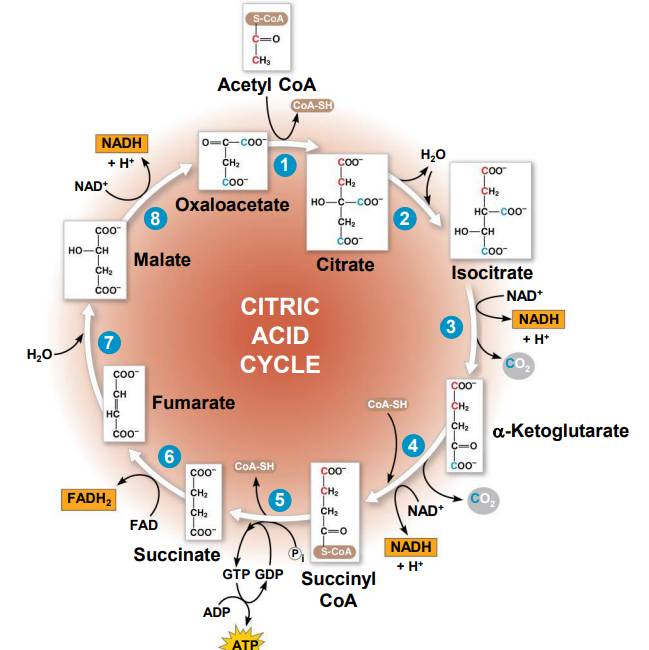
After pyruvate is oxidized, the citric acid cycle completes the energy-yielding oxidation of organic molecules
In the presence of O2 , pyruvate enters the mitochondrion (in eukaryotic cells) where the oxidation of glucose is completed
Before the citric acid cycle can begin, pyruvate must be converted to acetyl Coenzyme A (acetyl CoA), which links glycolysis to the citric acid cycle
The citric acid cycle (krebs cycle)
Completes the break down of pyruvate to CO2
The cycle oxidizes organic fuel derived from pyruvate, generating 1 ATP, 3 NADH, and 1 FADH2 per turn
Oxidative Phosphorylation/Osmosis
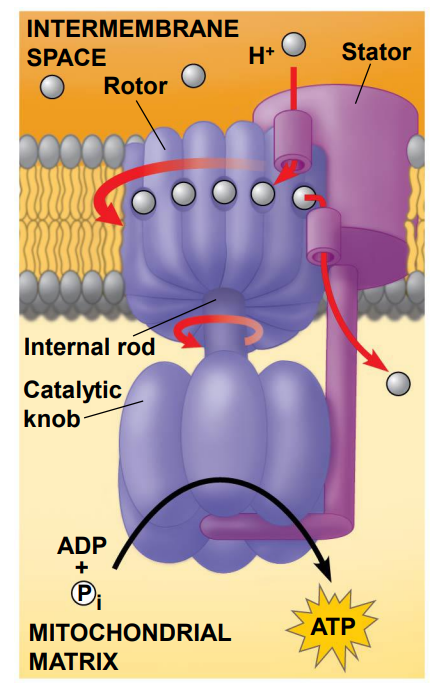
NADH and FADH2 are two electron carriers that donate electrons to the ETC , powers ATP synthesis via oxidative phosphorylation
most cellular respirations requires O2 to produce ATP
without O2, ETC will not work
glycolosis coupled with anaerobis respiration or fermentation to produce ATP
Anaerobic respiration uses ETC with a final electron acceptor other than O2
Fermentation uses substrate level phosphorylation instead of ETC to generate ATP
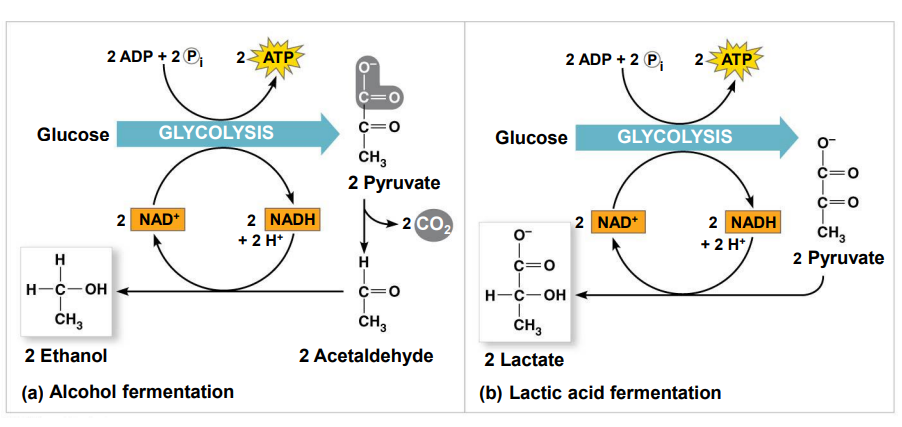
Types of Fermentation
Glycolysis plus reactions that regenerate NAD+, which can be reused by glycolosis
2 common types : alchohol fermentation and lactic acid fermentation
Obligate anaerobes carry out fermenation or anaerobis respiration and cannot survive in the presene of O2
Yeah and many bacteris are faculative anaerobes, can survive fermentation or cellular respiration