ENST2000 W2 Distributional Justice
ENST2000 w26
Environmental Justice
Week 2: Distributional Justice
Welcome!
Overview
Eco-Anxiety: A sense of worry regarding the future of the environment.
Active Learning Tutorials: Engaging in discussions and activities to enhance understanding.
Reading Notes: Notes based on assigned readings which will focus on various theories of justice, particularly distributional justice.
Key Concepts:
Equity: Fair distribution of resources.
Equality: Equal access and treatment.
Environmental Harms: Adverse impacts on the environment and communities.
Basis for Opposition: Reasons or principles guiding resistance against environmental injustices.
Vision Statement Assignment: Identifying ideals for environmental justice.
Green Gentrification: Analyzing the balance of improving urban areas without displacing existing communities.
Defenses Against Climate Change
Information Denial: Ignoring the signs of climate change, acting as if it does not exist.
Distraction: Diverting attention from pressing issues by focusing on unrelated concepts.
Technoredemption: The belief that technological advancements will solve environmental problems without changing behavior.
Regression: A psychological retreat where individuals hope that experts will solve complex problems, reminiscent of childlike dependency.
Reference: Kilvans 2019 (audio)
Caring for Eco-Anxiety
Strategies
Collective Action: Collaborating within communities to face eco-anxiety together.
Taking Breaks: Allowing oneself to recuperate mentally and emotionally.
Processing Feelings: Identifying specific environmental concerns that resonate personally.
Quote: “To work on one is actually to bring some healing to the whole thing.” (Craig Chalquist, quoted in Kilvans 2019, also see EcoJustice 2024)
Care + Accessibility
Reflection on Personal Circumstances
Importance of self-care and community wellness.
Health and Wellness resources:
[wellness.carleton.ca]
Awards and Financial Aid available for unexpected expenses or economic hardship.
[carleton.ca/awards/other-assistance-2/]
Care + Accessibility
Sharing Personal Stories
Students may choose to share personal circumstances (medical, financial, family) that may affect learning.
Encouragement of participation from individuals with diverse abilities, identities, skills, and experiences to enhance the course dynamic.
Paul Menton Centre for Students with Disabilities:
[https://carleton.ca/pmc/]
Active Learning
Learning Preferences
Studies indicate that students retain information more effectively through active participation (discussion activities).
Despite a preference for traditional lectures, engaging with materials and peers is essential.
Attendance at lectures and discussions.
Dedication of approximately 6 hours per week for coursework.
Listening with an open mind to diverse perspectives.
Taking personal risks by sharing thoughts and trying new activities.
Active Learning
Integrity in Academic Work
Engage with academic resources like writing centers, research assistance, and citation help when needed.
Centre for Student Academic Support (CSAS):
[carleton.ca/csas/]
Perspectives on Learning
Encounters with Knowledge
Quote: “Even if I did the wrong thing, someone was always there to teach me something different…” (Smiles, 2024, pp. 5-6)
Importance of humility and transfer of knowledge across generations.
Emphasizes the importance of acknowledging knowledge as a communal resource rather than individual expertise.
Tutorials - Week 2
Refer to Carleton Central for scheduled times.
Group agreements and discussions on Distributional Justice.
Reading Notes
Grading Structure
Total Points: 24
Due every Sunday after lecture.
Grading breakdown:
No pass: 0 points
Pass: 6.32 points
High Pass: 8 points
Accumulating three high passes will yield full points.
Reading Notes
Submission Guidelines
Opportunity to resubmit any reading notes twice.
Must submit previous evaluation sheets; otherwise, a resubmission will be automatically given a no pass.
Highest grade counts, submissions via Brightspace in the specified dropbox.
Reading Notes
Components of Submission
1) List: Detailed notes on the topic discussed.
2) Genre Writing: Learning how to present information in varied formats for different audiences, which may include press releases, fables, or biographies.
Theory
Understanding Theories
Theories serve as frameworks:
Descriptive Theory: Focuses on what is.
Normative Theory: Addresses what should be.
Evaluating Theory
Attributes of a Good Theory
Should be:
Sound: Logical and well-reasoned.
Useful: Applicable to present situations.
The effectiveness of a theory may vary with context and the nature of inquiries that arise.
Theories of Justice
Frameworks of Justice
Ethics: Moral principles guiding conduct.
Law: Regulations and statutes governing society.
Politics: Influences of governance and policy-making.
Equality: Emphasis on equal opportunity.
Equity: Focus on equal outcomes.
What are the ways that our society collaborates well and what are ways that we struggle to do so,
Distributional Justice
Definition
Concerns equitable access and exposure to environmental benefits and harms.
Askes the question abou thow is env harms and how is env benefits ditrubited, are they equal, are they just?
Environmental Harms
Types of Environmental Harms
Examples include:
Waste Storage: The impacts and health concerns related to improperly stored waste.
Land Uses: Activities that may be:
Damaging: Harmful to ecosystems and communities.
Dangerous: Potent threats to health or safety.
Ugly: Impacts on aesthetic quality of landscapes.
Case Study: Warren County, NC 1978-1982
Context
This instance gave rise to the focus on Toxic Waste Debate: Documented rise of NIMBY (Not In My Backyard) attitudes.
McGurty 1997 references several key events, specifically related to PCB waste.
Significant image documentation by Greg Gibson/AP Photo highlight the socio-political aspects of environmental justice.
North Carolina decided that the toxic waste run off should be allocated to a primally clay area in the Warren County, however this was primarily a poor, African American, community which represents one example of distributional injustice
Warren County, NC 1978-1982 (McGurty 1997)
Key Findings
Over ninety sites examined for potential remediation in NC.
Context: The county comprised a majority of African-American residents, was economically disadvantaged and faced agricultural challenges.
Quoted data: “One of five counties within North Carolina with majority African-American residents, it was also among the poorest and agriculturally least productive.” (p307).
Basis for Opposition
Influential Factors
Not In My Backyard (NIMBY): Local opposition to harmful projects.
Environmental Health Concerns: Cited health issues resulting from environmental hazards.
Environmental Racism: Disproportionate impacts on marginalized communities.
Reference: McGurty 1997
Some of the afflicted commintys of poor farmers, African Americans, and those who suffered poorly, reached out to pollical leaders
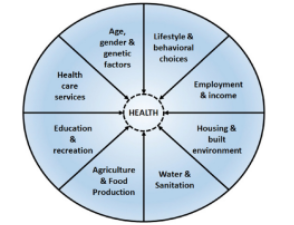
Social Determinants of Health
Definition
“Direct and indirect stressors that can be distributed both temporally and geographically across a population. Often referred to as the ‘social determinants of health’.”
Reference: McCallum et al. 2015, p99.
Social Epidemiology
Scholars and Works
Balazs, Carolina, and Isha Ray.
2014 study titled “The drinking water disparities framework: On the origin and persistence of inequities in exposure.”
Source: American Journal of Public Health, 104(4): 603-611.
Environmental Racism
Definition
“It has been known that communities of color are systemically targeted for the disposal of toxic wastes and the placement of this country’s hazardous industries–a practice known as ‘environmental racism’.”
Reference: Alston 2010 p14
Cited work: UCC - Toxic Waste and Race Report (1987).
Race + Racialization
Concepts
Social construct with material impacts that imply hierarchies.
Racialization: The process by which individuals are ascribed a racial identity, impacting societal perceptions and treatment.
Crucially important to understand that everyone is racialized, not just marginalized communities.
People of Colour
Importance of Advocacy
Highlighting the lack of representation and the influence of systemic oppression on various communities.
Loretta Ross: Activist focusing on issues pertaining to women of color and reproductive justice.
Sister Song: Women of Color Reproductive Justice Collective.
Reference to a video discussing these critical topics.\
*Insert YouTube Video*
Visible Minority
Historical Context
1975: Kay Livingstone's advocacy leading to Canadian Privy Council's acknowledgment of minority status in policies.
First National People of Color Environmental Justice Leadership Summit (1991)
Objectives
Sharing experiences among communities.
Development of theory grounded in experiential knowledge.
Emphasis on Praxis: Applying theory to action and real-world situations.
Principles of Environmental Justice
Key Tenets
Affirms the sacredness of Mother Earth and all species, advocating freedom from ecological destruction.
Demands public policy grounded in justice for all peoples, devoid of discrimination.
Mandates ethical use of land/renewable resources for sustainability.
Advocates protection from nuclear threats and toxic/hazardous waste.
Affirms political, economic, cultural, and environmental self-determination.
Calls for accountability of producers of toxins and hazardous materials.
Advocates equal participation in decision-making processes at every level.
Ensures the right to safe work environments without hazardous exposure.
Protects rights of victims seeking reparations and health care for environmental injustices.
Recognizes governmental acts of environmental injustice as violations of international law.
Acknowledges special relationships of Native Peoples in treaty contexts.
Advocates for ecological policies that respect cultural integrity and provide fair resource access.
Requires informed consent and halts experimental medical practices on people of color.
Opposes destructive operations of multinational corporations.
Rejected military occupations and exploitations affecting lands and cultures.
Promotes education that emphasizes social/environmental issues and diverse perspectives.
Requires individual choices to minimize resource use and waste production.
Context of the First National People of Color Environmental Leadership Summit on October 24-27, 1991, in Washington, DC.
Vision Statement Assignment
Details
Points Available: 24
Due: February 13 at 11:59 PM
Components:
Describe and analyze a vision related to environmental justice.
Prepare poster presentation scheduled in tutorials Week 5.
Written report must not exceed 500 words.
Importance on clarity, accuracy, and reflection in submissions.
No late assignments accepted.
Green Gentrification?
Examination of Concepts
Nature-Based Solutions: Green initiatives that may inadvertently lead to social issues.
Green Paradox: The idea that improvements can exacerbate class/racial inequalities.
Consequences include displacement and segregation arising from urban revitalization efforts (as discussed by Isabelle Angueloski in NetworkNature 2025).
Historical context of gentrification: Cycles of urban disinvestment and reinvestment that lead to community displacement.
Green Gentrification: Case Studies
Notable Cities
Examples of cities experiencing green gentrification include:
Atlanta
Austin
Copenhagen
Louisville
Milwaukee
Montreal
Nantes
Vancouver
Participant Perspectives on Green Gentrification
Personal Testimonies
“We have a lot more police in the neighborhood than we used to have and kinda do patrols of the park … so it’s harder to have a healthy mix of people in the places.” (Quotation from participant in NetworkNature 2025.)
Vision: Positive Environmental Justice
Core Concepts
Ensuring equitable access to environmental benefits.
Advocating for anti-displacement policies alongside greening initiatives.
Carbon Capture in Manitoba
Assessment Framework
Description of the case study.
Identify possible environmental benefits stemming from the project.
Outline potential environmental harms associated with the project.
Examine where benefits may be realized and where harms may be distributed.
Evaluate equity in distribution of benefits/harms and explore potential EJ (Environmental Justice) visions if inequities exist.
Week 3: Procedural Justice
Required Readings
Principles of Working Together: Insights from the Second People of Color Environmental Leadership Summit (2002).
Craft et al. (2021): Anishinaabe theories about law and knowledge, particularly regarding water. Recommended focus on specific sections.
Huq and Azaz (2024): Peer-reviewed article examining procedure/justice aspects in Bangladesh. Focus on principles surrounding rule-setting and governance.
Sekhukune et al. (2025): Report providing an example of procedural justice theory and practice in South Africa. Recommended to explore listed pages but open to broader reading.
Recorded
Regression to a Child's Position
Concept Overview:
Regression to a child's position refers to a psychological tendency where individuals believe someone else will solve complex problems rather than actively engaging in finding solutions themselves.
This could manifest in expectations placed on scientists, politicians, or experts as the ones responsible for solving significant issues (like environmental crises).
The Role of Environmental Anxiety
Understanding Eco Anxiety:
Continuously hearing negative news about ecological issues contributes to a sense of hopelessness.
Individuals may retreat into a passive mindset instead of engaging with issues affecting the environment.
Importance of Collective Action
Collective Action as a Solution:
To address eco anxiety effectively, psychologists recommend collective action—coming together as a community to address these concerns.
Engagement in collective efforts provides an opportunity for individuals to share their concerns and interests about the environment.
Being part of a class focused on environmental studies offers a chance for communal learning and growth, emphasizing shared goals amongst participants.
Engagement Strategies
Getting to Know Each Other:
Initiating conversations within the class to identify shared interests and collaborative goals.
Taking Breaks:
Recognizing the importance of personal well-being by scheduling breaks in busy weeks.
These breaks could involve engaging with aspects of the environment (walking, caring for pets, or watching movies).
Processing Feelings:
Encouraging discussions with friends or family about eco anxiety.
Reminding individuals to utilize campus resources, such as wellness counselors, for emotional support.
Personal Focus:
Individuals should focus on environmental elements that resonate personally with them.
The approach is to prioritize working on areas of passion, as collective efforts yield results in diverse ways.
Mental Health and Well-Being
Prioritizing Self-Care:
Self-care and community care are more important than solely focusing on academic obligations.
Utilize health resources available on campus for wellness.
Course Structure and Student Engagement
Flexibility in Learning:
Emphasis on accommodating students with diverse abilities and identities in the course setup.
Encouragement to speak up about any learning needs or barriers to fully participate in the class.
Utilization of Campus Resources
Opportunity for Student Success:
Students are encouraged to leverage various campus offices that are designed to support their academic and personal success.
Engage with writing centers, health resources, and career services to facilitate educational advancement.
Active Learning Focus
Active Learning Principles:
The importance of discussion and collaboration over traditional lectures.
Regular attendance, participation in discussions, and completing readings are mandatory for an enriching academic experience.
Cultural Learning:
Reference to the experiences of Bjorn Re Smiles illustrates the value of learning from community mistakes and collective knowledge dissemination.
Commitment to Integrity
Academic Integrity:
Importance of practicing individual writing and creativity instead of outsourcing tasks, as personal growth occurs through genuine effort and mistakes.
Creativity in Assignments:
Encouragement for students to express themselves creatively in writing assignments while adhering to academic standards.
Course Assignments Overview
Reading Notes Assignment:
Description and purpose of assignment which allows students to capture and articulate their understanding of various theories discussed in class.
Evaluation methods include various grades of pass, high pass, and no pass based on meeting defined standards.
Submission Process and Resubmissions:
Details about the allowance of resubmissions and necessary documentation requirements.
Theoretical Frameworks in Environmental Justice
Importance of Theory:
Understanding theories as frameworks for making sense of realities and guiding actions.
Distinction between descriptive theories (what is) and normative theories (what should be).
Emphasis on how theories help to focus attention on particular environmental issues.
Justice Concepts in Environmental Studies
Equity vs Equality:
Understanding the distinction between equity (focusing on outcomes) and equality (focusing on opportunities) in environmental contexts.
Discussion of access to environmental benefits and harms become central questions in environmental justice discussions.
Historical Context of Environmental Justice
Warren County's Environmental Crisis:
Examination of historical cases like Warren County and Love Canal as foundational events in environmental justice movement.
Emergence of key terms and concepts to address systemic injustices in environmental harm distribution.
Principles of Environmental Justice
Key Principles Established During the First Summit:
Emphasis on ecological unity, the sacredness of Mother Earth, and the right to be free from ecological destruction.
Theory Making in Practice:
Emphasis on praxis—knowledge production through communal experiences and direct actions.
Environmental Racism
Defining Environmental Racism:
Understanding the systemic targeting of communities of color for negative environmental impacts.
Discussion surrounding the societal and political structures allowing disproportionate placement of toxic waste sites in marginalized communities.
Summary of Learning Objectives
Engagement in Active Learning:
Students are called to engage, share, and create a supportive learning environment throughout the course.
Understanding of environmental theories, particularly regarding justice, pollution's effects, and advocacy through the lens of shared community experiences.