Artworks Abstract Expressionism
Jackson Pollock Works
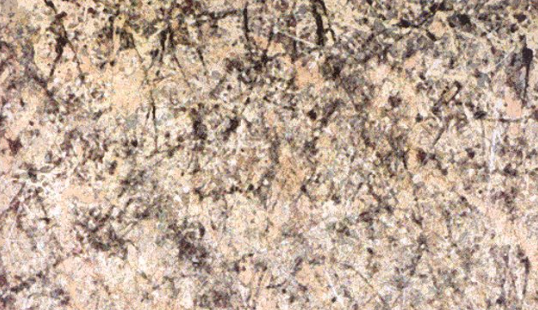
“Lavender Mist” / “Painting no 1, 1950” 221× 300cm
Oil and enamel on canvas Endless duality of space is contrived in this work. The colours are finely webbed and integrated into an allover unity, with out becoming solid at any point.
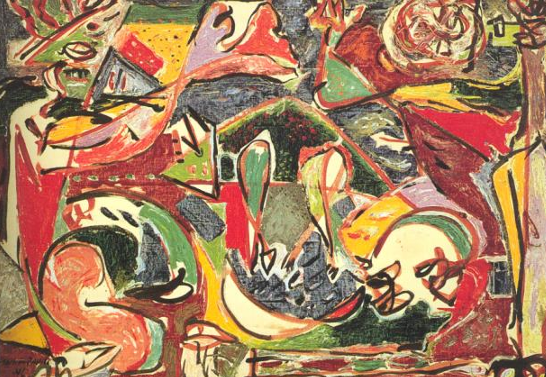
“The Key” – Jackson Pollock, 1946 Oil on canvas 1.47× 2.16m
Pollock utilizes broad, swirling brushstrokes and bold, layered colors to create a sense of depth and dynamic movement. The composition is densely packed with organic shapes, lines, and forms, hinting at both abstraction and figures, which draw the viewer's eye across the canvas in a complex, almost chaotic dance.
“Number 27” Jackson Pollock, 1950 Oil on canvas
dynamic drip painting characterized by intricate layers of swirling, overlapping lines in black, white, and earthy tones. The canvas bursts with energy, as Pollock’s signature "all-over" technique covers the surface with dense, rhythmic patterns, creating a sense of movement and depth.
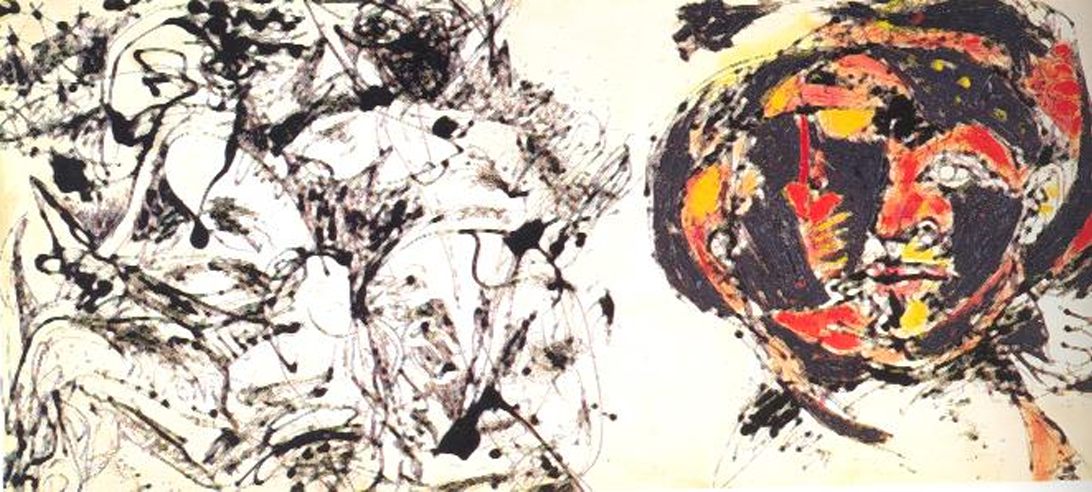
“Portrait and a Dream” Jackson Pollock, 1953, Oil and enamel
juxtaposes two contrasting halves: one side features an abstract, tangled web of lines and shapes, while the other contains a haunting, semi-abstract face.
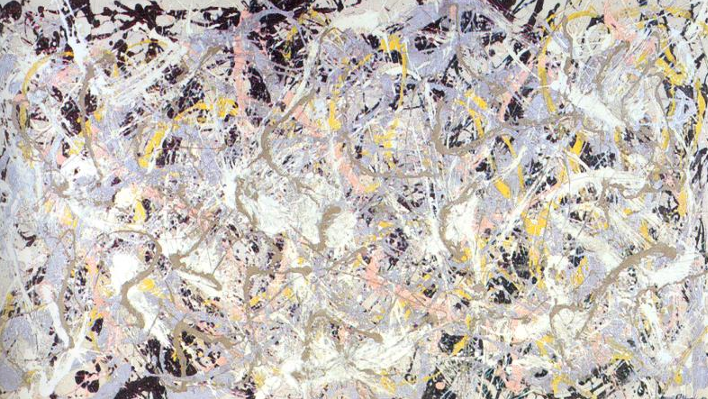
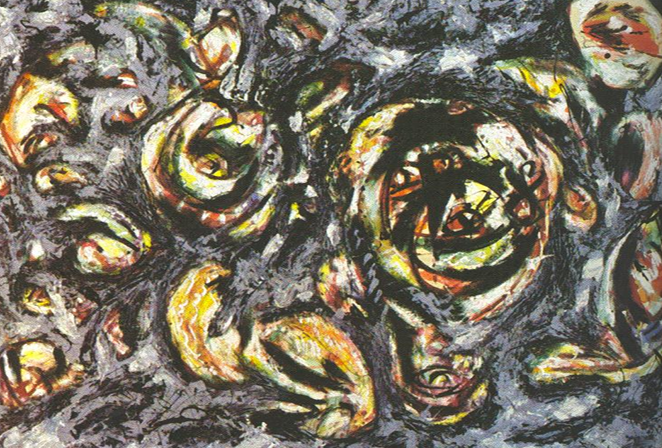
“Ocean Greyness” 1950 Oil on canvas
features swirling layers of muted grays, whites, and blues, creating a dense, misty atmosphere. The painting’s textured, rhythmic patterns evoke the movement and depth of ocean waves, embodying a tranquil yet mysterious quality.
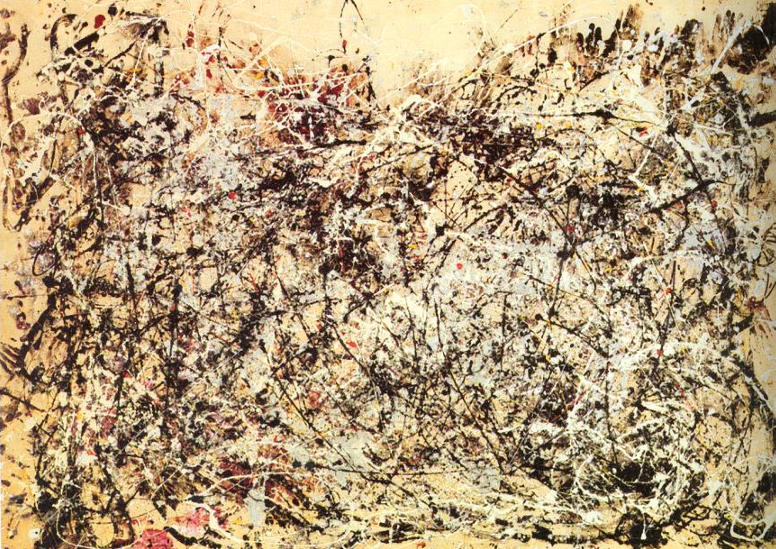
“Number 1, 1948” – Jackson Pollock, 1948, Oil & enamel on canvas
dynamic, large-scale drip painting that showcases his signature style of gestural abstraction. Using oil and enamel, Pollock creates an energetic, chaotic composition of tangled lines and splatters, emphasizing movement and spontaneity over form. The work is a prime example of his shift toward full abstraction.
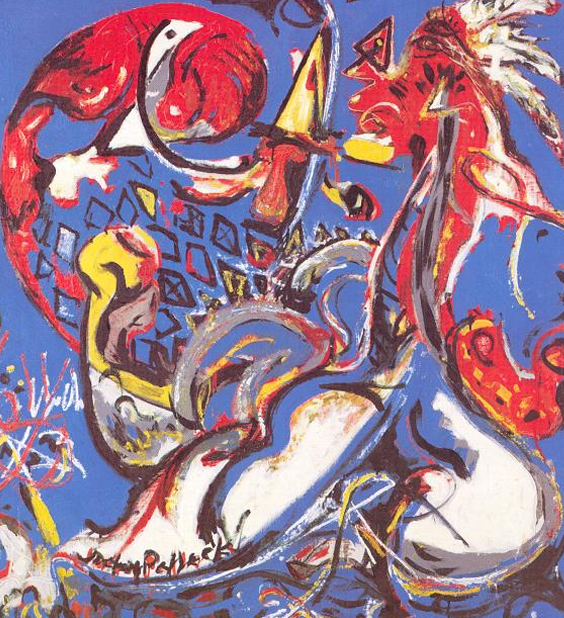
“The Moon-Woman Cuts the Circle” Jackson Pollock 1943, Oil 1195x104cm
surrealist-inspired painting featuring a dynamic, abstract depiction of a female figure and symbolic forms. The work blends organic shapes, energetic brushstrokes, and vivid colors, reflecting Pollock's early exploration of mythology and psychological themes, with a focus on movement and emotion.
“Autumn Rhythm” 1950 (2.6m x 5.3m)
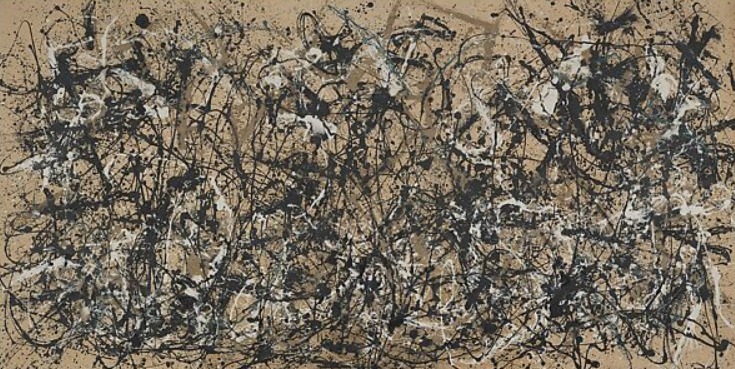
This work is an excellent example of Pollock’s drip technique. The canvas was used without primer and paint was applied from all around it.
Top Section: black, brown and red paint was splattered and thrown onto the canvas, causing a definite direction of marks. Bottom Section: black and brown paint dripped down sticks and brushes, the marks are generally more flowing and curved. In some places so much paint was applied that it dried in puddles, forming ridges in the surface. The overall impression is one of vibrant energy and vitality.
Willem de Kooning Works
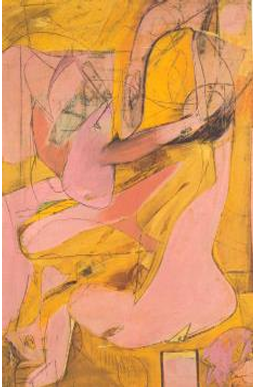
“Pink Angels” 1945, Oil on canvas
figurative yet abstract painting that features distorted, fleshy forms of women, rendered in soft pinks and vibrant reds. The piece captures de Kooning's signature blend of aggressive brushwork and sensuality, exploring themes of femininity, desire, and the tension between abstraction and representation.
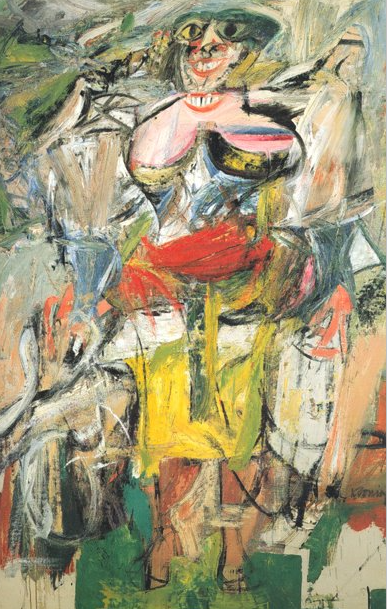
“Woman and Bicycle” 1953, oil
figurative painting that features a distorted female form amidst a vibrant, chaotic composition. The work blends abstraction and representation, with bold brushstrokes, vibrant colors, and a sense of movement. The fragmented figure of the woman is both sensual and unsettling, reflecting de Kooning’s complex exploration of femininity and identity.
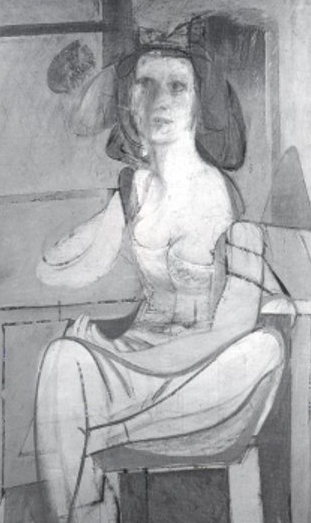
‘Seated Woman” 1940 Oil, Charcoal
early figurative work that depicts a woman in a seated position. The piece combines oil paint and charcoal, with bold, gestural lines and soft, muted colors. The figure is abstracted yet recognizable, showing de Kooning's emerging style that bridges realism and abstraction.
“Woman I” 1952 Oil on canvas 1.9 x 1.47m
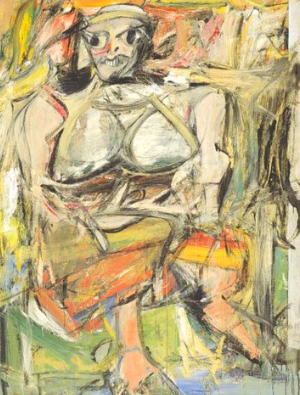
“Gotham News” 1955 Oil
abstract expressionist painting characterized by bold brushstrokes, energetic shapes, and vibrant colors. The work reflects de Kooning's exploration of chaotic urban life, with layers of color and form that suggest both abstraction and fleeting images of the city.
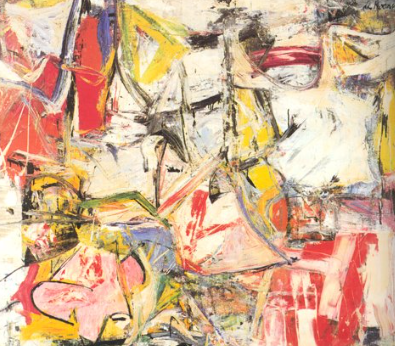
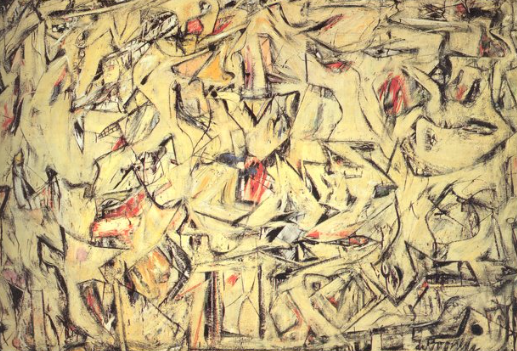
“Excavation” – Willem de Kooning, 1950 Oil