lab 1
Spectrophotometry:
passing light through a sample to of dissolved substances by measuring electromagnetic absorption.
In the spectrophotometer, white light passes through a prism to separate into individual wavelengths and give ==initial light intensity (Io) that passes through the cuvette,== sample absorbs some of that light and gives off the transmitted intensity (It) which is registered by the photoelectric cell and sent to detector.
^^Io-It=^^ the light absorbed by sample/^^Absorbance/optical density^^ which is proportional to concentration of sample.
Colorimeter
measuring concentrations of compounds as it correlates to its intensity of colour.
| Colorimeter | Spectrophotometer |
|---|---|
| more specific type | general type |
| limited to visible light wavelength: 400-800nm. | applicable to UV, IR, X-ray and radio frequencies. |
Both colorimeter and spectrophotometer have the same basic preparations and both measure intensity of colour through light.
Determination of unknown concentration:
A) sample vs std method
Beer’s lambert’s law: we can determine unknown concentration of substance by using known concentration of the same substance.
absorbance is equal to substance constant times length of cuvette times substance concentration.
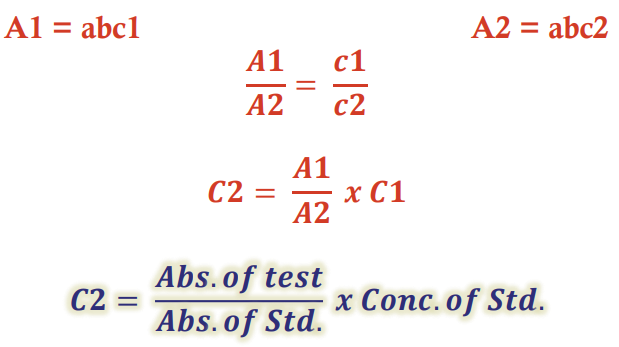
B) standardization graph
we create a ==standard curve== by measuring absorbance of standard (solution of known conc) and plotting the absorbance against known concentration. From the resulting line/graph, we can determine unknown concentration using its measured absorbance.
Blanks
a blank is added before quantitative testing using spectrophotometer to %%cancel/exclude%% reagent colours that could affect the unknowns wanted absorbance value.
.
Blanks
To from quantitative testing of unknown substance.