recycling papers and boards
DEFINITIONS
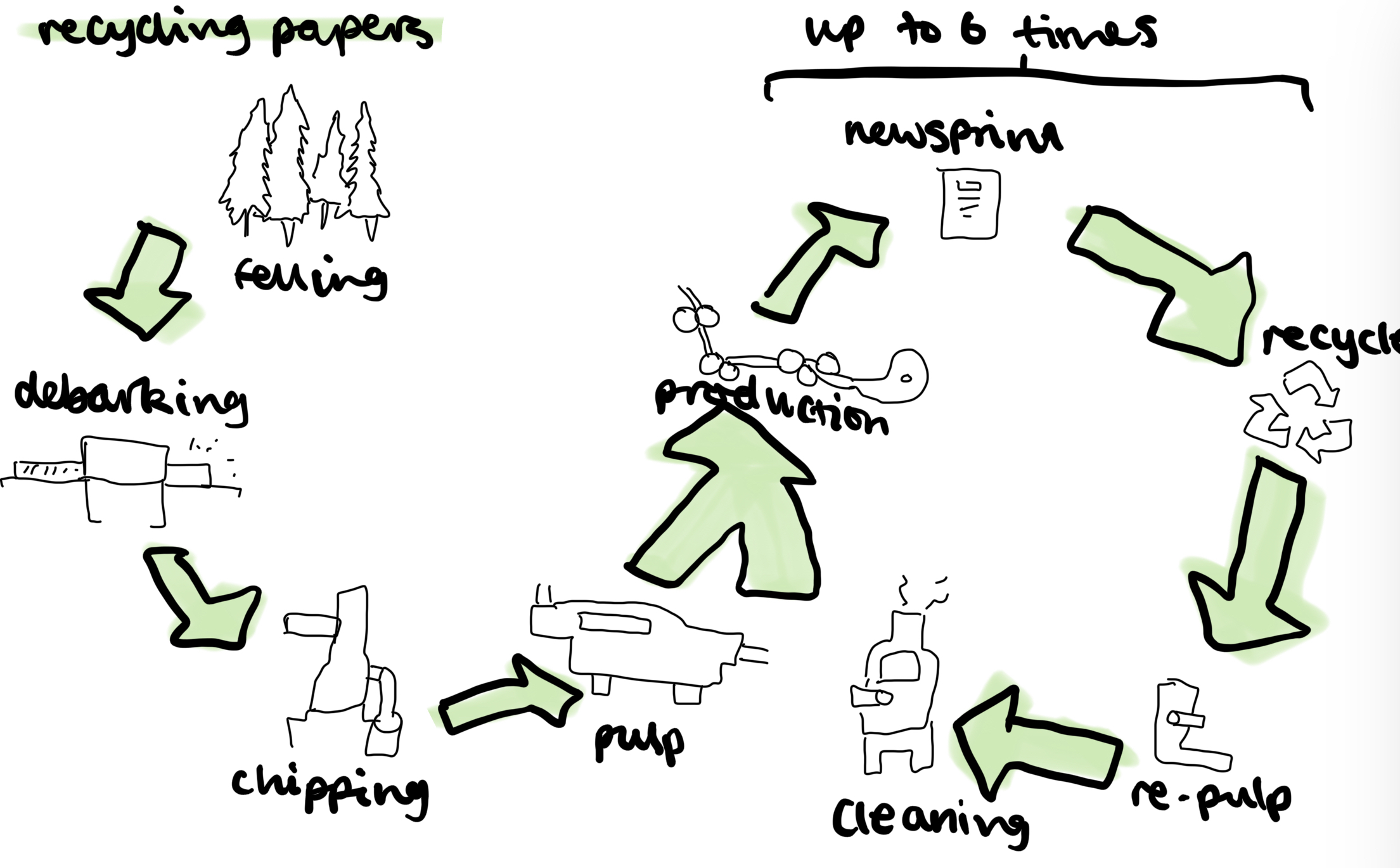
recyclable - paper that can be re-pulped and turned into new paper and reused, this can happen up to six times
compostable - a biodegradable material that can break down naturally, with the help of moisture
biodegradable - a material that can be broken down by micro-organisms. some coatings also can’t be broken down by micro-organisms making them non-biodegradable
virgin pulp - paper pulp that has not been recycled
RECYCLING
paper can not be recycled if it’s laminated with non recyclable materials or has a strong bonds or needs extra processing. papers also can’t be recycled if there is grease or dirt. paper can also be impregnated with wax for a food safe insulation, that is also resistant to bacteria - this also cannot be recycled. some papers and boards contain metals and plastics that can’t be recycled. some coating also can’t be broken down by microorganisms making them non-biodegradable. papers cannot be recycled more than 6 times as the fibres become too short to reform paper or board
recycling saves water each time and reduces the need for new raw materials. untreated paper doesn’t need to be processed before recycling but treated paper has to be de-inked, pulped and bleached. on average 4 billion trees are felled per year for paper and board production
paper has many categories to sperate papers to allow for more efficient recycling, there are also categories for mixed materials
recycled paper uses 40-70% less energy and produces 73% less air pollution, using recycled paper also reducing the carbon footprint and saves space in landfill. but chemicals such as bleach are stilled used in production
FOREST PROTECTION
the FSC (forest stewardship council) and the PEFC (programme for the endorsement of forest certification) both work to protect forest by ethically sourcing wood. they reduce deforestation and advocate for the protection of animals habitats - 2/3 land animals rely on trees. they provide jobs for locals and have safe workplaces that provide a fair wage. they try to reduce the steps of global warming by replanting and stopping illegal logging. they also do auditing of areas
VEGWARE - CASE STUDY
Vegware is a group that provides recyclable and biodegradable alternatives for catering companies, they have saved 8.8 tonnes of carbon, 5.1 tonnes of virgin materials and 13 tonnes of packiging from landfill. They have reduce the catering waste of the NHS by 70% and 2,500 meals a day use their products
they use:
paper and card
clear PLA for cold use
CPLA for hot food
natureflex from wood pulp as an anti-grease, heat-sealable product
bagasse made from sugarcane for sturdy practical use in any temperature
palm leaves are pressed and used in products
inks are also water or vegetable based, reducing the impact on the environment