Cardiovascular System
Cardiovascular system
The cardiovascular system is comprised of the heart and the circulatory system of blood vessels. The heart is composed of four chambers; two atria and two ventricles. Blood enters the heart through the upper chambers of the left and right atria and exits via the left and right ventricles. Heart valves prevent the backflow of blood.
The heart acts as a two-way pump. The right side of the heart pumps deoxygenated blood into the pulmonary circulation of the lungs, where the blood is reoxygenated again. While the left side of the heart simultaneously pumps oxygenated blood into the systemic circulation, distributing it to the peripheral tissues. The regular pumping, or heartbeat, is controlled by the conduction system of the heart.
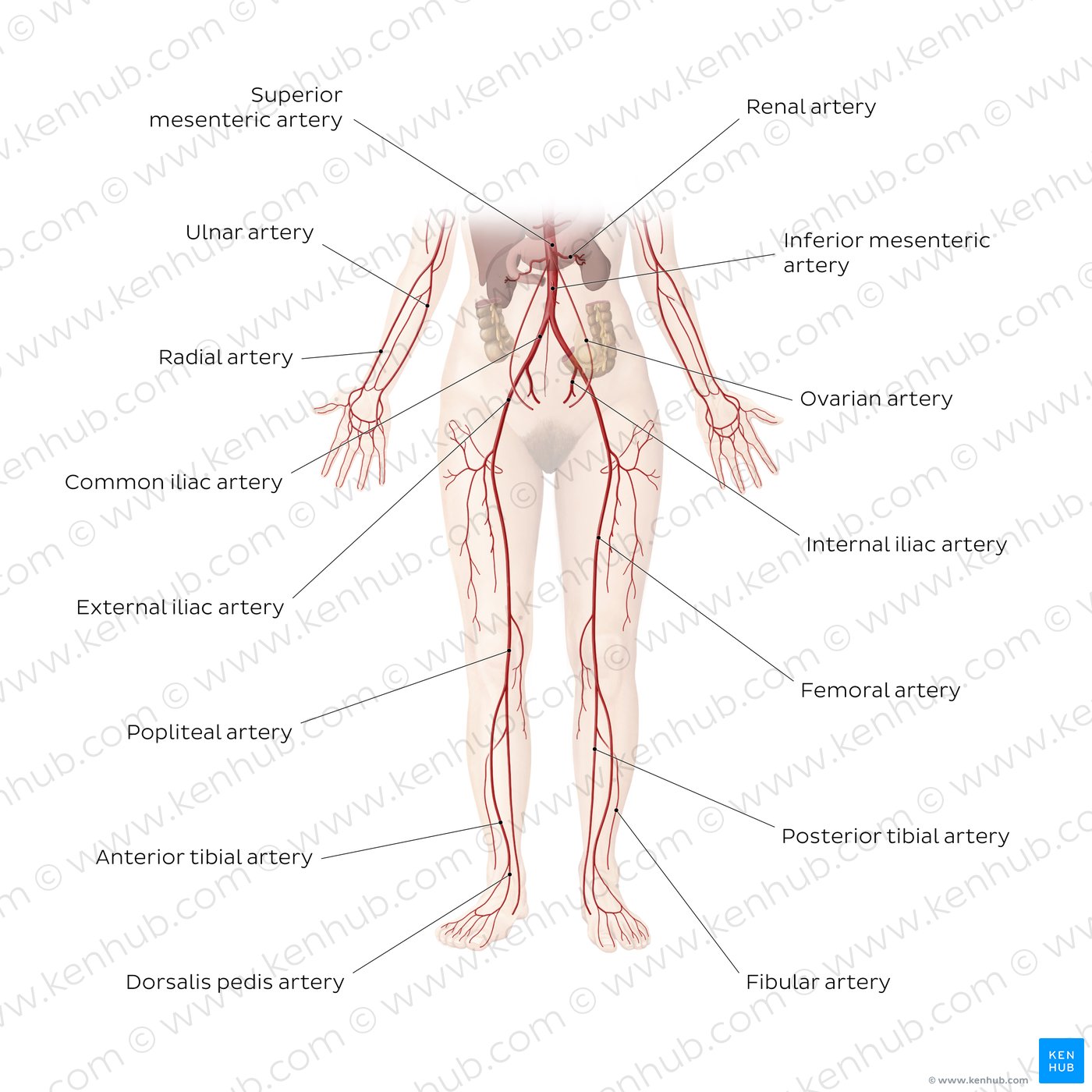
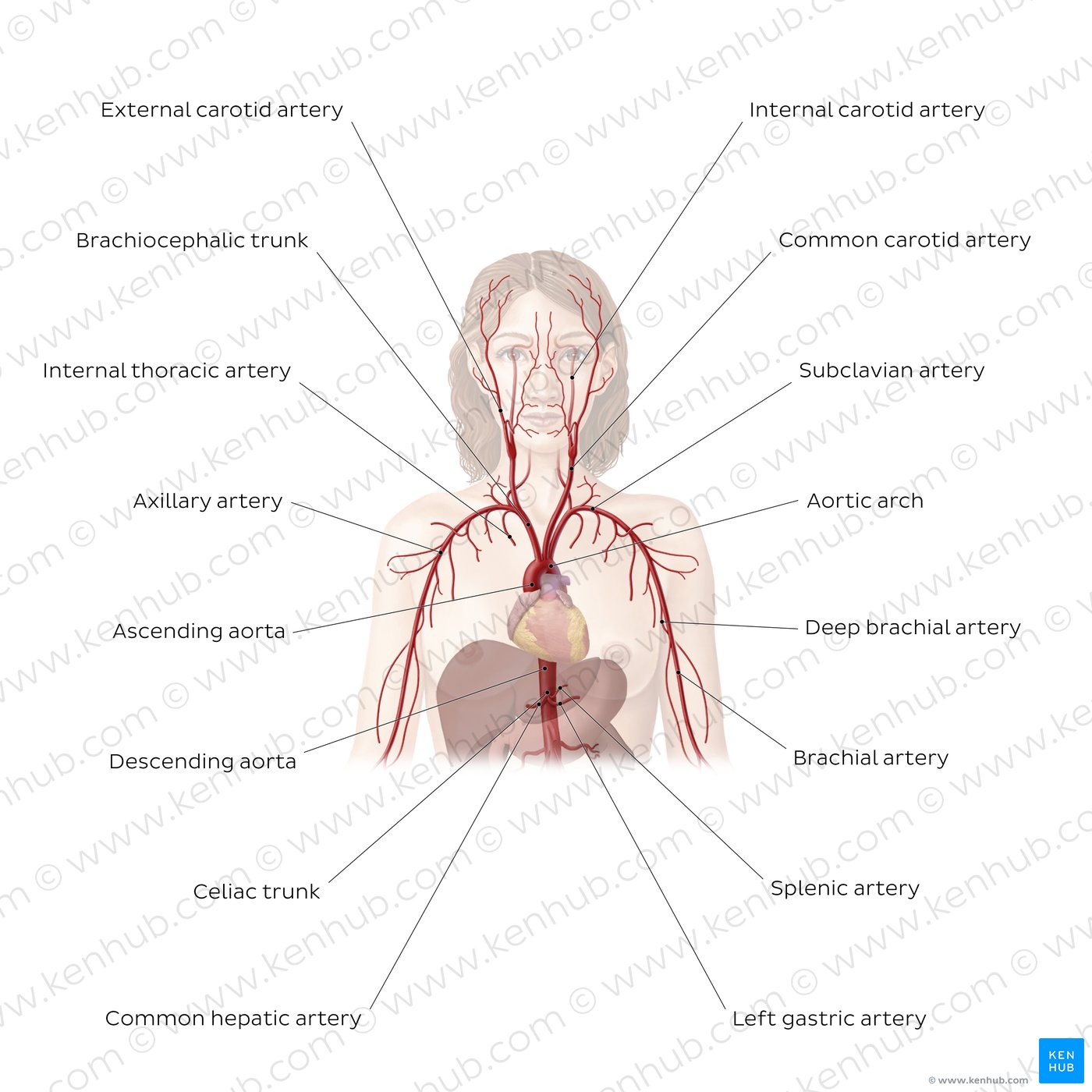
The circulatory system, also called the vascular system, consists of arteries, veins and capillaries. They all comprise a continuous network of vessels which act to carry blood around the body. Blood leaves the heart via arteries, these progressively reduce in size to continue as smaller arterial vessels called arterioles. Arterioles end in a web of even smaller vessels called capillaries. The exchange of gases and nutrients occurs through the capillary walls.
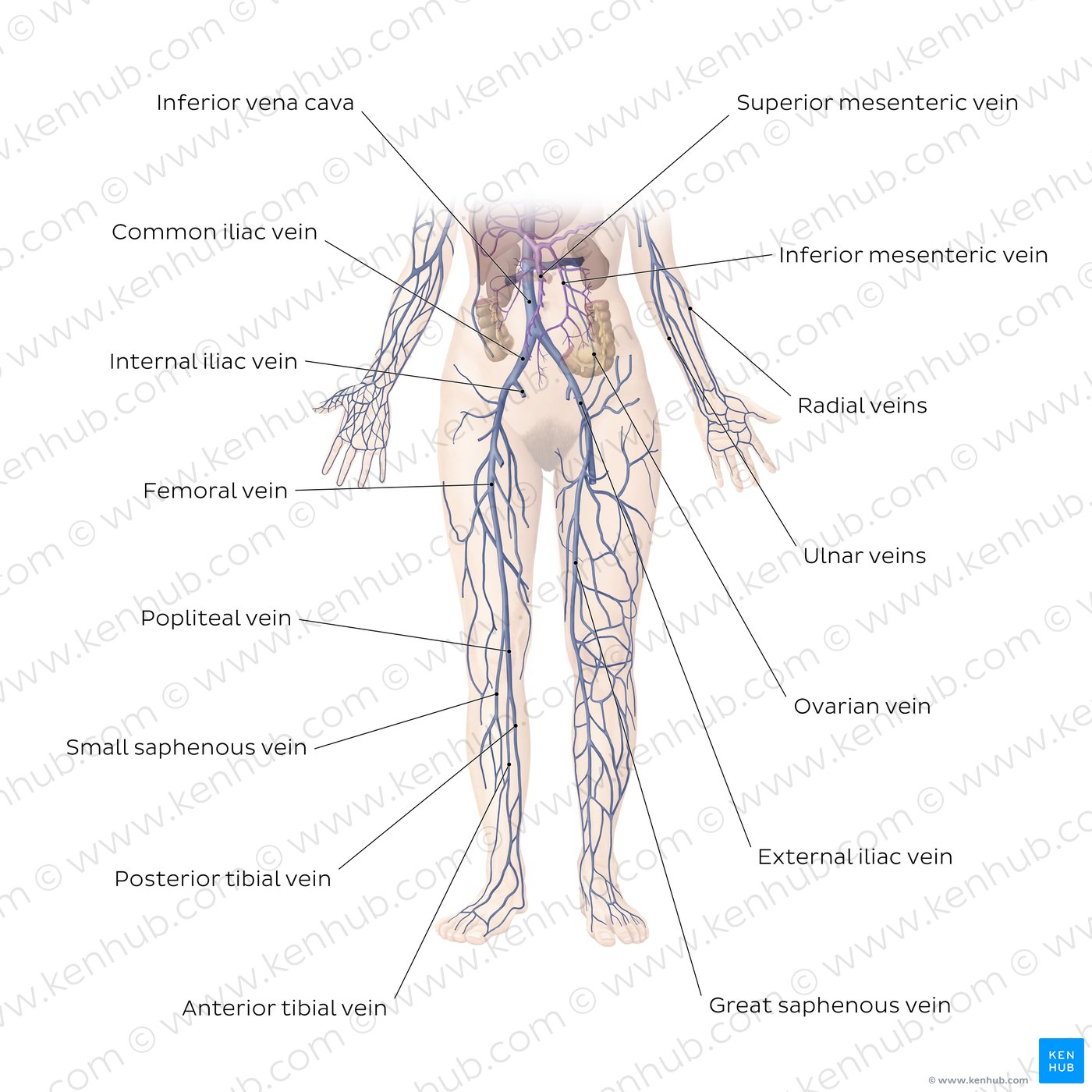
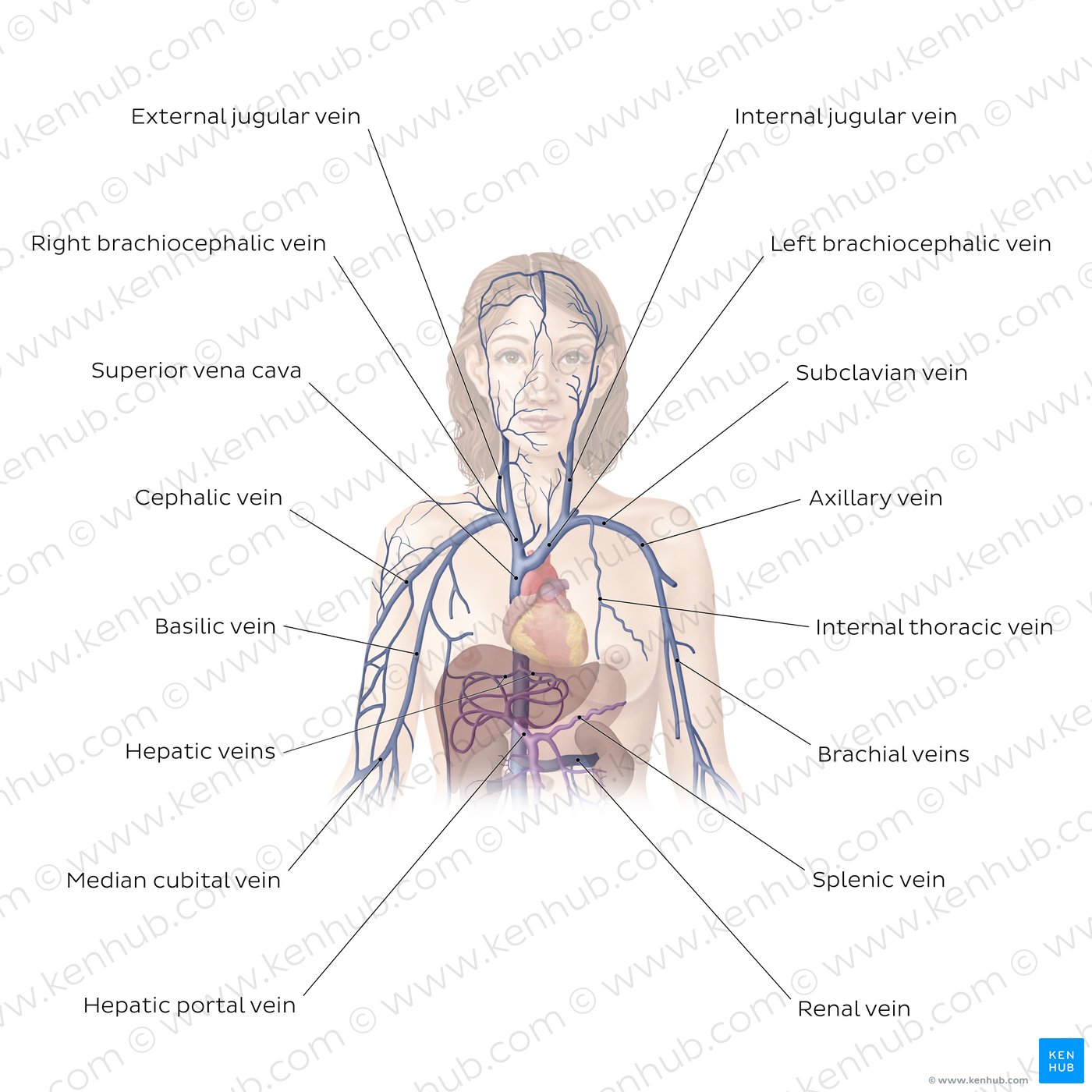
Small veins, called venules, leave from capillaries and gradually increase their lumen on the way to the heart to end as veins. There is a certain histological difference between arteries and veins, but their main functional difference reflects the direction in which they conduct blood: the arteries convey blood from the heart to the periphery, whereas the veins convey blood from the periphery to the heart.
There are three separate circuits to the circulatory system.
- The pulmonary circulation which carries blood between the heart and the lungs;
- The coronary circulation which supplies blood to the muscle of the heart;
- And the systemic circulation which carries blood to the rest of the body.
Major arteries within the systemic circulatory system are the aorta and its branches, while the main representatives of the veins are the superior vena cava and inferior vena cava.
Major functions of the cardiovascular system include transportation of oxygen, nutrients and hormones throughout the body within the blood, and as well as eliminating carbon dioxide and other metabolic waste.