Dental Hand Instruments & Basic Tray Setup
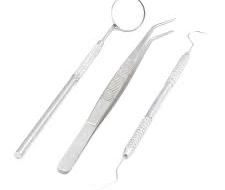
Basic Tray Setup
The foundational arrangement every operatory should be able to produce on demand.
• Top → Bottom Ordering (left-to-right if placed horizontally):
– Mouth mirror
– Explorer
– Cotton forceps ("pliers")Objective: ensure the dentist or hygienist can immediately perform examination, retraction, light reflection, and material transfer without additional instrument hunts.
Examination & Visualization Instruments
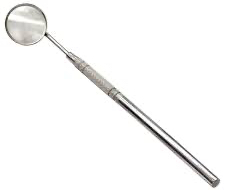
Mouth Mirror
• Provides indirect vision when direct line-of-sight is impossible (e.g., lingual surfaces of maxillary incisors).
• Retracts soft tissues (lips, cheeks, tongue) to improve access & protect tissues.
• Reflects operatory light into depths of the oral cavity or cavity preparation, enhancing illumination & contrast.
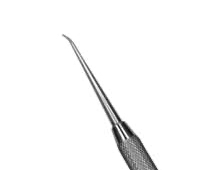
Explorers
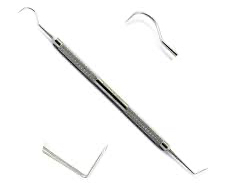
• Fine, sharp working ends for tactile detection.
• Uses: identify caries, calculus, decalcification, defective margins, and other surface irregularities.
• Common designs: #17, 23 (shepherd hook), Orban, pigtail, etc.
• Clinical pearl: Light grasp with minimal pressure prevents iatrogenic cavitation of incipient lesions.
Cotton Forceps (Pliers)
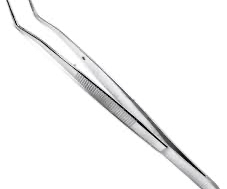
• Serrated tips for secure grasp of cotton rolls, small instruments, wedges, matrix bands, or medicament pellets.
• Transfer items into/out of oral cavity without contaminating gloved hands.
Numbering Systems for Hand Cutting Instruments
Instrument formulas stamped on the handle standardize size & angulation.
Three-Number Formula (GV Black):
• number = blade width
• number = blade length
• number = blade angle (to long axis of handle)
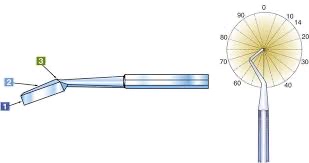
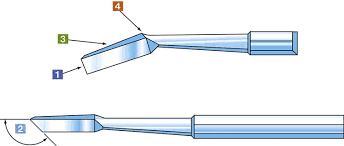
Four-Number Formula (used when cutting edge ≠ 90° to blade):
• = blade width
• = angle of cutting edge
• = blade length
• = blade angleSignificance: allows replacement ordering, regulatory tracking, and ergonomic consistency regardless of manufacturer.
Primary Hand Cutting & Planing Instruments
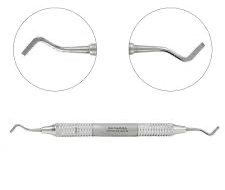
Enamel Hatchet
• Cutting, cleaning & smoothing cavity walls.
• Removes unsupported enamel rods that rest on dentin.
• Bevel opposite side for mesial vs distal versions; used with chopping motion.
Enamel Hoe
• Cleans & smooths cavity floor/walls; blade oriented at 45° to shaft—pulling motion.
• Ideal for Class III & V internal line angle refinement.
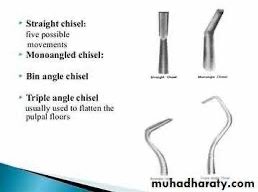
Straight Chisel
• Planes & cleaves enamel in cavity prep.
• Bevel on one side only; pushed with force to split enamel along rod direction.
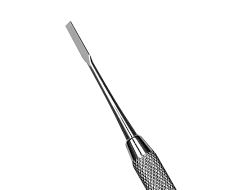
Bin-angle, Triple-angle & Wedelstaedt Chisels
• Provide access to different portions of occlusal table without hand interference.
• Same planing/cleaving purpose as straight chisel.
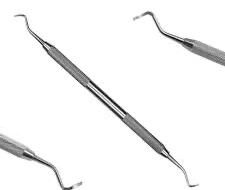
Gingival Margin Trimmer (GMT)
• Two paired instruments: mesial & distal (cutting edges set at opposing angles).
• Functions:
– Bevel cervical (gingival) walls in proximal box.
– Create retention grooves (mesial/distal) by trimming unsupported enamel.
– Smooth the cavosurface to accept matrix & final restoration.
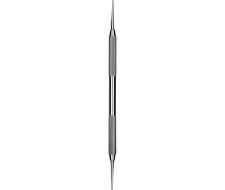
Angle Former
• Essentially a chisel + gingival margin trimmer hybrid.
• Establishes line & point angles, particularly in internal outline of cavity preparations.
• Produces retentive features in dentin for amalgam/composite.
Excavators & Secondary Functions
Spoon & Discoid Excavators
• Scoop-shaped edges for removing infected (carious) dentin—"spooning out" soft tissue.
• Double-ended; larger vs smaller spoon sizes.Secondary / Multifunctional Uses
• Remove temporary cement or IRM between appointments.
• Dislodge provisional crowns or excess temporary restorative material.
• Excavate permanent restorative material when performing repairs.
Clinical & Practical Connections
Proper selection of hand instruments reduces over-preparation, preserving tooth structure and maximizing long-term prognosis.
Knowledge of instrument formulas aids compliance with sterilization tracking and replacement—essential in modern infection control protocols.
Mastery of planing/cleaving tools is foundational before adopting high-speed rotary burs; many boards still test manual techniques to ensure tactile competence.
Ethical & Ergonomic Considerations
Over-zealous explorer use can create cavitated lesions; ADA advocates for visual & radiographic corroboration.
Mirrors provide ergonomic benefit—less neck flexion for operator and increased patient comfort when lips/cheeks are gently retracted.
Correct GMT usage prevents unnecessary gingival trauma, aligning with minimally invasive dentistry principles.