BIOL 310 - Ch 2 Lecture Notes
cell overview
prokaryotes: large circular chromosome & no organelles
eukaryotes: membrane bound organells, nucleus, mitochondria & chloroplasts
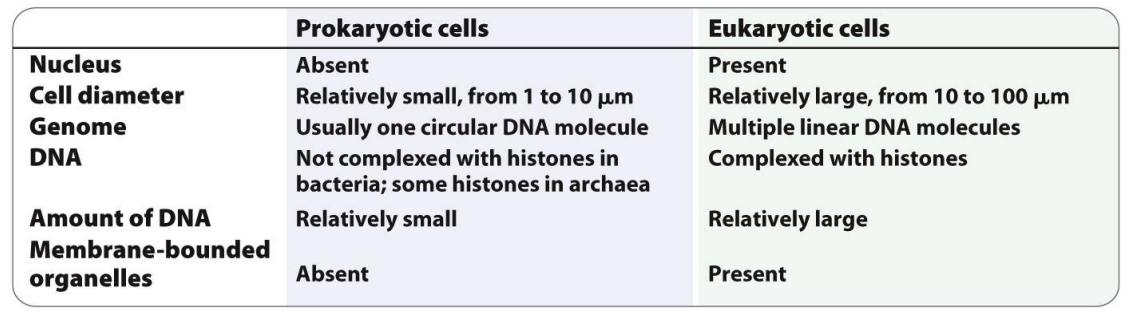
cells & DNA composition
prokaryotic: one circular chromosome packaged as nucleoid
extra-chromosomal DNA as plasmids; multiple copies of these dispersed around the cell
eukaryotic: two to many that are linear (diploid)
varies in size from small to larger
DNA packaged in histones
extra-chromosomal DNA in mitochondria & chloroplasts that are circular
eukaryotic genome
diploid with two to many chromosomes
genes & alleles (homo or heterozygous)
basic eukaryotic chromosome structure
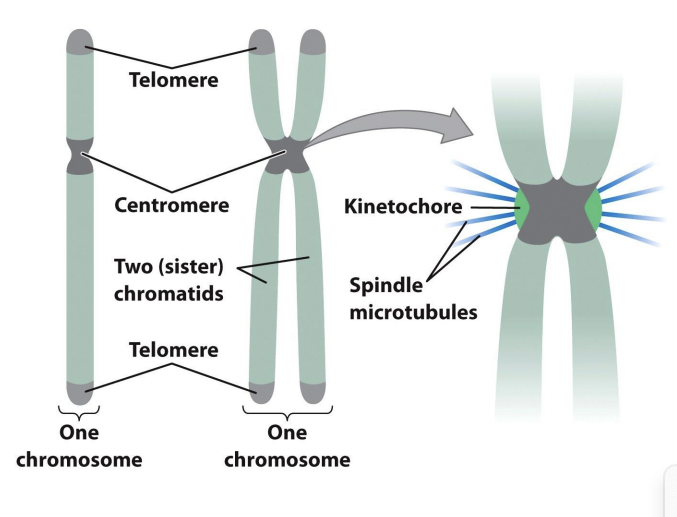
each chromatid has two telomeres and one centromere
kinetochore on one chromosome where the spindle microtubules attach during metaphase & pull apart during anaphase
upper arm P; lower arm Q
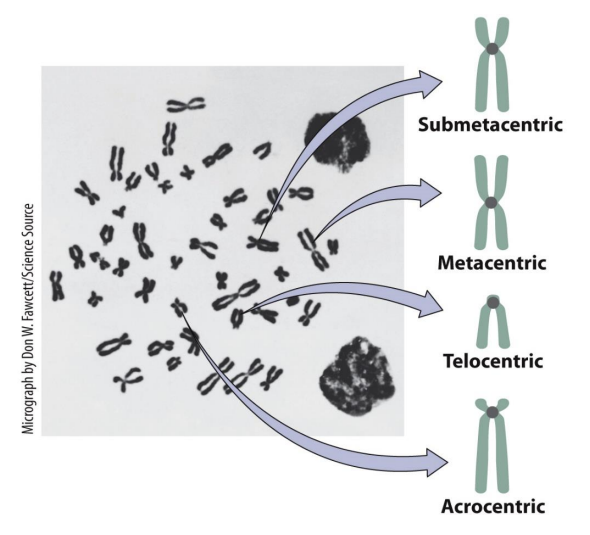
chromosomes are classified by location of centromere
cellular replication
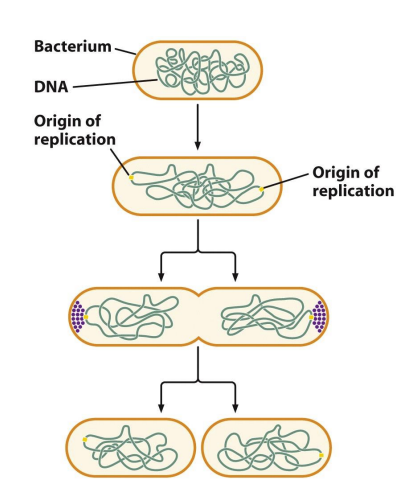
prokaryotes - binary fission
single chromosome and initial single origin of replication
once replicated, two copies with one single of origin that are pulled in opposite direction by poles situated at either end of the elongated cell
DNA segregates & fission of the cells occurs
eukaryotes - complex & slow, cell division by cell cycle
G1 - growth period
the cell can proceed forward or stay in G0 which is a nondividing phase
G1 / S checkpoint gives clearance to proceed to the S phase
S phase - synthesis phase
duplication of the genetic material
G2 - prepping the cell for mitosis
G2 / M checkpoint that corresponds to the correct molecular signals alerts process to continue
M - Mitosis
cell is divided to produce two genetically identical cells from one cycle
interphase - no activity
prophase - mitotic spindle forms & chromosomes condense
prometaphase - disintegration of nuclear membrane; spindle microtubules attach to chromatids
telophase - chromosomes lined up at spindle poles
anaphase - sister chromatids get pulled apart; genetic material located at the poles
metaphase - chromosomes line up on the metaphase plate
end result of mitosis: two daughter cell that are identical and diploid
Meiosis
gamete production which results in four daughter cells that an non-identical and haploid
there is one round of replication and two rounds of division
Middle Prophase I
chromosomes begin to condense and the spindle forms
Late Prophase I
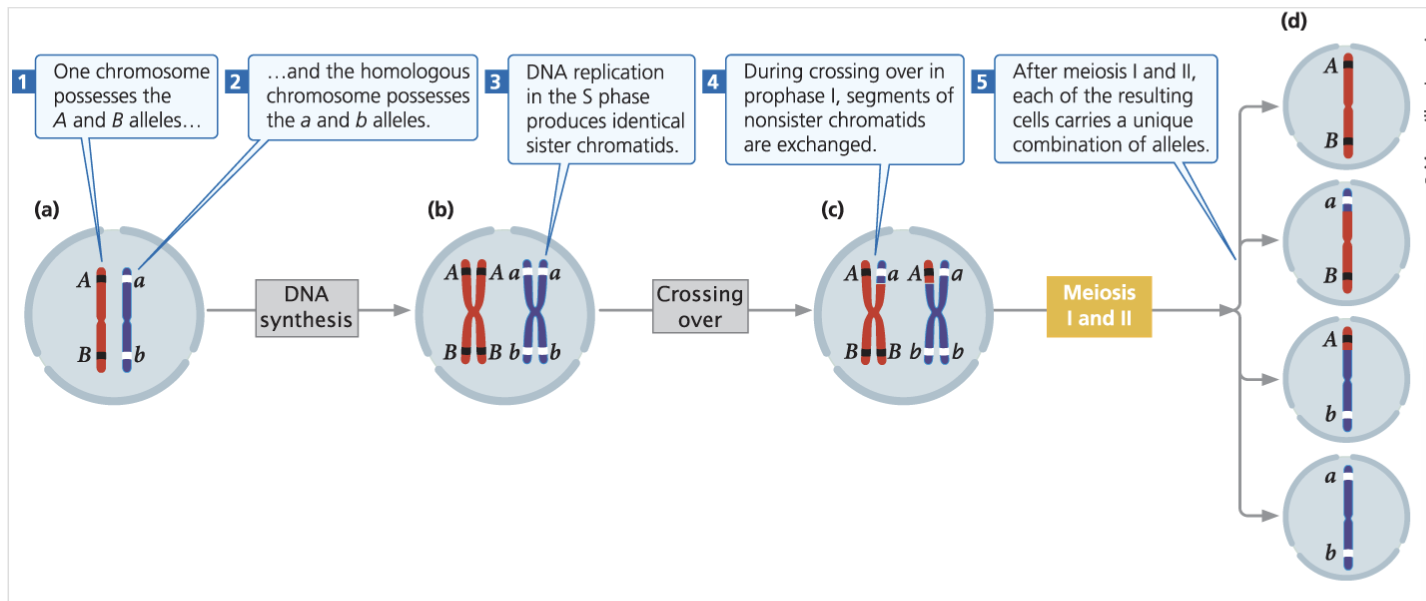
homologous chromosomes pair up and formation of chiasmata occurs
crossing over takes place & the nuclear membrane breaks down
Metaphase I
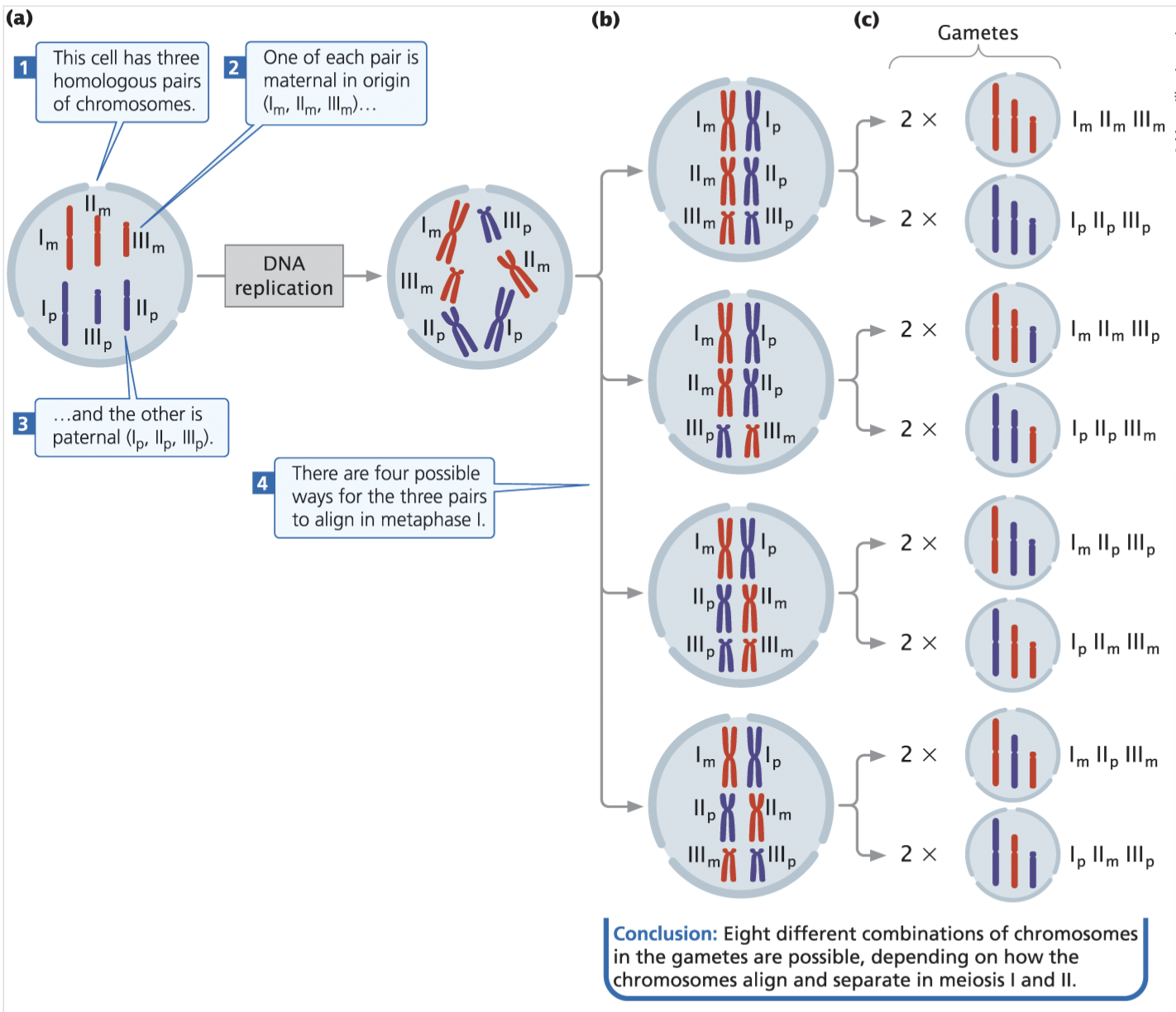
homologous pair of chromosomes line up along the metaphase plate
Anaphase I
homologous chromosome separate and move towards opposite poles
Telophase I
chromosomes arrives at spindle poles
Prophase II
the chromosomes recondense within nuclear membrane
Metaphase II
individual chromosomes line up on the equatorial plate
more spindle fibers to pull apart individual chromatids apart
Anaphase II
sister chromatids separate and move towards opposite poles
Telophase II
four poles present
Cytokinesis
splits the cell into four daughter cells
Meiotic Recombination
reduction in chromosome number
crossing over occurs in prophase I
recombination and genetic diversity
synaptonemal complex - breaking & joining of chromosome to result in bivalent or tetrad chromatids
Mitosis - cohesin ring to keep sister chromatid together until the breakdown of cohesin during metaphase allows the sister chromatids to separate during anaphase
Meiosis - cohesin and protein shugoshin are present
shugoshin remains at the centromere during anaphase I to protect the sister chromatids from splitting
anaphase II degrades so cohesin breaks down to allow the chromatids to split
Meiosis in Male vs Female
male: produces large quantity of small mobile gametes
spermatids (1n)
female: produces few large stationary gametes
ovum (1n)
Plant reproduction
Meiosis → spores (undergo mitosis) → gametes (both male & female depending on genotype) → fuse by fertilization to form zygote
generation alternation: sporophyte to gametophyte
model organisms
typically small, simple, have a fast replication time, easy to keep, and easy to keep in large numbers