L3 Biological Membranes
Objectives
Describe the function and structure of biological membranes.
Discuss the components of cell membranes (phospholipids, glycolipids, proteins )
Describe types of membrane proteins and their function
Identify factors that influence mammalian membrane fluidity
Discuss the function of membrane microdomains (lipid rafts, caveolae)
Where are membranes found
outer barrier of cells and organelles
What are the functions of membranes
has selective permeability
maintains gradient
allows intracellular cytoskeletal proteins and extracellular matrix components to attach to
What makes up the structure of membranes
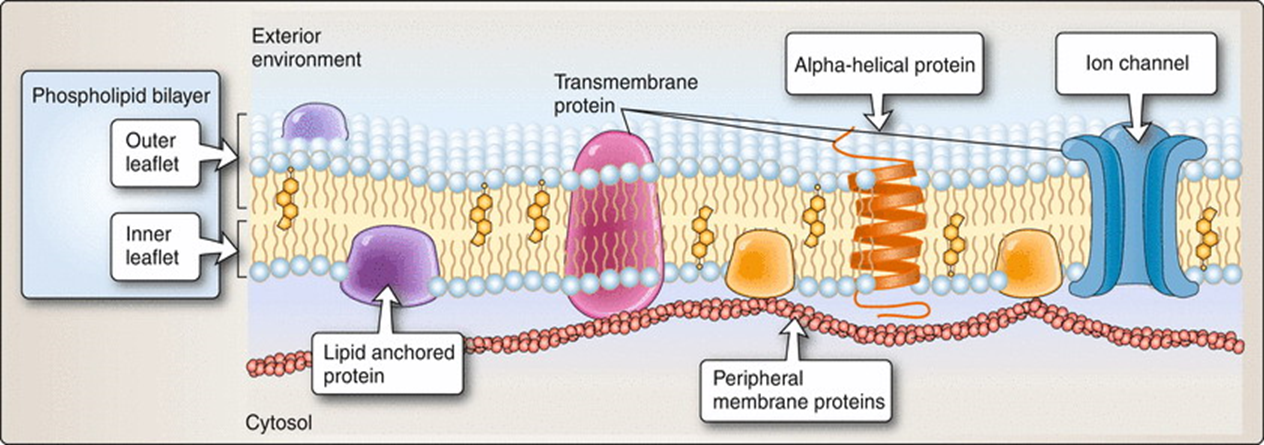
phospholipid bilayer
outer and inner leaflet
proteins
integral and peripheral membrane proteins
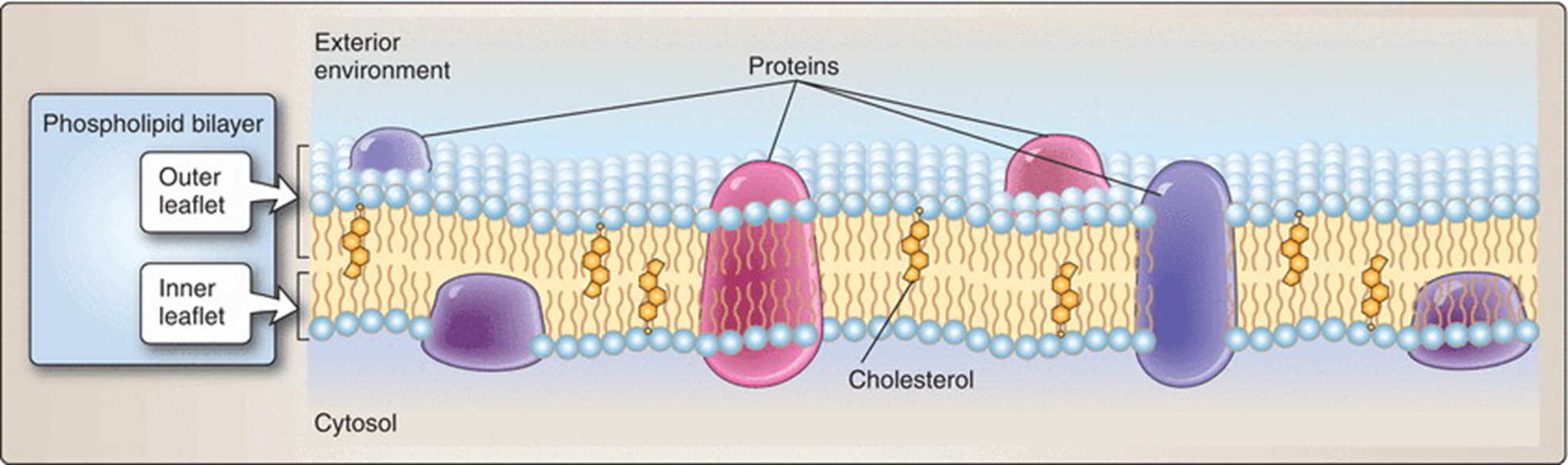
What are the 2 main membrane components?
Lipids and Proteins
What are the 3 subcategories of Lipids
Phospholipids
Cholesterol
Glycolipids
What type of compound are phospholipids?
polar, ionic compounds
What are the 2 possible backbones can phospholipids have?'
Glycerol or Sphingosine
Which of the phospholipid head and tail are hydrophilic and hydrophobic?
Head: Hydrophilic
Tail: Hydrophobic
What are the 4 polar heads that can be attached to a GLYCEROL backbone?
Phosphatidyl-SERINE
Phosphatidyl-ETHANOLAMINE
Phosphatidyl-CHOLINE
Phosphatidyl-INOSITOL
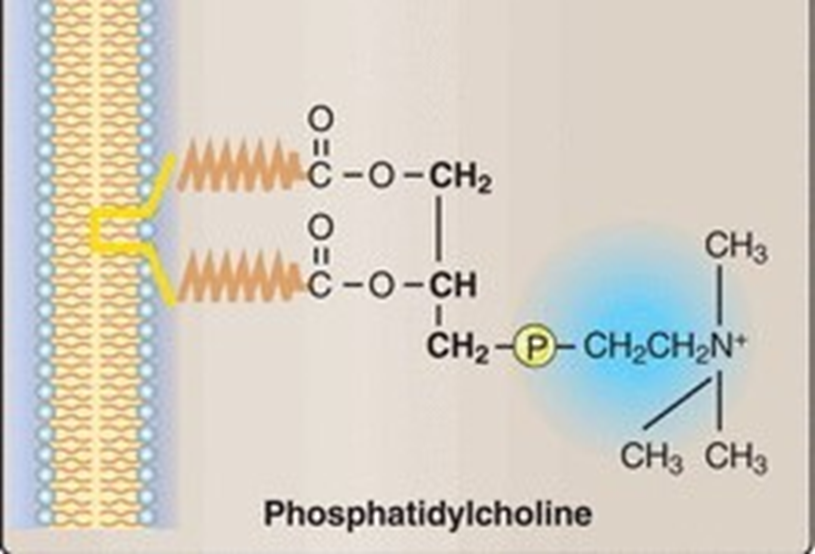
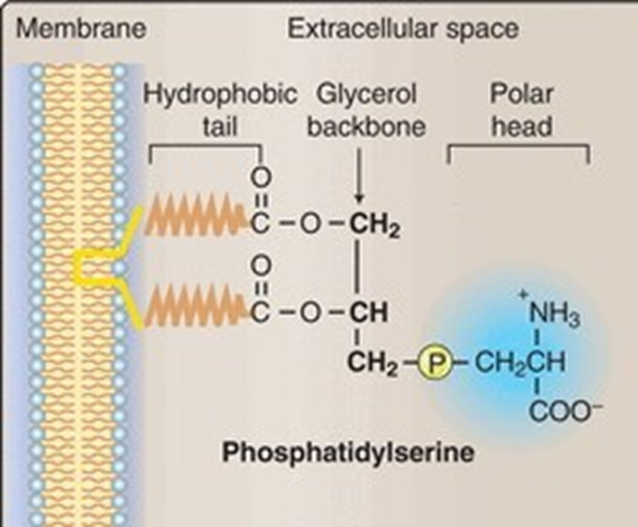
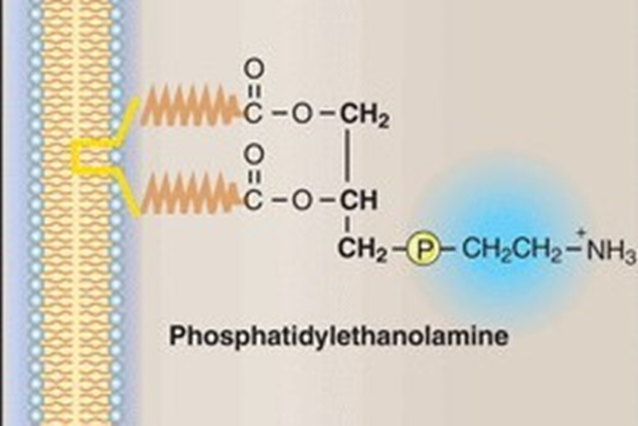
What polar head can be attached to a SPINGOSINE backbone?
Sphingomyelin
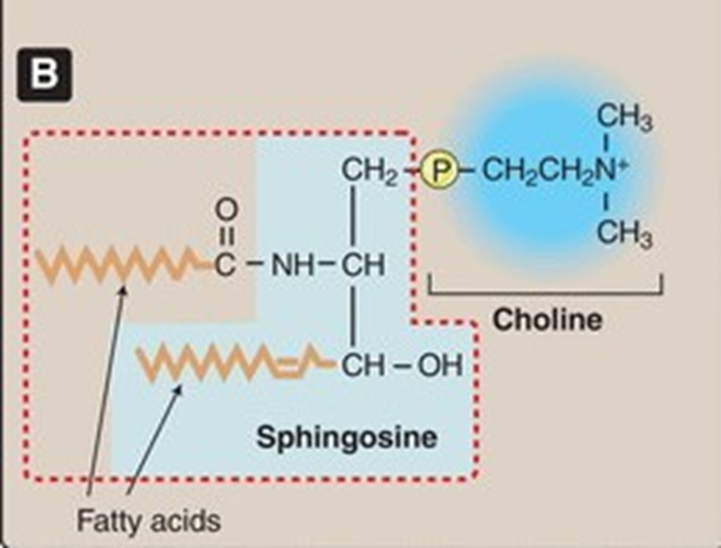
Where is cholesterol located within the membrane?
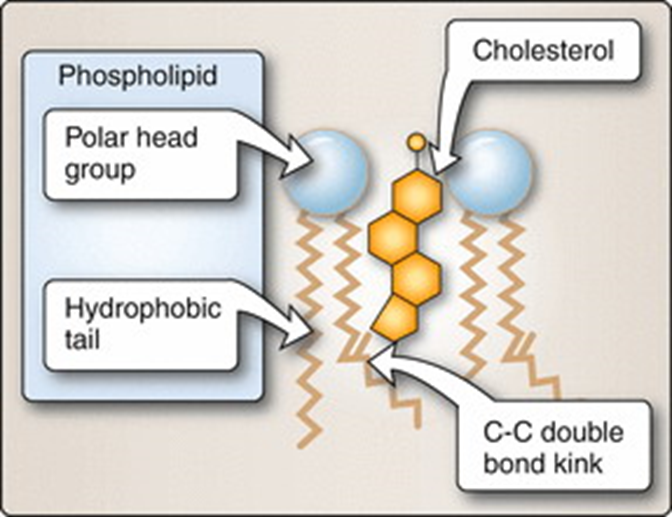
between phospholipids
What is the structure of cholesterol?
Hydroxyl group
Steroid nucleus
Hydrocarbon tail
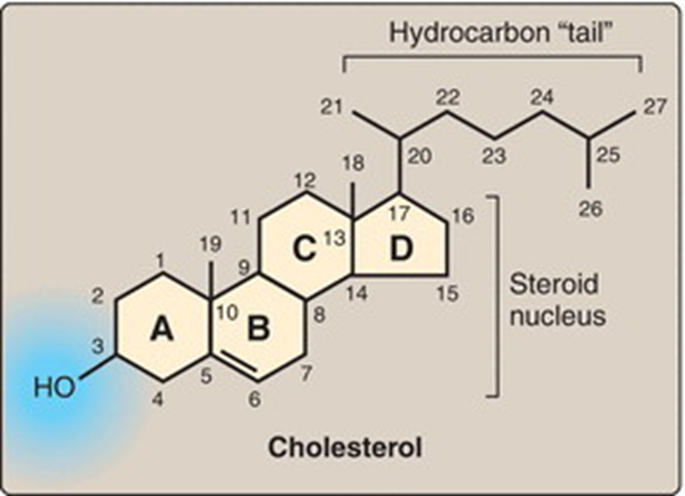
How is cholesterol oriented?
the Hydroxyl group end is oriented near the phospholipid heads
the steroid rings and hydrocarbon tails are parallel to the phospholipid tails
What are Glycolipids
Lipids with a Carbohydrate attached
How are Glycolipids oriented in the membrane?
The Glycolipid is embedded in the membrane with its Carbohydrate sticking outside
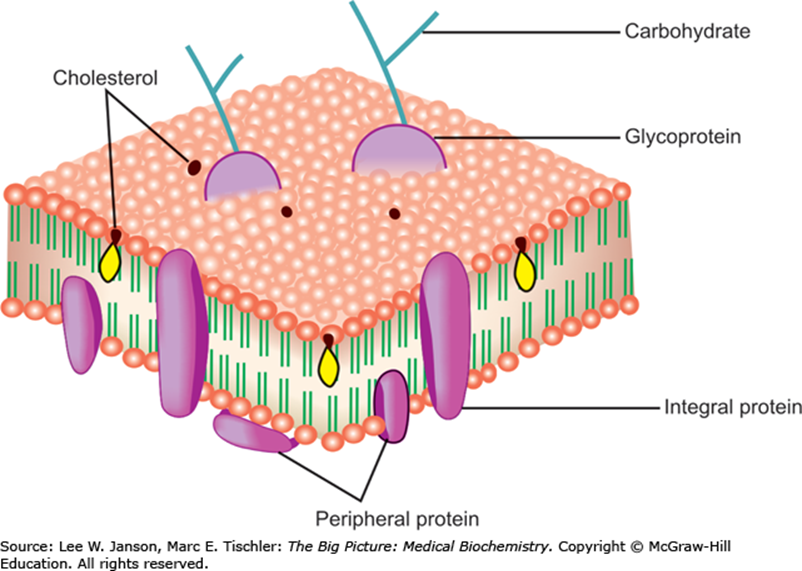
What are Glycolipids concentration in comparison to Phospholipids and Cholesterol?
Lower concentration
What are the roles of Glycolipids?
Intercellular Interactions
Blood Group Antigens
Receptors for Toxins
Cholera
Tetanus
How can Integral Proteins be removed from the membrane structure?
the entire membrane structure needs to be disrupted
What are Transmembrane proteins
proteins that pierce through the entire membrane
ex. GPCR, Ion Channels
What are Lipid-Anchored membrane proteins?
proteins that are attached to the lipids and partially penetrate the membrane
ex. G proteins
What are Peripheral Membrane proteins
proteins that are loosely attached to the inner membrane leaflet
ex. Cytoskeletal
What are the 4 functions of membrane proteins
Cell Adhesion
Transport
Ion channel
Signaling
Receptor
G proteins
Structure
cytoskeleton
What type of integral protein are G proteins?
Lipid-Anchored proteins
What protein best describes the arrangement of a ligand receptor within a plasma membrane?
Transmembrane protein
Distinguish the orientation of the phospholipid bilayer’s Outer and Inner Leaflet
Outer leaflet faces the exterior environment
Inner leaflet faces the cytosol
What type of phospholipids that are part of the OUTER leaflet of the phospholipid bilayer?
Phosphatidyl-CHOLINE & Sphingomyelin
What type of phospholipids that are part of the INNER leaflet of the phospholipid bilayer?
Phosphatidyl-SERINE
Phosphatidyl-Ethanolamine
Phosphatidyl-Inositol
What indicates a normal functioning phospholipid bilayer?
Asymmetry of the outer and inner leaflets
What happens if distribution of the phospholipids were placed in the wrong leaflet?
Apoptosis
Why do phospholipids and proteins exhibit different types of motion?
Membrane Fluidity
What are the 3 types of motions that Phospholipids have?
Flexion, Rotation, Lateral Movement
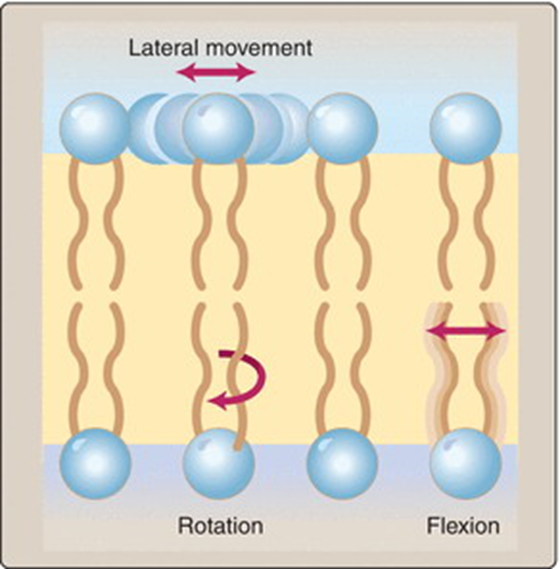
What are the 2 types of motions that Proteins have?
Rotation and Lateral Movement
How does Singer and Nicholson, 1972, described the membrane?
Fluid Mosaic Model
flowing sea and proteins dispersed
protein icebergs in a lipid sea
What are Hemoglobinopathies
changes in lipid composition and/or defects in proteins associated with the red cell membrane
What happens in a hemoglobinopathy where there’s defects in Spectrin and Ankyrin?
results in Elliptocytosis and Spherocytosis which can cause changes in shape
What are Lipid Rafts
Microdomains that have Sphingolipids and Cholesterol
What are Lipid Rafts’ functions?
Cholesterol transport
Endocytosis
Signal Transduction
What are the 3 types of Lipid Rafts?
Planar
Glycosphingolipid-Enriched Membranes (GEM)
Caveolae
What are Caveolae?
foldings of the plasma membrane of endothelial cells
What are present in Caveolae?
Caveolin, Arachidonic Acid, Growth Factor Receptors, Integrins, Insulin Receptors