Nucleotides, Base Pairing, and Structure of DNA
The Structure of DNA
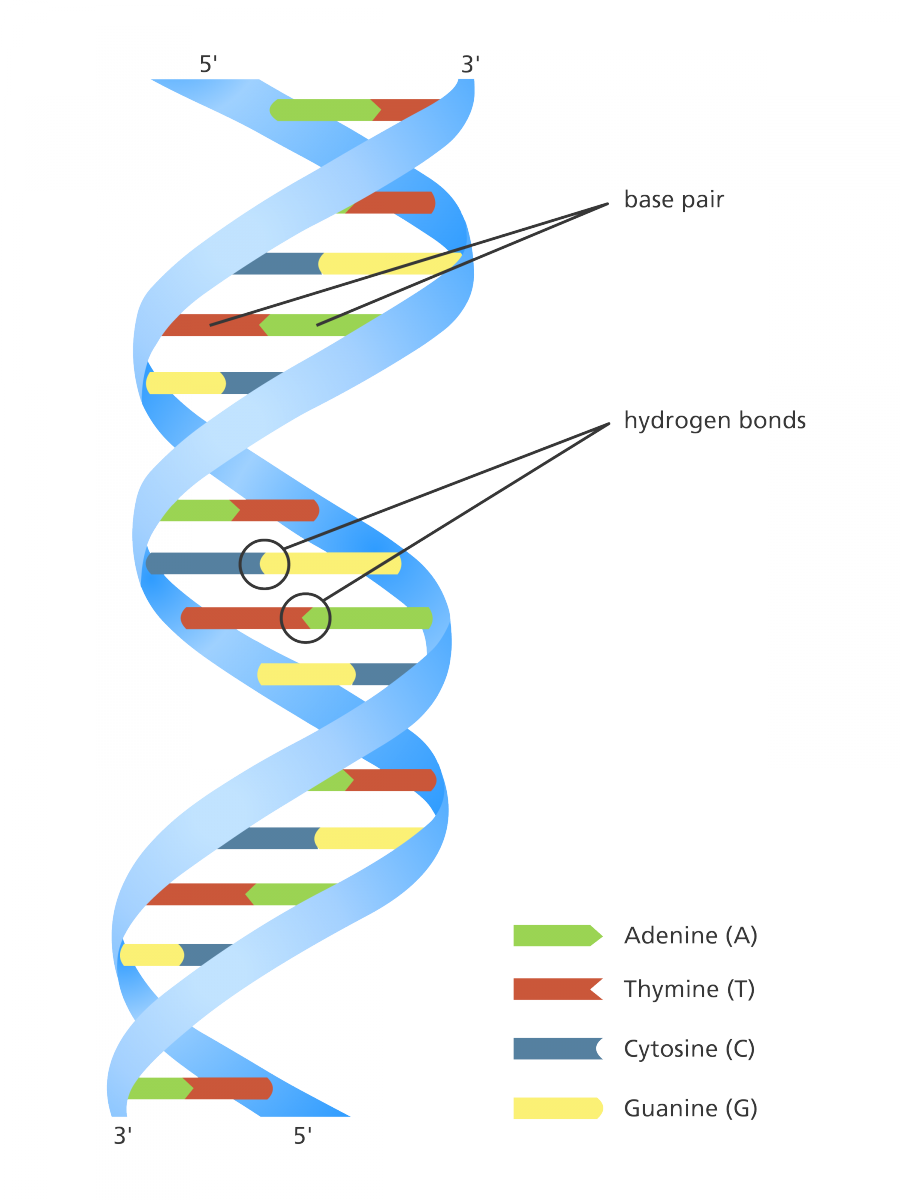
- (DNA) , which is two strands that are twisted and wrapped around each other. The two strands of DNA run antiparallel, or in opposite directions, to each other.
- The of the strands is made of a . The sugar in this group is known as deoxyribose, the namesake of DNA, which is . Carbon is an important element found in all organic, carbon-based, molecules.
- The nucleotides in DNA are hel. These bonds are strong enough to hold the two pieces together, but the bonds are easy enough to break when the strands need to unravel for reproduction.
- In DNA, adenine always pairs with thymine; guanine always pairs with cytosine. Adenine and guanine are known as purines and have . Cytosine and thymine are known as pyrimidines and have . The two-ring compounds cannot bond together in DNA because that would make the DNA molecule too wide.
- The one-ring compounds cannot bond together in DNA because that would make the DNA molecule too small.
- found something interesting about DNA. Whenever he analyzed the composition of DNA, he always found that there was the same amount of thymine and adenine AND the same amount of cytosine and guanine. He called this Chargaff’s Rule.
Edited: 01 December 2022