Why concrete beams crack?
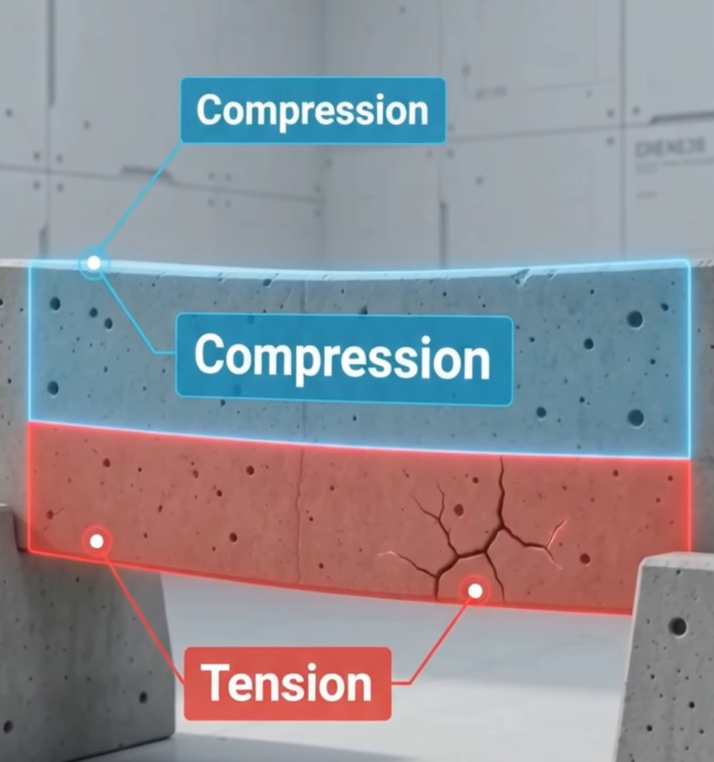
Not all concrete cracks are the same. This is a 3D structural look at why beams fail and how engineers fix them. Concrete beams handle massive loads, causing them to bend. This creates two major points of failure:
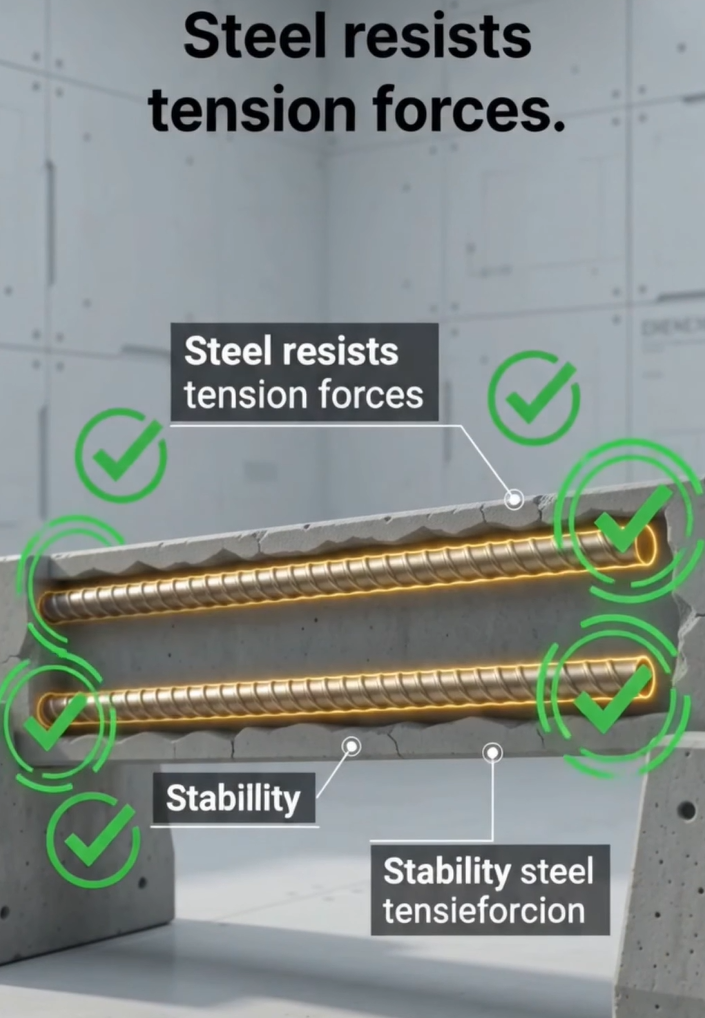
→ Flexural Cracks: These happen at the bottom center of the beam where tension is highest. Engineers stop this by placing thick, longitudinal steel rebars along the bottom.
→ Shear Cracks: These are diagonal cracks that happen near the support columns. Engineers stop this using steel "stirrups" the rectangular loops that wrap around the main bars.
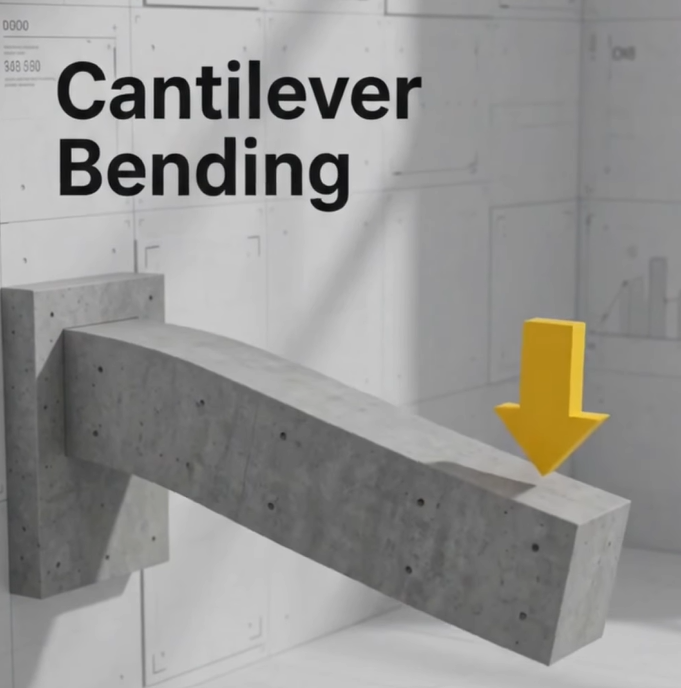
canileveres need top reinforcement
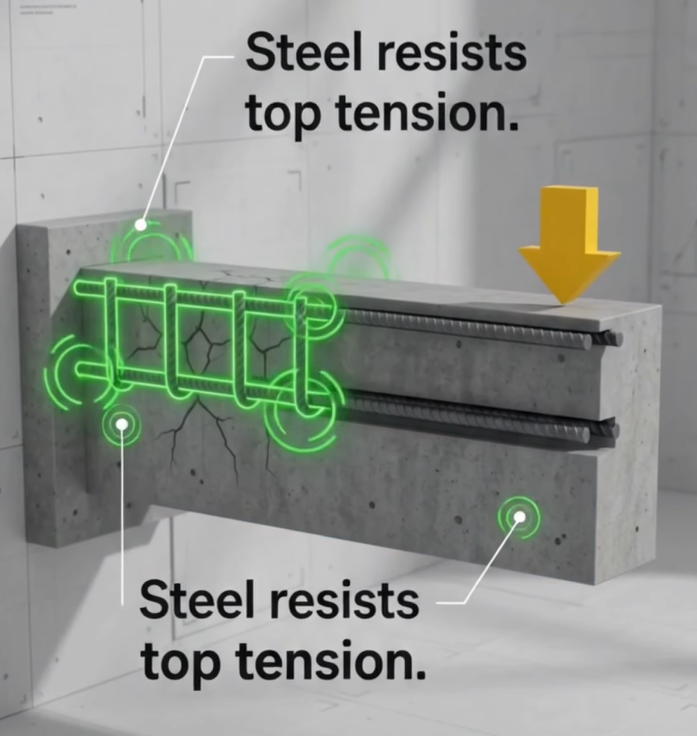
top concrete stretches and cracks under tension, the top steel resists tension preventing failure
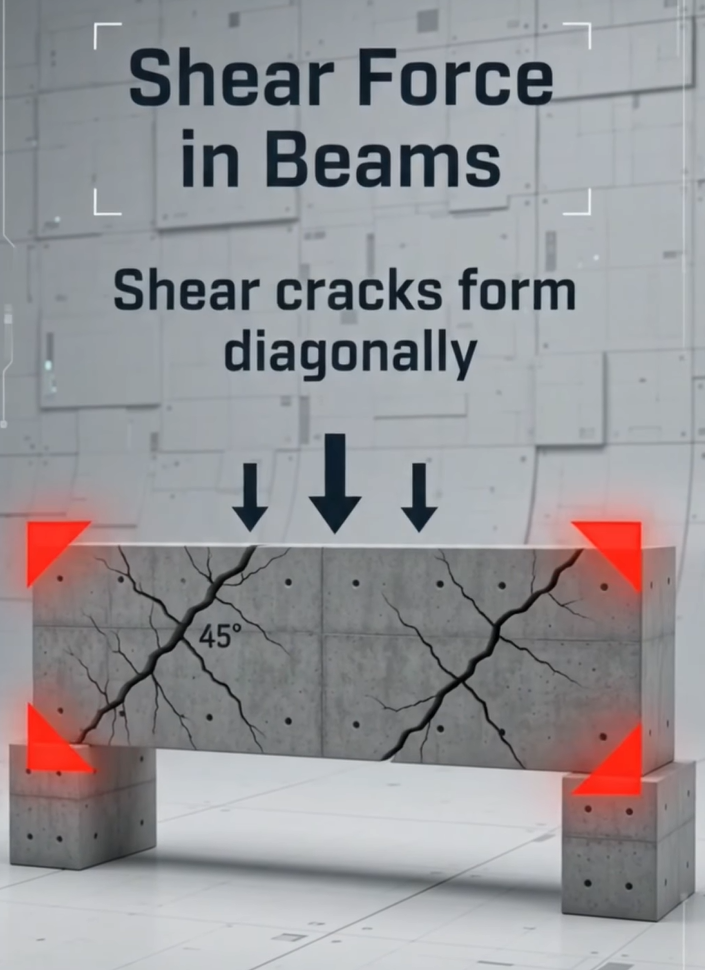
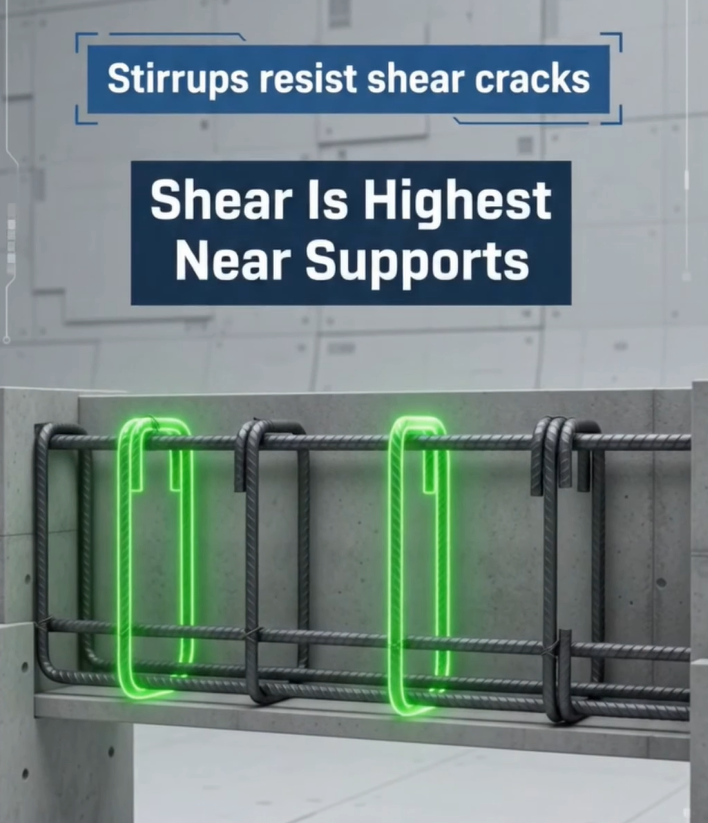
Large shear force beams are developed near beam supports
diagonal cracks can cause sudden beam failure
stirrups hold the beam and resist shear cracks/failure
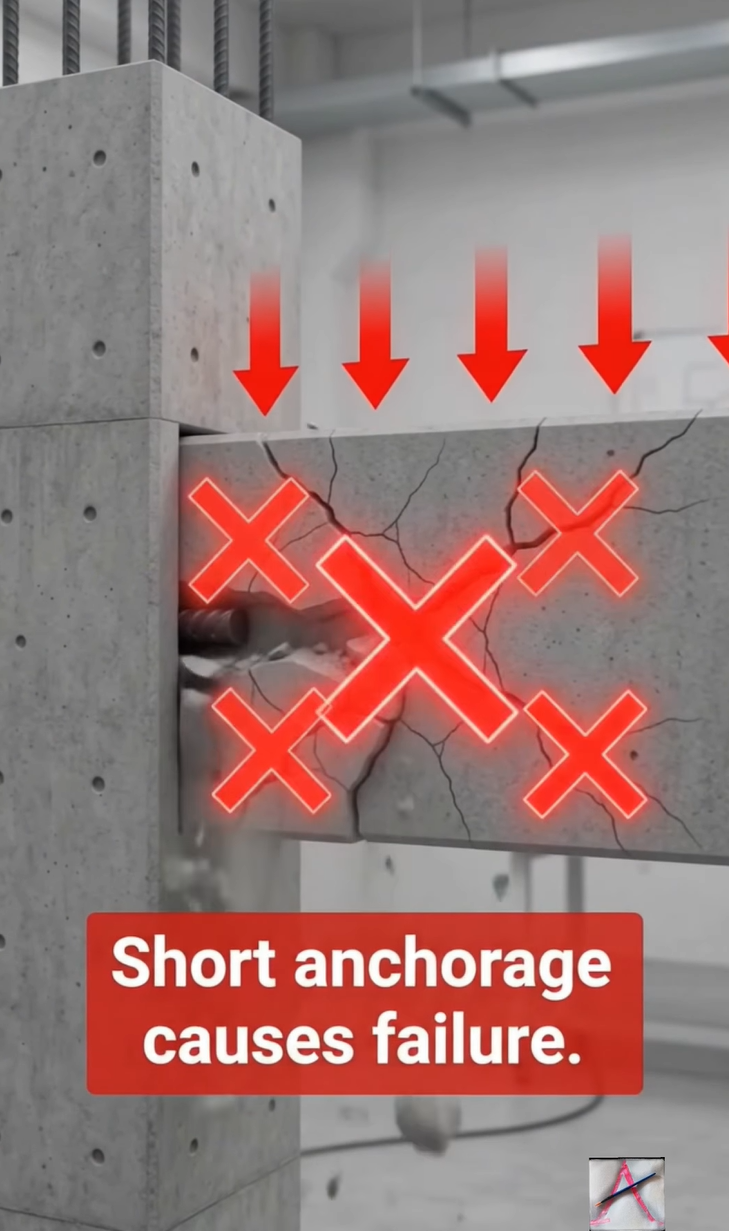
Steel bars must grip the concrete safely.
Short bars can pull out under heavy load
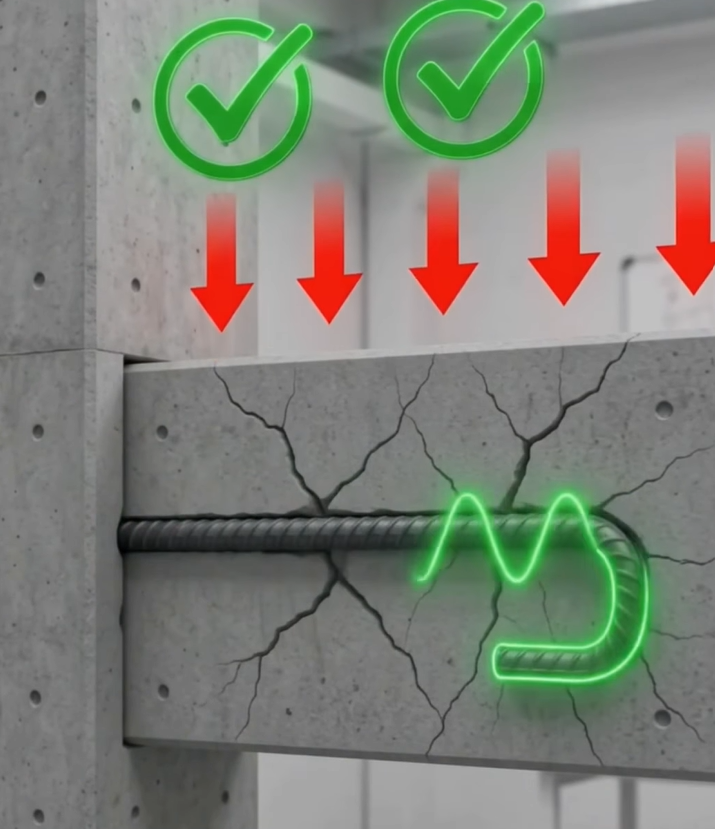
Proper development length transfers forces safely
Bars need proper anchorage length
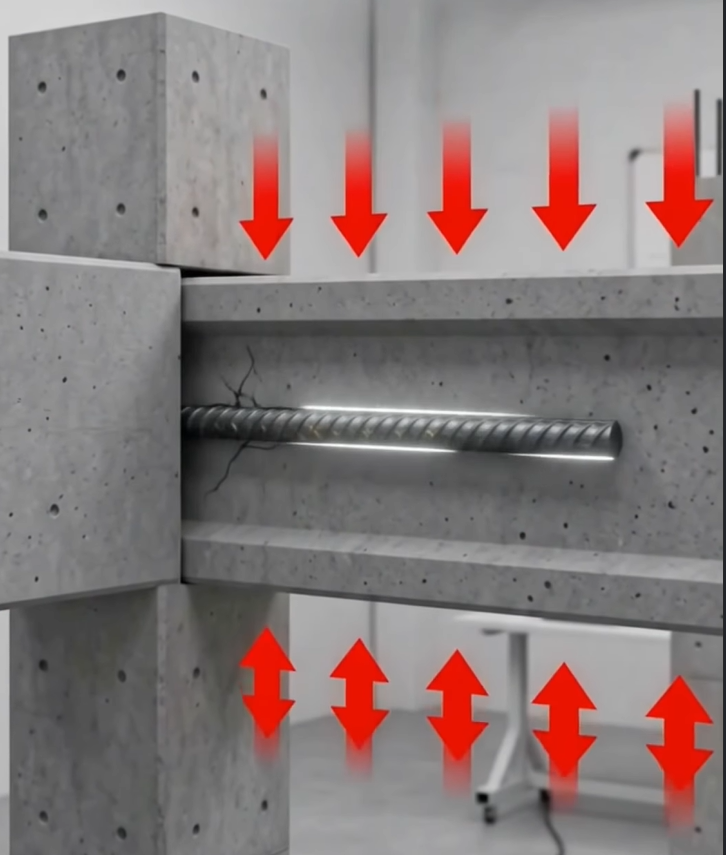
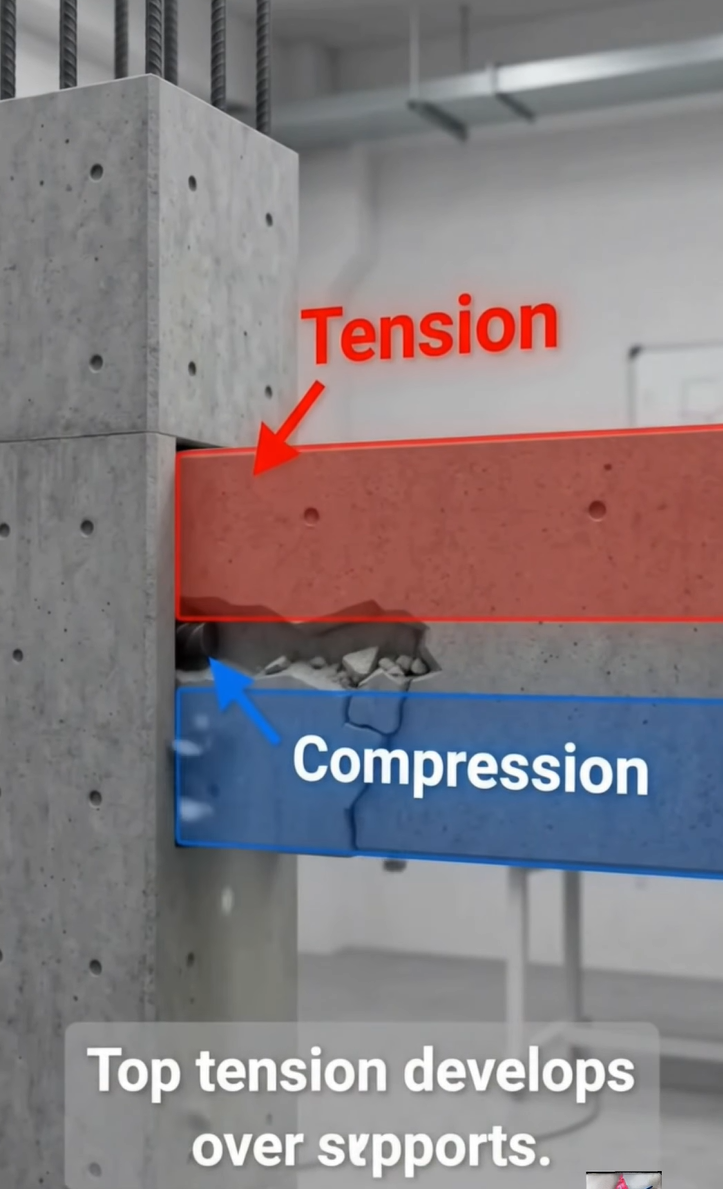
continuous beams bend differently near supports
negative bending creates tension at the top of the beam
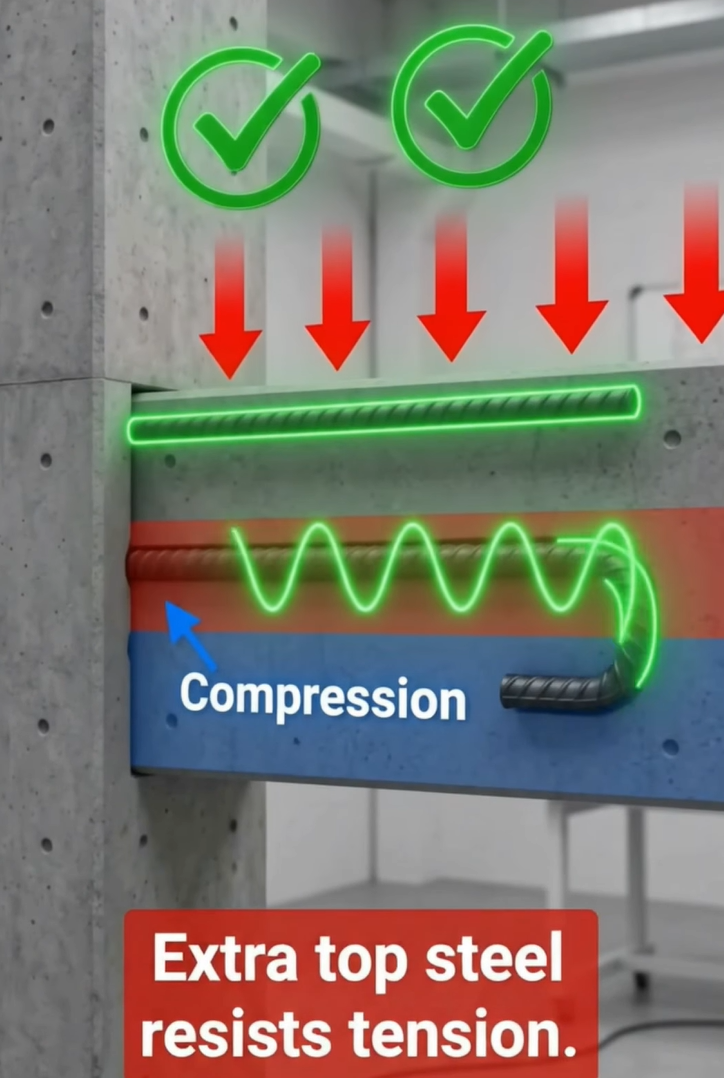
Top reinforcement prevents cracking over supports
Extra top steel resists tension