Neurobiology IV
Acetylcholine
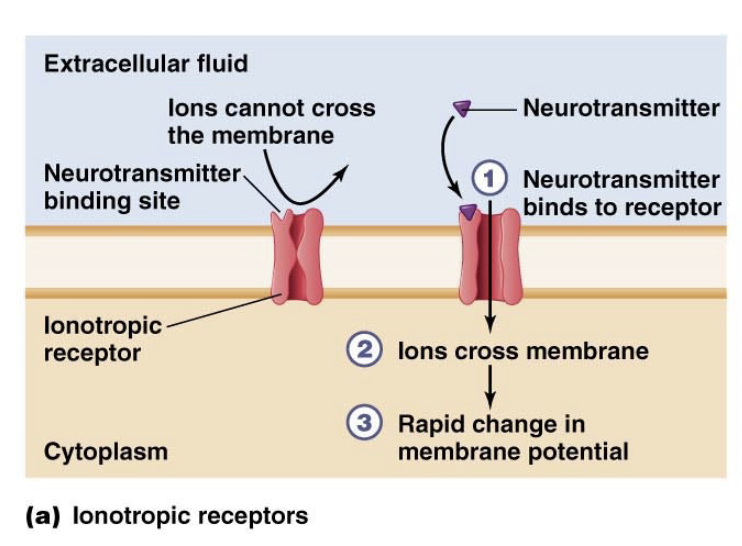
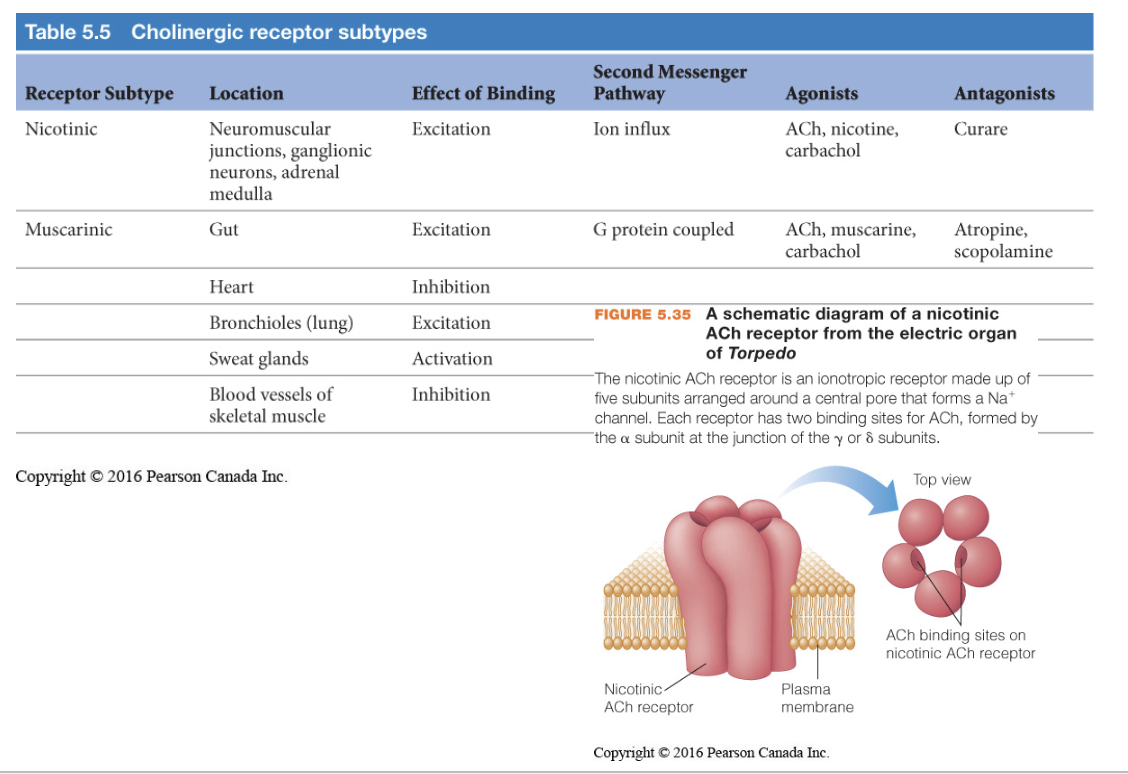
Nicotinic
Receptor type - ionotropic
Receptor location - Skeletal muscles, autonomic neurons, CNS
Effect - Excitatory
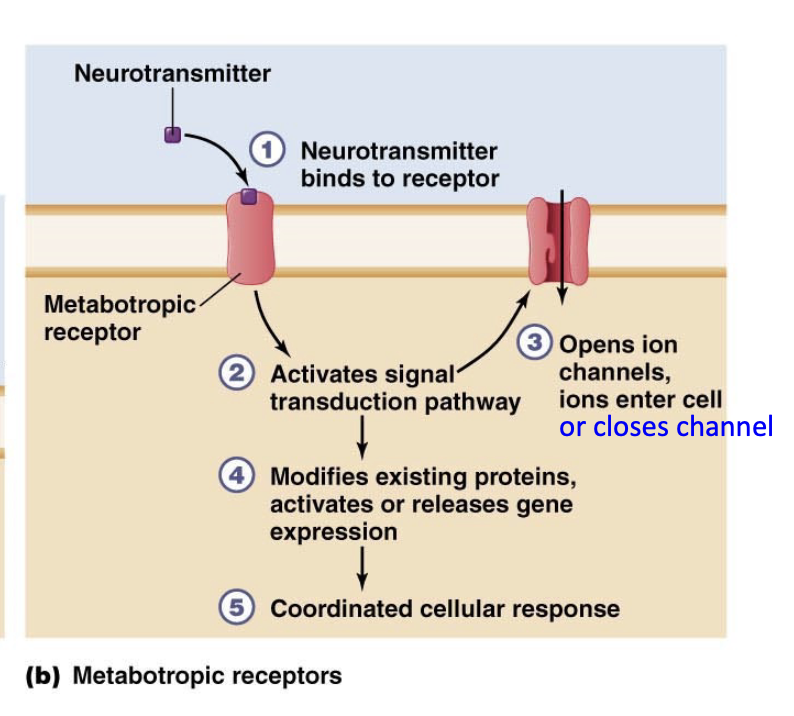
Muscarinic
Receptor Type - metabotropic
Receptor location - Smooth and cardiac muscle, endocrine and exocrine glands, CNS
Effect - Excitatory and Inhibitory
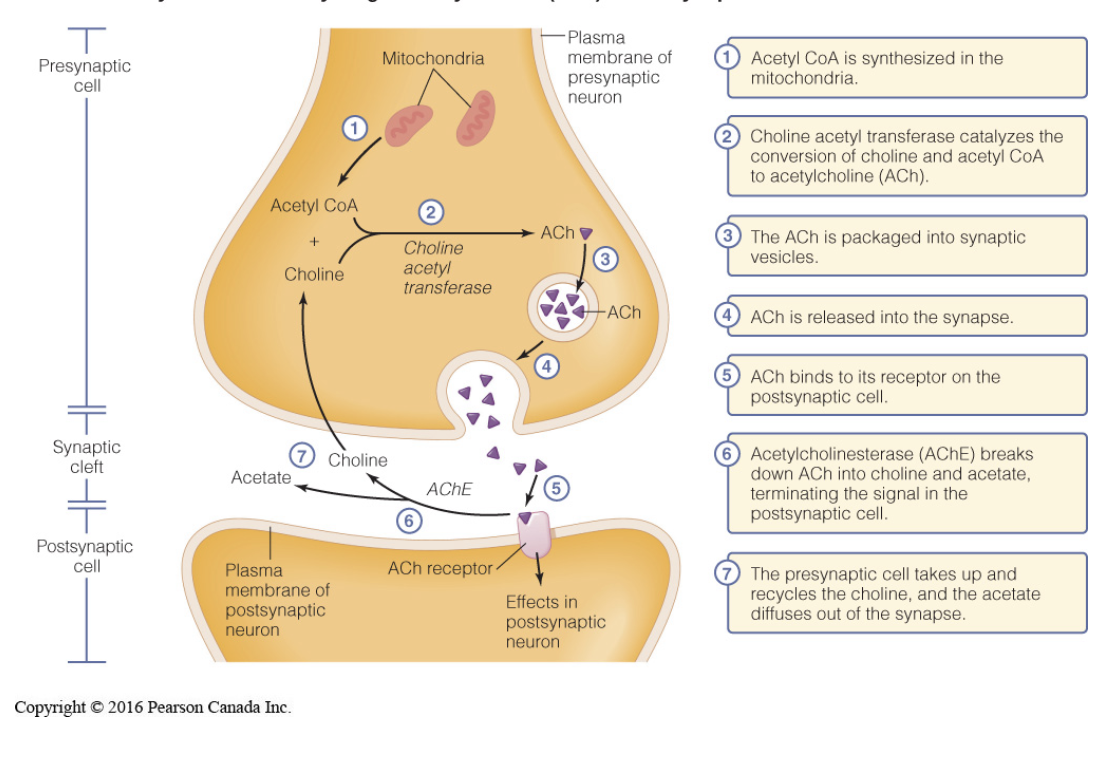
Synthesis of Acetylcholine as a Neurotransmitter
Acetylcholine ( Cholinergic receptor) subtypes
Diversity of neurotransmitters
Dopamine
Receptor - dopamine
receptor type - metabotropic
Receptor Location - CNS
Effect - Excitatory or inhibitory
Norepinephrine
Receptor - a and B adnergic
receptor type - metabotropic
Receptor Location - CNS and PNS, cardiac muscle, smooth muscle
Effect - Excitatory or inhibitory
Norepinephrine receptor cause differing reponses
Norepinephrine binds to several different receptor types
Type depends on function
a1 andrenergic receptor
cause vasoconstriction in smooth muscle
a2 adrenergic receptor
inactivates calcium channels and reduce release of NE
B1 receptor
activate calcium channels and increase muscle contraction in cardiac muscle
B2 receptor
reduces muscle contraction and causes vasodilation
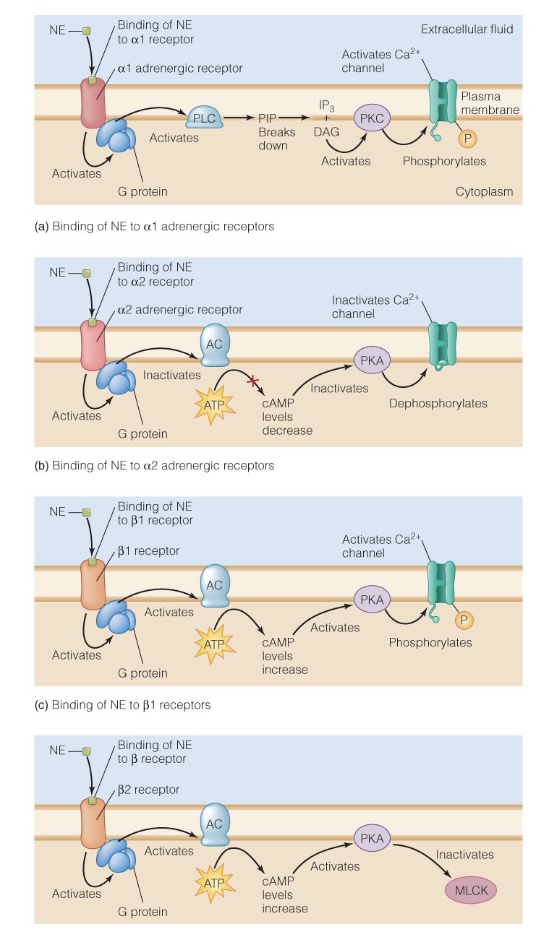
Some of the differing effects
pupil dialiation
stronger heart contraction
increase. non-shivering thermogenesis in brown adipose tissue
constrict arteries - increased BP
cause release of renin and Na+ in kidneys
increase glycogenolysis
increase release of glucagon
increase glucose uptake in skeletal muscles
increase lipolysis
reduce digestive activity in digestive system
Classes of Neurons
Multipolar neurons
One process, called an axon, carries signals away from the cell body, while the other processes, called dendrites, receive signals from other neurons. Multipolar neurons are found in the brain and spinal cord, and they play a crucial role in transmitting and integrating information within the nervous system.
Bipolar neuron
They have two distinct processes, or extensions, known as dendrites and axons. Dendrites receive signals from other neurons, while axons transmit signals to other neurons or target cells.
Bipolar neurons are commonly found in the retina of the eye, where they play a role in transmitting visual information. They are also present in the olfactory system, where they help in detecting and transmitting information about smells.
Overall, bipolar neurons are specialized for relaying sensory information in specific sensory pathways.
Unipolar neuron ( afferent neurons)
A unipolar neuron, also known as a sensory neuron, is a type of neuron that has a single process extending from the cell body. This process acts as both the axon and the dendrite.
Unipolar neurons are primarily involved in transmitting sensory information from the periphery to the central nervous system. They are found in sensory ganglia, such as the dorsal root ganglia of the spinal cord, and have specialized receptors at their peripheral endings to detect various stimuli.
The information received by the unipolar neuron is then transmitted to other neurons in the central nervous system, allowing for the perception and interpretation of sensory stimuli.
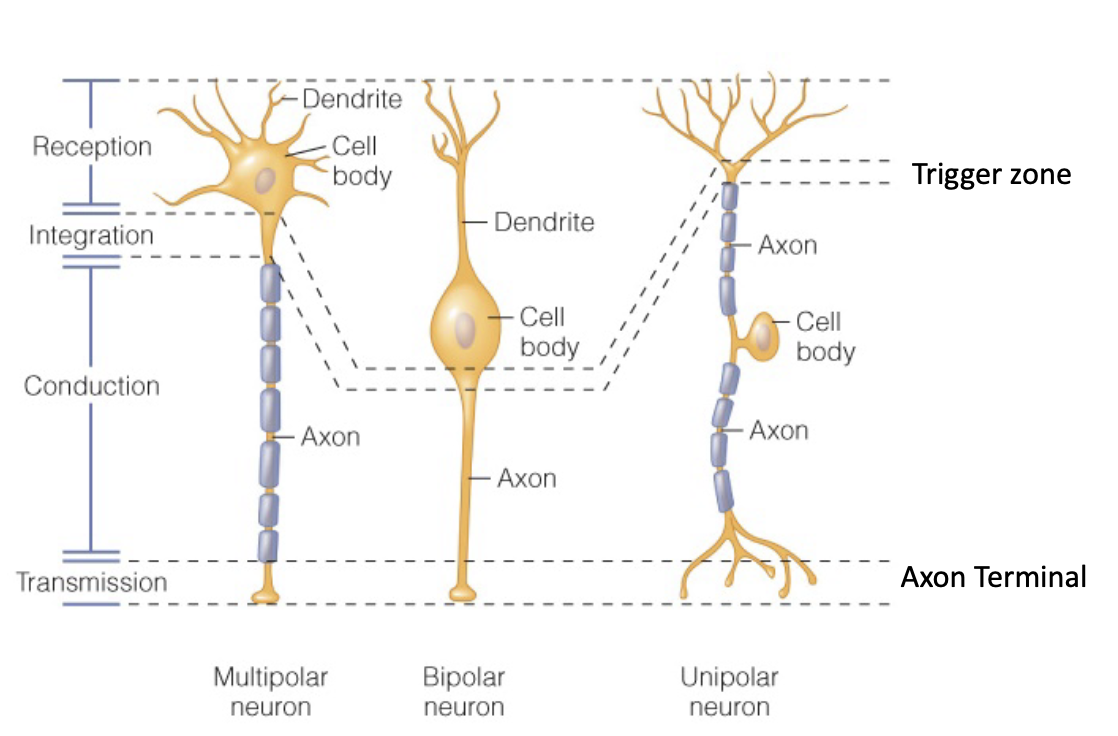
Functional classes of neurons
Sensory neuron ( afferent neuron)
theses are considered unipolar neuron
trigger zone - interface between the dendrites and the axon
carry impulses from the periphery to the CNS
Interneuron
connect one neuron to another
typically multipolar and may have multiple axon terminals
varying functional class
many dendrites
Motor neuron (efferent neuron)
carry signal from the CNS to some external target organ - muscle and other tissues which are stimulates
generally multipolar
elicits a response in the effector organ
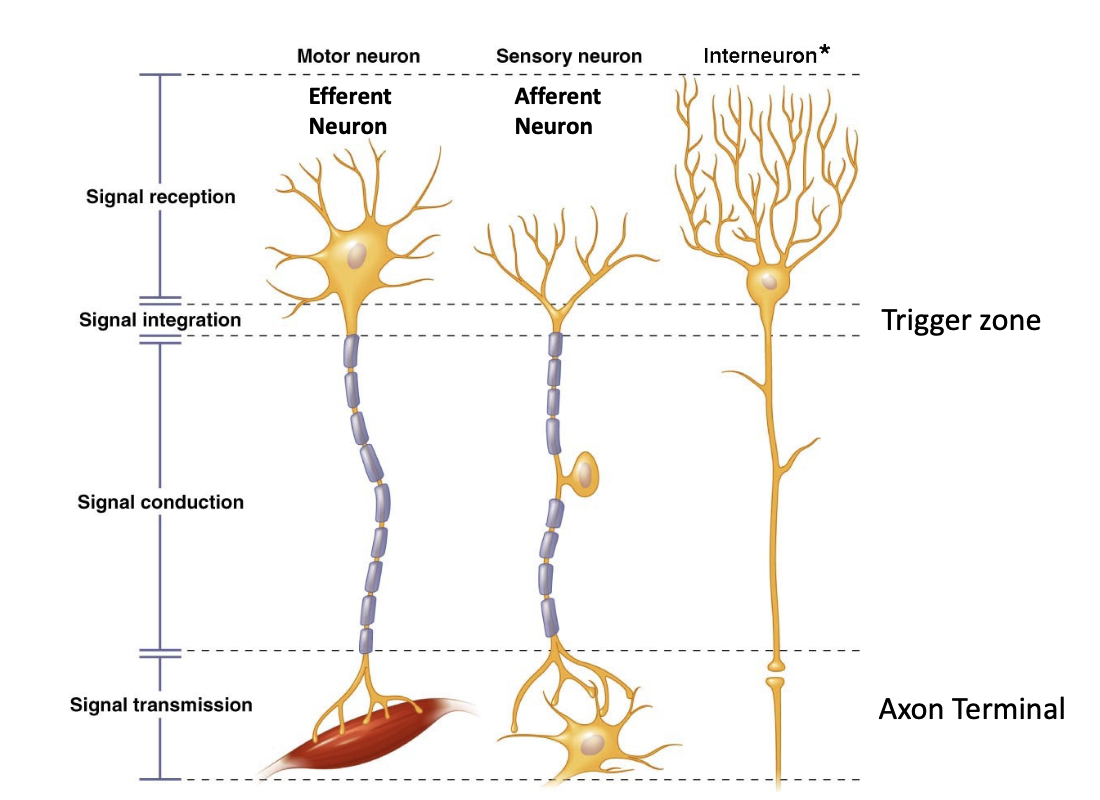
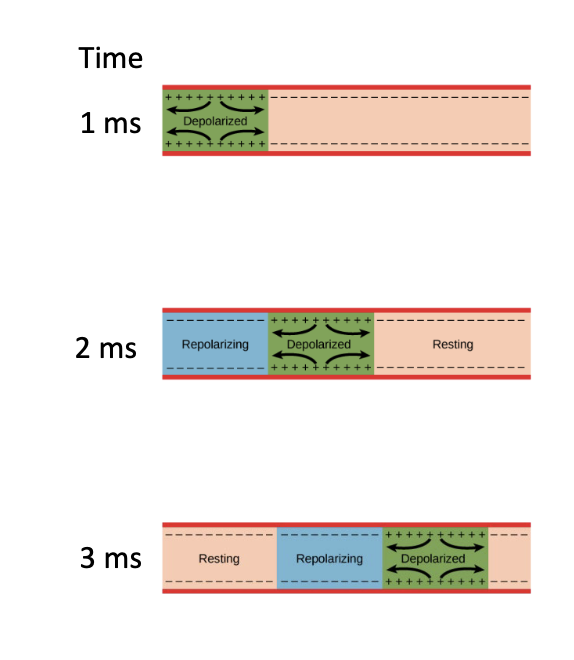
Myelination increases the speed of AP conduction down the axon
AP generation is slower than electronic spread
Electronic current decreases with distance while action potential maintain amplitude
Myelin sheath insulates region of the axon
restricts action potentials to nodes of Ranvies
Forces electronic spread through the internodes
Best compromise between action potentials and electronic spread
AP conduction speeds
heavily myelinated: 15-150 m/s
Lightly myelinated : 3 -15 m/s
Unmyelinated: 1 m/s
Signals travel faster through the internodes than the nodes of Ranvier
Larger diameter axons increase AP conduction speeds
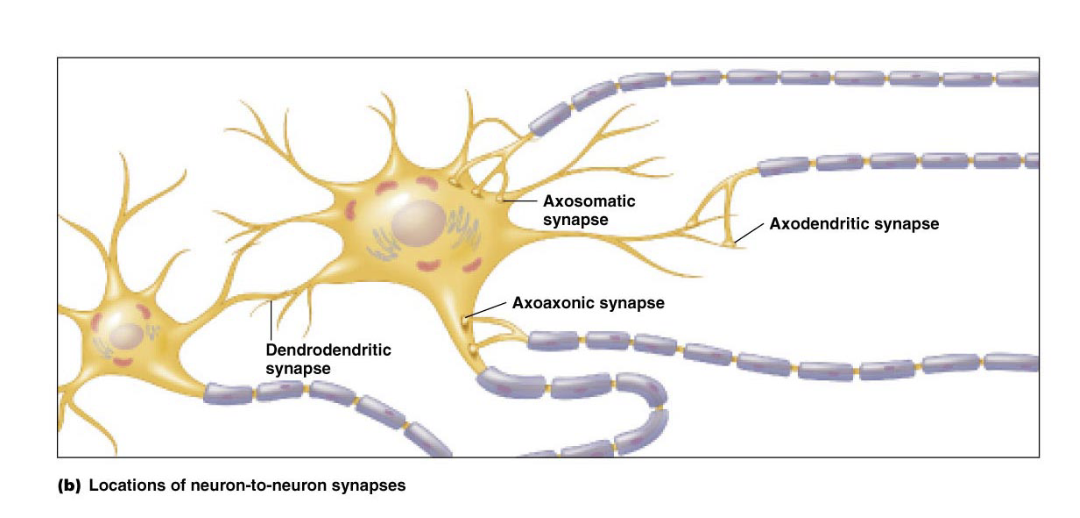
Neurons exhibit variation in the morphology of synapse
Neuron to neuron synapses occur to a variety of locations