kennisclip post-stroke english
Knowledge clip, Post - strong
Hemiplegic shoulder pain (HSP)
different type of pain
muscle-skeletal pain, central pain
patients experience phase often in the acute phase
around 40% of stroke patients develop HSP in the acute and early rehab phase
Pathophysiology
changes associated with or resulting from stroke
muscle weakness
change in muscle tone
pathological muscle synergies
spasticity (affected side) → can be painful
shortened muscles (due to not using the arm)
altered muscle activity hampering scapular control (shoulder girdle)
Causes HSP (multifactorial!)
glenohumeral subluxation (due to loss of muscle strength, tone and wrong positioning, it happens especially due the decrease of activity of the supraspinatus and deltoid muscles,
capsulitis → inflammation due to the muscles that don’t support the joint
neuritis scapularis nerve
subdeltoid bursitis
tendovaginitis of biceps tendon
neuropathy of the brachial plexus
arthritis
spasticity
thalamic pain
shoulder-hand syndrome (sympathische reflexdystrphy)
edema → hands hanging down for prolonged period of time
Assessment
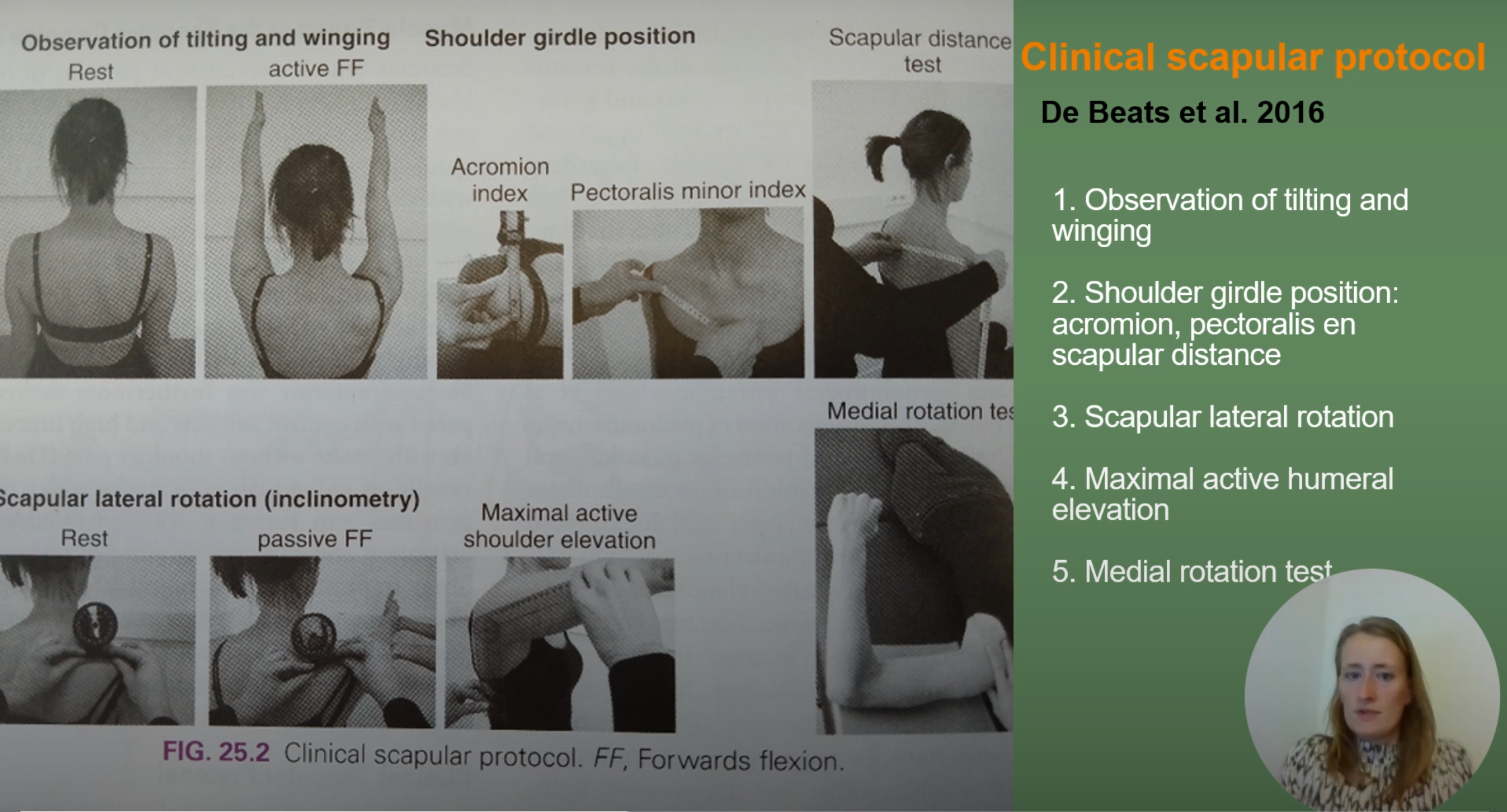
1) inspection, arm positioning, functional inspection
2) AROM/PROM
3) MAS
4) MI of Upper extremity
5) Frenchay arm test or Action research arm test → to assess functional movement
6) FM (upper extremity) → motor synergies and motor selectivity
Prevention
A sling, orthoses or taping provides mechanical support for glenohumeral subluxation
Taping:
to correct reduces LR of scapula
To support the head of the humerus in the glenoid fossa
To alleviate the m. supraspinatus → allow more freedom of movement
It improves the arm positioning
Exercise therapy
arm positioning
weight bearing
stretching
building up normal tone/ moving out of the spastic pattern
strengthening the rotator cuff muscles
coaching the patient to avoid unnecessary strain on the shoulder
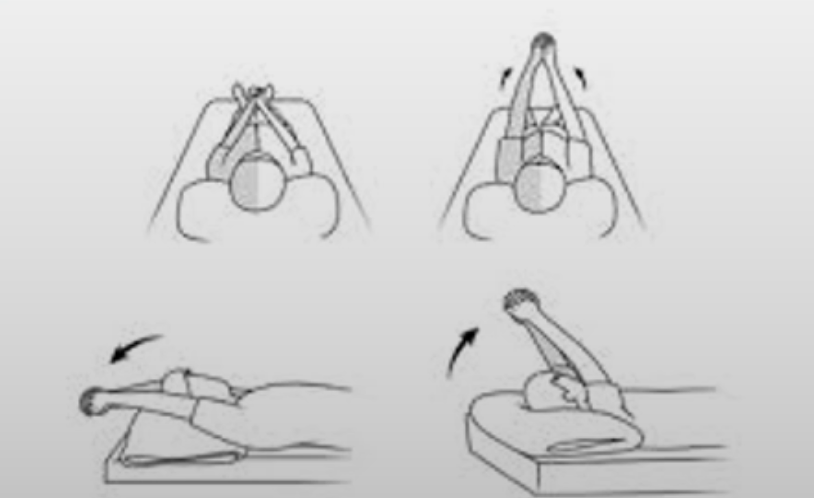
Robot assisted training for paretic arm
reduce atypical pain in the paretic arm (shoulder+ elbow)
Medical treatment options for spasticity
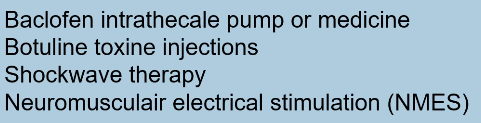
+ steroid injections for inflamed area’
Patient education
involve the family
teach them to work with a mirror (self - awareness)
explain impairments of shoulder and how the patient can improve them
help to understand the movements of the shoulder and how to avoid inappropriate movements
explain and teach appropriate positioning and handling of hemiplegic shoulder
explain and teach appropriate exercises