Earths Layers
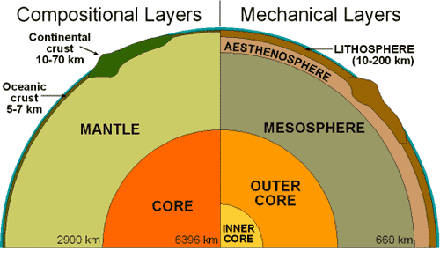
The Earth's structure is divided into four main layers: the crust, mantle, outer core, and inner core.
The crust is the outermost layer, consisting of solid rock and is relatively thin compared to the other layers. Below it lies the mantle, made up of semi-solid rock that flows slowly over time, allowing for tectonic plate movement. The outer core is composed of liquid iron and nickel, which generates the Earth's magnetic field, while the inner core is a solid sphere made primarily of iron, with extremely high temperatures and pressures.
Each of these layers plays a crucial role in the Earth's geology and tectonic activities, influencing everything from earthquakes to volcanic eruptions and the overall thermal dynamics of the planet.
Understanding these layers helps scientists to predict geological events and comprehend the processes that shape our planet's surface. In addition to their physical properties, the interaction between these layers is vital for maintaining geological balance, as the movement of magma from the mantle can lead to volcanic activity and the shifting of tectonic plates can trigger seismic events. Furthermore, studying the composition and behavior of these layers allows researchers to better understand the thermal gradients and materials that contribute to plate tectonics, thereby enhancing our knowledge of Earth's history and resource