L12- Reciprocity
familiar to humans e.g. ‘you scratch my back, I’ll scratch yours’ (Trivers 1971)
Trivers thought to be common in animals as it is in us→ is this true?
Mutualism vs Reciprocity:
mutualism- both parties get immediate benefit
reciprocity- a incurs some cost to benefit b, at some point in the future b incurs an act that is costly to itself but benefits b
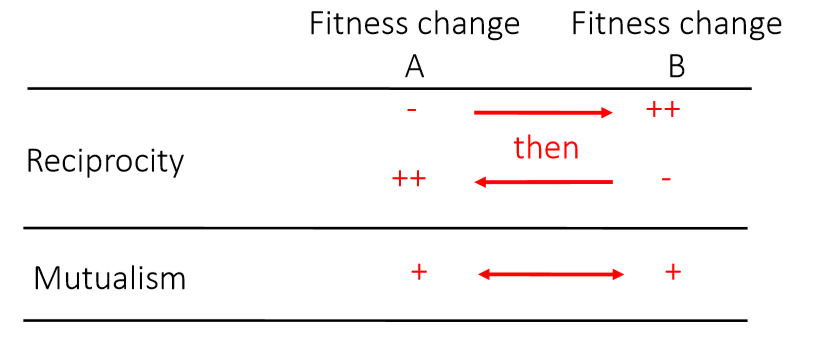
problem with reciprocity→ delay in repayment of favour, gives recipient opportunity to defect
Game Theory: The Prisoner’s Dilemma
imagines 2 players who can either cooperate or defect, table looks at pay-offs:
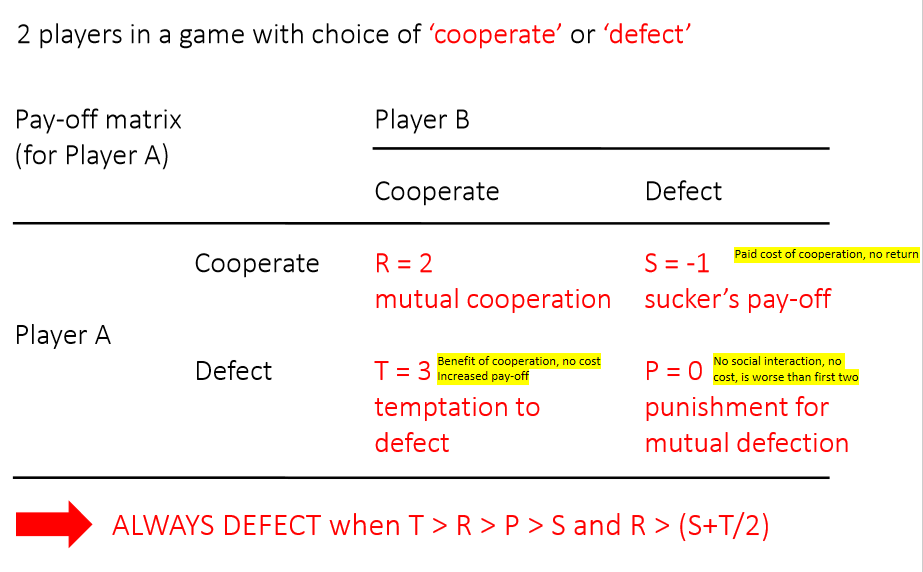
player As best strategy in a one off game with a:
cooperator→ defect
defector→ defect
→ the ESS for player A is always defect
reciprocity should not work but one strategy does→ ‘Tit for Tat’ strategy, works if:
there are lots of repeated interactions through time
there is an indeterminate number of encounters
→ may work as can see long-term social groups in a lot of nature
Evidence for the ‘Tit for Tat’ strategy
Lab→ Norway Rats (Kettler et al., 2021):
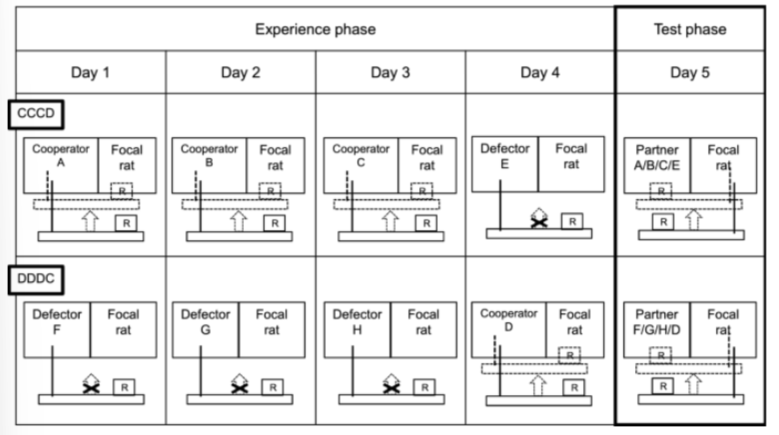
2 rats caged next door to each other, one has a stick that it can use to pull a platform that will give the rat next door food
focal rat is either paired with a cooperator- pulls table to give focal rat food or a defector- did not pull table
put rats in a series of these encounters- day 1-4
day 5- focal rat now has the stick and can choose to cooperate or defect
strong positive correlation between amount of food donated by focal rat and food donated by partner
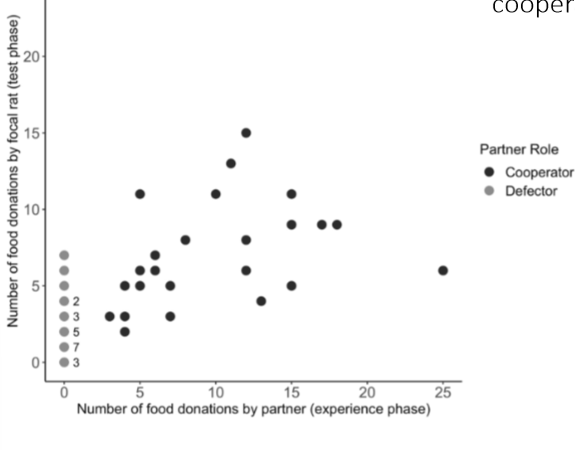
→ rats directly reciprocated food donation with cooperative social partners, only in females though
Field→ Vampire Bats (Wilkinson 1984):
each individual goes out and finds blood meals, some are successful, some are unsuccessful
observed that some unsuccessful individuals beg for blood meals from successful roost mates, who sometimes regurgitate their meal for them
relatedness is generally low but kin are more likely to swap blood
field observations- evidence it was reciprocity:
roosts are stable and not large- high likelihood of interacting in the future
benefit to recipient is high and cost to donor is low- a fully fed bat can survive for 60 hours without eating, but the food can help a bat survive for much longer
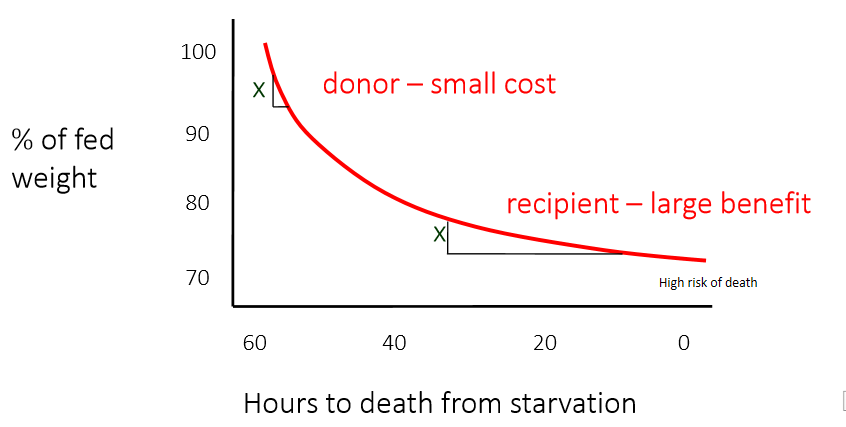
donations were reciprocated- higher chance that those that fed someone else would feed them back
criticisms of this study:
is kin selection
lots of begging- was coercion or something similar
experimental lab study (Carter and Wilkinson, 2013)→ did blood donation depend on…
amount of blood received?
amount of grooming received?
had sex with them before?
were related?
results→ an overwhelming amount of variance was explained by if the donor had previously received blood from the recipient
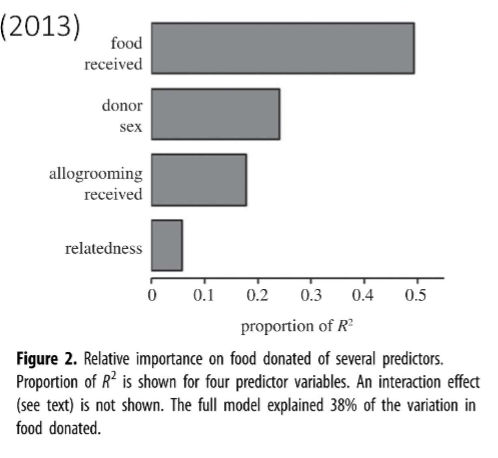
→ Vampire Bat study is good evidence of reciprocity
Field→ Primates:
observations of primate grooming and alliances
e.g. Vervet monkeys field experiment
subordinates groom dominants, dominants control access to food
results of observations:
dominant not groomed/groomed by a 3rd party were very intolerant of subordinates
dominants groomed by the subordinate were significantly more likely to let the subordinate gain access to food source
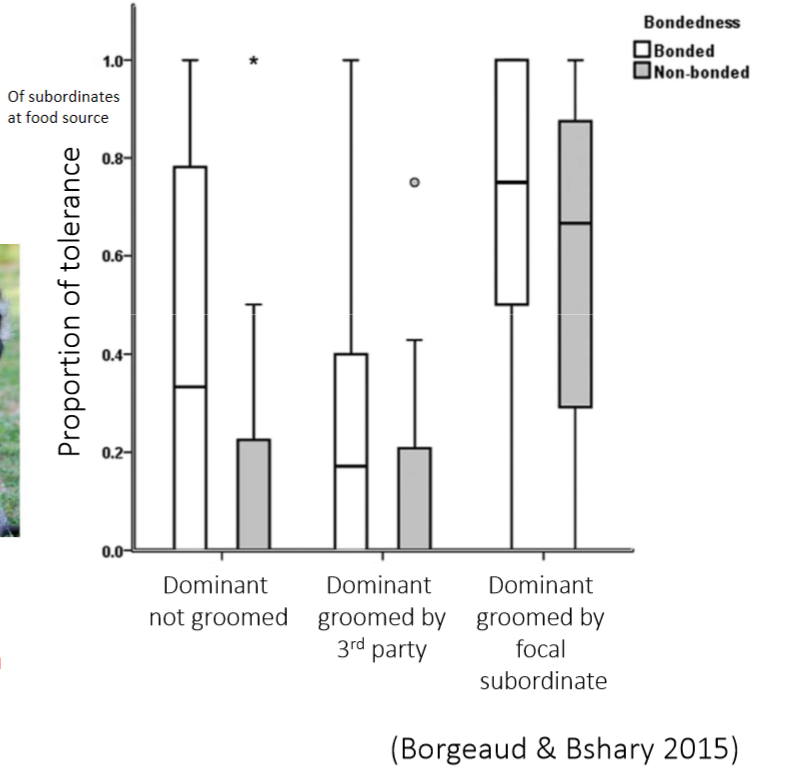
→ grooming being exchanged for food
Field experiment→ Pied Flycatchers (Krams et al., 2008):
breed in nest boxes, feed on territories, mob predators on neighbouring territories
experiment→
placed a stuffed owl (predator) in pair a box, caged pair b, pair c would help pair a
released pair b and and put owls in pair b and pair c boxes
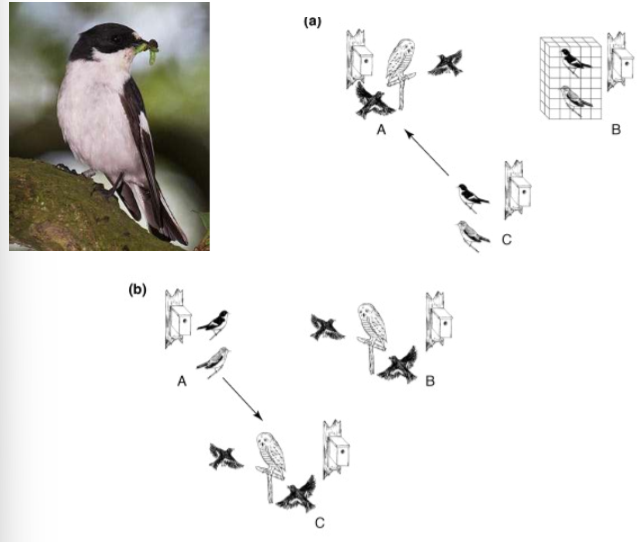
Q→ who would pair a choose to help? → those that previously helped them (pair c) or randomly (pair b)
results→ in 30/32 cases, pair a chose to help pair c- those that helped before and never helped pair b- those that didn’t help before
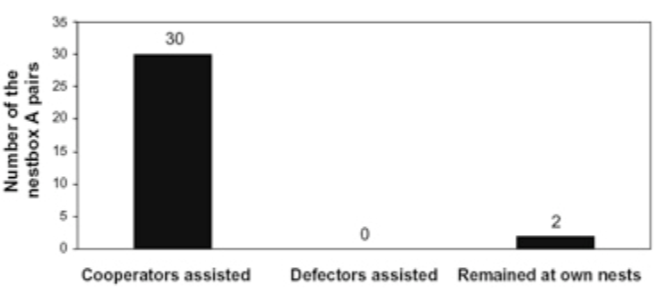
→ reciprocity in mobbing behaviour
General conclusions of reciprocity evidence:
there are a few good examples but is very limited- papers:

natural systems are more complicated than dyadic relationships- interact with lots of social partners at once
develop profitable relationships and terminate unproductive ones
should view as biological market theory:
there is a holding class e.g. dominants
there is a demanding class e.g. subordinates
there are trade dynamics e.g. supply and demand, advertisement, commodity value
defection is punished and cooperation is enforced by cheating having high costs:
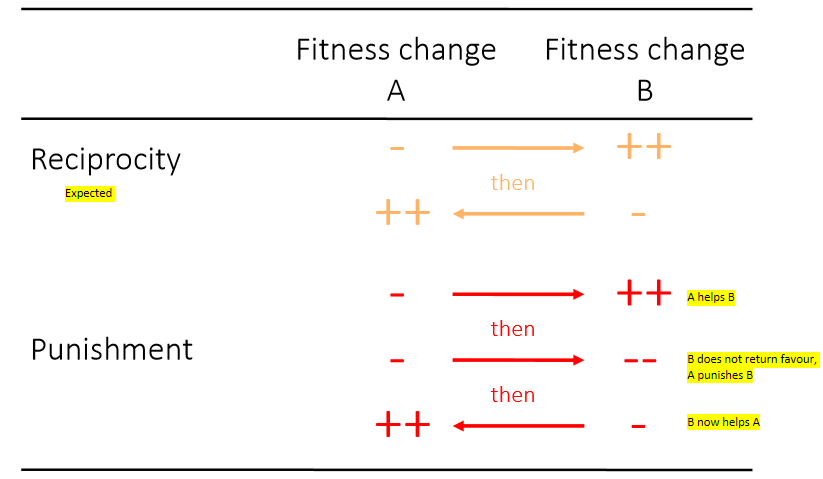
no evidence in natural systems
Is the biological markets theory better to use when looking at social interactions?
e.g. Macaque mating market-
male-to-female grooming is mostly directed to receptive females (87%), of which led to mating 37% of the time
BUT amount of time male grooms female depends on the number of fertile females in the group
more fertile females, less time grooming:
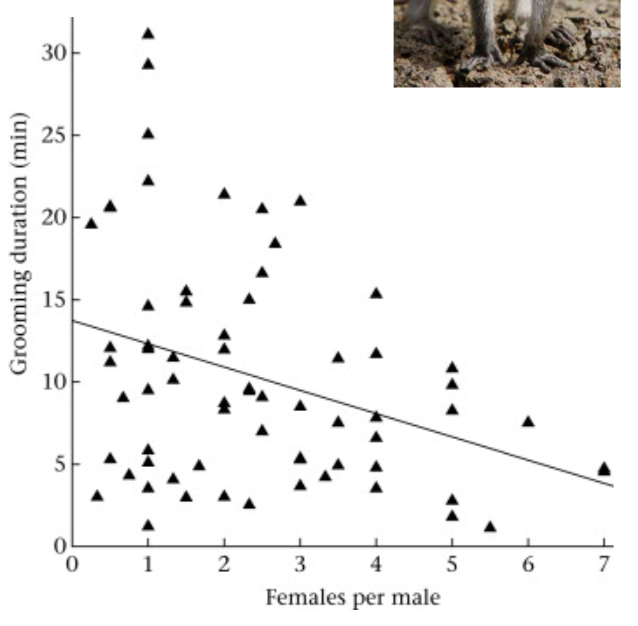
→ supply demand operates, goes away from the idea of similar commodities in reciprocity (grooming for sex)
e.g. Dwarf mongoose-
post sentinels in the day, groom each other when back
observations→ positive correlation between amount of time being sentinel and being groomed
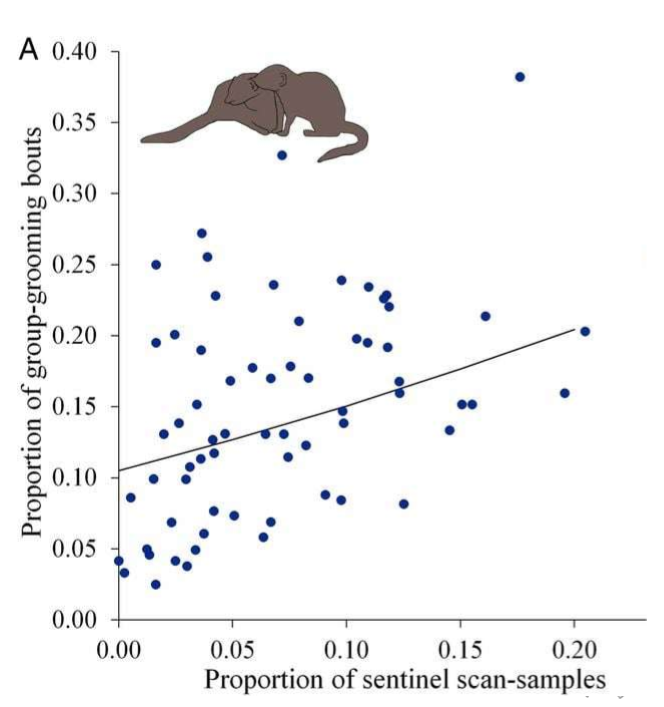
experiment→
in the day, played surveillance calls (sentinel call, individual is performing more surveillance than normal) or control calls (soft, quiet calls of an individual), monitored how much that individual would be groomed
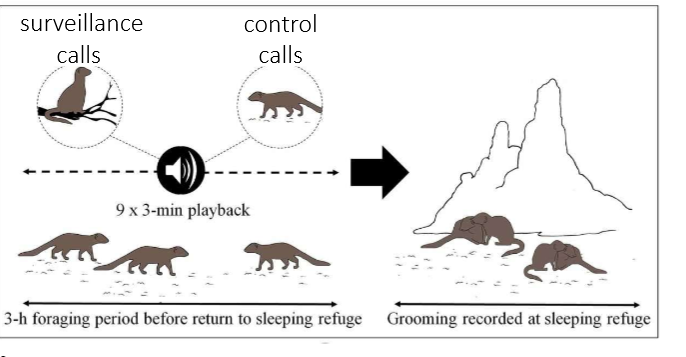
results→ duration and number of grooming bouts was higher when they were perceived to have called more
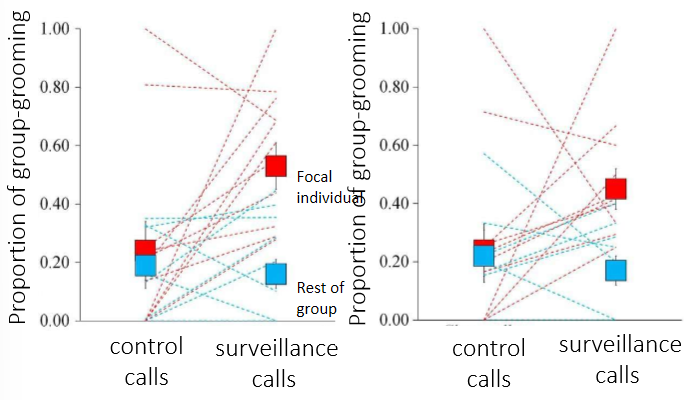
→ there is a temporal delay and different commodities are exchanged
BMT has suggested that there are different kinds of reciprocity:
Direct reciprocity
you scratch my back, I’ll scratch yours
above examples
Generalised reciprocity
help anyone if helped by someone
works in theory, one good lab experiment- Norway Rats
method→ placed a rate next to either all cooperative or all non-cooperative partners, gave a new rat, looked at action
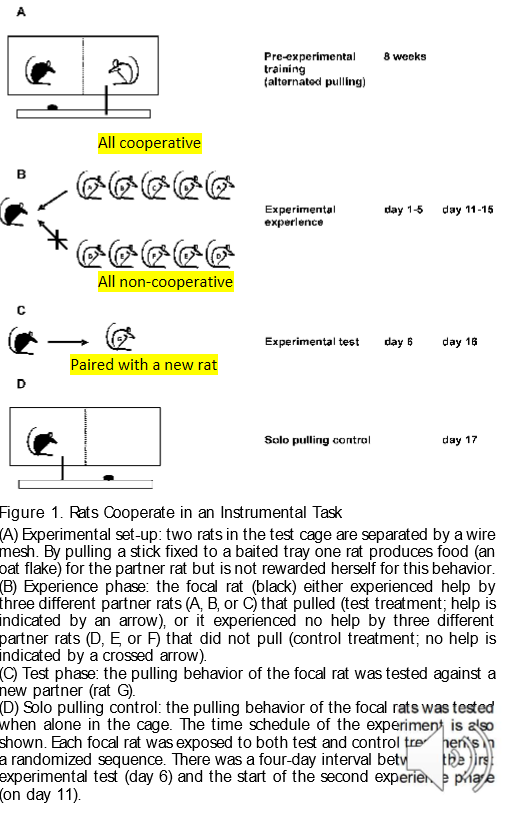
Q→ are rats nice to their next social partner depending on past environment?
results→ 21% more pulls when a rat had previous cooperation:
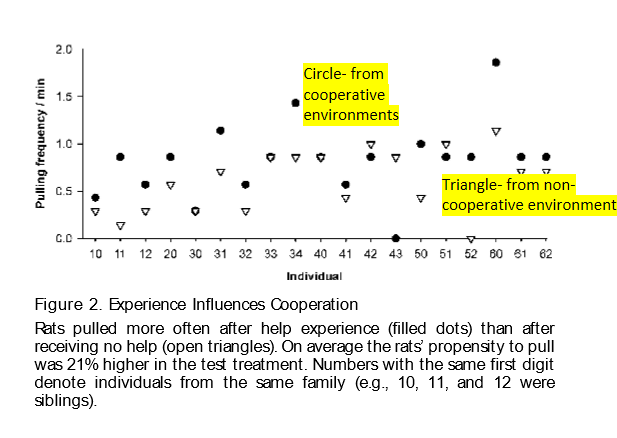
→ generalised reciprocity is shown in Norway Rats
Indirect reciprocity
help someone who is deemed to be helpful, reputation is important
works in theory but no good evidence so far
→ BMT expanded ideas but does not have enough evidence to be fully supported yet
Johnstone argues reciprocity can solve the problem of negotiation between a male and female in biparental care:
feeding indeterminate times, same individual
provision of food is costly
both parties receive a benefit
seems to be an alteration of male and female more than by chance in birds
→ reciprocity may have been hiding in plain sight
→ reciprocity works well in theory, the lab and humans but is not widely important in non-human animals