Revision centre
Describe translation -
Ribosome binds to mRNA.
When a start codon is found, tRNA with complementary anticodons attach to the codons on the mRNA.
The tRNA carries with it an amino acid and peptide bonds join together adjacent amino acids held by the tRNA.
When a stop codon is reached the polypeptide is released.
What is the function of tRNA -
attaches to specific amino acids and takes them to the ribosomes. Has 3 bases exposed which are complementary to the sequence on mRNA coding for a particular amino acid.
Describe the transcription of DNA into the primary mRNA strand-
DNA is unzipped.
RNA nucleotides bind to complementary bases on the single DNA strand.
RNA polymerase joins the RNA nucleotides to form the primary mRNA strand (primary transcript)
Describe how the primary transcript is made into mature mRNA transcript
Non coding regions (introns) are removed.
Exons (coding regions) are then joined together to form mature mRNA.
This process is called RNA splicing.
Describe the 4 steps of PCR -
Mix polymerase, primers, nucleotides and template DNA.
Heat - separates strands (92-98)
Cool - allows primers to bind (50-65)
Heat - primers extended by heat tolerant DNA polymerase (70-80)
The heating and cooling steps are repeated to amplify the target DNA.
How is DNA organised in yeast?
Yeast are eukaryotes so have DNA in linear chromosomes in the nucleus. They are unusual because they also have plasmids
Describe DNA replication
1) DNA is unwound and unzipped exposing the bases
2) Using the single strand as a template, a short stretch of nucleotides called a primer is added
3) DNA polymerase then adds nucleotides to the 3’ end provided by the primer
4) One strand forms continuously and the other is formed in fragments
5) The enzyme ligase joins fragments of DNA together
What is the function of mRNA -
it carries a copy of the genetic code from DNA in the nucleus to the ribosome as a complementary sequence
How is RNA different to DNA?
RNA is single stranded, DNA is double stranded.
RNA has ribose sugar, DNA has deoxyribose sugar.
RNA has uracil as one of its bases, DNA has thymine.
How can different proteins be expressed from one gene?
Alternative RNA splicing where different mature mRNA transcripts are produced from the same primary transcript by keeping different exons.
How is the phenotype determined?
by the production of different proteins produced as a result of gene expression and environmental factors
What do tissue cells do?
they are involved in growth, repair and renewal of the cells in that tissue
How can stem cells be used therapeutically?
to repair damaged or diseased organs or tissues e.g. skin grafts for burns
Why might stem cells be used in research?
to learn about processes such as cell growth, differentiation and gene regulation. As model cells to study how diseases develop or for drug testing because they can be grown indefinitely in laboratories. embryonic cells are used as they are pluripotent and can become any cell in the body and can grow indefinitely.
Why does the use of embryonic stem cells raise ethical issues?
The use of embryonic stem cells has huge potential to treat diseases and injuries, improving the lives of many.
However they are created in laboratories to get stem cells from them for research, should human life be artificially created? the embryos are destroyed when the stem cells are removed, should a life be ended for research?
What is the purpose of the sections of the genome that do not code for proteins
some sequences regulate transcriptions.
other sequences are transcribed but not translated.
some sequences have no known function.
How are mutations linked to evolution?
mutations provide altered proteins which means the organism can change or evolve, without mutations there would be no evolution
Stabilising selection - when the average phenotype is most successful in a given habitat, frequency of extreme phenotypes is reduced.
Disruptive selection - when the average phenotype is least successful in a given habitat, frequency of extreme phenotypes is increased.
Directional selection -when one extreme phenotype is more successful in a given habitat, frequency of the other extreme will decrease
Why is natural selection more rapid in prokaryotes than in eukaryotes?
Prokaryotes can exchange genetic material horizontally between individuals of the same generation resulting in faster evolutionary change.
Eukaryotes exchange genetic material vertically parent to offspring which is slower.
How might genomic sequencing of individuals help improve health?
1) allows advanced screening for diseases
2) predict the likelihood of developing certain diseases
3) allows individual to make lifestyle changes before symptoms begin
4) drugs can target the genome directly
5) effective drugs can be used immediately- no need for trial and error
How are nucleotides held together in DNA?
Strong bonds form between the phosphate group of one nucleotide and the carbon 3’ on another nucleotide forming a long strand.
Two strands of nucleotides are held together by hydrogen bonding between bases.
Describe the structure of DNA
Two strands of nucleotides run in opposite/antiparallel directions forming a double helix. One strand goes from 3’ to 5’ and the other goes 5’ to 3’.
How is DNA organised in prokaryotes?
In a single circular chromosome and smaller circular plasmids (no nucleus)
How is DNA organised in eukaryotes
In linear chromosomes which are tightly coiled and packaged round proteins (histones) in the nucleus. Circular chromosomes are found in mitochondria and chloroplasts.
Uses of PCR
1) Forensic applications - genetic fingerprinting (help solve crimes)
2) Medical applications - genetic testing (diagnose genetic disorders)
Metabolism and survival
How are metabolic pathways controlled?
by the presence and absence of some enzymes and by the regulation of the rate of reaction of other key enzymes
How do enzymes speed up reactions?
they lower the activation energy so more molecules have greater than the activation energy and the reaction takes place faster
What is competitive inhibition of an enzyme?
when a molecule that is a very similar shape to the substrate competes for the active site of the enzyme. the inhibitor attaches to the active site and blocks the substrate from attaching. it can be reversed by increasing the concentration of substrate, this increases the chance of substrate reaching the active site before the inhibitor.
What is non-competitive inhibition of an enzyme?
an inhibitor binds to an enzyme away from the active site which changes the shape of the active site. increasing the concentration of the substrate will not increase the rate of reaction.
What is feedback inhibition?
a way that metabolic pathways can be controlled. as the end product of the pathway accumulates, it can inhibit an enzyme involved earlier in its synthesis. as the concentration of the product is reduced, inhibition is removed and the pathway proceeds again.
Describe what happens in the citric acid cycle
Acetyl coenzyme A gives up its acetyl group which combines with oxaloacetate to form citrate. Citrate is converted back into oxaloacetate in a series of enzyme controlled steps which generate ATP and release carbon dioxide and hydrogen ions. Occurs in the matrix of the mitochondria
How is NADH formed in both glycolysis and the citric acid cycle?
Dehydrogenase enzymes remove hydrogen ions and electrons and pass them to the coenzyme NAD+ which forms NADH. The electrons and hydrogen ions are passed to the electron transport chain on the inner mitochondrial membrane.
Describe how ATP is made from the electron transport chain.
Electrons pumped along the electron transport chain release energy. This energy is used to pump hydrogen ions across the inner mitochondrial membrane. Hydrogen ions flow back through the membrane protein ATP synthase which makes ATP.
Describe fermentation
Fermentation occurs in the cytoplasm when there is not enough oxygen to support the electron transport chain. Fermentation produces ATP but much less than produced in aerobic respiration.
increasing metabolic rate … fish (lowest), reptiles and amphibians and mammals and birds (highest)
Describe the heart and circulatory system in birds and mammals
-4 chambered heart
-2atria and 2 ventricles
-oxygenated and deoxygenated blood do not mix in the heart
-circulation is a double circulatory system
Describe the heart and circulatory system in reptiles and amphibians
-3 chambered heart
-2 atria and one ventricle (partly divided)
-oxygenated and deoxygenated blood mostly kept separate by timing of heart contractions but is considered as mixed
-circulation is incomplete double system
Describe the heart and circulatory system in fish
-2 chambered heart
-1 atrium, 1 ventricle
-circulation is single system
Describe the difference between conformers and regulators
Conformers (reptiles) internal environment depends on the external environment. They use behavioural responses e.g. basking in the sun to raise temperature, borrowing into ground to warm up or cool down. The consequences of this are that they have low metabolic costs and a narrow range of ecological niches.
Regulators (mammals) maintain their internal environment regardless of the external environment. They use metabolism. This requires energy and therefore has high metabolic cost but increase the range of possible ecological niches.
Describe the negative feedback of thermoregulation
Receptors detect a change in body temperature. Nerves carry the message to the hypothalamus. Hypothalamus sends signals in nerves to the effector cells response eg shiver. The response reverses the original condition, increases body temperature
Why is thermoregulation important?
Enzymes have an optional temperature where they work fastest. If enzymes get too hot they can denature (permanently lose their shape and stop working). Diffusion slows down at low temperatures and high diffusion rates are needed to maintain metabolism.
Types of dormancy
-daily torpor- a period of reduced activity in some animals with small body size and high metabolic rates
-hibernation - a way of surviving low temperatures by building up fat stores before entering a state of dramatically reduced metabolic rate.
-aestivation - a dormancy response caused by very dry or hot conditions
If dormancy is predictive it occurs before the start of the adverse conditions.
If dormancy is consequential then it is caused by the onset of adverse conditions
Total cell count -counts all the cells
Viable cell count - only counts live cells
What are restriction endonucleases and why are they important?
A group of enzymes that recognise and cut specific sequences of DNA leaving unpaired nucleotides at the ends. They allow specific genes to be cut out of a source chromosome and vectors to be opened.
Describe the process of recombinant DNA technology
Restriction endonuclease used to select and cut a sequence of DNA. The same restriction endonuclease is used to cut a vector. The required DNA sequence is inserted into the vector and joined with DNA ligase. The vector carries the new DNA into cells.
Why are recombinant yeast cells used?
To produce active forms of animal or plant proteins. These proteins may be inactive if made by bacteria because they are not correctly folded or modified after protein synthesis.
2019 past paper extended answer notes
Primers are necessary for DNA replication to give DNA polymerase a start point for replication.
Only the leading strand can be replicated continuously because DNA polymerase replicates on a 5’ to 3’ direction.
DNA ligase is the enzyme that joins fragments together in the lagging strand.
DNA is organised in prokaryotes as circular chromosomes and plasmids.
Protein is a component of ribosomes.
A change in the sequence of bases in DNA transcribed to rRNA can result in a decrease in protein synthesis because there may be a change in structure or function of the ribosome, translation can no longer occur and ribosome is not formed.
Hydrogen bonds hold the polypeptide chain is a three dimensional shape.
Mature transcript has less bases then the primary transcript because the Introns/non-coding regions are removed.
Geographical isolation barriers prevent gene flow between populations and prevent interbreeding.
Sympatric speciation and behavioural and ecological isolation can cause the change in the number of species.
Mutation rate is an example of the type of data required to generate a molecular clock.
Including control groups in investigations show the effect of what is being recorded.
Pharmacogenetics (personalised medicine) is the selection of drugs to treat individuals based on their genomic sequence.
Prokaryotes have a smaller genome than eukaryotes.
Non-coding DNA in the genome regulates transcript.
In eukaryotes, alternative splicing occurs because there are different combinations of exons in the mature transcript.
Enzymes increase the rate of reactions in living cells and reduces activation energy.
Glycolysis occurs in the cytoplasm. ATP phosphorylates (gives energy to glucose) in step one.
Glycolysis results in a net gain of ATP because 2 ATP is used but 4 ATP is made.
Dehydrogenase enzymes remove hydrogen and pass them to coenzyme NAD to make NADH.
Absence of oxygen = Condition required for fermentation.
The conversion of pyruvate to lactate is required for glycolysis to continue as it produces NAD which is needed for glycolysis.
Less citric acid would be produced if the temperature in the fermenter was reduced because enzyme activity would be lower.
It is necessary to sterilise equipment to ensure microorganisms are not present, which would contaminate end product or compete with experiment.
Conserving energy is an advantage of entering torpor.
Oxygen consumption, carbon dioxide production, breathing/heartrate and body temperature can be measured to determine whether the animal has entered torpor.
Design experiments can be made reliable if there are several numbers in each group.
Body mass or temperature can affect torpor frequency.
Migration and daily torpor are ways in which animals survive adverse conditions.
Experiments with exposure to UV light can be carried out in a darkened room to control how much UV light cells were exposed to.
Investigations can be modified to test the effectiveness of sunscreen lotion using yeast as model cells by putting a layer of sunscreen over the plates of yeast and comparing with plates with no sunscreen.
The use of insecticides can be harmful to the environment because of biomagnification/bioaccumulation, toxic tot non-target animals and can be persistent in the environment.
Introducing prey on insects would require the use of less insecticide.
Integrated pest management involves using both insecticides and prey species.
Invasive species spread rapidly and eliminate native species.
Invasive species are more successful in their new habitat because they are free from predators that were found in their native habitat.
Vectors transfer bacteria to host.
Parasites take blood/nutrients from humans who are harmed by this.
Use of pesticides to kill ticks means there are fewer vectors to spread bacteria.
Treating infected animals with antibiotics means there are fewer bacteria in animals so fewer infected by ticks to transmit to humans.
Altruistic behaviour (alarms calls and meerkats eg) they risk their life to allow others to escape.
Young monkeys have not or are still learning alarm calls.
Forming alliances improves position in social hierarchy.
Appeasement avoids conflict/fighting.
Unit 1 DNA and the genome notes
Eukaryotes (contain a nucleus) = animals and plant, arranged as linear chromosomes. DNA is packaged and tightly coiled around proteins called histones.
Prokaryotes (have no nucleus) = bacteria, arranged as circular chromosome and plasmid
DNA consists of two long strands of nucleotides running in an antiparallel to form a double helix.
Each nucleotide contains a phosphate group, a deoxyribose sugar and a base (A,T,C,G). Nucleotides are joined together by strong chemical bonds (sugar phosphate bonds) between phosphate and sugar groups, this forms the sugar-phosphate backbone. Weak hydrogen bonds between bases of different strands between complementary base pairs.
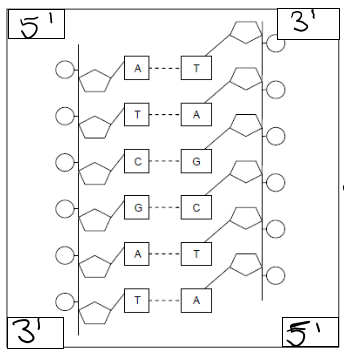
molecules required for DNA replication to take place:
ATP
Primers
Enzymes (DNA polymerase and ligase)
Original DNA
Nucleotides
DNA replication ensures that genetic information is passed on to every daughter cell during mitosis and that the cells are identical, ensures that all cells have the necessary information to carry out its function, any mistakes would result in a change in the gene code = mutation.
The double helix unwinds and unzips (hydrogen bonds between the two strands break) to form two template strands. DNA polymerase needs a short strand of nucleotides called a primer to bind to the 3’ end of the template strand to start replication. DNA polymerase adds free complementary DNA nucleotides to the end of a DNA strand so only one strand is replicated continuously. The other strand is replicated in fragments which are then joined together by DNA ligase.
Polymerase chain reaction is a technique used to amplify DNA fragments in vitro, carried out in a thermal cycling machine, requires:
DNA to be amplified
heat tolerant DNA polymerase
primers
free DNA nucleotides
Uses
amplifying DNA for forensic analysis (solving crimes)
settling paternity suits
diagnostic testing for genetic diseases e.g. COVID
Step 1 - DNA is heated (denatures) to between 92 and 98 to get single stranded DNA
Step 2 - primers annealed: temperature is lowered to 50-65 so that primers bind to complementary sequences on DNA
Step 3 - DNA synthesised, temperature is increase to between 70 and 80 so that heat tolerant DNA polymerase will synthesise new strands using free DNA nucleotides.
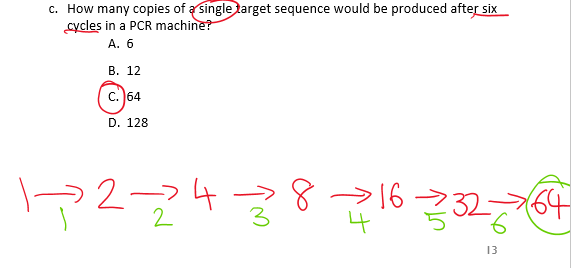
Step 4 - Cycle repeated, this cycle of denaturing DNA, annealing primers and the synthesis of new DNA strands is repeated many times.
The DNA sequence to be amplified is target by the addition of primers.
 Proteins form the structure and control the functions in an organism. Proteins are synthesised on ribosomes in the cytoplasm. Complementary copies of genes are made by transcription, the mRNA is translated into proteins by ribosomes in the cytoplasm.
The phenotype of an organism is determined by the proteins produced as a result of gene expression.
RNA does not contain the base thymine, instead it contains uracil which binds to adenine.
In alternative splicing the order of the exons stays the same.
2021 past paper notes
Animal cells are organised in linear and circular chromosomes only.
Primary transcript contains introns and exons and its exons are spliced together to form the mature mRNA transcript.
DNA sequences functions are transcribed to tRNA and regulates transcription.
Conformers (reptiles) make behavioural responses to optimise metabolic rate.
Regulators occupy a wide range of ecological niches.
Reliability can be improved by using several syringes for each experiment, NOT using the same size of leaf disc in each syringe (accuracy), NOT using a stopwatch to record the time.
The production of G3P in photosynthesis requires hydrogen.
Primers are required to start DNA replication.
DNA polymerase attaches free nucleotides to the leading strand during DNA replication.
Practical applications of PCR = solving crimes, paternity suits, diagnose diseases.
Allopatric speciation occurs when populations are isolated on two islands which could become different species as a result of natural speciation.
Populations not being able to interbreed to produce fertile offspring is evidence that speciation has occurred.
Electron transport chain occurs in the inner mitochondrial matrix. Movement of electrons releases energy to transport hydrogen ions across the inner membrane, flow of hydrogen ions through ATP synthase generates ATP.
Examples of corrective response to a decrease in body temperature:
Shivering - muscles contract, generating heat
Vasoconstriction
Increase metabolic rate
Hair raised
Thermoregulation to maintain metabolism allows optimal diffusion rates.
Hibernation helps polar bears to survive in the winter as it lower heart rate and saves energy. The population of polar bears is likely to decrease as there is less ice which means there is less food/seals.
Daily torpor (aestivation) and hibernation is a way that animals survive adverse conditions.
Water baths/incubators is a piece of apparatus that can be used to maintain temperature.
Vitamins and fatty acids are complex molecules that could be added to growth mediums for biosynthesis.
Non competitive inhibition is not reversed by increasing substrate concentration, it still inhibits at high substrate concentration.
Feedback inhibition of a metabolic pathway = end product reaches a critical concentration, inhibits an enzyme earlier in the pathway.
Advantages of feedback inhibition:
-saves energy/raw materials
-end product is only produced when required.
Chlorophyll is a pigment that absorbs mainly red and blue light.
The role of carotenoids = extends the range of wavelengths absorbed and passes energy to chlorophyll
Colorimeters are apparatus that could be used to show the colours which colours of light absorbed by photosynthetic pigments.
Dandelions could be incorrectly identified as annual weeds as they have high seed output.
Selective herbicide would have a greater effect on dandelions than on grass as dandelions have broad leaves to absorb herbicide.
Improvements to field trial = randomised plots which reduces bias.
Behaviour lookouts = altruistic as the lookout is more likely to be harmed while the other escape. Altruistic behaviour is more common in related animals as it increases chances of survival of shared genes, kin selection.
Threat displays (ritualistic behaviour) is shown by dominant members of a social group.
Advantages of soil hierarchy:
reduces conflict
increase chances of dominant animals favourable genes being passed on
Apathy is the behaviour of animals which show abnormally low levels of activity.
Advantages to humans of intensive farming
low cost
high profit
less land used
Biodiversity in isolated fragments decreases as the size of the fragments gets smaller because there is increased competition for food and genetic/species diversity decreases.
Reproductive rates are low in isolated fragments as there are fewer mates leading to inbreeding and the bottleneck effect.
Habitat corridors are areas of land that connect isolated fragments. Linking habitat fragments may result in an increase in population as there is an increase access to food and mates in other fragments.
Less habitats would have to be cleared if it was only used for crop production because:
crops produce more food per unit area than animals
energy is lost between trophic levels in food webs
Unit 2 notes - Metabolism and survival
Cell metabolism = all of the biochemical reactions which occur within a living cell.
Anabolic pathways involves the biosynthesis of complex molecules from simple building blocks, require energy.
Catabolic pathways are the breakdown of complex molecules to simple ones, releasing energy.
The cell membrane has a fluid mosaic structure and is composed of a bilayer of phospholipids with protein pores, pumps and enzymes.
Potassium pumps actively transport sodium ions out of the cells and potassium ions into the cell, it uses energy to move these ions against their concentration gradient.
Passive = no energy required (diffusion/osmosis)
Active - energy required (active transport)
The activation energy is the energy needed to break chemical bonds in the reactant chemicals and can be lowered by using enzymes (biological catalysts), speeding up the rate of a reaction and remains unchanged.
Substrates fit the active site exactly and has a high affinity for it. Products of a reaction have a low affinity for the active site.
2023 past paper multi choice notes
rRNA is a component of ribosomes along with protein.
If a section did not match the sequence of any protein coding genes in the human genome it may be involved in the production of tRNA.
Frameshift mutation is caused by a mutation in a gene which causes all the codons after the mutation to change, this can cause a genetic disease.
Natural selection involves a non-random increase in frequency of DNA sequences that increase survival.
In gene transfer bacteria use horizontal and vertical transfer.
Microorganisms are found in bacteria, archaea and eukaryotes domains of life.
As the concentration of an experiment is increased the catalase activity decreases.
Dehydrogenase enzymes catalyses the reaction of respiration which is taken place in the cytoplasm and NOT the inner mitochondrial membrane.
In feedback inhibition the last enzyme binds with the first enzyme as the metabolic pathway is enzyme controlled.
Mammals use vasoconstriction and an increase in metabolic rate as a mechanism to regulate their body temperature after there is a decrease in temperature.
RuBisCO catalyses fixation of carbon dioxide.
Placing a heat shield between apparatus in an experiment can ensure validity.
Perennial weeds have storage organs and vegetative reproduction.
Annual weeds have short life cycle.
Insertion of Bt toxin gene into cotton plants is an example of recombinant DNA technology used to increase yields in crop plants.
Converting an intensive farm into a free range farm requires more land but animals can be sold at a higher price.
Social groups have behaviours that are adapted to group living - cooperative hunting e.g. killer whales working together to kill seals.
2022 past paper multi choice notes
Prokaryotes chromosomes are circular shaped.
Stem cells are used to study how diseases develop (research use) and to repair damages tissue (therapeutic use).
Nonsense mutation is shortens a protein by producing the early production of a stop codon.
Active site changes shape during induced fit.
Glucose and ATP must be present in a living cell for glycolysis to occur.
Ensuring the same item type (species) is used in an experiment allows for a valid conclusion to be drawn.
Microorganisms use a variety of metabolic substrates.
Events that occur during photosynthesis:
Carbon dioxide combines with RuBP
3PG is phosphorylated by ATP
Carotenoids in green plants extend the range of wavelengths of light absorbed and pass energy onto chlorophyll.
Ritualistic behaviour occurs in social hierarchies by dominant individuals to decrease conflict.
In habitat fragments recolonization is more likely to occur in larger fragments. Larger fragments are more likely to have a greater species diversity than smaller fragments. Degradation of the edges of habitat fragments is likely to reduce species diversity in fragments.
2022 past paper extended response notes
Primers in PCR allow DNA polymerase.
DNA ligase is an enzyme that is not required for step 3 in PCR because there are no fragments to join and both strands are replicated continuously.
PCR applications:
solving crimes (forensics)
settle paternity suits
diagnose genetic disease
A temperature of 92-98 is required for step one of PCR to occur.
mRNA transcripts move from the nucleus to ribosome.
Alternative splicing of the primary mRNA transcript has occurred because there is more than one mature transcript/protein.
Alternative splicing - different exons are joined together in the mature transcript.
Ribosomes would contain radioactive uracil because ribosomes contain RNA which will contain uracil.
Evolution by natural selection is more rapid in prokaryotes because prokaryotes carry out horizontal gene transfer in the same generation.
Antibiotics can lead to evolution as the bacteria can become resistant and survive as they have a selective advantage which pass on resistant genes to offspring.
Pharmacogenetics (personalised medicine) is when the individuals genomic sequence is used to select the most effective drug.
Unspecialised cells in the meristem differentiate into specialised cells because certain genes are expressed (switched on).
Mitosis/cell division is the process responsible for new meristem cells which would form in addition to shoots.
Shoot growth would be reduced if the investigation was set up in non-sterile conditions because microorganisms and bacteria would grow and compete for resources and can cause disease.
The presence of an isolation barrier could lead to the evolution of two new species as it prevents gene flow/breeding between the groups, different mutations occur in each population and natural selection occurs. This is Allopatric speciation.
Speciation is more likely to occur in ground animals than birds because birds can fly across barriers.
Species - a group of organisms that can interbreed to produce fertile offspring and that does not normally breed with other groups.
The central matrix of mitochondria is the exact location of the citric acid cycle within cells.
An increase in the concentration of an enzyme could decrease the activity of the enzyme as it is a competitive inhibitor.
ATP, lactate and NAD are products of fermentation in muscle cells.
Metabolic rate can be expressed as per kg if the body masses are different.
Equipment used in measuring metabolic rate:
respirometer
calorimeter
oxygen probe
carbon dioxide probe
Mammals have 2 ventricles and two atria in their heart chambers. The arrangement of its heart chambers supports a birds high metabolic rate because there is no mixing of oxygenated and de oxygenated blood, blood pumped out at higher pressure so there is efficient oxygen delivery to cells.
Crocodiles are conformers as their internal temperature is dependant on the air temperature.
An advantage of bacteria producing antibiotics in its natural environment is it reduces competition for resources and outcompetes other bacteria.
Oxygen, pH, temperature and sterility are culture conditions that would be controlled when producing antibiotics in a fermenter.
Variables to be controlled in a light investigation so that a valid conclusion can be drawn:
light intensity
power of bulb
distance from bulb and tube
Variables to be controlled in a algae investigation so that a valid conclusion can be drawn:
size of gel beads
concentration of algae
species of algae
Investigations determining light factors should be carried out in the dark, removing other light sources.
Repeating experiment at each wavelength can improve reliability of experiments.
Species living under floating surface plants are still able to photosynthesise because they have carotenoids and they absorb light transmitted by surface plants.
Randomisation of plots eliminates bias.
F1 hybrids are not usually bred together in plant breeding programmes because F2 has too much variation.
Mutualisation (symbiotic relationship)
Worker bees raise the young as they are related which increases survival of shared genes.
Sterile bees roles:
defend the hive
collect pollen
carry out waggle dance to show direction of food
build and repair the hive
Invasive species spread rapidly and outcompete the native species, prey on native species and hybridise with native species.
The bottleneck effect reduces genetic diversity (variation), cannot adapt to cope with the environmental change and inbreeding leads to lower reproductive rates.
Genetic diversity can be increased by releasing breeding pairs as new/different alleles are introduced.
INDEPENDANT VARIABLE = CHANGING
DEPENDANT VARIBALE = RESULTS
2018 past paper notes
ATP and lactate are products of fermentation in human muscle cells NOT carbon dioxide.
Hydrogen ions, electrons and oxygen are the molecules to make water in cellular respiration.
Non-competitive feedback inhibitor enzymes reduces the activation energy need to convert.
Fish have a single circulatory system with higher blood pressure in the capillaries in the gills and lower blood pressure in the capillaries in the body pressure.
Carbon dioxide attaches to RuBP producing 3GP is catalysed by RuBisCO.
3PG forms G3P which requires energy.
To improve the accuracy of results use a measuring cylinder with a narrower diameter and use a scale with more divisions.
Repeating the experiment several times and taking an average improves reliability.
The storage organ of perennial weeds indicates that it should be controlled by a systematic herbicide.
Randomising treatment plots would improve the field trial design to take into account higher soil moisture levels at the bottom of the hill.
Worker leafcutter ants raising young ants in their colony is an example of Kin selection.
Have several individuals in each group increases reliability of the results.
Each type of human cell has a different structure and function because only some of their genes are expressed.
Studying how cells differentiate, researching the development of Parkinson’s disease are not therapeutic uses of stem cells. Producing skin grafts and bone marrow transplants are therapeutic uses of stem cells.
Female black grouse mating with the male with the best display is an example of sexual selection.
Allopatric speciation occurs when species become isolated on an island.
Sexual selection and genetic drift involve the non-random changes in the frequency of DNA sequences, disruptive selection is not.
Molecular clocks are based on the assumption that over time DNA sequences undergo mutations at a constant rate.
The hypothalamus is the part of the brain in which thermoreceptors are found, information travels through nerve impulses to the effectors in the skin.
vasoconstriction, blood vessels constricting, muscles contracting are a response to a decrease in body temperature, these responses would help return body temperature to normal as less blood flow to the skin so less heat lost.
It is important for a mammal to regulate its body temperature so enzymes are at their optimum temperature.
In a conformer as the temperature is increased so is the heart rate.
An increase in temperature of water for conformers (reptiles) would result in a higher metabolic rate as optimum enzyme activity leading to increased respiration.
Behavioural responses such as burrowing or basking in the sun are shown by conformers to maintain an optimum metabolic rate.
By producing antibiotics in the stationary phase competition is reduced and allows it to outcompete other bacteria.
In a mutualistic relationship both individuals benefit.
Advantage of migration is that the species can avoid adverse conditions and there will be more availability of food. A disadvantage of migration is that the species uses energy and has a metabolic cost.
Migration in animals such as bugs/flies can be innate as each generation dies pretty soon after laying eggs and not every generation migrates.
daily torpor = reduce in metabolic rate while resting
Origin of replication ensures that the modified plasmid would be passed on to daughter cells.
Using a camera to collect species data may collect inaccurate results as…
the same animal may have been counted more than once or be missed
not every animal passes the camera
cameras only record some parts of the area
Invasive species spread rapidly and eliminate native species. e.g. grey squirrels
plants use the light energy absorbed by pigments during photosynthesis for photolysis ( to break water to hydrogen and oxygen), excites electrons, energy used to pump hydrogen ions across membrane.
food security is the ability of the human population to access food of sufficient quantity and quality.
Human population are better to consume crops than livestock as there is less energy in livestock as they are at a higher trophic level
F2 offspring have a greater increased genetic variation.
It is important to select male homozygous for the desired dominant characteristics because there is a higher chance of having desired dominant genes.
Inbreeding could cause an increase in the number of offspring with genetic diseases and conditions because it results in inbreeding depression (the build up of homozygous alleles
Hydrogen bonds can be broken due to the change of temperature, unfolding proteins.
More enzyme being produced may be a result of the gene being permanently switched on, more transcription occurred.