Physics Remove EOY
TOPIC 1 - Forces and motion
av. speed = total distance/ total time
On velocity time graphs the gradient it the acceleration and the area of the graph is the distance
When the line is flat on a speed time graph it is at rest
When the line is flat on a velocity time graph it is at a constant velocity
VELOCITY/DISPLACEMENT - VECTOR
Have both direction and magnitude
SPEED/DISTANCE - SCALAR
Only have magnitude
EQUATIONS
A = v-u / t
V2 = U2 + 2AS
F=ma
W=mg
Forces
friction is the force that opposes
Terminal Velocity
As the objects falls it speeds up
Air resistance increases as speed increases
Weight/gravity and air resistance become equal meaning the resultant force is 0 this is when an objects reached terminal
Stopping distance = thinking distance + braking distance
Thinking distance
Distractions
Influence of Drugs and alcohol
Braking distance
Conditions of tyres
Condition of road
Speed of car
Mass of car
TOPIC 2 - WORK, ENERGY AND POWER
EQUATIONS
W=fd
GPE=mgh
KE = 1/2 mv*2
Efficiency = useful/total x100
P=w/t (power = work done/time)
Work done equals energy transferred
Power is the rate of transfer of energy or the rate of doing work
ENERGY TRANFERS
H - heating
E - electricity
R - radiation
M - mechanical
ENERGY STORES
K - kinetic
G - gravitational
C - chemical
E - elastic potential
M - magnet
E - electrostatic
N - nuclear
T - thermal
TOPIC 3 - ASTROPHYSICS
Universe - large collection of billions of galaxies
Galaxy - large collection of billions of stars
Solar System - in the Milky Way galaxy
Gravitational Force causes
- moons to orbit planets
-planets to orbit the sun
-artificial satellites to orbit the earth
-comets to orbit the sun
Gravitaional feild strength varies by mass and density of a planet
The orbits of comets are elliptical while moons and planets are circular
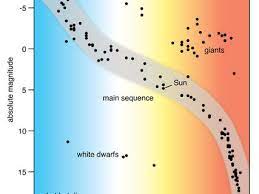
Blue are the hottest stars while red are cooler
Orbital speed - 2PiR/t
Life cycle of a star
Nebula
MS star
Red giant/ red supergiant
White dwarf / supernova
Black dwarf/ neutron star/ black hole
/