Fire Protection
Components of a Fire
-To have a fire, you have to have:
Oxygen
Fuel
Friction (Heat)
-If you remove any of these components, you can put the fire out.
Fire Classifications
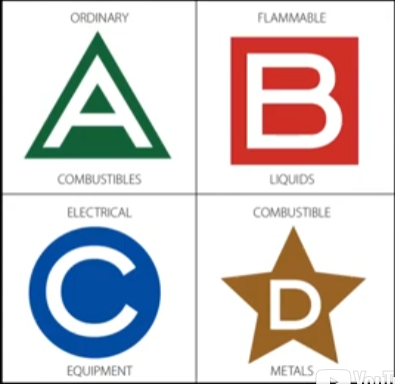
Class A: Occurs in ordinary combustible materials, including paper and wood.
Class B: Occurs in petroleum products, like your hydraulic or fuel.
Class C: Occurs in electrical wiring/equipment.
Class D: Flammable material, things like magnesium, your aircraft wheels and aircraft brakes.
Class K: (Kitchen-type fire. We do not deal with class of fire in aviation.)
Types of Fire Extinguishers
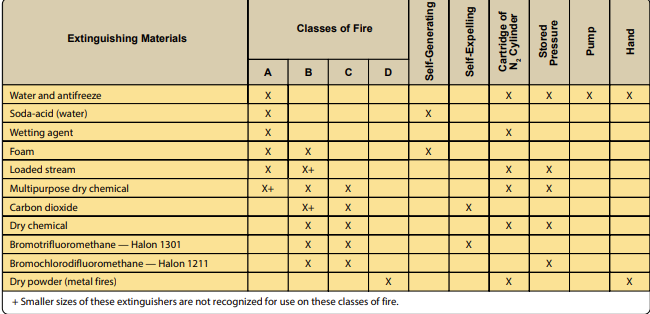
Water and antifreeze: Class A, would not recommend being used on electrical fire due to risk of electrical shock.
Carbon Dioxide: Good for Class B and Class C fires. (Will cool the fire and smother the oxygen.)
Dry Chemical: Class B and Class C fires. (Will smother the fire but will leave residual chemicals on the aluminum and on the aircraft structure that are going to cause corrosion.)
Halon 1301 and Halon 1211: Class B and Class C fires.
Dry Powder: Typically used for metal fires. (Magnesium fires, brakes, etc. Do not put water on a magnesium fire, will cause it to explode.)
Extinguisher Inspection
-Periodic extinguisher inspection items include:
Proper location of the appropriate extinguisher
Safety seals are unbroken
Remove external dirt and rust
Gauge or indicator is in operable range
Proper weight
No nozzle obstruction
No obvious damage
-Look at tag of fire extinguisher to make sure it’s been inspected within the last 30 to 45 days.
Extinguisher Identification and Use
Extinguishers should be marked with suitability (see course eBook for details)
Ensure you have the correct type for the fire, then:
Pull the pin to activate the agent
Stand back 8 feet and aim at the base of the fire
Squeeze lever and sweep side to side until extinguished
Fireguards
During technician supported ground runs, a fireguard should be used to watch for and assist in fighting engine fires during ground engine operations
Fireguards should be placed where they can quickly access areas of the engine that may catch fire during operations
Generally, the fireguard will need to direct the extinguisher at the induction system of the engine, or possibly the exhaust system
Engine Fires
If a fire develops during an engine start, attempt to keep cranking the engine to start.
If the engine starts, this will usually extinguish the fire.
If the engine does not start and the fire continues, terminate the start and the fireguard then extinguishes the fire.
Inspect the aircraft and return to service as necessary.