Motor Events
Dr Christian Thode
MAKE NOTES ON THE FIRST TWO WEEKS OF CHRISTIAN THODES LECTURES “ VERTEBRATE BRAIN
Overview
Motor Events:
Neuronal Programmes
animal models
feedback loops
Planning movement
role of the cortex
role of the basal ganglia
role of the cerebellum
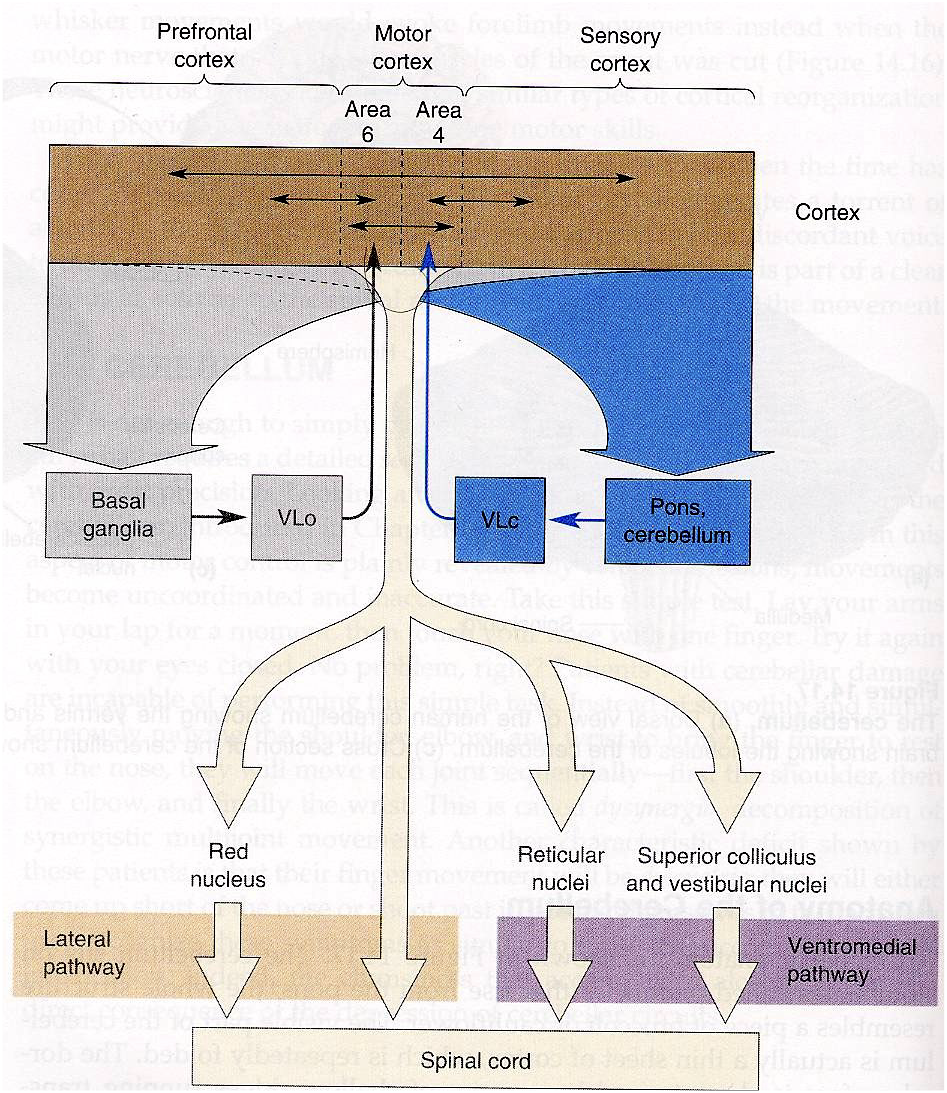
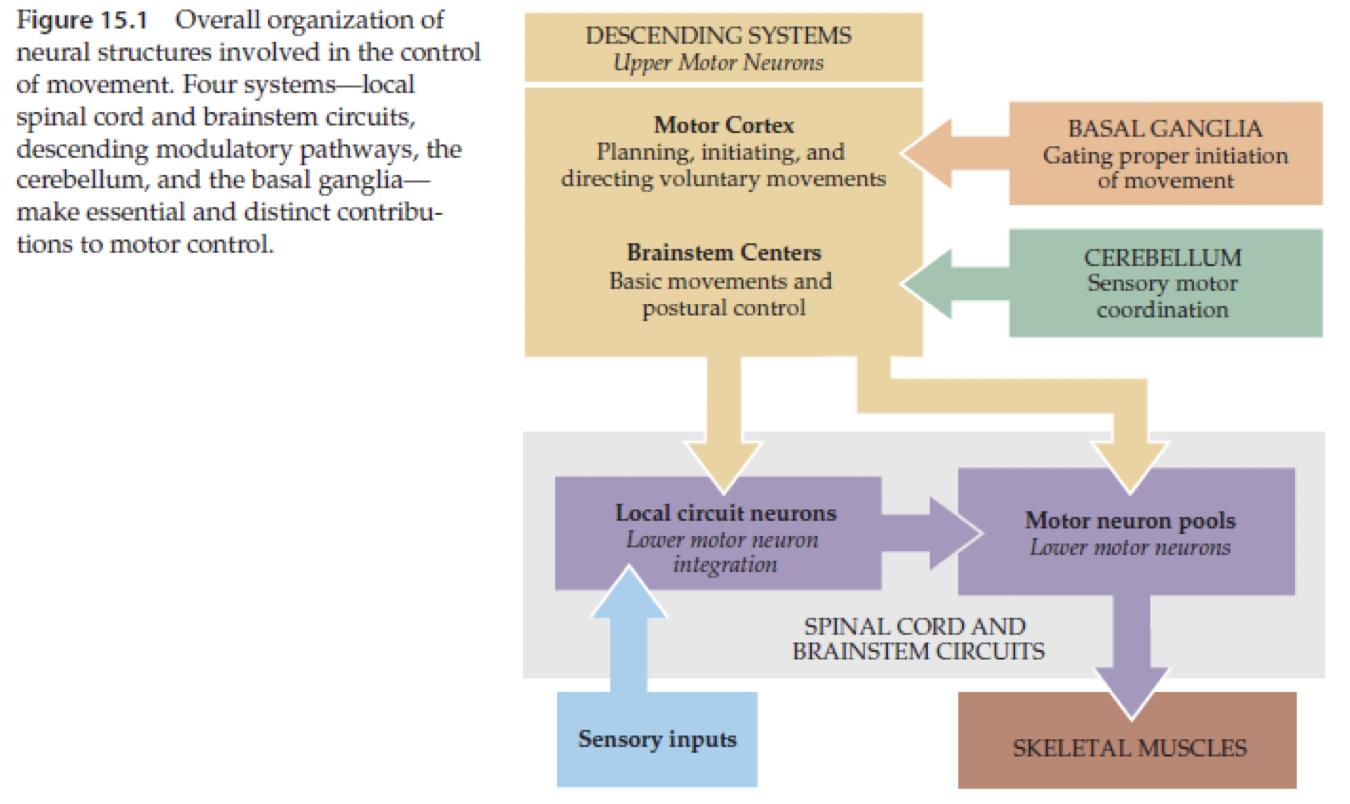
Planning & Control of Movement
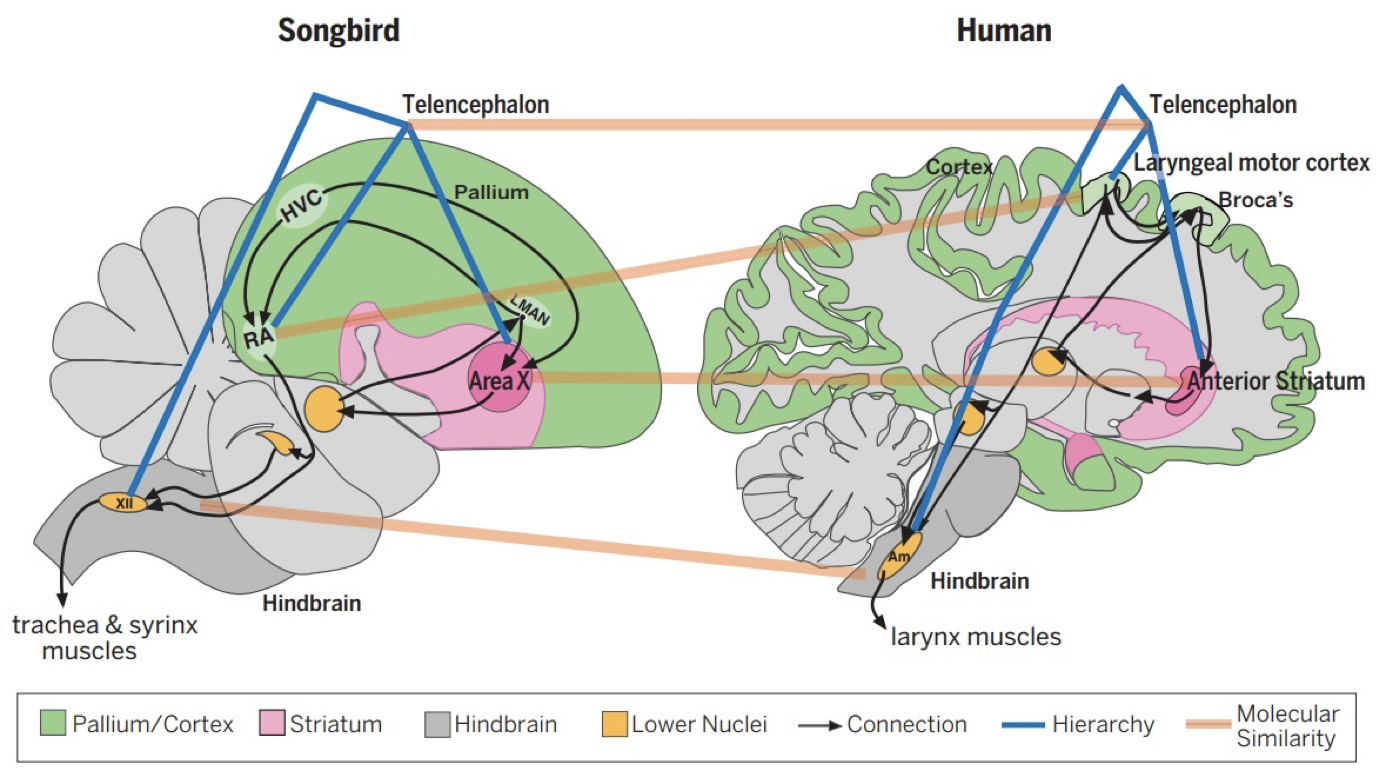
Comparison - Hierarchy of Regions
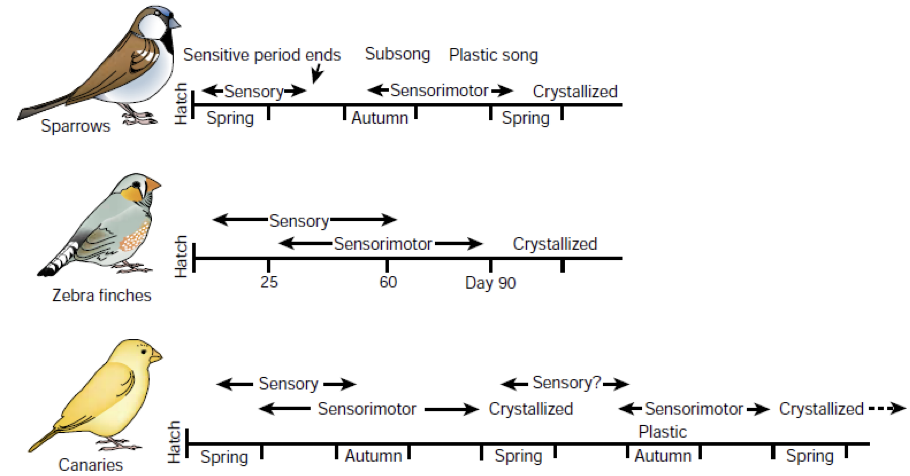
Song Learning in the Zebra Finch
Birdsong, like human speech, is a motor behaviour. It is learned progressively in two phases:
sensory – the bird is exposed to a tutor’s song, and stores this as long-term memory
sensorimotor – the juvenile bird forms its own vocalisations
The Avian Song System
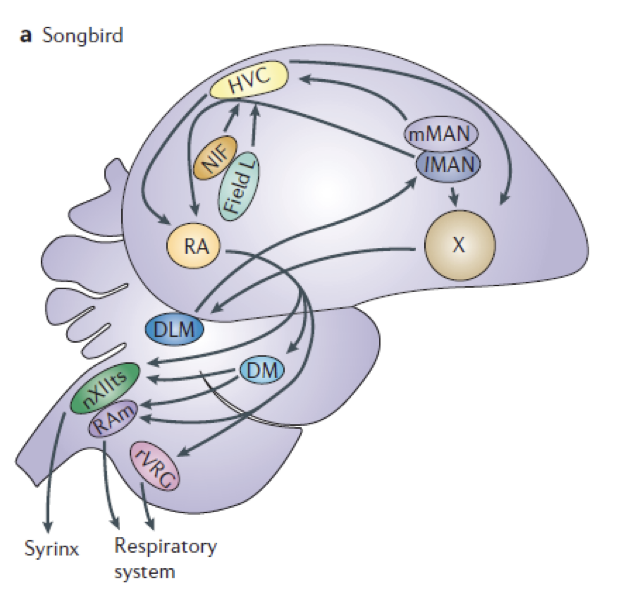
It consists of two interconnected neuronal circuits.
The motor pathway innervates the vocal organ (syrinx); it is required for song production. The connected Field L provides information on the bird’s own song.
The anterior forebrain pathway is involved in song learning and maintenance; it forms a feedback loop to the vocal motor pathway.
Feedback Loops
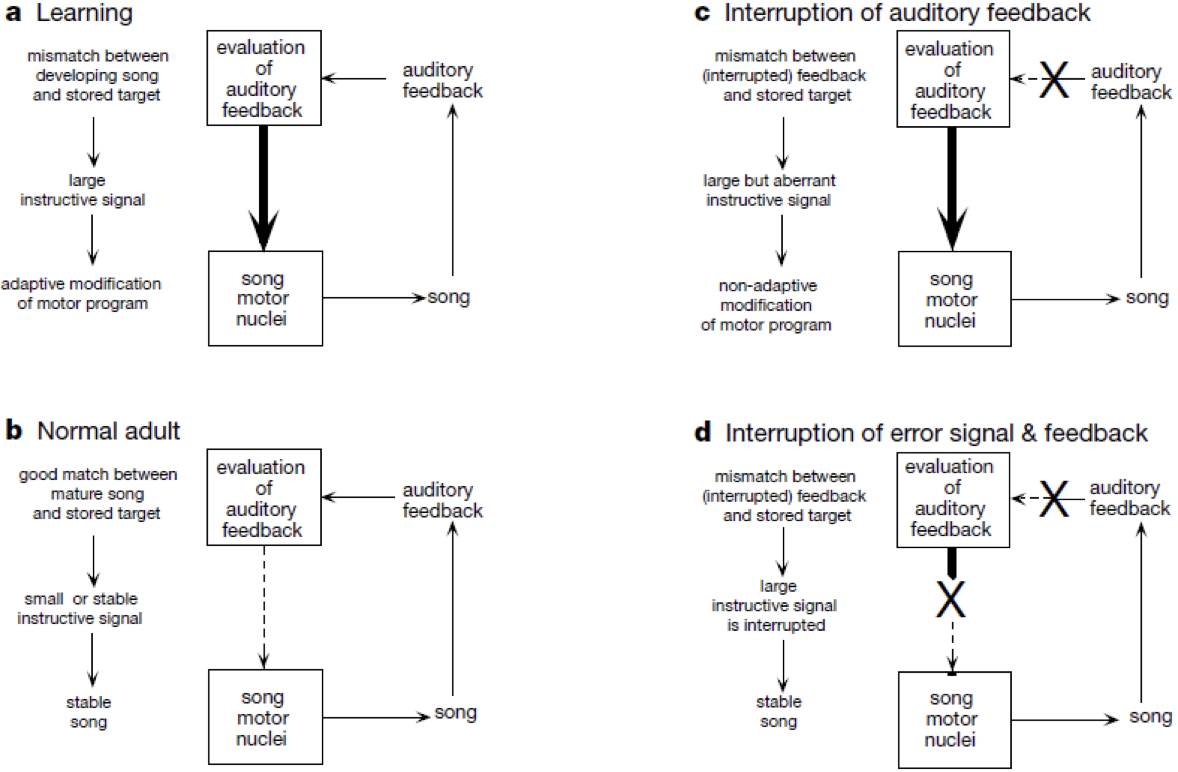
During singing, the desired and the actual movement are compared and corrections are made – feedback loops involve different parts of the brain.
Motor Cortex
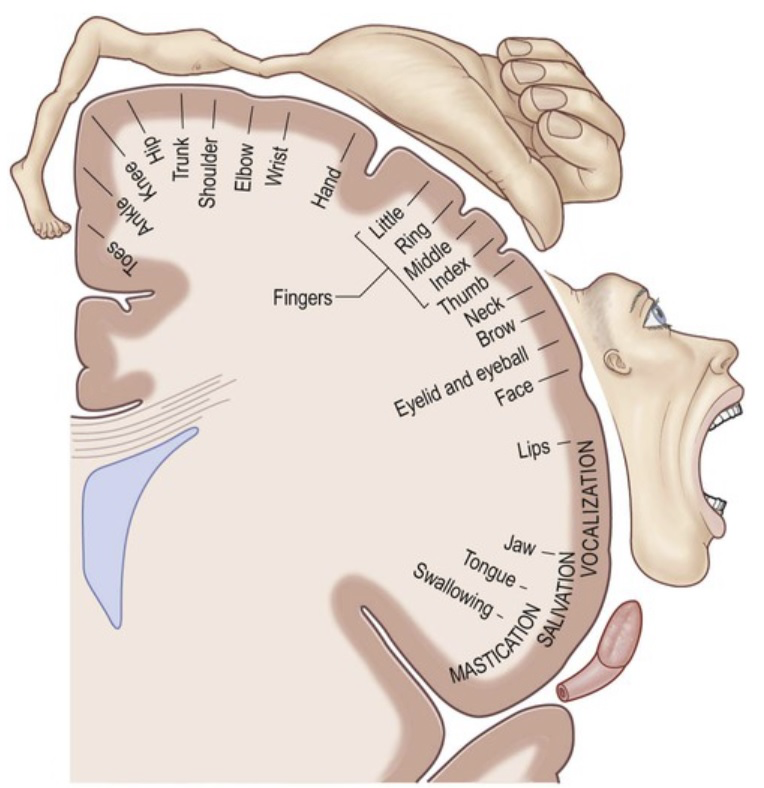
The primary motor cortex (area 4 or M1) is located in front of the central sulcus, next to the somatosensory cortex (S1).
The regions of area 6, the supplementary motor area and premotor area, also contribute to movements.
→ area 4 – simple movement
area 6 – complex movements
→ Wilder Penfield;
contralateral activation
⇒ somatotopic organisation
→ Wilder Penfield;
contralateral activation
⇒ somatotopic organisation
Somatotopic Map (Motor Cortex)
Motor Cortex
Key contributions come from the posterior parietal cortex, which receives information from the primary sensory cortex and visual cortex.
The parietal cortex is connected to the prefrontal cortex (abstract thought, decisions, prediction of consequences).
Both areas are at the highest level in the hierarchy of motor control.
→ send axons to area 6 to code for what actions will take place ⇒ corticospinal tract
PET scans light up areas 4, 6 and 8 (prefrontal) when actions are performed from memory.
Basal Ganglia
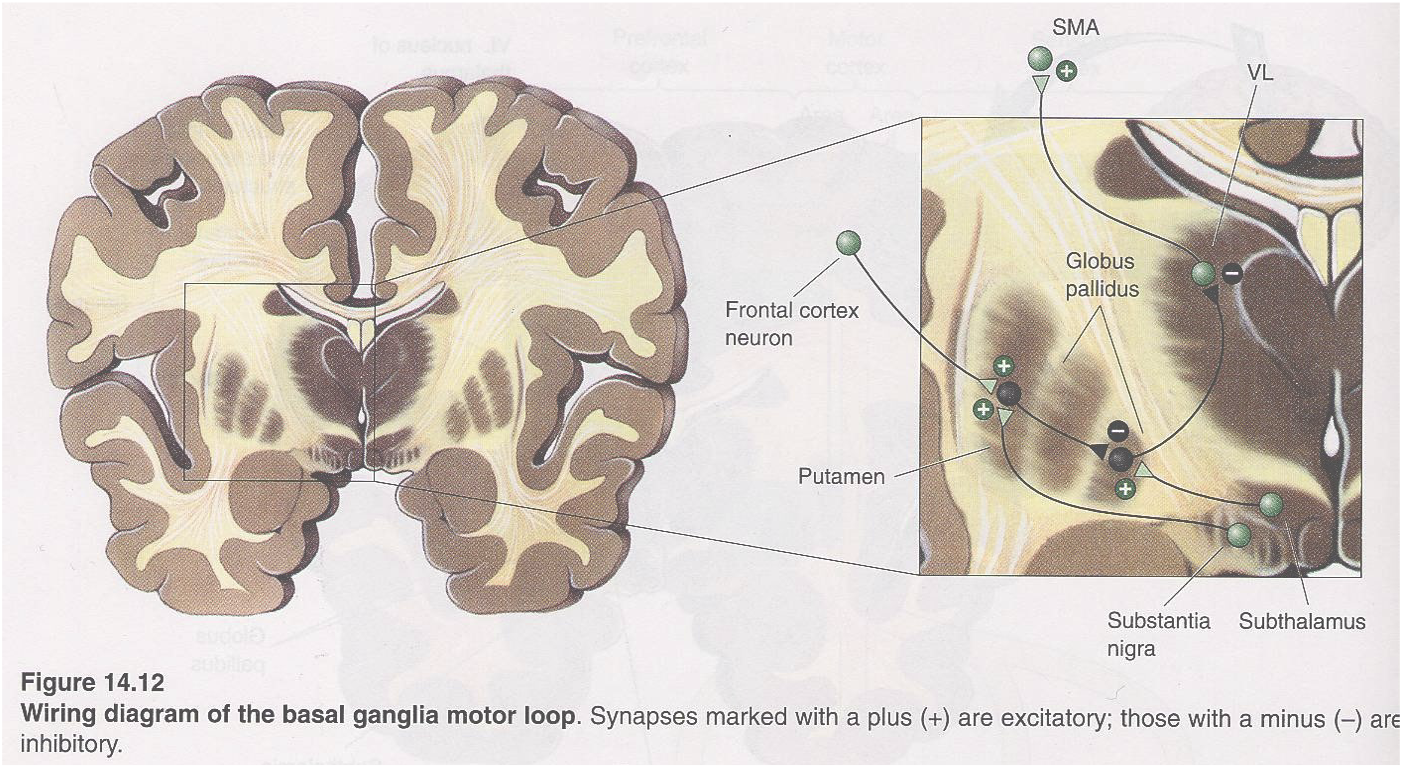
Basal Ganglia Motor Loop
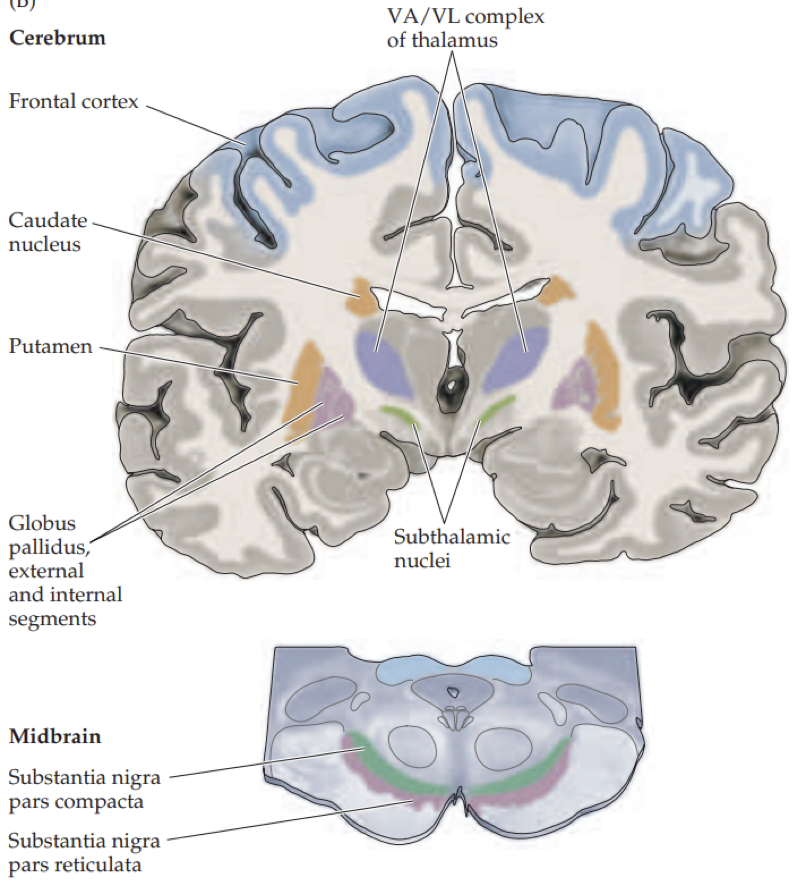
The basal ganglia themselves receive input from the frontal, prefrontal and parietal cortex (⇒ motor loop).

Direct Connections
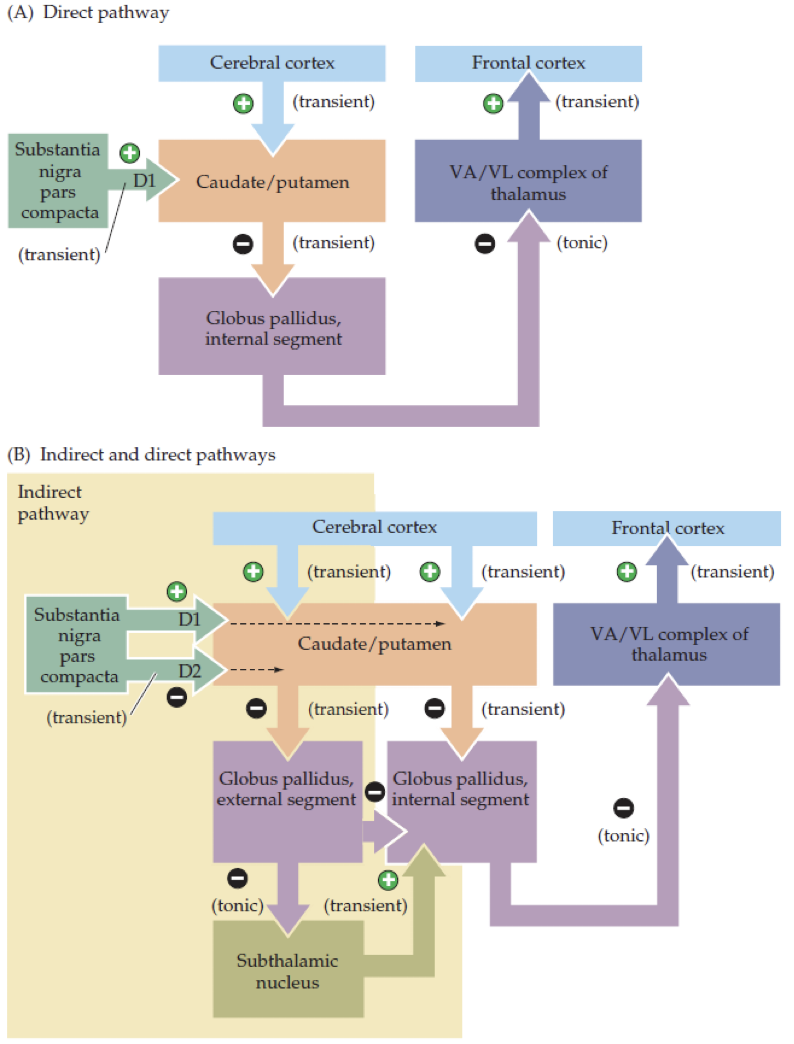
The motor loop involves the excitation of inhibitory neurons (putamen) that inhibit inhibitory neurons (globus pallidus).
→ cells in the globus pallidus are spontaneously active
⇒ inhibition there results in excitation of the SMA
The SMA is interconnected with area 4 and stimulates cells there to produce movement in the correct direction and time.
⇒ initiation of voluntary movements
Direct & Indirect Connections
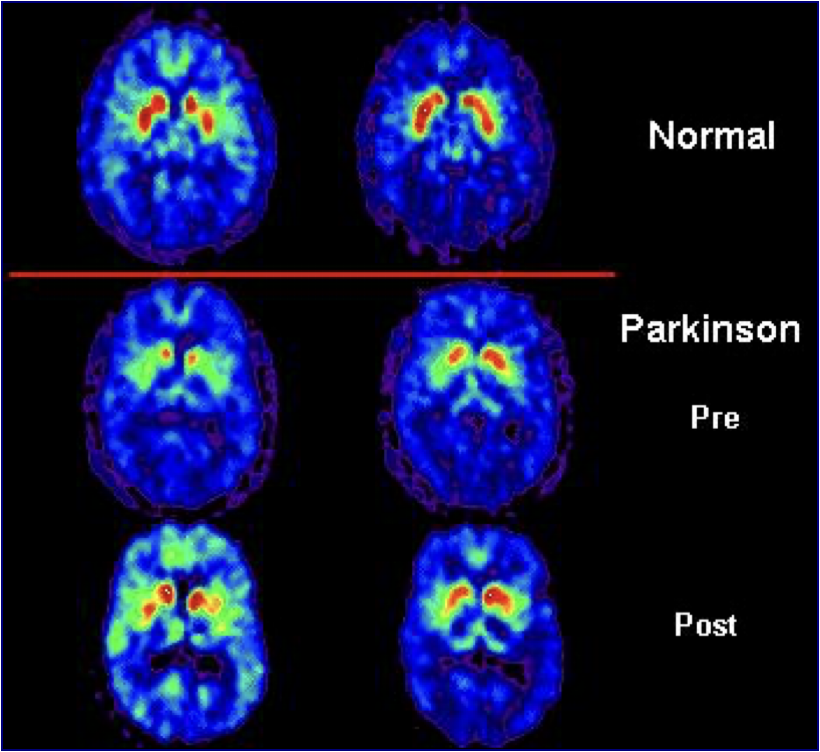
Basal Ganglia & Parkinson’s Disease
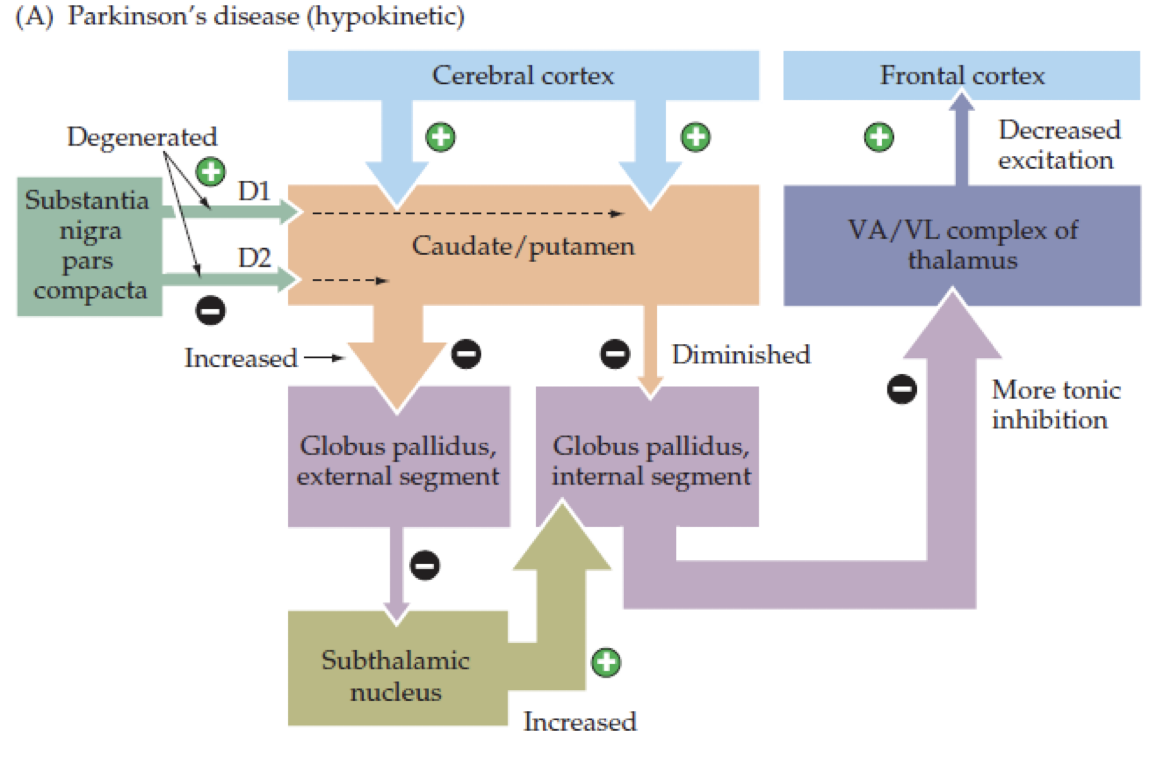
Motor Loop in Parkinson’s Disease
Cerebellum
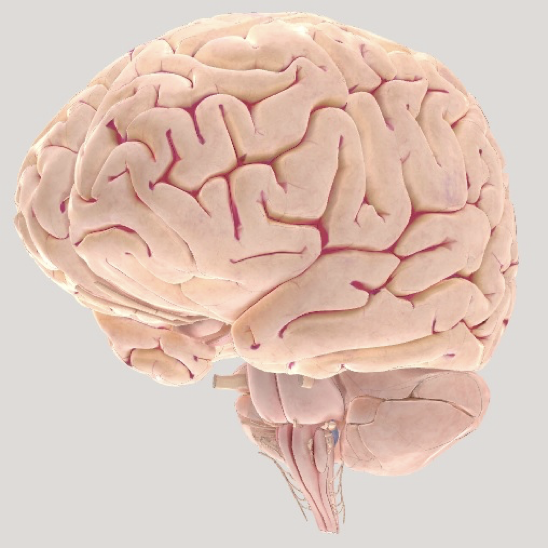
The cerebellum (Cb) is important for the co-ordination and accuracy of motor activities.
→ monitors and corrects
→ integrates information from the vestibular apparatus and proprioceptors
→ predicts movements
These regulating effects are [not] noticeable after alcohol consumption.
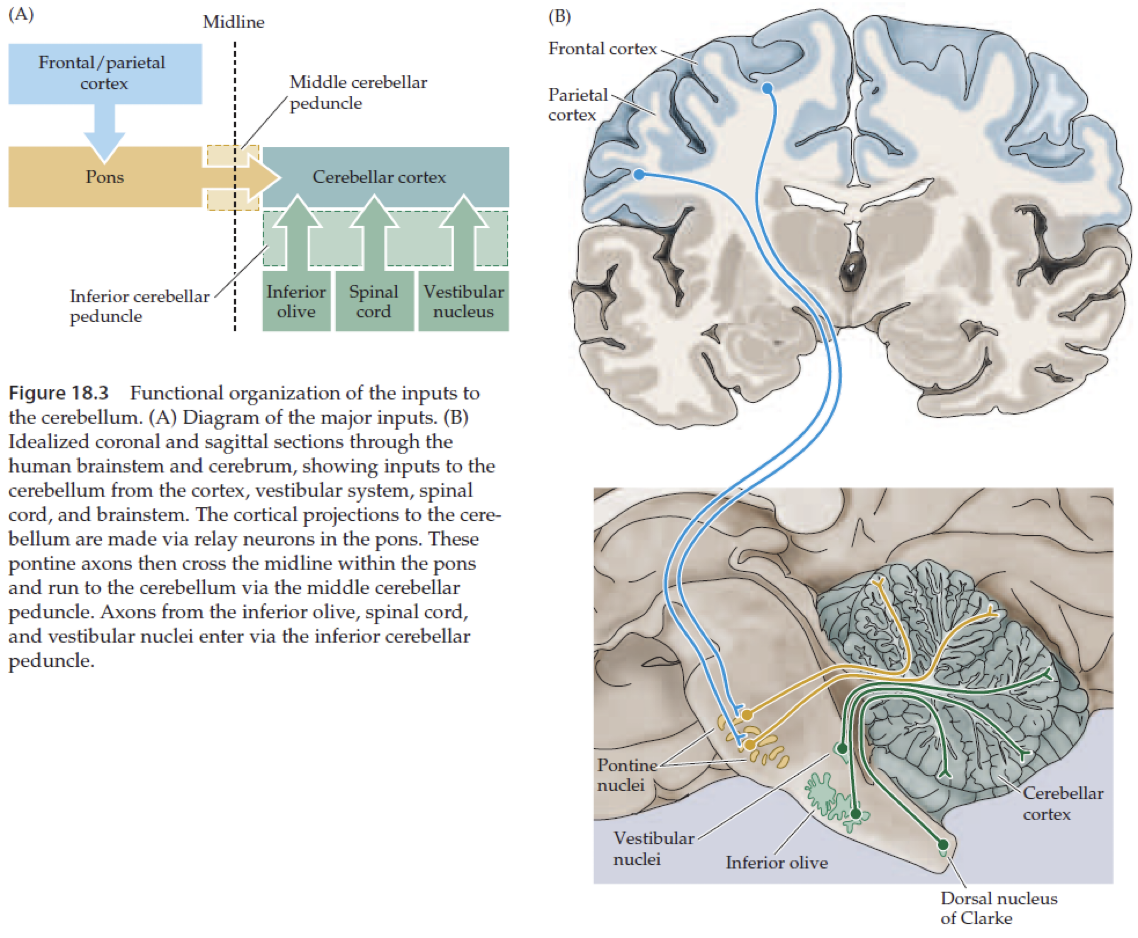
Inputs to Cerebellum
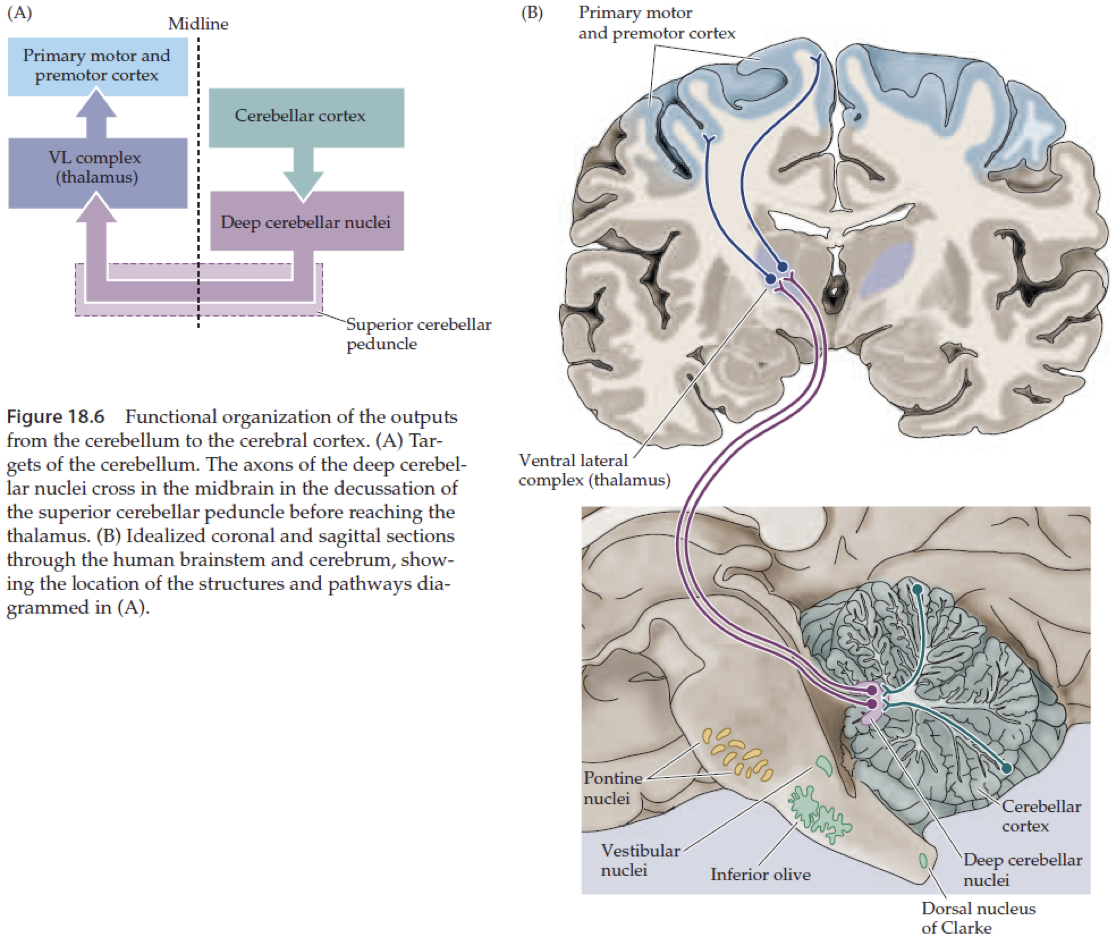
Outputs from the Cerebellum
Summary of Motor Loops