Spermatogenesis
Spermatogenesis is the process of sperm formation.
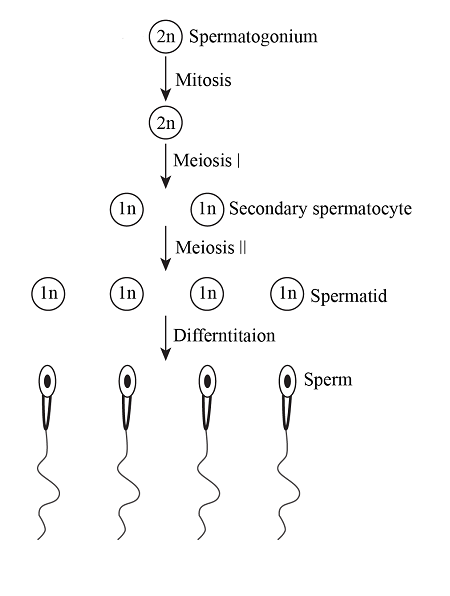
Sperm formation begins in the seminiferous tubules of the testes, where spermatogonia undergo mitosis and meiosis to produce mature sperm cells.
the primary germ cell undergoes mitosis to form spermatogonium.
which then differentiate into primary spermatocytes.
the primary spermatocytes undergo meiosis I, resulting in the formation of secondary spermatocytes.
the secondary spermatocytes then undergo meiosis ii, resulting in the production of spermatids.
which will eventually mature into spermatozoa through the process of spermiogenesis.
Spermiogenesis is the process in which the spermatids become mature spermatozoa with distinct head, neck and tail.
The spermatozoa is not initially motile. It undergoes significant morphological changes
and only develops motility in the epididymis.
The sperm only fully matures in the female genital tract where it undergoes capication.
Spermatogenesis starts from puberty to the end of a man’s life.
An average human male produces about 200–300 million spermatozoa per day.