Flexibility Training Concepts
Objectives
explain the effects of muscle imbalances on HMS (kinetic chain)
provide a scientific rationale for the use of the integrated flexibility training program
differentiate between the various types of flexibility techniques
perform and instruct appropriate flexibility techniques for give situation
Introduction to flexibility training
warm-up section of the OPT
current concepts in flexibility training
- Sedentary lifestyles have lead to an increase in low-back & neck pain, carpal tunnel syndrome, and increased rates of obesity
- Flexibility training has been recognized to aid in preventing and treating neuromuscular diseases
- studies have shown there is an association between altered ROM, muscle tightness, or lack of flexibility with increased risk of injury
what is flexibility
flexibility - ability to move a joint through its complete ROM
ROM is dictated by normal extensibility of all soft tissue surrounding it
dynamic range of motion - the combination of flexibility and the NS’s ability to control this ROM efficiently
factors that can influence flexibility
genetics
connective tissue elasticity
composition of tendons/skin surrounding joint
joint structure
strength of opposing muscle groups
body comp, age, sex, activity level, previous injury
repetitive movements
neuromuscular efficiency - ability of NMS to allow agonsits, antagonists, and stabilizers to work synergistically to produce, reduce, and stabilize entire kinetic chain in all 3 planes of motion
flexibility —> extensibility —> dynamic ROM —> neuromuscular efficiency
Review of HMS
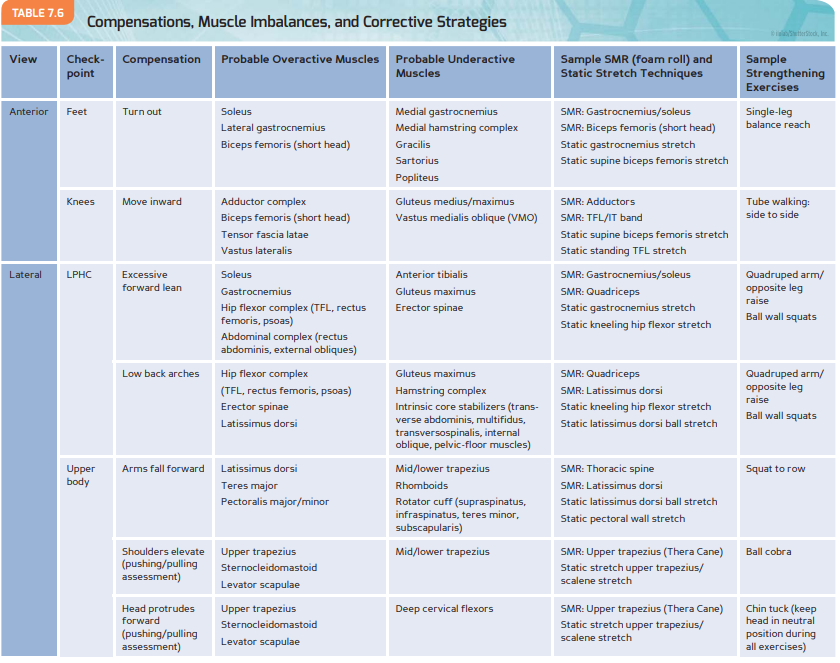
- postural distortion patterns - predicable patterns of muscle imbalance, which lead to decreased neuromuscular efficiency & tissue overload
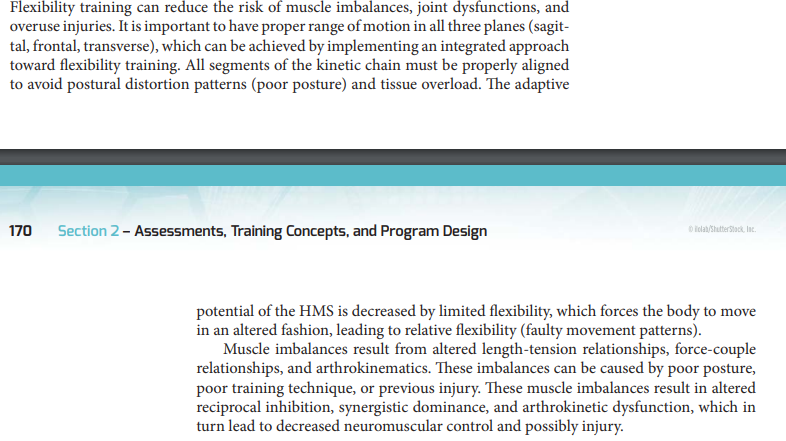
- postural distortion patterns stems from lack of structural integrity, which results in altered length-tension relationships (altered muscle lengths) , altered force-couple relationships (altered muscle activation) , and altered arthrokinematics (altered joint motion)
- relative flexibility - tendency of body to seek path of least resistance during functional movement patterns
- example of relative flexibility - squatting with feet externally rotated; due to poor flexibility of ankle dorsiflexion
Muscle imbalance - alterations in lengths of muscles surrounding a given joint; overactive vs underactive
caused by:
postural stress
emotional duress
repititive movement
cumulative trauma
poor training technique
lack of core strength
lack of neuromuscular efficiency
altered reciprocal inhibition
reciprocal inhibition - simultaneous contraction of one muscle and relaxation of its antagonist to allow movement to take place
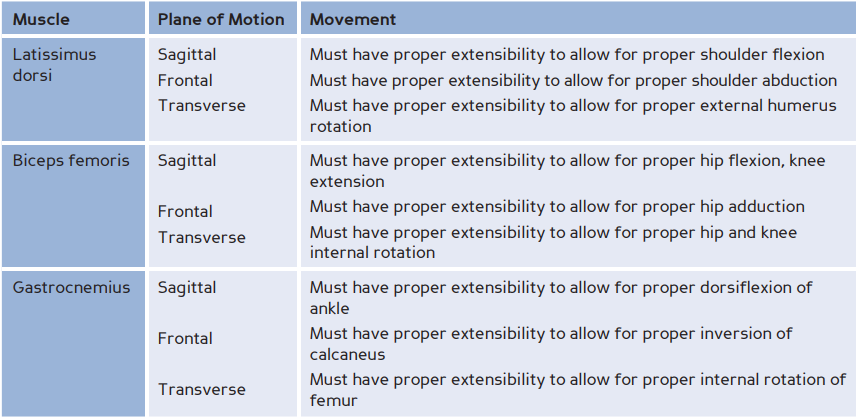
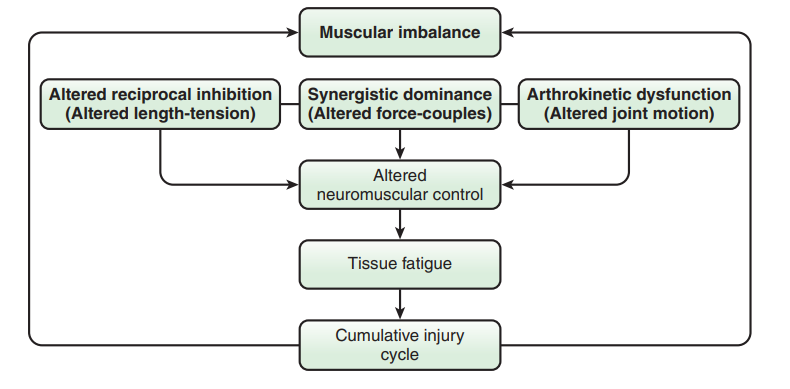
altered reciprocal inhibition - muscle inhibition caused by tight agonist, which inhibits its functional antagonist
e.g.: tight hip flexors decrease neural drive to the hip extensor during a squat
synergistic dominance
synergistic dominance - inappropriate muscles take over function of weak or inhibited prime mover
if the hips are tight, the glute max will be inhibited, and the hamstring complex will compensate for the glute max
leads to possible hamstring injury
arthokinetic dysfunction
arthokinetic dysfunction - altered forces at joint that results in abnormal muscular activity and impaired neuromuscular communication at joint
caused by altered length-tension relationships, force-couple relationships, which affect joint and cause poor movement efficiency
eg: a squat with excessively externally rotated feed forces tibia and femur to rotate externally
alters length-tension of muscles at knees/hips
puts glute max in shortened position, decreasing force output
hamstring & outer hip muscles become synergistically dominant, increasing stress on knees and low back
Neuromuscular efficiency
- ability of NMS to properly recruit muscles to concentrically & eccentrically produce and reduce force and stabilize isometrically the kinetic chain.
- mechanoreceptors are located on muscles and tendons to determine muscle balance & imbalance
muscle spindles
sensitive to change in muscle length and rate of muscle length
prevent muscles from stretching too fast/ too far
micro muscle spasms/tightness occurs when the spindles in the lengthened muscles are stretched
eg: when the pelvis is anteriorly rotated:
if the hamstring complex is moved superiorly, the distance between the two attachment sites (the bottom of the pelvis and the tibia/fibula of leg), and the hamstring is lengthened
when the hamstrings are stretched, it creates excitement in the muscle spindles which causes a spasm response
the shortened hip flexors create anterior pelvic rotation, which the lengthened hamstrings
e.g: when knees adduct and internally rotate:
underactive - glute Medius
overactive - adductors and hip flexor & internal rotator
Golgi Tendon Organs
located where the muscle and tendon meet
sensitive to muscular tension and rate of muscle tension change
when excited, GTO causes muscle to relax and prevents muscle from being placed under excessive stress
autogenic inhibition - neural impulses that sense tension are greater than the impulses that cause muscles to contract, providing an inhibitory effect to the muscle spindles
summary
Scientific Rationale for Flexibility training
- flexibility training is used for: correcting muscle imbalances, increasing joint ROM, decreasing excessive tension of muscles, relieving joint stress, improving extensibility of MT joint, maintaining functional length of all muscles, improve NM efficiency and function
pattern overload
pattern overload - consistently repeating the same pattern of motion, which may place abnormal stress on the body
jobs that require lifting and loading or sitting may cause pattern overload
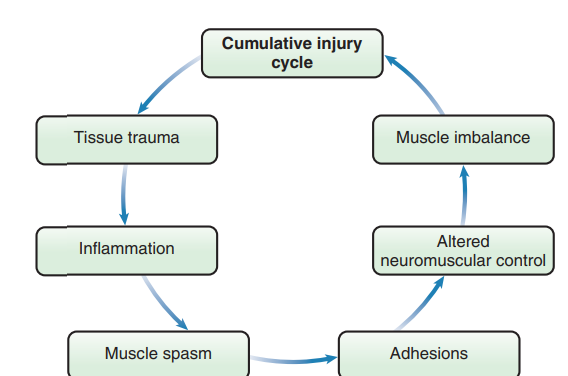
cumulative injury cycle
poor posture and repetitive movements create dysfunction within connective tissue
trauma causes inflammation, which initiates a protective mechanism, increasing muscle tension or causes muscle spasms
The spasms results in adhesions (or notes) to form in the soft tissue
adhesions form a weak inelastic matrix that decreases normal elasticity, resulting in altered length-tension relationships, reciprocal inhibition, synergistic dominance, and altered joint motion
Davis’s Law - soft tissue models along the lines of stress
if muscle fibers are lengthened, the inelastic tissue fibers formed around soft tissue prevents the muscles from moving properly
constant shortened muscles will affect neuromuscular efficiency, joint motion, and alter movement patterns
summary
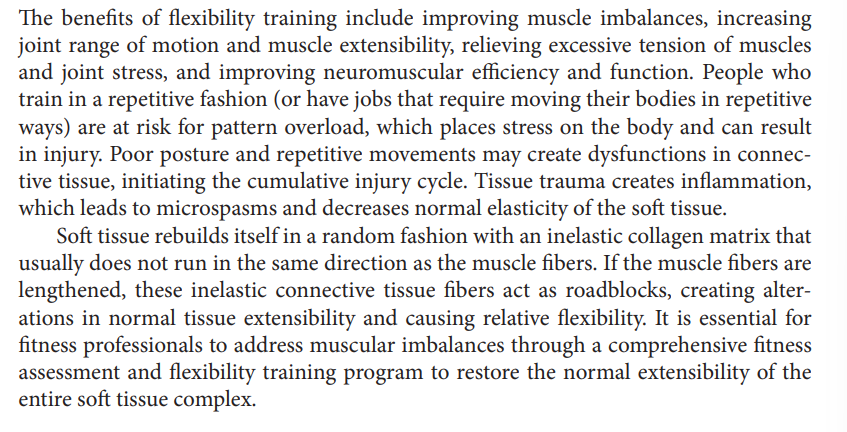
Flexibility continuum
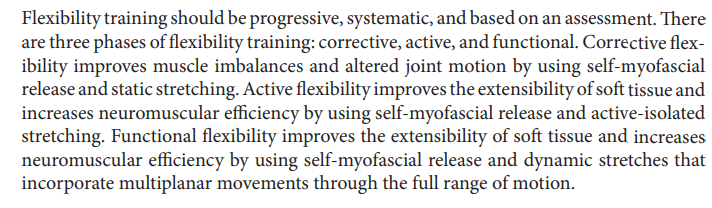
corrective flexibility
self-myofascial release (foam roll)
autogenic inhibition to cause muscle relaxation
static stretching
autogenic inhibition/reciprocal inhibition to increase muscle length
phase 1
active flexibility
self-myofascial release
active-isolated stretching techniques
improve extensibility of soft tissue
reciprocal inhibition
allows agonists & synergist muscles to move through full ROM
phase 2-4
functional flexibility
self-myofascial release
dynamic stretching
integrated, multiplanar soft tissue extensibility, with optimal neuromuscular control through full ROM
phase 5
most injuries occur in the transverse plane
exercises that increase soft tissue extensibility and have high levels of neuromuscular demand are preferred
summary
Stretching techniques
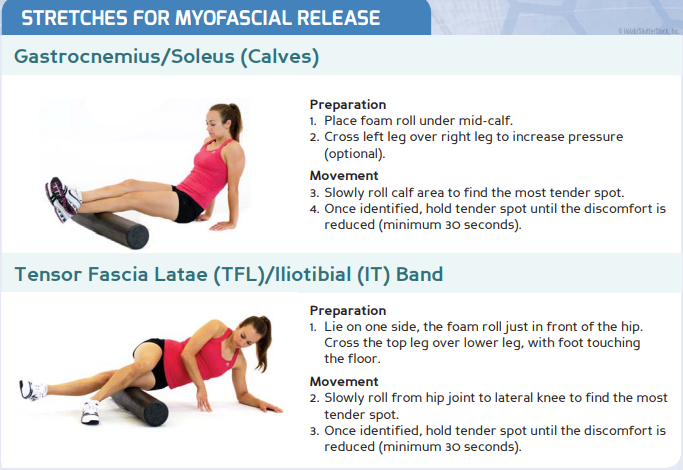
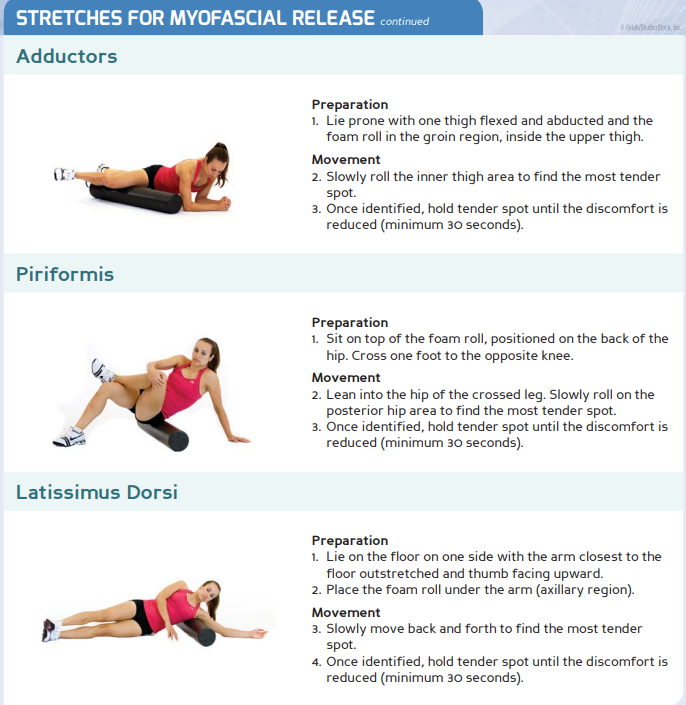
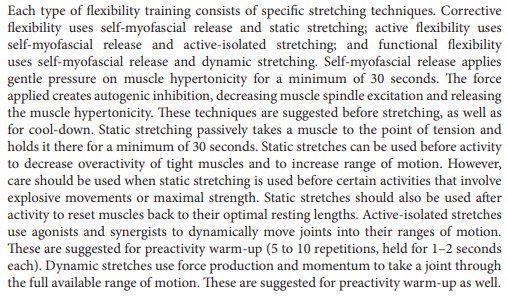
myofascial release
used to correct existing muscle imbalances, reduce trigger points (knots within muscle), and inhibit overactive muscles
done before/after exercise
applying force to the knot makes the bundled elastic muscle fibers straight in the direction of the muscle
pressure stimulates the GTO and create autogenic inhibition, which decreases muscle spindle excitation, releasing tension in the muscle
applying gentle pressure breaks up knots within muscle and release unwanted muscle tension
find the tender spot and sustain pressure for 30 seconds
suggested before stretching and could be done during cool-down process
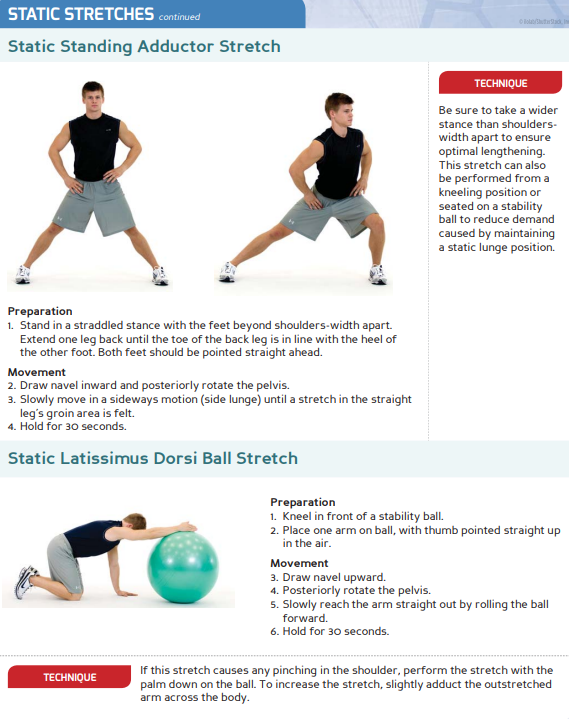
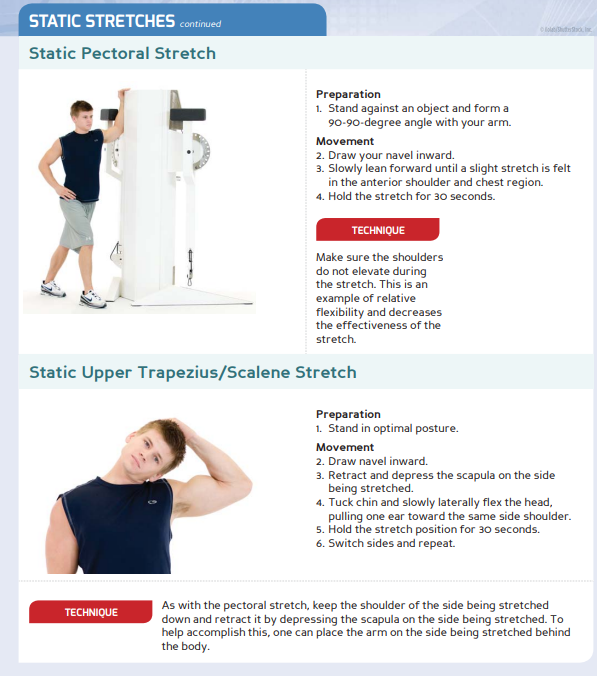
static stretching
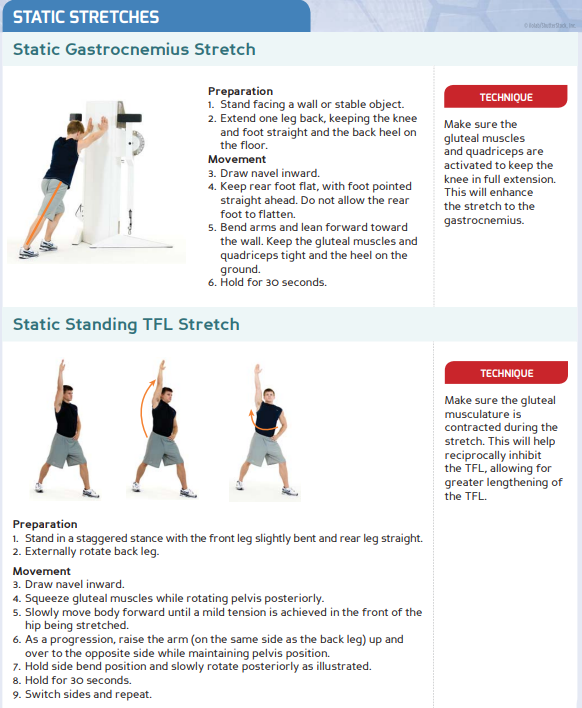
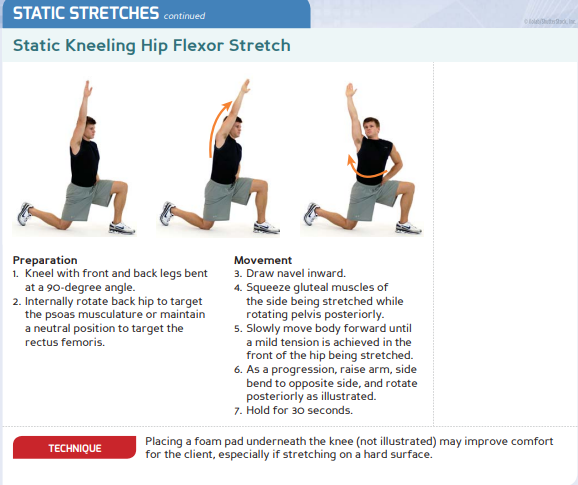
used to correct existing muscle imbalances and lengthen overactive (tight) muscles
done before/after exercise
static stretching - passively taking a muscle to point of tension and holding the stretch for 30 seconds
holding a muscle in a stretched position will stimulate the GTO and produce autogenic inhibition
static stretching before physical activity could be beneficial
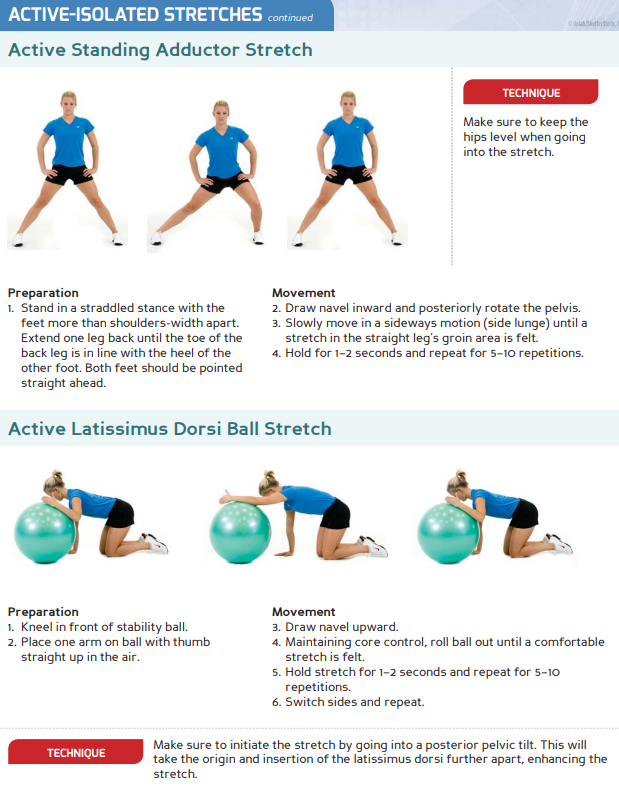
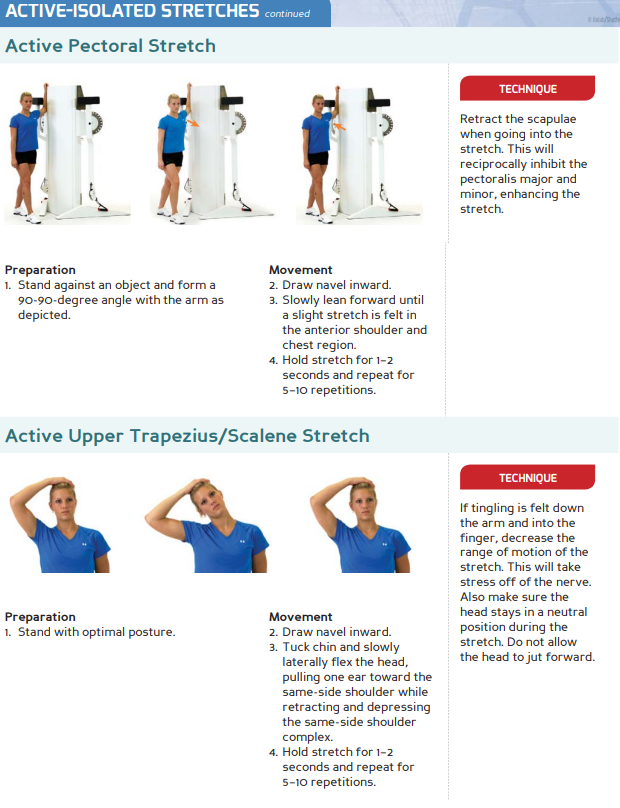
active-isolated stretching
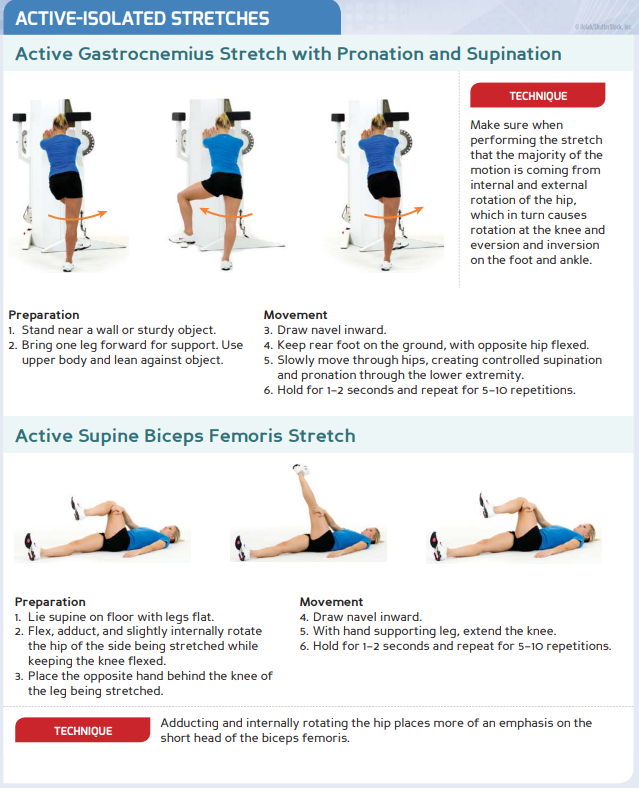
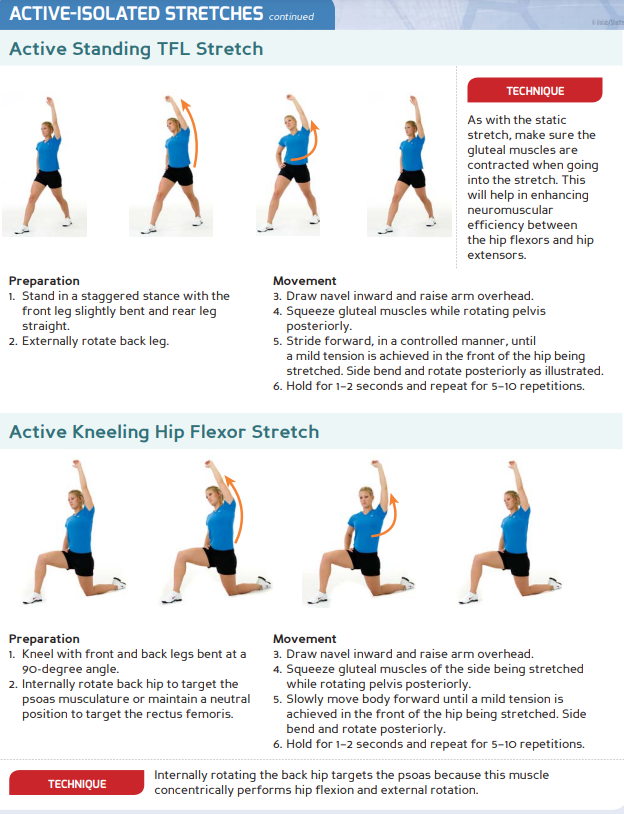
used to increase extensibility of soft tissues through reciprocal inhibition
could possibly increase joint ROM and muscle flexibility
active-isolated stretching - using agonists and synergists to dynamically move the joint into a range of motion
creates reciprocal inhibition
pre-activity warmup
if there are muscle imbalances, should be performed after corrective flexibility
5-10 reps of 1-2 second holds
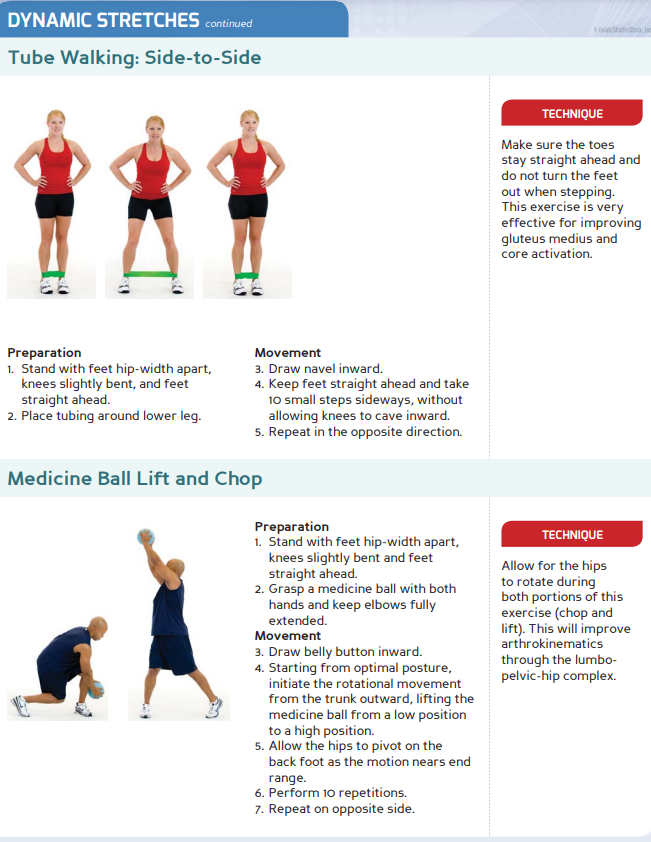
dynamic stretching
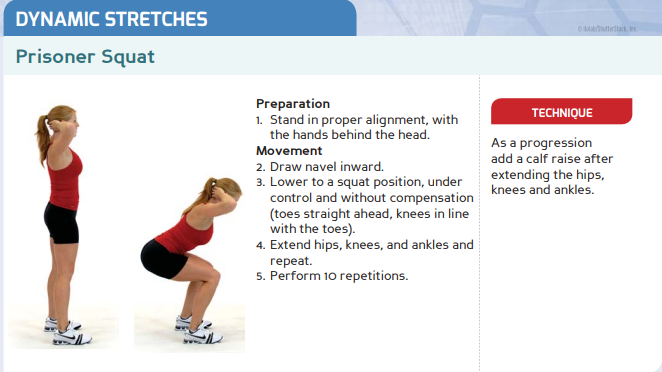
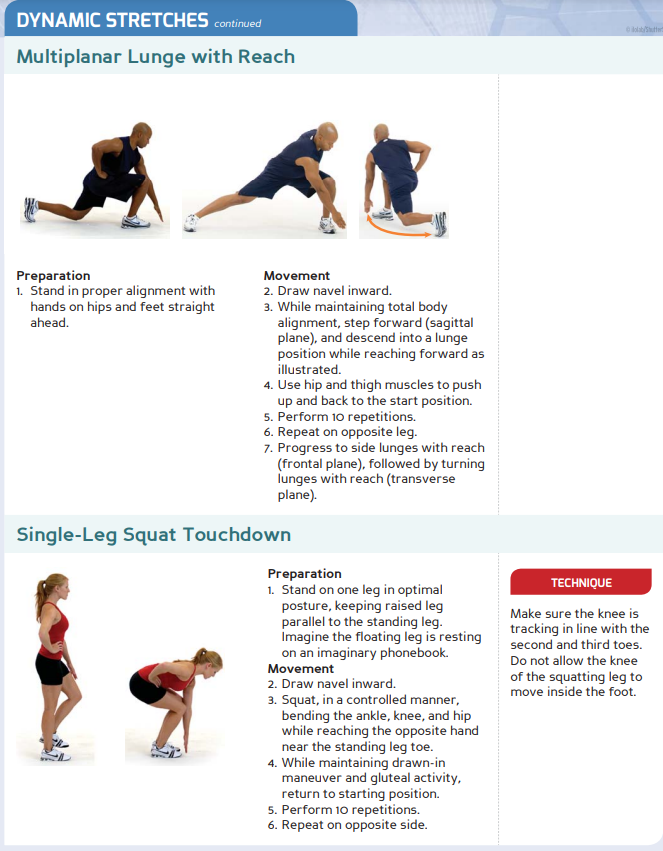
increase flexibility with optimal neuromuscular control.
dynamic stretching - active extension of muscle, using force production & momentum, to move joint through full ROM
performed as a warm up
summary
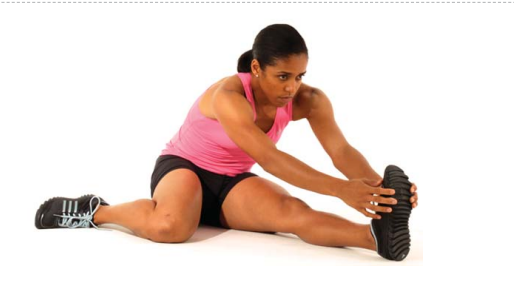
controversial stretches
inverted hurdler’s stretch: causes high stress on the MCL and patella. should not be performed with history of low-back or knee pain
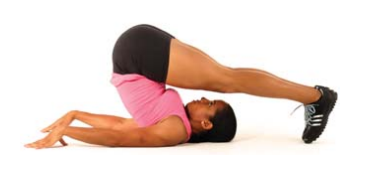
plow: stress on neck and spine. patients with history of neck/back pain and history of high-blood pressure should not perform this.
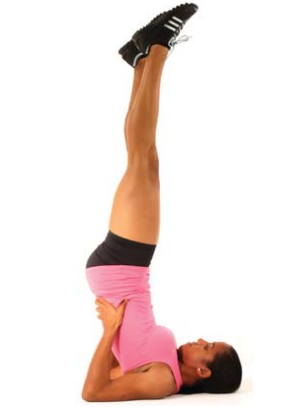
Shoulder stand: stress on neck, shoulder, and spine. Should be avoided with history of hypertension or neck/back pain
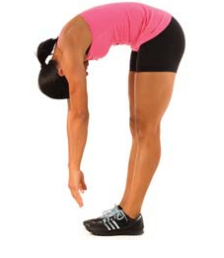
straight-leg toe touch
stress on low back and ligaments of knee. Should not be done if history of herniated disc or nerve pain that runs in the back of leg
arching quadriceps
stress on kneecap and tissues on front of knee joint. patients with history of knee injury should avoid
some stretches are required in certain sports, but for most clients there are safer options
practical application of flexibility training for movement