BIOS1064 Lecture 7~DNA and genome sequencing Dr Gonzalez-24-M (1)
DNA Sequencing
There are 2 procedures involved in DNA Sequencing
Selective termination of DNA synthesis at specific nucleotides (A, C, G, or T) and
High-Resolution electrophoresis.
Sequencing methods include the following,
Maxam and Gilbert method
Sanger dideoxy method
High-throughput sequencing
High-throughput sequencing technologies are intended to lower the cost of DNA sequencing beyond what is possible with standard dye-terminator methods, some examples include: Illumina (Solexa) sequencing, DNA nanoball sequencing.
7-valent and 13-valent vaccines to protect against pneumonia and meningitis are examples of how whole sequencing can help to solve epidemics.
Maxam Gilbert method
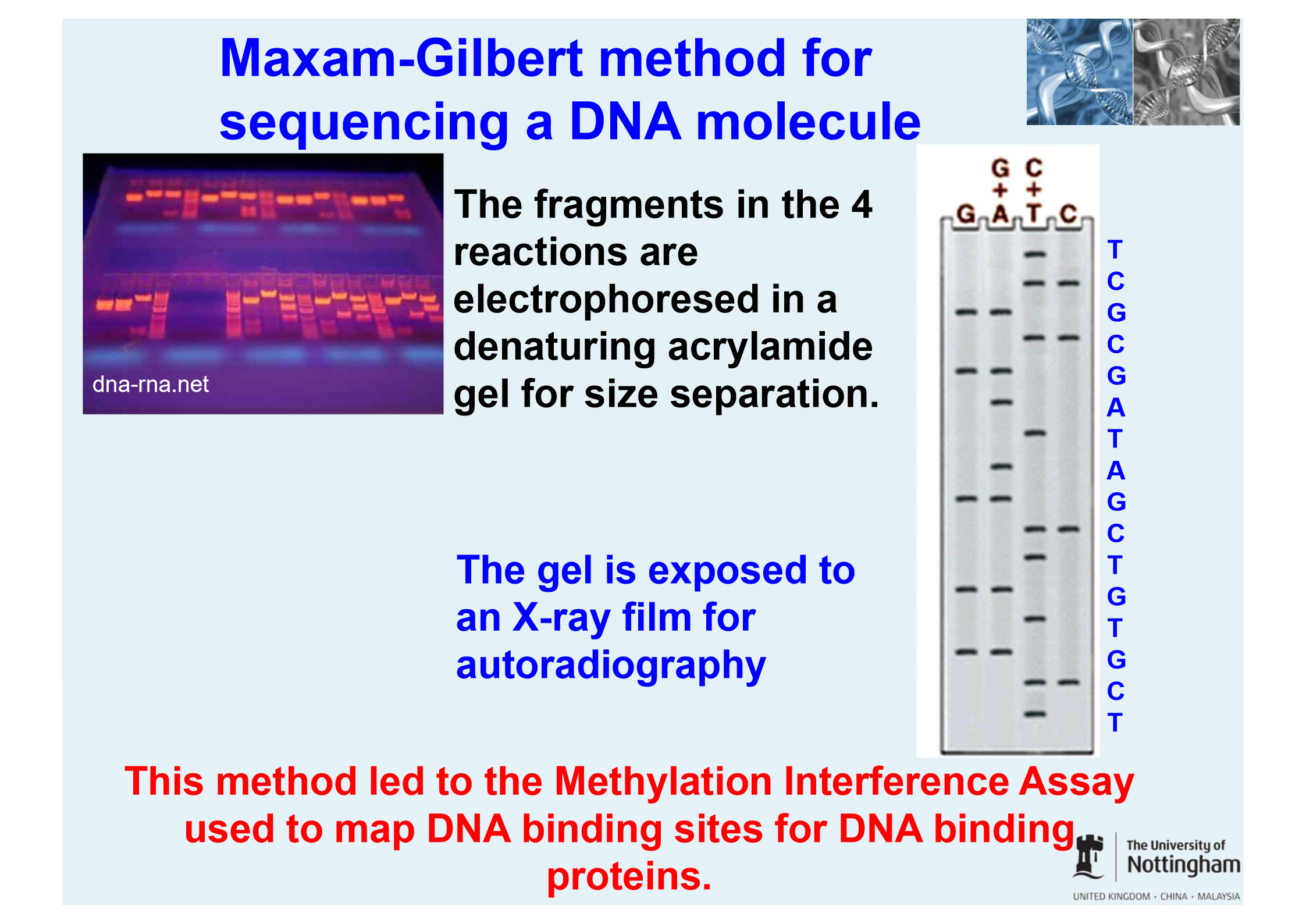 Maxam- Gilbert method for the sequencing a DNA Molecule
The fragments in the 4 reactions are electrophoresed in a denaturing acrylamide gel for size separation. The gel is exposed to an X-ray film for autoradiography. This method led to the Methylation Interference assay used to map DNA binding sites for DNA binding proteins.
KEY POINTS
DNA sequencing is important to establish the order of nucleotide bases in a piece of DNA and aids in the decoding of genome sequences.
The two procedures for DNA sequencing are selective termination of DNA and high-resolution electrophoresis.
Two methods for sequencing include Maxam-Gilbert and Sanger dideoxy.
Genome sequencing is the beginning of the understanding of how an organism functions.
A genome map is a set of landmarks to aid in the understanding of a genome.