Rocks
Rocks Lecture
Rocks - substances mad euphoria of one or more minerals
Mineralogy of a rock
Texture
3 great rock groups
Average Geothermal Gradient
1 degree Celsius / 100 ft depth
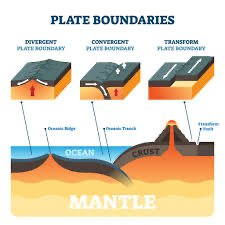
Pieces of the Earth’s crust are called plates
Magma or lava (cool and crystallization) → Igneous Rocks (weathering and erosion) → Sediment (lithification) - Sedimentary Rock (heat + pressure - Metamorphism) → Metamorphic Rock (melting → back to magma
(side bar any rock can turn into sedamentary rock)
Plates
Plate tectonics
They move and interact with each other (slow but violent)
Igneous Rocks
Igneous rocks - form form the crystallization of molten rock (either magma or lava)
Average GeoThermal Gradient - the deeper you go the hotter it gets (the worldwide average of it) 1 degree celsius/ 100 feet depth
form from the cooling and crystallization of molten rock. When minerals grow
directly from a liquid the boundaries between adjacent minerals tend to penetrate each other,
forming a very strong, interlocking pattern similar to that of pieces in a jigsaw puzzle. Given
this and the fact that igneous rocks are composed of relatively hard (for the most part) silicate
minerals, igneous rocks are very hard rocks that have been used as major building materials by
people for 1000s of years.heat is caused by radiation
Mineralogy -
When it comes to the Earths crust 75% is made up of just 2 elements
Silicon & Oxygen
24% is 8 other metals
calcium
Magnesium
Iron
Sodium
Aluminum
Potassium
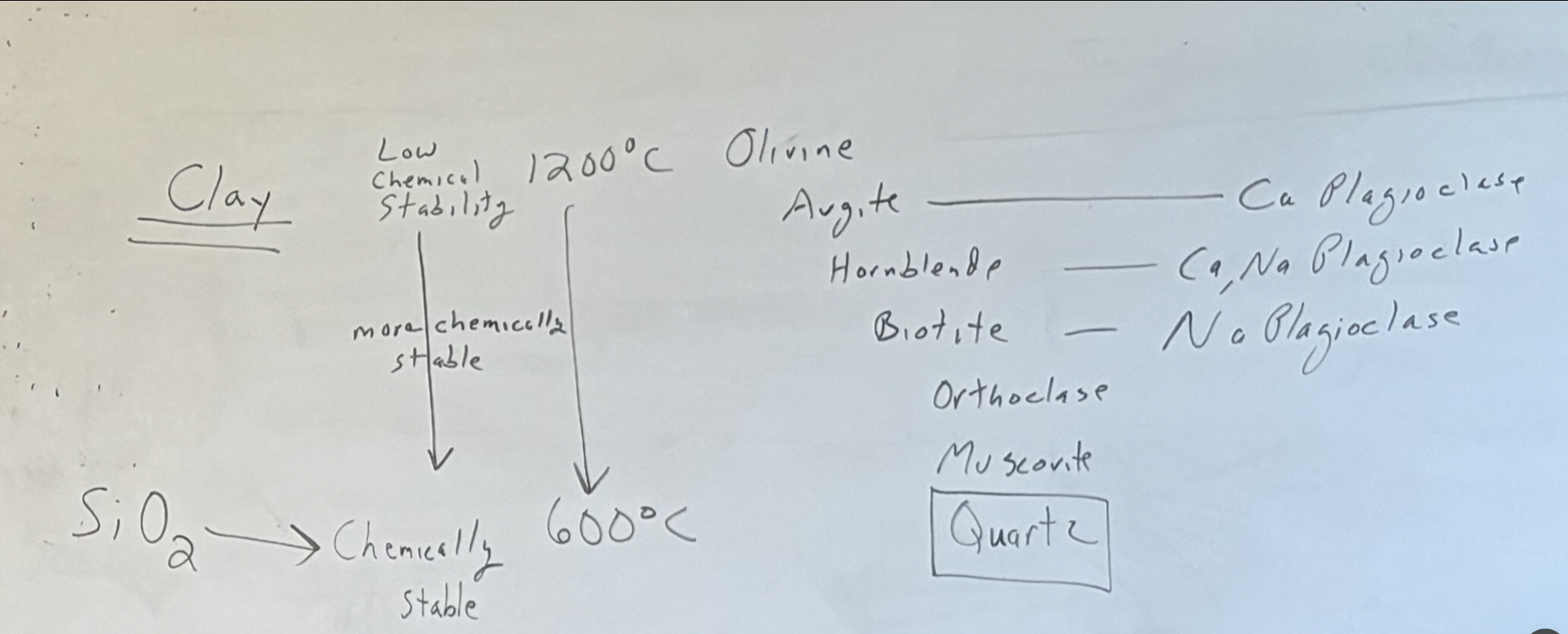
Bowens Reaction Series
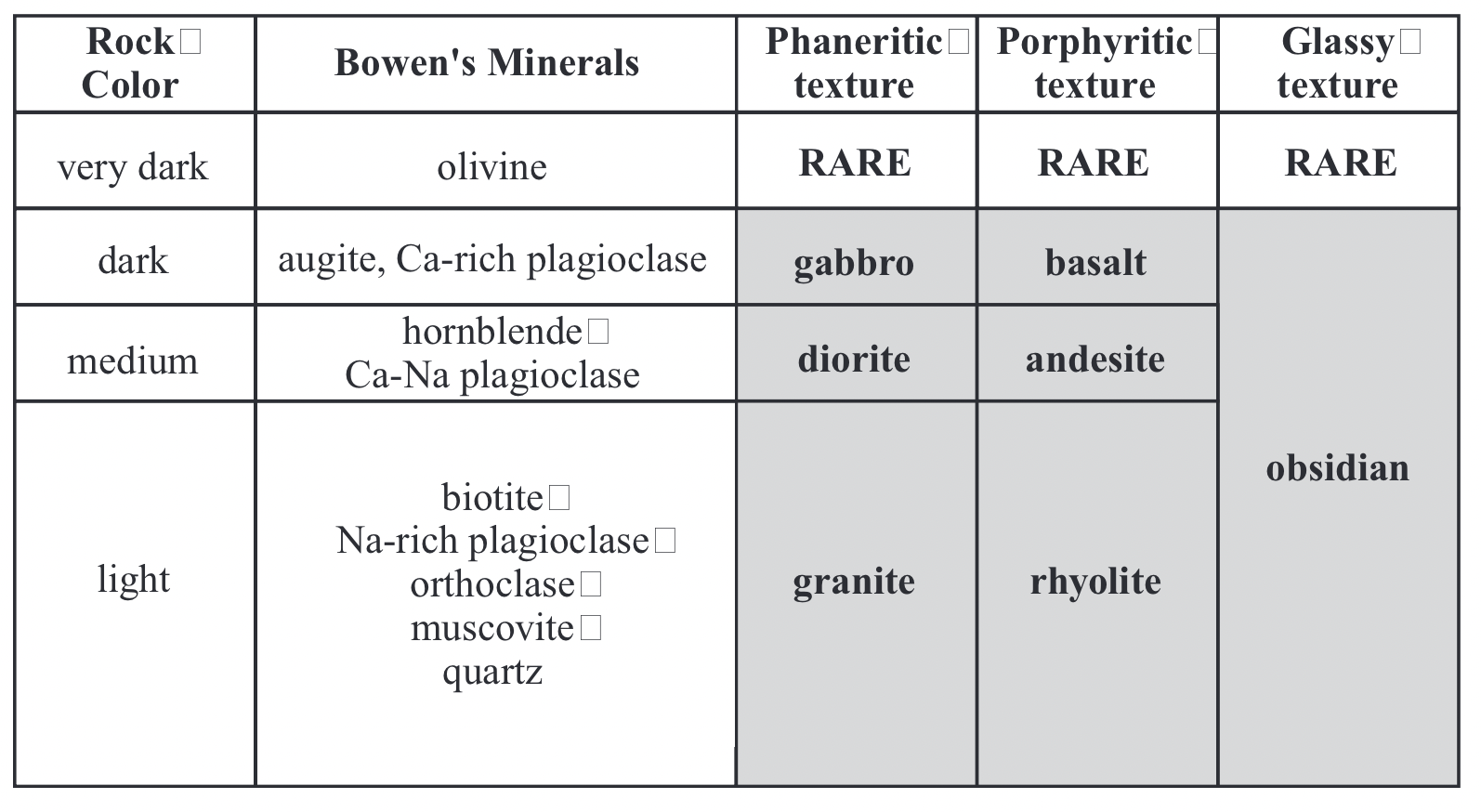
How does magmatic differentiation occur?
basically how do we get different igneous rocks from the same chunk
So to answer the question we have to picture a deep crack in the earth and approx 20 miles down we make magma
SO imma upload a picture on my phone bc i zoned out < /3
Bowen calls the process - Fractional Crystallization
Doesn’t explain everything
Just XENOLITHS
Assimilation
Different kidns of Granite are formed via contaminations
Dunite v Dunite Magma
Can be differentiated via texture
and mineralogy
Sedimentary Rock
~ 5% of all rocks
75% of the Earth Surface
Sediment = “pieces”
90% - Detrital Sediment
Detrital Sediment - pieces of pre-existing rock (Detrital Sedimentary Rock)
10% - Nondetrital Sediment
Nondetrital Sediment - hard part "(pieces) of pre-existing life
Detrital Sediment
Weathering = break down of pre-existing rock
Physical weathering
Frost wedging = Freezing of expanding liquid water, applying a force to break up rock
Exactly like Nivation but this is the general term, it’s not location specific like Nivation
Abrasion - physical force of moving something and slamming it into something else
Plant root pressure - roots of plants move things around and break things up
Chemical Weathering
Acidation - ass acid to rock (carbonic acid)
Oxidation - chemically rust minerals
Hydration - chemically add water to rocks
Think Vander Waals Forces
the primary force that holds things together in a water molecule
the plus and minus magnetic field of the compound
think about the formation of clay
Waters magnetic nature has pulled metals out of minerals
forming clay
Recipe for making Detrital Sedimentary Rock
1) Weathering (makes soil)
2) Erosion = transportation (Detrital Sediment)
3) Deposition
4) Lithification
Lithification - Compaction and Dehydration
Ex) making clay into a rock then pile a bunch of it up = shale
Ex) Quarts sand - Cementation of some minerals = sandstone
Nondetrital Sediment
2 major categories of life
Plants
Animals
Animal Life
most animals are in the Sea
Seashells
Seashells are made up of Calcite
Susceptible to being dissolved by acidic water
dissolves some of the calcite → making calcite seashells cementing with Calcite
Really old seashells are known as fossil limestones?? I think.
Plant Life
CHONS is in PLANTS AND ANIMALS
Carbon Hydrogen Oxygen Nitrogen and Sulfur
the gasses go away over time and the solids compact over time and become mostly carbon
Metamorphic Rock
it’s way down deep
about 3 mi deep
Protolist = first rock
Metamorphism
High temperature (Solid State)
High pressure = Kilobar
bar = 14.7 psi
Chemically active fluids and gases
Volatiles
Temp
denatures and chemically changes
Pressure
recrystallized
rotate and realign
LIKE FOLIAGE
called Foliated texture (peel old layer to get new layer)
Volatiles
Recrystallize
We see a thing called Regional Metamorphism
Regional metamorphism is a type of metamorphism that occurs over large areas and is typically associated with tectonic forces that apply significant pressure and temperature conditions, often resulting in the formation of foliation in rocks. This process can lead to the recrystallization of minerals and changes in the rock structure and composition due to elevated temperatures and pressures deep within the Earth's crust.
when clays grow in size and we can see them they change names
now called Micas
Muscovite/ biotite
most common types of Micas
Shale protolist = Schist
granit protolith = Gneiss (nice)