Introduction to Toxicology and Toxicity
Pharmacology & Therapeutics
Course Information
School of Bioscience Education
Fundamentals of Pharmacology (4BBY1040)
K College, King's, London
Instructor: Dr. Dibesh Thapa
Learning Outcomes
After this lecture, students should be able to:
- Describe three important principles of toxicology.
- Recap the terms: dose, dose-response, LD50, and therapeutic index.
- Distinguish between acute and chronic effects, and between organ-specific and systemic effects.
- Describe common sources of toxins and toxicants.
- Explain how toxic effects can be caused by:
- Alcohol
- Botulinum toxin
- Paracetamol
- Ibuprofen
- Thalidomide
- Grapefruit juice
- List and briefly describe various branches of toxicology.
Fundamentals of Pharmacology
Pharmacology:
- The science of drugs, their mechanisms of action, effects, discovery, design and development, and interaction with organisms.Toxicology:
- A branch of pharmacology focusing on the harmful effects of chemicals, including drugs.Therapeutics:
- The medicinal use of drugs to treat or relieve disease symptoms (not all drugs are considered medicines).Pharmacy:
- The formulation and dispensing of drugs for medicinal purposes, including the laws governing their use.
Definition of a Poison
Definition by Paracelsus (1493-1541):
- "All substances are poisons; there is none that is not a poison. The right dose differentiates a poison from a remedy."
- Also stated simply as: "the dose makes the poison".
Three Important Principles of Toxicology
Dose-Response Relationship:
- Effects of toxicants are generally proportional to the exposure or dose.Variability in Sensitivity:
- There is significant variability in sensitivity to toxicants both between species and within a species, such as the human population.Acute vs Chronic Effects:
- Acute and chronic toxic effects are distinct with potentially different mechanisms.
Acute Toxicity
Definition:
- Adverse effects arising shortly after a single or multiple exposures within a short period (typically ≤ 24 hours).Key Features:
- Rapid onset (minutes to hours).
- Usually results from high exposure doses.
- Often severe and may be life-threatening.
- Commonly assessed using LD₅₀ (lethal dose for 50% of the test population), although ethical concerns limit usage today.Mechanisms of Acute Toxicity:
- Overstimulation of physiological systems, receptor overstimulation (e.g., nicotinic acetylcholine receptor in insecticides), direct tissue damage, or acute organ failure.Examples in Medicinal/Clinical Toxicology:
- Paracetamol (Acetaminophen) Overdose: Leading to acute liver failure.
- Cyanide Poisoning: rapid inhibition of mitochondrial cytochrome oxidase leading to cellular hypoxia.
- Sarin (Organophosphate): Causes acute cholinergic crisis through acetylcholinesterase inhibition.Examples in Environmental/Household Toxicology:
- Carbon Monoxide (CO): Causes acute hypoxic injury.
- Snake Venom: Can lead to rapid neurotoxicity or coagulopathy.
Chronic Toxicity
Definition:
- Adverse effects resulting from repeated or continuous exposure over months to years.Key Features:
- Accumulation of small doses over time.
- Effects develop slowly, typically involving irreversible damage.Mechanisms of Chronic Toxicity:
- Bioaccumulation of toxins in tissues, continuous low-level organ injury.
- May include Mutagenesis (e.g., long-term UV exposure) and Carcinogenesis (e.g., smoking).Medicines and Clinical Toxicology:
- Chronic NSAID Use (Ibuprofen): Can lead to gastric ulcers.
- Chronic Opioid Use: May cause tolerance, dependence, and opioid-induced hyperalgesia.Examples in Environmental/Chemical Toxicology:
- Lead Exposure: From old pipes/paint, can cause neurocognitive defects and anemia.
- Asbestos Exposure: Can lead to mesothelioma decades after inhalation.
- Aflatoxin Exposure (contaminated grains): Chronic liver damage from contaminated grains.
LD50
Definition:
- The LD50 is the amount of a substance estimated to kill 50% of a test population with acute, single-dose exposure.
- LD50 varies both within and between species, influenced by route of administration.Example:
- Dioxin has an LD50 of 0.001 mg/kg in guinea pigs, while it ranges from 1-5 mg/kg in hamsters.
Dose-Response Curves
Description:
- Graphical representation of the relationship between dosage and response (% response).
- Important for understanding efficacy, toxicity, and lethality of substances.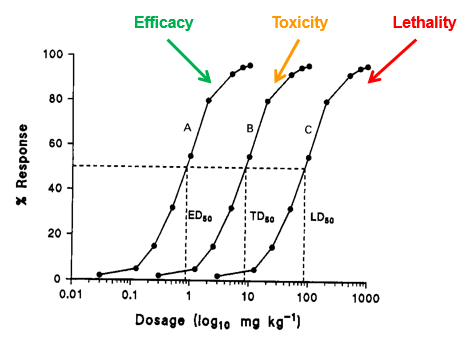
Components:
- LD50: Doses at which 50% of the population respond lethally.
- TD30: Dose that elicits a toxic response in 30% of the population.
- ED50: Dose that provides therapeutic effect in 50% of the population.Graph Characteristics:
- Efficacy increases with dose until a saturation limit is reached.
Therapeutic Index (TI)
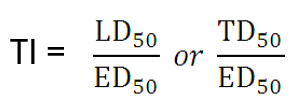
Definition:
- The ratio of the toxic dose to the effective dose of a drug.
- A larger TI indicates a greater margin of safety between effective and toxic doses.but doesnt indicate shape of the dose-response curve
Example:
- TI value of 10 indicates tenfold safety compared to therapeutic dosage.
Comparison of Drug Toxicity
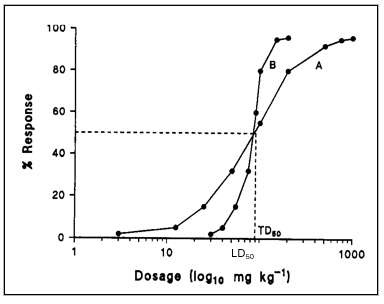
Drugs A and B may have the same LD50; however, A could be more hazardous than B.
Importance of understanding the dose-response relationship
Pharmacokinetics & Toxicity
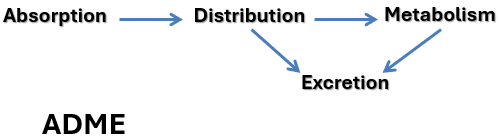
Alterations in any phase of ADME (Absorption, Distribution, Metabolism, Excretion) can affect both the efficacy and toxicity of a drug.
Types of Toxic Substances
Examples of Toxic Substances:
- Drugs:
- Paracetamol, aspirin, halothane, debrisoquine, thalidomide.
- Industrial Chemicals:
- Metals (lead, cadmium), asbestos, vinyl chloride, aromatic amines.
- Food Additives and Contaminants:
- Artificial sweeteners, aflatoxin, tartrazine (E102), botulinum toxin.
- Pesticides:
- DDT, paraquat.
- Natural Products:
- Plant toxins, animal toxins, fungal toxins, microbial toxins.
- Household Products:
- CO, antifreeze, cyanide, alcohol, glue sniffing, solvent abuse.
- Environmental Pollution:
- Particulates, mercury, lead, arsenic, ozone, tobacco smoke.
Definitions of Toxin and Toxicant
Toxin:
- A toxicant that is naturally produced by living organisms (e.g., botulinum toxin, ricin).source: biological
molecular complexity: often complex molecules (protein peptides, secondary metabolites
typical exposure: bites, stings, toxic plants, contaminated food
regulatory focus: natural ecology, infection disease, food safety
key distinction: natural origin
Toxicant:
- Synthetic, manmade, or released due to human activity (e.g., pesticides, solvents).source: anthropogenic (industirl/manufacutred)
molecular complexity: can be simple or complex chemical structures
typical exposure: pollution, indutrial exposure, pharmaceuticals, contaminated soil/water
regulatory focus: environmental, occupational and regulatory toxicology
key distinction: human made or human released
Quick Revision Questions
Do two drugs with the same LD50 have the same toxic effects? (True/False)
Is TD50 the dose that kills 50% of the population? (True/False)
Can pharmacokinetics of a drug affect its toxicity? (True/False)
Specific Toxicities
Alcohol Toxicity
Acute Toxicity:
- CNS depression leading to symptoms including drunkenness, visual impairment, muscular incoordination, slowed reaction time, vomiting, hangover, and unconsciousness.Chronic Toxicity:
- Long-term effects include liver cirrhosis, brain damage, and various cancers (oral cavity, pharynx, larynx, esophagus, liver, colorectum, breast).Health Benefits:
- Low consumption may provide cardiovascular benefits.
Botulinum Toxin (Botox)
Source:
- Produced by Clostridium botulinum (soil bacterium), thrives in low acid, low sugar, low oxygen environments.Toxicity:
- One of the most toxic substances known, causes of botulism with symptoms such as blurred vision, difficulty swallowing, and paralysis. Fatality rates of 5-10% due to respiratory failure.Mechanism:
- Blocks neuromuscular transmission through decreased release of acetylcholine.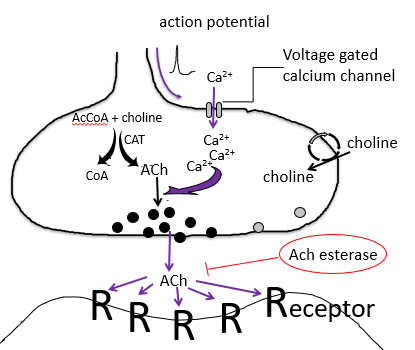
Therapeutic Uses:
- Treatment of overactive muscles, spasms, dystonia, excessive blinking, and sweating. For cosmetics, it induces facial muscle paralysis to prevent wrinkles,
Paracetamol (Acetaminophen)
Metabolism:
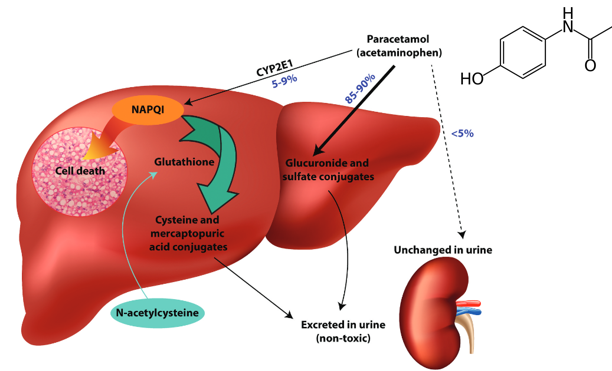
- Mainly through conjugation with sulfate and glucuronic acid; minor metaolism by oxidation followed by glutathione conjugation.Overdose Consequences:
- Saturation of conjugation pathway leads to increased oxidative metabolism and depletion of glutathione, reacts with liver proteins resulting in hepatic necrosis and potential death.Antidote:
- N-acetylcysteine can act as an antidote, regenerate glutathione if administered within 10-12 hours.Interactions:
- Alcohol potentiates liver damage by inducing cytochrome P450 enzymes, enhancing toxic metabolic activation of paracetamol.example of organ specific toxicity
Ibuprofen
Definition:
- A Non-steroidal anti-inflammatory drug (NSAID) inhibiting COX1 and COX2, lowering prostaglandin synthesis.Toxicity Effects:
- Overdose can critically affect other functions of prostaglandins; protection of gastric mucosa and maintenance of renal blood flow; symptoms include nausea, vomiting, abdominal pain, GI irritation, ulcers, and gut perforation.recommended to take with food to minimize damage to gut linng
Thalidomide
Historical context:
- Marketed as an anti-sickness remedy for pregnant women, leading to limb deformities when used during specific gestation days (24-29), banned in 1962.one entantiomr is more embryotoxic than the other (importance of chirality in toxicity)
Current Uses:
- Effective for treating leprosy, AIDS, and some cancers;notable for its molecular mechanism of action involving interference with the expression of angiogenesis genes (blood vessel formation).
Grapefruit Juice
Mechanism:
- Contains furanocoumarins, which inhibit cytochrome P450 3A4 in the gut.Normally, CYP3A4 in the gut metabolises a portion of many drugs before they reach systemic circulation, but grapefruit means less of the drug is metabolised in the gut
More drug passes into the bloodstream, the blood concentrations rise, bioavailability of drugs goes up
increase risk of adverse effects and toxicity
cases major inhibition of the metabolism of many pharmaceutical drugs
Affected Drug Classes:
- Includes antiarrhythmics, antihistamines, calcium channel antagonists, statins, HIV protease inhibitors, hormones, immunosuppressants, sedatives, and antidepressants.
Branches of Toxicology
Clinical Toxicology:
- Diagnosis and treatment of poisonings, including drug overdoses and adverse drug reactions (ADRs).may be related to drugs principal action
may be unrelated to drugs principal action
drug-drug interactions
Forensic Toxicology:
- Involves the detection and interpretation of the effects of drugs and poisons for legal implications. combines analytical chemistry with medical and legal expertise to understand whether substances played a role in a person’s behavior, impairment, or deathe.g. arsenic, mercury, antimony, thallium
Industrial/Occupational Toxicology:
- Addresses workplace-related toxic exposures concerning various industries.e.g. mining (asbestos →lung disease), construction (asbestos), vinyl chloride(liver disease), cadmium (kidney, lung, testicular disease), hat making (mercury → mad hatters disease), rubber and dye (aromatic amines → bladder disease), furnaces and foundries (polycyclic aromatic hydrocarbons → lung, bladder)
Environmental Toxicology:
- Focuses on how environmental agents affect health and ecosystems.e.g. tobacco, lead in petrol, air pollution, arsenic in wate and wallpaper, mercury and methylmercury, pesticides
Ecotoxicology:
- Examines environmental pollution and its biological impact.Regulatory Toxicology:
- Involves establishing safety regulations for chemicals.Genetic Toxicology:
- Studies how toxic substances affect genetic material and cause mutations.gnotoxic agents: chemical (benzene, aflatoxin B1, vinyl chloride)
The field uses specialised tests to detect genotoxicity and ensure drugs and chemicals are safe
Regulatory History of Toxicology
1937 U.S. Incident:
- Elixir Sulfanilamide (antifreeze ingredient) led to 107 deaths, resulting in the Food, Drug, and Cosmetic Act of 1938 for product regulation.1960s International Regulations:
- Notable for the teratogenic effects of thalidomide prompting EU directives and UK Medicines Act of 1968.Role of Legislation:
- Increasing regulation worldwide, leading to the establishment of the International Council for Harmonisation (ICH) in April 1990, emphasizing the 3Rs (Reduction, Replacement, Refinement).
Summary of Key Concepts
Safety of Substances:
- "There are no safe substances, only safe ways of using them."Toxicity and Dose Exposure:
- Toxic effects are proportional to dose and exposure levels.Therapeutic Index Importance:
- A higher therapeutic index provides a better chance of avoiding toxicity.Classifications of Toxic Substances:
- Toxic substances can be classified based on exposure such as drugs, food additives, pesticides, industrial chemicals, environmental pollutants, natural substances, and household materials.
Final Quick Revision Questions
Are all harmful effects mediated by toxic metabolites? (True/False)
Are acute and chronic toxicities mediated by the same mechanisms? (True/False)
Is toxicology a branch of pharmacy? (True/False)
Learning Outcomes Recap
Students should now be able to describe the principles of toxicology, key terms, methods to distinguish between types of effects, sources of toxins, and illustrate specific toxic substances.