Infancy and Toddlerhood
Body Growth Basics
height nearly doubles in the first two years of life, and weight quadruples
‘baby fat’ increases over the first year (temperature regulation) then decreases
weight unlikely to be concern
malnutrition: marasmus, kwashiorkor
breastfeeding
growth in two patterns
cephalocaudal- head to tail
proximodistal- near to far
Motor Development
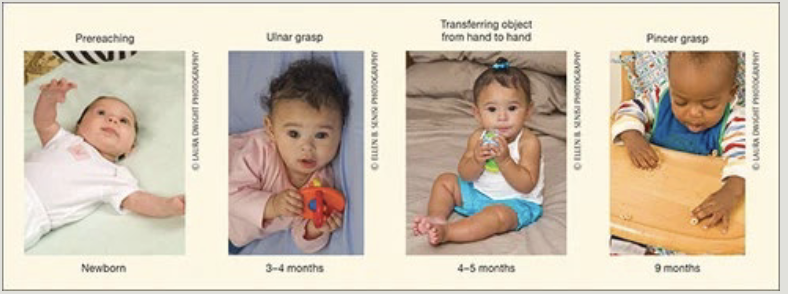
gross and fine motor skills
dynamic systems theory: motor skills develop based on multiple factors
CNS development
capacity for movement
goals
environmental supports
Brain Development
the brain more than doubles in size in the first year of life
growth - new neurons, fibers, and synapses
this requires stimulation - sensitive periods
experience- expectant (vs. experience-dependent, which happens through life)
programmed cell death- neurons die off to make room for more connections
myelination- glial cells coat fibers to speed up transmission
huge amount near age 2 (then again at adolescence)
why these times?
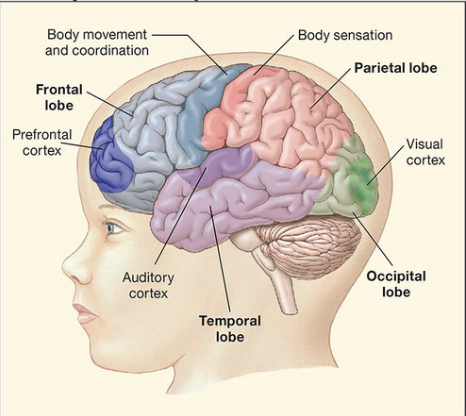
Cerebral Cortex
main area for postnatal brain development
prefrontal cortex is the last to fully develop- really develops from about 2 months on
lateralization
right brain/left brain?
depends on experience, stimulation
plasticity
Perception
habituation
vision
very poor for newborns
depth perception (visual cliff)
patterns and faces
preferences - sex, race
hearing
begin developing musical preferences
understand where musical phrases (and words!) begin and end
Differentiation Theory
infants seek stable features in a changing world
then begin to identify patterns and relationships (amodal at first, then intermodal), finer and finer details
always looking for possibilities for action
may begin imposing meaning- what we call the beginning of cognition
Learning
behaviorism research (mind as black box)
conditioning
classical conditioning
operant conditioning
social learning
modeling, learning by observation
developed into social-cognitive theory
“Little Scientists”
piaget’s sensorimotor stage - learning by doing
begins by reflex and circular reactions and develops into goal-directed behavior
we develop schemas about how the world works, and constantly update them
accommodation - updating our schemas to match the world
then using them to interpret: assimilation
organization- connecting various schemas together
mental representations help us think about things when they’re not there
deferred imitation, make-believe
general ideas have stayed useful - however, piaget’s timelines may not be accurate
more continuous- object permanence may be a matter of degree, for example
Information Processing Approach
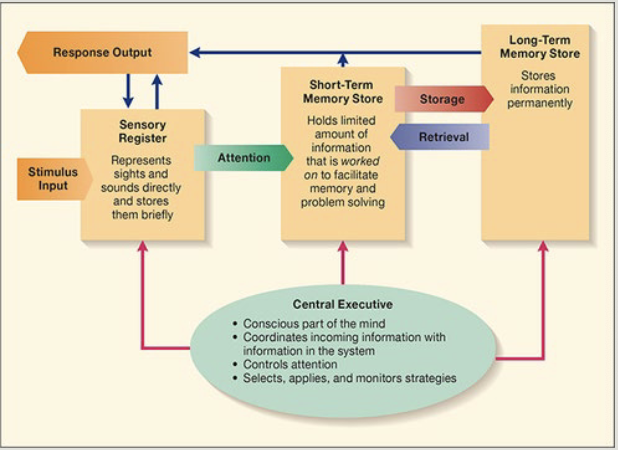
‘mind as a computer’ analogy
how do each of these change during the first two years of life?
more sustained attention
greater memory retention and retrieval
recognition - recall is more difficult
if that’s the case, why dont we remember this part of our life?
Infantile Amnesia
possible explanations
language
schemas
brain development
Language Development Theories
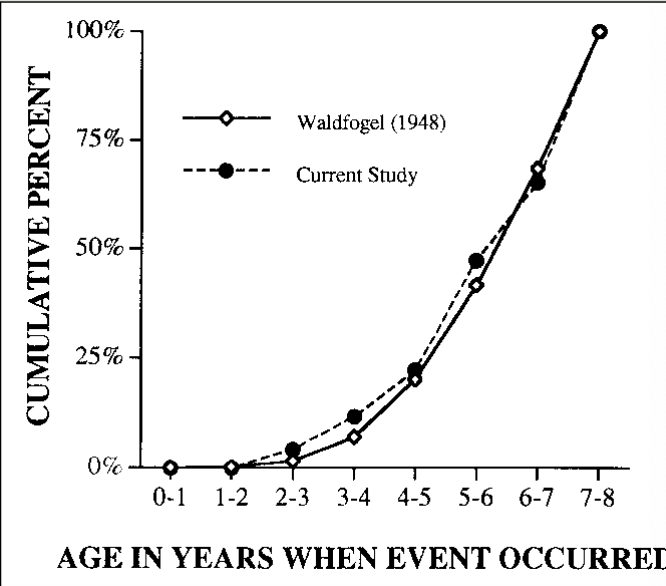
is language taught or are we naturally oriented toward developing it?
chomsky’s language acquisition device, sensitive period
interactionist perspectives
information processing - same general cognitive capacities as for understanding other patterns, music, art, etc.
social interactions - language develops out of social interactions and is driven by those relationships (Vygotsky)
role of adults, environment
infant-directed speech
Attachment
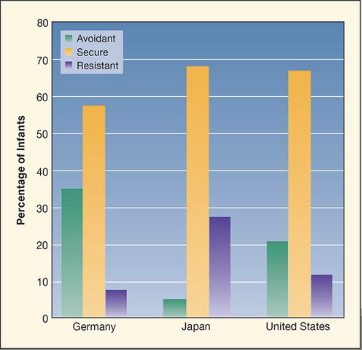
ethiological theory; internal working model
if secure bond formed, will feel more confident to explore
secure base, stranger anxiety
if insecure, emotional difficulties may follow (specific to type of insecurity)
avoidance, anxiety, disorganization
fairly stable and predictive of later relationships/outcomes, but can be changes (especially if insecure)
erikson’s stage of trust vs distrust (infancy)
Factors Affecting Attachment
early availability of consistent caregiver
quality of caregiving
infant characteristics (including genetics - another gene x environment interaction)
parent’s own attachments
other factors - SES, culture
Emotion
ekman: 6 basic emotions
for infants, we see basic attraction/ withdrawal that gets more complex
happiness, surprise
social smiles, laughter
anger, sadness, fear
increase with autonomy, especially anger
stranger anxiety and the secure base
responding to others’ emotions
self-conscious emotions (pride, guilt, embarrassment) emerge around 1.5
Temperament
basic personality
seems to be partially genetic but is also affected by environment
gene x environment interactions - parenting style more important for children with low proprensity for emotion regulation
goodness of fit model
classic 3 types
‘easy’, ‘difficult’, and ‘slow to warm up’
however this only described about 2/3 of their sample and may be stigmatizing in terms of language
modern conceptions have more components
activity level, attention span, fearful distress, irritable distress, positive affect, effortful control
Self Development
early self-awareness demonstrated by distinguishing self/body from others
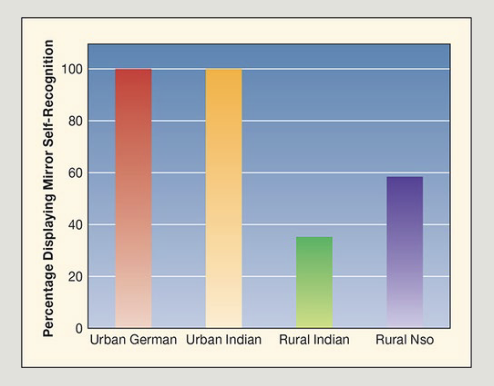
self recognition in mirror around 1.5 years
culture-dependent- why?
scale errors (e.g., doll’s clothes)
development of empathy
broccoli
self-control and delayed gratification
marshmallow test (role of SES)