Neoplasm
neoplasm = tumour = collection of tumour cells plus others
benign or malignant
cancer = malignant neoplasm
tumours are created when normal cell cycle control checkpoints are bypassed
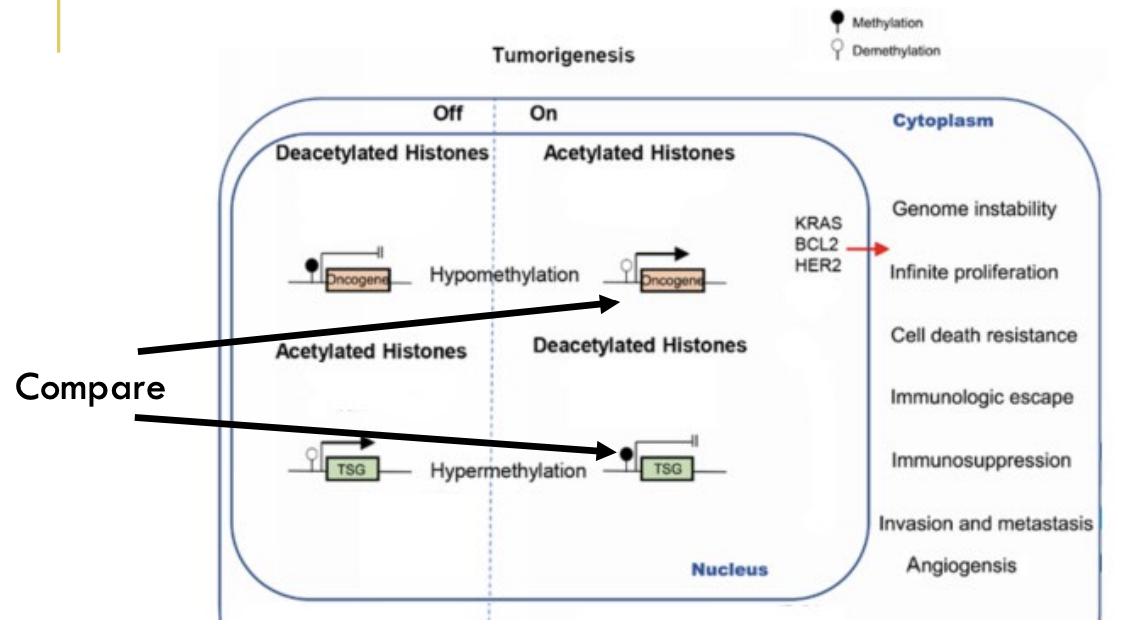
results from genetic and epigenetic changes
consequences
chromosome instability
cell evade cues that inhibit growth
benign tumours can be life-threatening
consequences of checkpoint
failure of | consequences |
spindle | aneuploid |
centrosome duplication | tetraploid - polyploid |
DNA-damage checkpoint |
|
normal vs neoplasm
normal | neoplasm |
controlled cell proliferation | uncontrolled cell proliferation |
stop growing upon contact with other cells | no contact inhibition of growth |
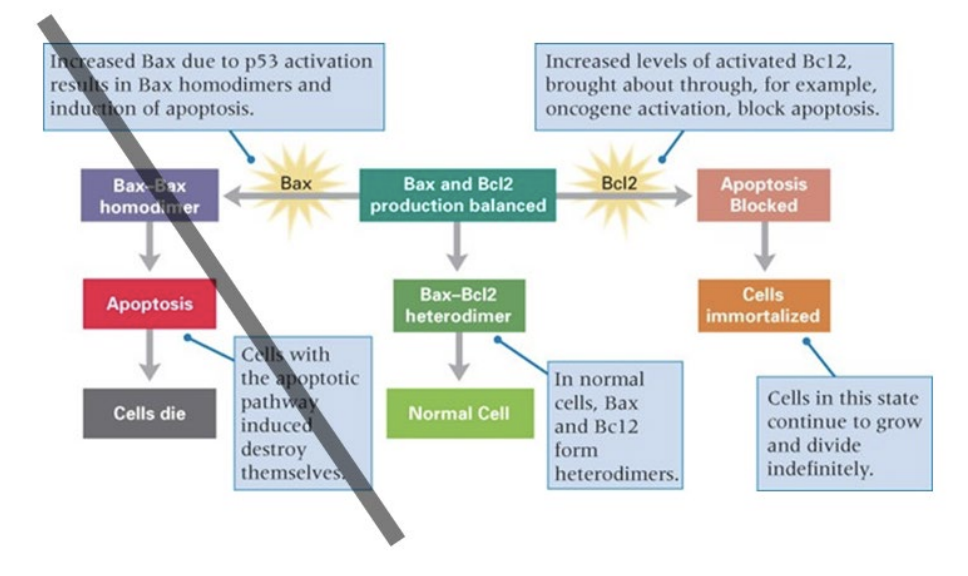
excess damage leads to apoptosis | no apoptosis |
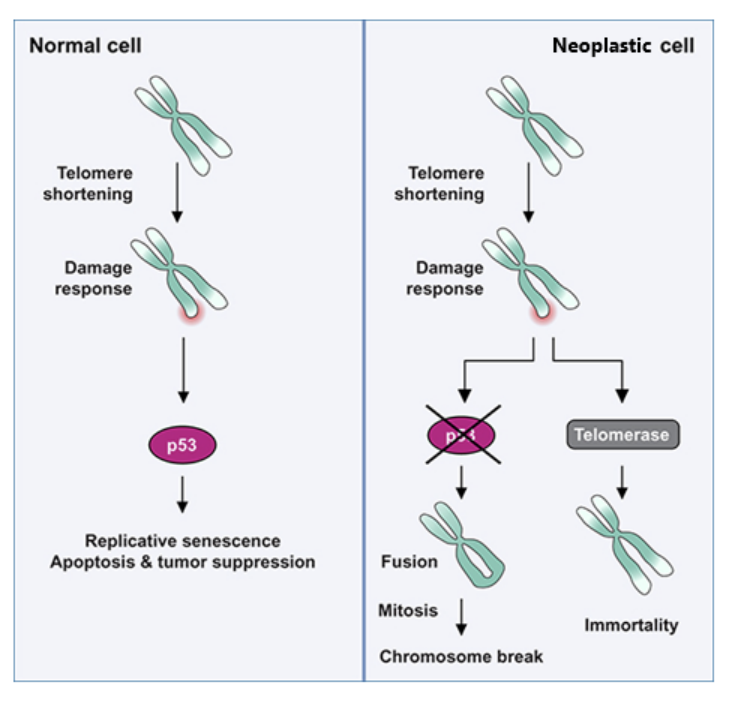
undergo senescence | overactive telomerase = cellular immortality |
benign vs malignant
benign | malignant |
tumour cells same as surrounding cells | tumour cells are de-differentiated |
contained | invasive (can penetrate tissue, enter circulation |
usually not life-threatening | life threatening |
no metastasis | poor cellular adhesion: undergo metastasis (establishment at secondary location) |
malignant neoplasm
sustaining proliferative signalling
evading growth suppressors
avoiding immune destructino
enabling replicative immortality
tumor-promoting inflammation
activating invasion and metastasis
inducing angiogenesis
genome instability and mutation
resisting cell death
deregulating cellular energetics
these 10 are never seen in normal tissues
angiogenesis
blood vessel formation promoted by
increasing angiogenic factors like VEGF
decreasing angiogenic inhibitors
senescence
this occurs because telomeres get shorter with each cell division
Hayflick limit (60-70 doublings in cultured cells
telomeres shorten to a critical length and activate DNA damage response
normal cells have no telomerase
overactive telomerase = restores telomeres, so critical length of telomeres is not reached
to avoid senescence
p53 and apoptosis
a loss of function mutation in p53 prevents Bax accumulation, therefore no apoptosis in neoplastic cells
Tumour progression
initiation phase
mutations occur in one or more driver genes
clonal expansion phase
additional mutations accumulate, allowing cell proliferation
invasive phase
additional mutations enable cells to invade normal tissue
increasing the chances of acquiring TSG and proto-oncogene mutations or becoming aneuploid is a characteristic that enables cancer
tumourigenesis
one key mutation can lead to accumulation
first mutation increases susceptibility to more mutations
results in clonal expansion
tumours can be genetically heterogenous
types of key genes
tumour suppressor gene | proto-oncogene |
undergoes loss of function mutation | undergoes gain of function mutation |
normal function: activates apoptosis, negatively regulates cell growth, repairs DNA damage | normal function: promotes cellular proliferation |
mutations = autosomal recessive | mutations = autosomal dominant |
p53
Rb
Ras family
proto-oncogenes
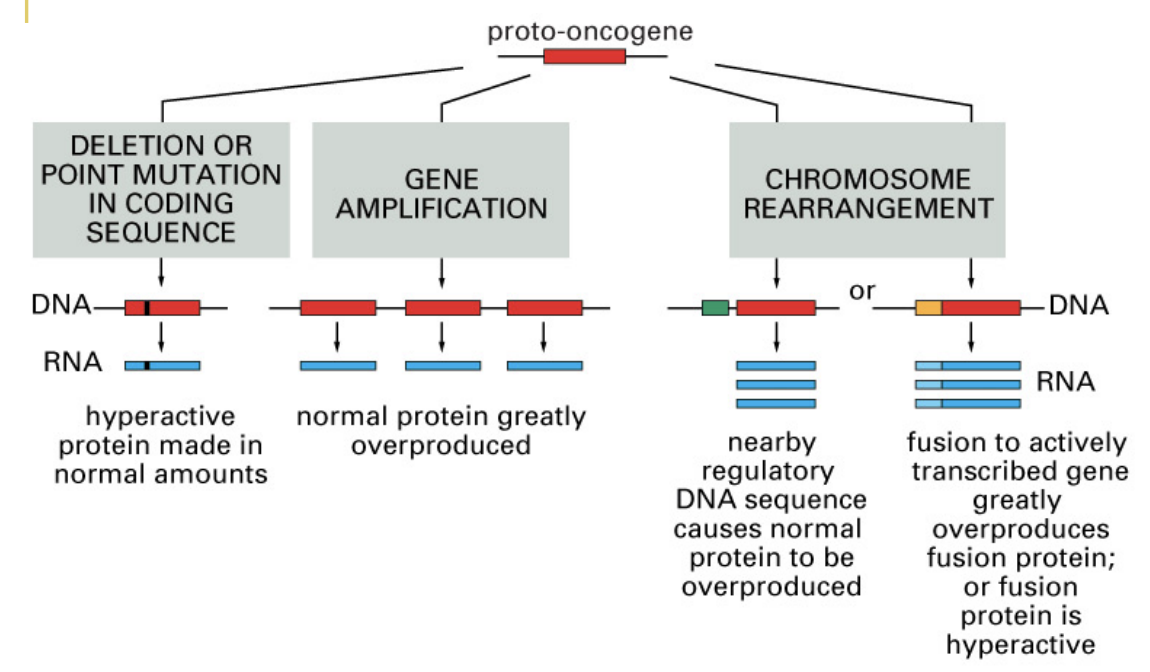
proto-oncogenes become an oncogene when altered by a mutation
normally, they perform cellular functions related to growth, proliferation or apoptosis
growth factors
receptors
TF
signaling enzymes
Ras
in normal cells, mitogen binds to receptor tyrosine kinases which then activate Ras
Ras is a GTPase that acts as signal transducer
Ras is active when bound to GTP
mutant cells can’t breakdown GTP
the result is a constant unregulated MAP kinase casecasde
results in increased cell proliferation
tumour suppressing genes
normal genes that are involved in
negatively regulating cell cycle
positively regulating apoptosis
coupling cell cycle to DNA damage
DNA repair genes
cell adhesion
these genes generally follow two hit hypothesis
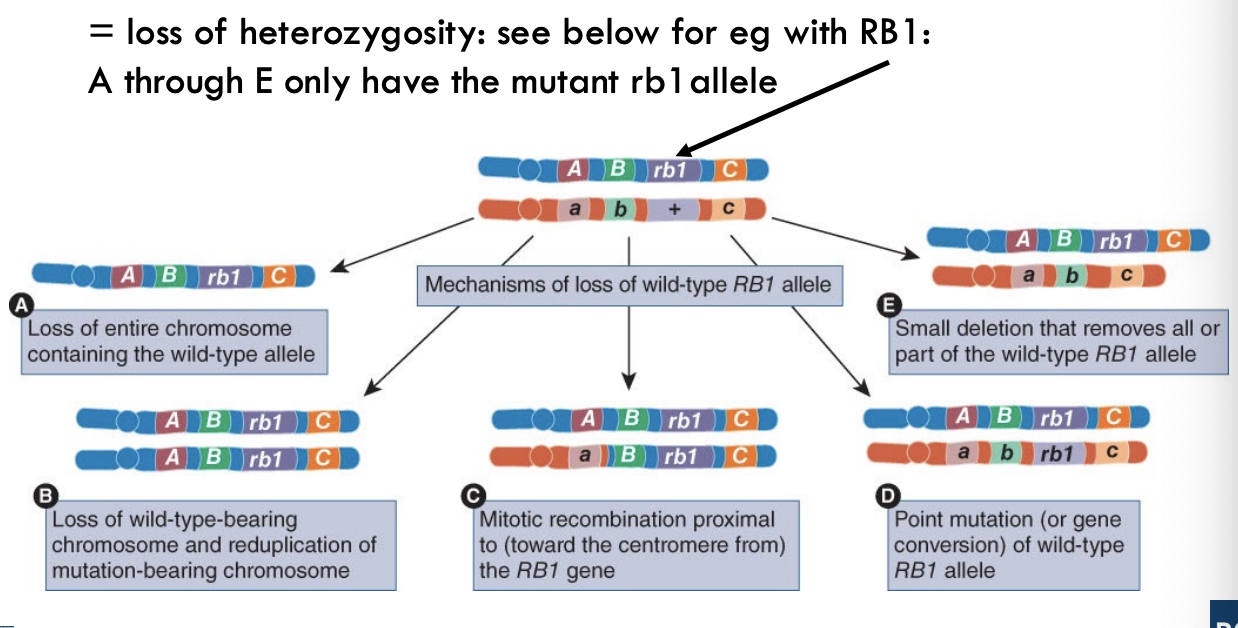
can be uncovered via loss of heterozygosity
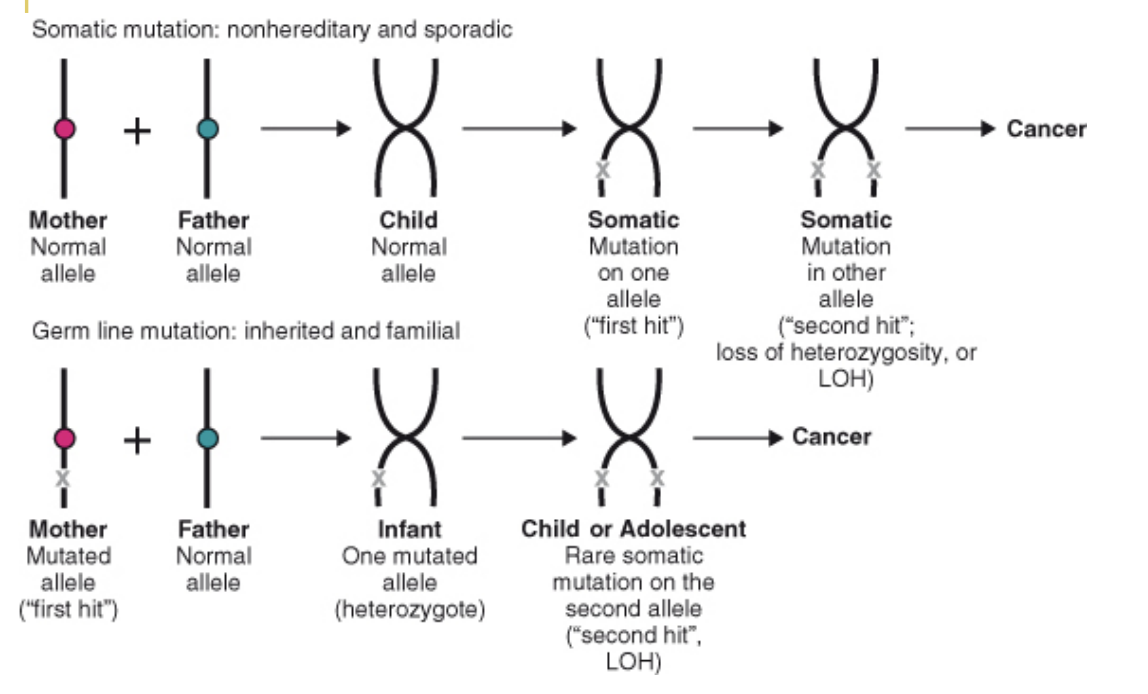
2 hit hypothesis
developed from study of RB1 and its role in retinoblastoma
cancer development requires 2 hits
familial: one mutation is inherited (first hit)
all cells have this mutation
only one more mutation is required to start cancer development, this is the second hit
destroys wild type allele = loss of heterozygosity (LOH)
because of loss of normal allele when other is already abnormal
very likely that cancer results in pedigree seen for autosomal dominant disorder
dominant at organism level; recessive at genotype level
sporadic cancer
both mutations need to occur in same cell
much less likely, so fewer numbers of primary tumours
p53
tetrameric TF
mutations prevent DNA binding
one mutant subunit and DNA is prevented from binding
mutations can create monomers/dimers
dominant-negative mutation
even if there is functional p53 present, if there is mutated p53, it will interfere with regular p53 function
epigenetics and cancer