3.1 Nerve Cells
Structure of neurons
Cell body:
contains nucleus
controls functioning of cell
contains cytoplasm with organelles
mitochondria, ER, ribosomes, Golgi body
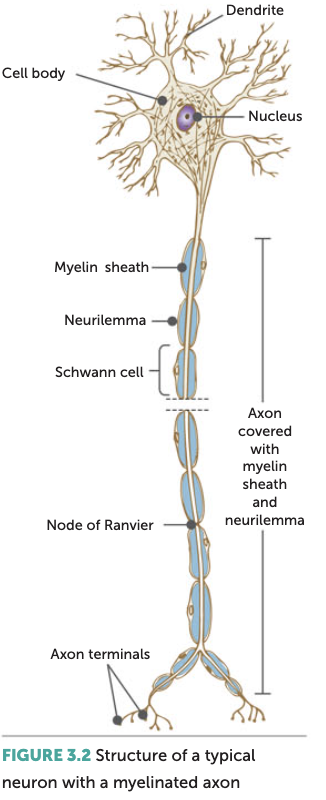
Dendrites:
short extensions of the cytoplasm
usually from cell body
carry nerve impulses into cell body
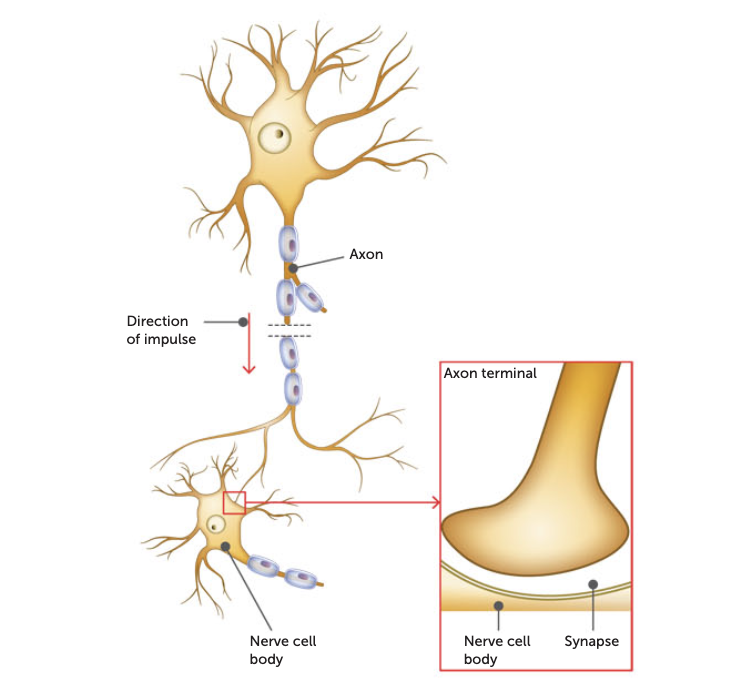
Axon
single extension of cytoplasm
carry nerve impulses into cell body
contains branches that end at the axon terminal
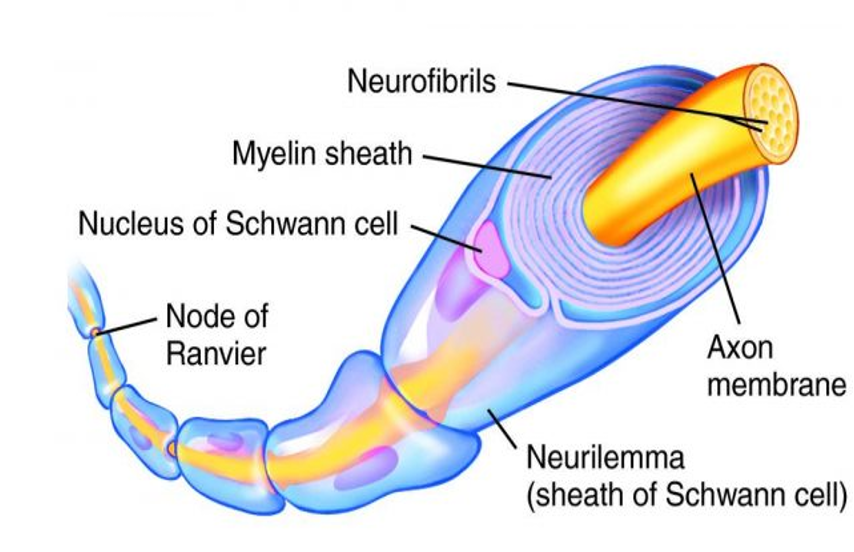
Myelin Sheath
fatty layer covering axons
act as an insulator
protects axons from damage
speeds up movement of nerve impulse
formed by cells called Schwann cells (not present in brain/spinal cord)
outer layer of Schwann cells are called the neurilemma which helps repair damaged fibres
gaps in the myelins sheath = Nodes of Ranvier
not all neurons contain myelin sheath
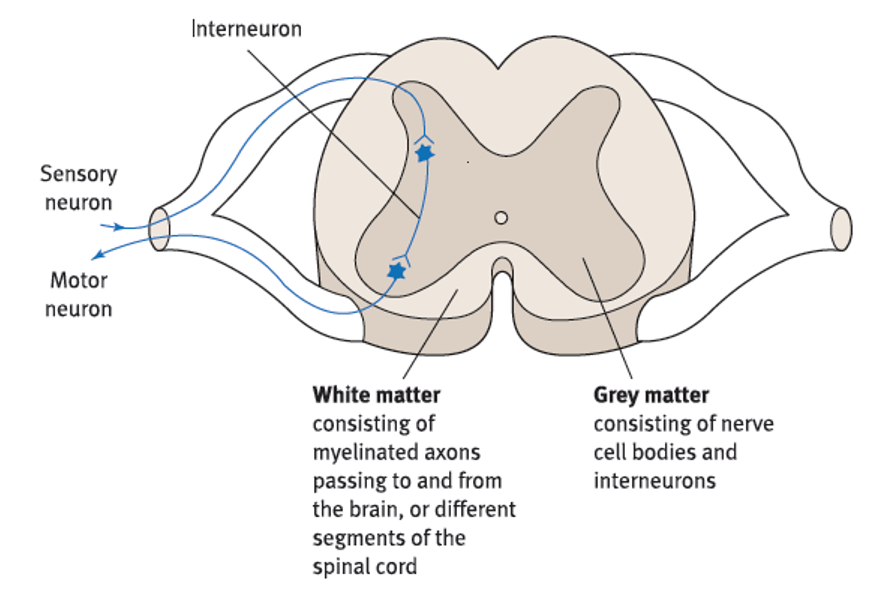
amount of axon present determines colour of nervous tissue
white matter = long axons, lots of myelin
grey matter = short axons (more cell bodies), less myelin
Synapses
junction between 2 neurons
occurs between axon terminal of one neuron and dendrite of other
no physical touching!
neurotransmitters are used
Types of Neuron (Function)
Sensory (afferent or receptor neurons)
carry messages from receptors/sense organs (tongue) to CNS (brain/spinal cord)
Motor (efferent or effector neuron)
carry messages from CNS to effectors (muscles, glands, etc)
Interneurons (association, relay or connector neurons)
link sensory and motor neurons
Types of neuron (structure)
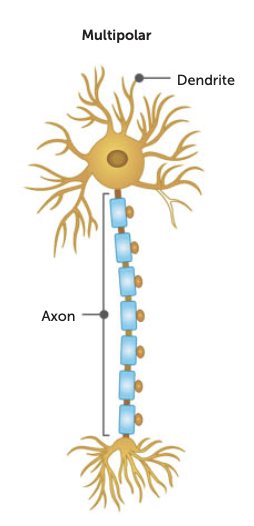
Multipolar
1 axon and multiple dendrites from cell body
most common
found in brain, spinal cord and skeletal muscles
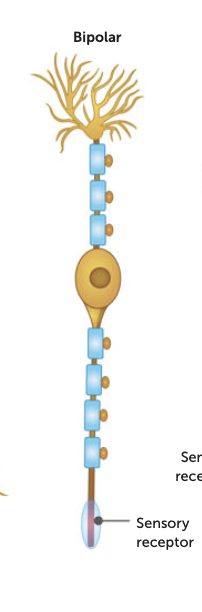
Bipolar
1 axon and 1 dendrite
axon and dendrites may be branched at ends
found in eye, ear and nose
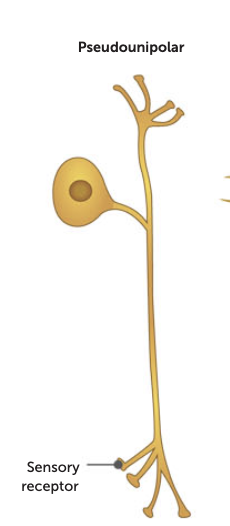
Pseudounipolar
1 axon - then divides into 2
1 ends in axon terminals, the other in dendrites
found mostly in sensory neurons, carrying messages to spinal cord
info travels faster because it doesn’t need to go through cell body