Wildlife Orientations
Learning objectives
understand core concepts (attitudes, wildlife value orientations) and why they matter
Why Wildlife Orientation Matters
one of 4 universal problems faced by human society
human-time, -nature, -each other, -motives (e.g. being, becoming, doing)
Biophilia
a hypothesis that suggests we evolved from nature and still have a connection to it
Last Child in the Woods: suggests that kids who are mentally ill need to go in the woods
Value Orientations
Social solutions to universal problems reflect a society’s values.
What is the relationship between humans and nature?
What is the relationship between individuals: hierarchical, equal, merit
Wildlife Value Orientations
More on the latest model
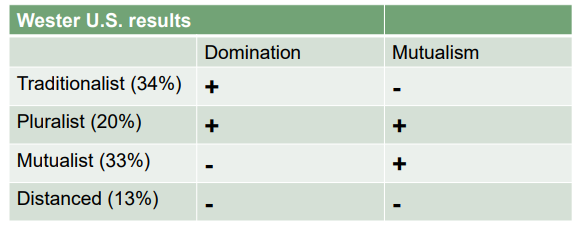
Domination (view of wildlife that prioritizes human wellbeing over wildlife and treats wildlife in utilitarian terms)
Mutualism (view of wildlife as capable of relationships of trust with humans and defined by a desire for companionship with wildlife)
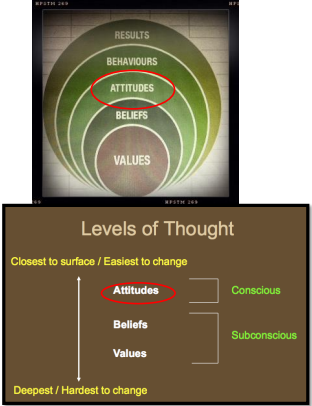
Attitudes are different
Heberlein (1981): + and - evaluations
favor/disfavor
towards an object
affect dimension = emotional elements (feelings)
cognitive dimension = dispassionate evaluation of facts
Naturalistic
interest in all animals
strong attraction to wildlife in natural settings
affectionate feelings towards pets
Regard pets as inferior to wild animals
Enjoy personal contact w/ wilderness
Wildlife valued for opportunities it provides for activity in the natural environment
Ecologistic
Also orientated toward wildlife in natural settings
More intellectual and detached
Environment is system of interdependent parts
Affection for animals in natural habitats
Humans are just another animal species dependent on the environment
Humanistic
Strong personal affection for individual animals
Pets >wildlife
But wildlife can be pets…
Pets viewed as friends, companions, and members of the family
Extend empathy for pets to general concern for well being of all animals
Moralistic
Concern for welfare of animals
Wild and domesticated
Philosophical: Ethical principles oppose exploitation, infliction of harm, suffering, or death of animals
Equality between humans and animals
Scientistic
An objective view of animals
Animals are objects to study
Little personal attraction to pets, wildlife, or natural environment
Emotional detachment
Aesthetic
Emotional detachment from physical animal
Interest in beauty or symbolic properties of animals in paintings, sculptures, movies, etc
Utilitarian
Animals have practical or profitable qualities
Interested in the usefulness of animals to humans
Own pets and believe pets are to be trained to do certain tasks
Tend to be indifferent to animal welfare
Domionistic
Sense of superiority
Desire to master animals
Negativistic
Desire to avoid animals
Indifferent towards animals
Fear or dislike animals
Superstitious about animals
Sense of separation and alienation from the natural world
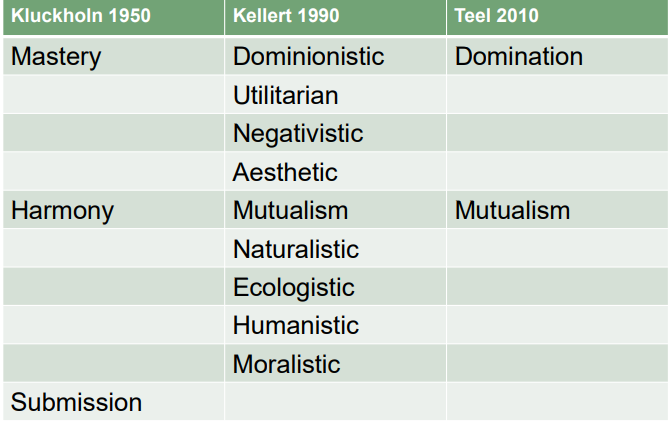
Reminders about the old 9 ‘WVOs’
Not really a thing scientifically or historically (like the NAM)
Loosely related to real WVOs (Mastery/Dominion and Harmony/Mutualism)
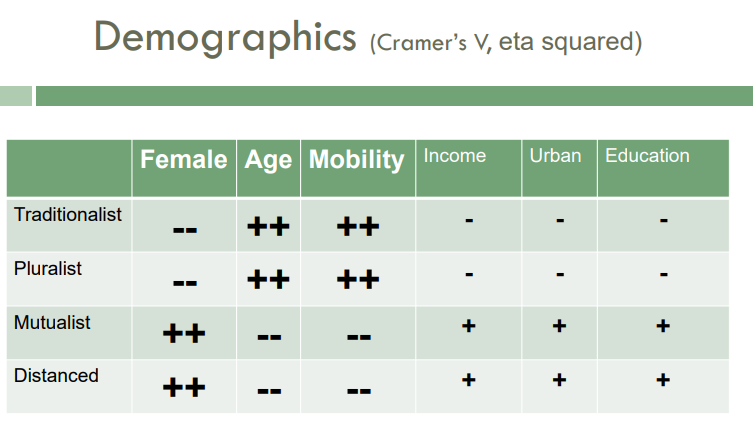
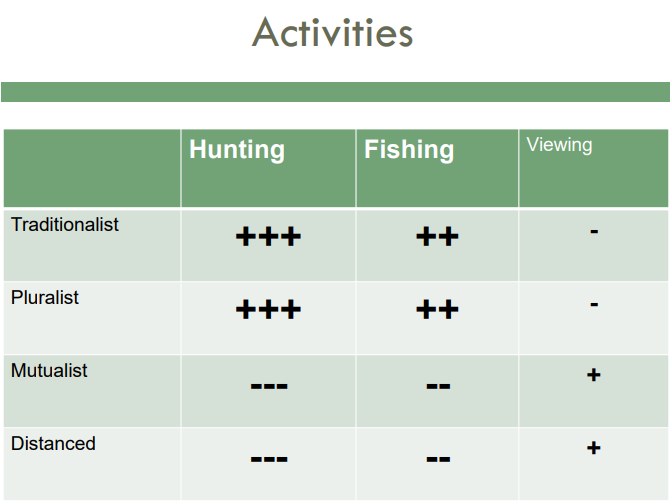
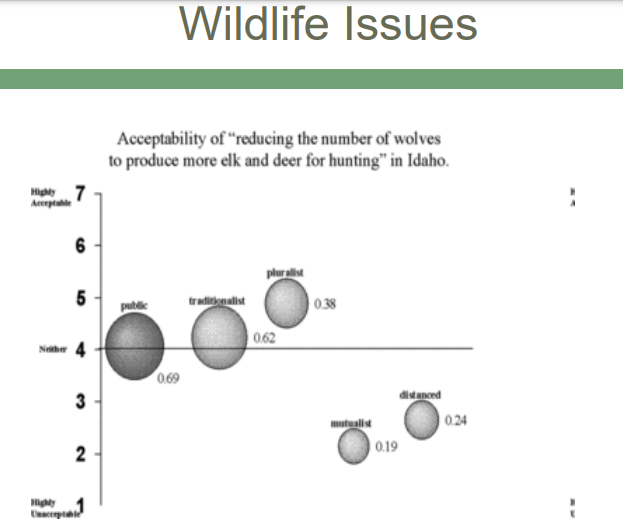
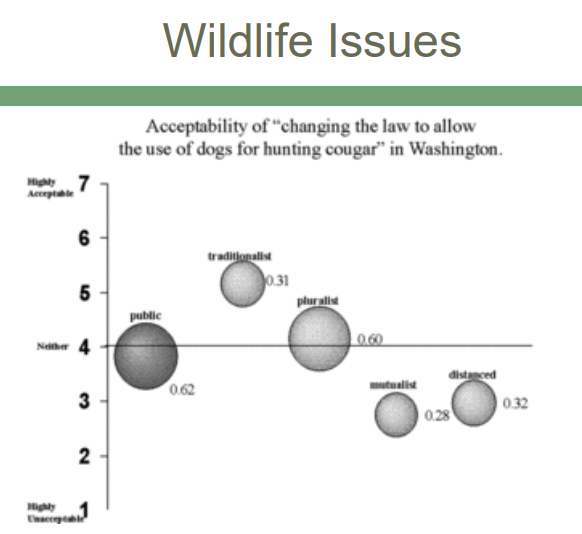
Most people possess more than one perspective towards animals (Traditional, Plural, Mutual, Distanced)
How we feel in one situation may change in another situation