BIOLOGY
CELL BIOLOGY
Animal and plant cells
Eukaryotic cells have a nucleus
Animal, plant or fungi…
Have ‘you’ in them
Prokaryotic cells have no nucleus and their DNA is free
Bacterial cells…
Animal cells
The cell membrane controls what enters and leaves the cell
The nucleus contains the cell’s genetic material (DNA)
Cytoplasm is where chemical reactions reactions take place
Mitochondria provide cells with energy needed to function, from cellular respiration
Ribosomes are the site of protein synthesis
Plant cells
Plant cells have all the same organelles as animal cells, as well as a vacuole, cell wall and chloroplasts
The vacuole is permanent and contains cell sap - sugars, salts and water
The cell wall keeps the cell’s shape and is made of cellulose
Chloroplasts are where photosynthesis occurs - green because of chlorophyll
Mitosis
Multicellular eukaryotic organisms continuously need a supply of new cells for growth, development and repair
Especially in young organisms
The cell cycle is the process of the generation of new cells, and is a cell’s ‘life cycle’
It is from when the cell is formed to when it divides
The mains stages are growth, DNA replication and mitosis, and finally division
Growth - The cell grows in size, and increases it’s number of sub-cellular structures
DNA replication and mitosis - The DNA is duplicated so that the new cell formed can have a full set
Mitosis is where the cell divides
Division is where the cytoplasm and cell membranes fully divide
Also called cytokinesis
Chromosomes
Chromosomes carry genetic information in DNA
‘Codes’ for characteristics
They are a singular molecule of DNA
Each human cell contains 46 chromosomes
23 pairs
Osmosis
Osmosis is the diffusion of water molecules across a partially permeable membrane
The net movement of water molecules across a partially permeable membrane from a higher water concentration to a lower concentration
Only the movement of WATER particles
No energy is required as with the concentration gradient

Diffusion
Diffusion is the net movement of particles from an area of high concentration to an area of high concentration
It can happen in gases and in liquids
It is a passive process, so no energy is required - with the concentration gradient
Factors that affect diffusion are:
The concentration gradient - the higher the difference, the faster the rate of diffusion will be
Temperature - the higher the energy, the more energy particles have and therefore a faster rate of diffusion
Surface area - the large the surface area, the faster the rate of diffusion as more particles can move at one time
Active transport
Active transport is the movement of particles against a concentration gradient across a membrane
It requires energy
Energy used comes from cellular respiration in the mitochondria (break down of bonds in glucose releases energy)
This energy is stored in APT molecules - they take energy to the parts of the cell that need it
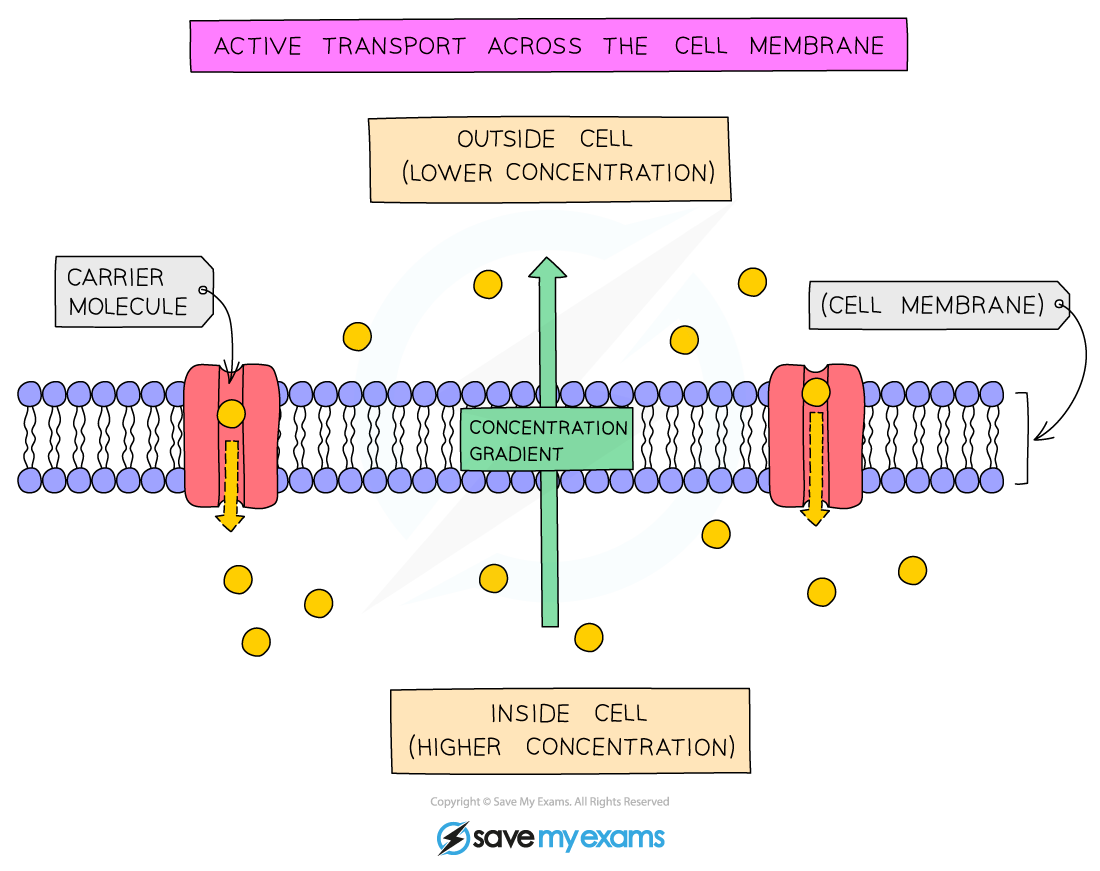
Root hair cells used active transport to absorb mineral ions and water molecules
They are adapted to use active transport so they can have a higher concentration inside, lots of mitochondria for energy release and a large surface area to increase rate of active transport
Stem cells
Cells divide by mitosis to form more cells
These cells are able to differentiate into specialised cells
Sperm and egg cells merge to form a zygote, and using mitosis this grows to form an embryo with embryonic stem cells
Embryotic stem cells can differentiate into any type of cell
When embryos grow into babies, and later an adult, there are no embryonic stem cells left
As adults, there are no longer stem cells that can differentiate into absolutely anything
Instead, there are adult stem cells, found in bone marrow, that can divide by mitosis but only into different types of blood cell
They can replace damaged cells to keep us alive, but don’t produce any new tissues, unlike embryonic stem cells
Plant stem cells are found in plant tissues called ‘meristems’, and they are found in areas of the plant that are continuously growing
Roots and shoots
They will differentiate into any of the cells needed in the plant
Palisade cells, phloem, xylem, root hair, etc.
They exist for the entire life of the plant
Stem cells in medicine
Lots of conditions are caused by faulty/damaged cells
Type 1 diabetes, paralysis, sickle cell anaemia
These faulty cells can be replaced to treat conditions
We can extract embryonic stem cells for early embryos, which can be grown in a laboratory
These can be stimulated to differentiate into specialised cells that are needed, and then given to patients to replace faulty cells
This can be used to produce healthy pancreas cells, nerve cells, red blood cells, etc.
Drawbacks:
It requires embryonic stem cells, that are in limited supply and there are ethical issues around it
Rejection as there are different genomes so patients body may reject or destroy
This risk can be reduced by giving medication to suppress an immune system
Alternatives:
Adult stem cells can be taken from a patient, which avoids rejection, and are easily accessible
They can only differentiate into different types of blood cells, so can only treat diseases such as sickle cell anaemia
New research is exploring how adult stem cells could produce any type of cell
Risks:
Virus transmission - if donor cells are infected (before taken or in a lab), the patient will be infected and that could cause more problems
Tumour development - stem cells divide so quickly that there’s a chance they’ll become uncontrollable and develop into a tumour/cancer
Ethical objections include issues with embryo’s being potential human life, so shouldn’t be used in research
However, do benefits of curing existing people outweigh rights of embryos?
Cell specialisation and differentiation
Animal and plants are complex organisms with lots of different cells to perform certain functions
Specialised cells
Sperm, nerve, muscle cells, etc.
Root hair, phloem, xylem cells, etc.
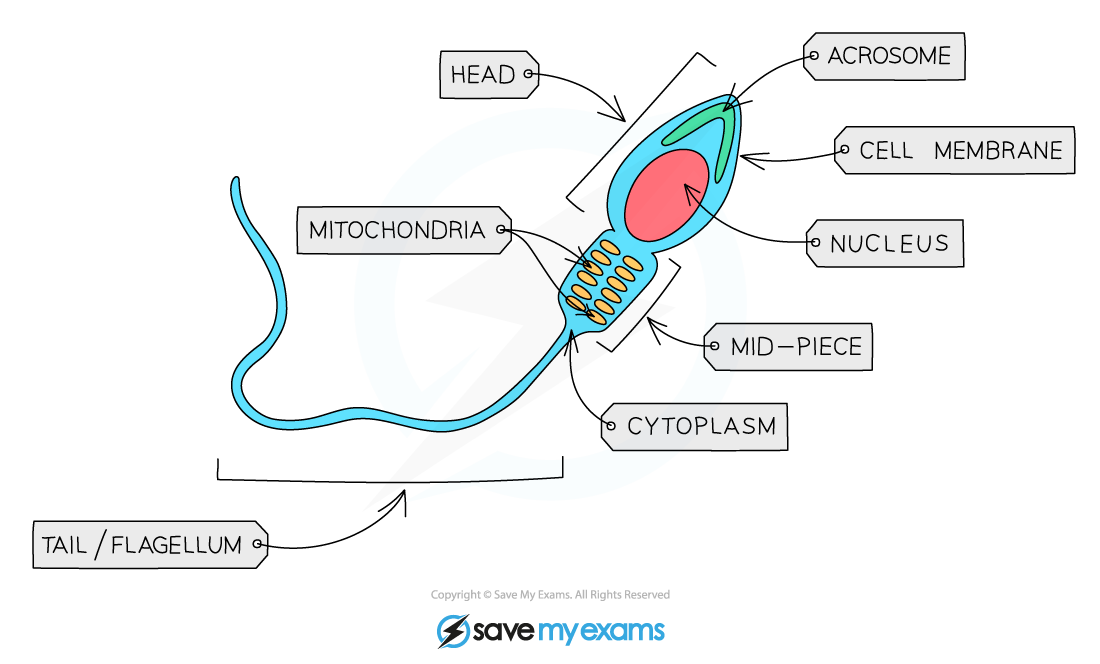
Sperm cells
Their role is to deliver genetic material to the egg in order to fertilise
Adaptations include:
They are streamline so they can swim faster
They have digestive enzymes in their heads, to break the egg
Their nucleus’ only have half of the amount of genetic material - half comes from egg
They have lots of mitochondria for energy
They have flagellum to allow them to swim quickly to reach the egg
Root hair cells
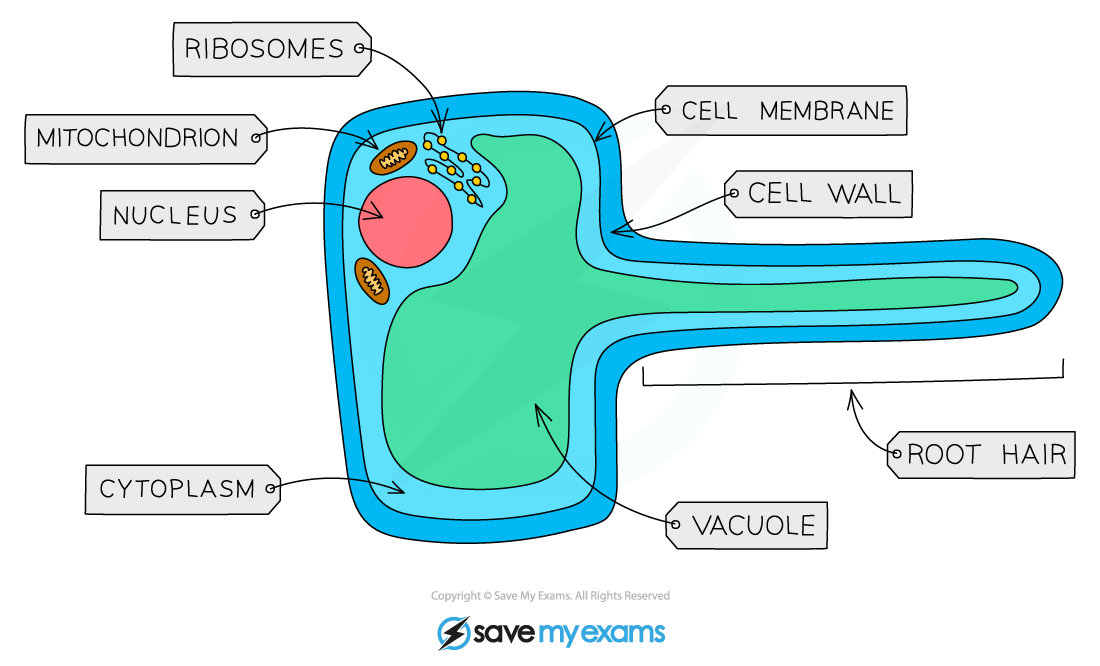
They are found in the roots of plant, and take in nutrients and water from the soil
Adaptations include:
Lots of mitochondria for energy, for active transport
They have thin walls to decrease distance of active transport
They have a large surface area to provide more contact with soil - increased rate of active transport
Nerve cells
They carry electrical signals from and to the brain
Adaptations include:
Lots of branches to increase efficiency of communication
They have a fatty sheath (myelin) around the axon, which insulates them and speeds up electrical impulses
They are extended so can run to and from different parts of the body to the central nervous system easier

Differentiation is the process of which cells become specialised
Zygote (before embryo), is made of lots of non-specialised cells, then they undergo differentiation, where they change shape, number of organelles and structure and become specialised
Microscopy
Microscopy is the use of microscopes
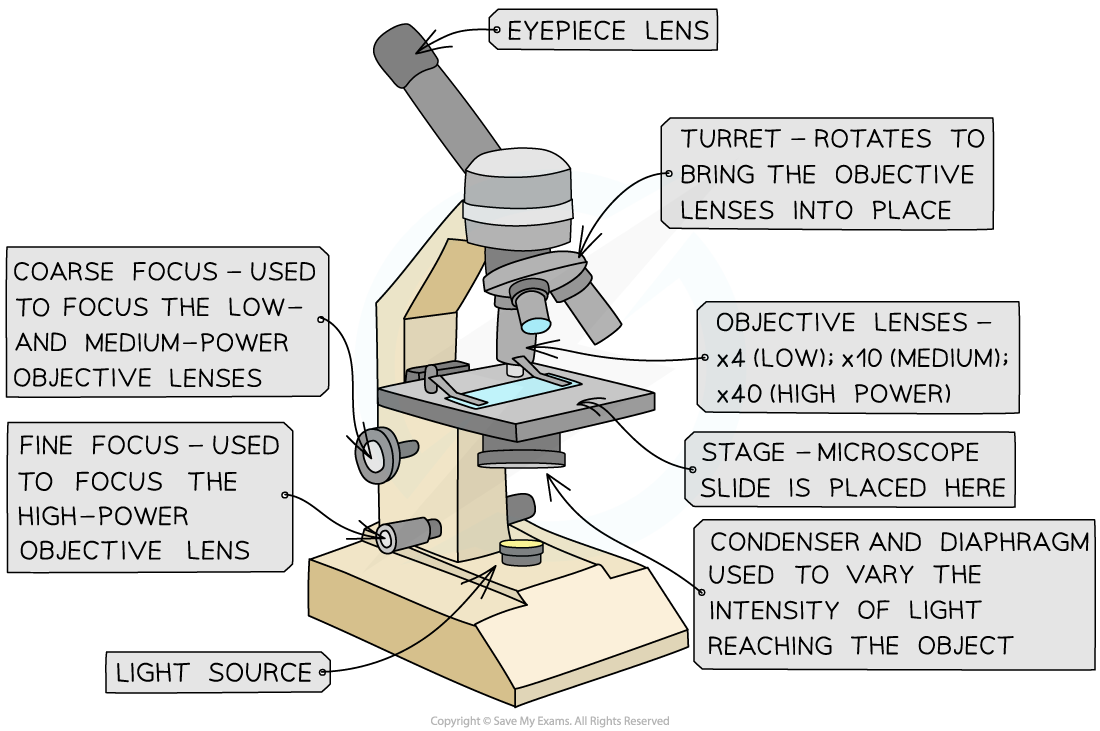
Light microscopes -
An object is the real sample that you are looking at, and it’s size
The image is what we see when we look down the microscope, and it’s size
Light microscopes work as light from the light source reflects through the sample and passes through the objective and eye piece lenses
These lenses spread out light so the image we see is far larger than the object
Magnification is how many times larger the image is than the object
Magnification = image size / object size
Resolution is the shortest distance between two points on an object that can be distinguished as two separate entities
How detailed an image is
PROS - They are easy to use
They are relatively cheap
CONS - They rely on light
Resolution is limited to 0.2 μm (the wavelength of light)
You can see cells, but no smaller
PROS of electron microscopes
They use electrons instead of light
The maximum resolution is 0.1 nm (the wavelength of electrons)
You can see subcellular structures - 2000x better
CONS - They are very expensive
They are hard to use
Binary fission
Binary fission is the process of which prokaryotic organisms, like bacteria, divide and reproduce
Bacteria’s genetic information is found in plasmids (non-essential) and a large circular strand - no nucleus
First, the cells grow, then they replicate their genetic material
The cell wall and membrane grows, and the cell splits
This process can happen up to every 20 mins
Depends on temperature, moisture and nutrients
In 5 hours, a bacteria could grow from 1 to more than 250000 if it divided every 20 minutes
DONE!!!
ORGANISATION
Principles of organisation
Organelles - subcellular structures
Nucleus, ribosome, mitochondria…
Cells - different organelles, become specialised
Muscle, red blood cells…
Tissues - a group of similar cells that work together to carry out a function
Muscle, epithelial…
Organ - a group of different tissues that work together to perform a function
Stomach, pancreas, liver…
Organ system - a group of organs that work together
Digestive system, cardiovascular system…
Organism!!! - a group of organs
Humans
Cancer
Cancer is a disease caused by cells growing abnormally and uncontrollably which can spread through the body
Tumours are an abnormal mass of cells that form when a group of cells undergo uncontrolled growth and division
Benign - Cells are contained in one area, usually in a membrane
Malignant - Cells aren’t contained in membrane, so can enter the bloodstream and travel through the body.
- Can invade other tissues and form secondary tumours when cells detach (metastasis)
- Process causes damage and is dangerous, so is seen as cancer
Risk factors - Lifestyle
Smoking - Lung, mouth, stomach and cervical cancers
Obesity - Bowel, liver and kidney cancers
UV light exposure - Skin cancers
Alcohol - Liver cancers
Risk factors - Genetics
Genes inherited from our parents can make you more susceptible to certain cancers
‘BRCA’ genes are linked to breast and ovarian cancers
Risk factors - Environmental
Increased exposure to ionising radiation
Exposure to chemical carcinogens (an agent that causes cancer)
The human digestive system
Digestive enzymes break down food in the pancreas and small intestine
Carbohydrates are usually found as starch (a polymer of glucose) and are broken down by amylase to maltose and then from maltose to glucose by maltase, which can be absorbed
Proteins are broken down by proteins (pepsin and trypsin, etc.) into amino acids
Lipids (fats) are broken down by lipase into glycerol and fatty acids
Bile helps this process by emulsifying lipids, which increases the surface area to allow lipase to further break down
All enzymes are broken down by the pancreas and small intestine
The digestive system has two main roles - digestion and absorption - and breaks down food so nutrients are absorbed and waste is excreted
The mouth
Teeth - physically break down food, increases surface area and improves ease of swallowing
Salivary glands - releases saliva, which contains amylase (to digest starch) and wettens food
Oesophagus - food is passed through
Stomach - contracts muscular walls, produces pepsin (type of protease) and produces HCl to kill bacteria and provide the right pH for pepsin
Pancreas - when food enters the stomach, it releases pancreatic juices to the small intestine, which contains enzymes for digestion
Gallbladder - neutralises acid from the stomach and releases bile to emulsify lipids (made in the pancreas, stored in the gallbladder)
Small intestine - Where most of digestion happens
Digestive enzymes are released to break nutrients down
Nutrients are absorbed - the small intestine has lots of villi (and microvilli), with a large surface area, good blood supply and a single layer of cells for increased rate of diffusion
Large intestine - Absorbs excess water
Rectum - Where waste is stored before excretion
The heart
The heart is part of a double circulatory system - pulmonary circuit (with the lungs) and systemic circuit (with the body)
The heart has 4 chambers
The left ventricle, right ventricle, left atrium and right atrium
The left ventricle has a thick muscular wall than the right as it needs to generate high pressure to pump blood to the rest of the body
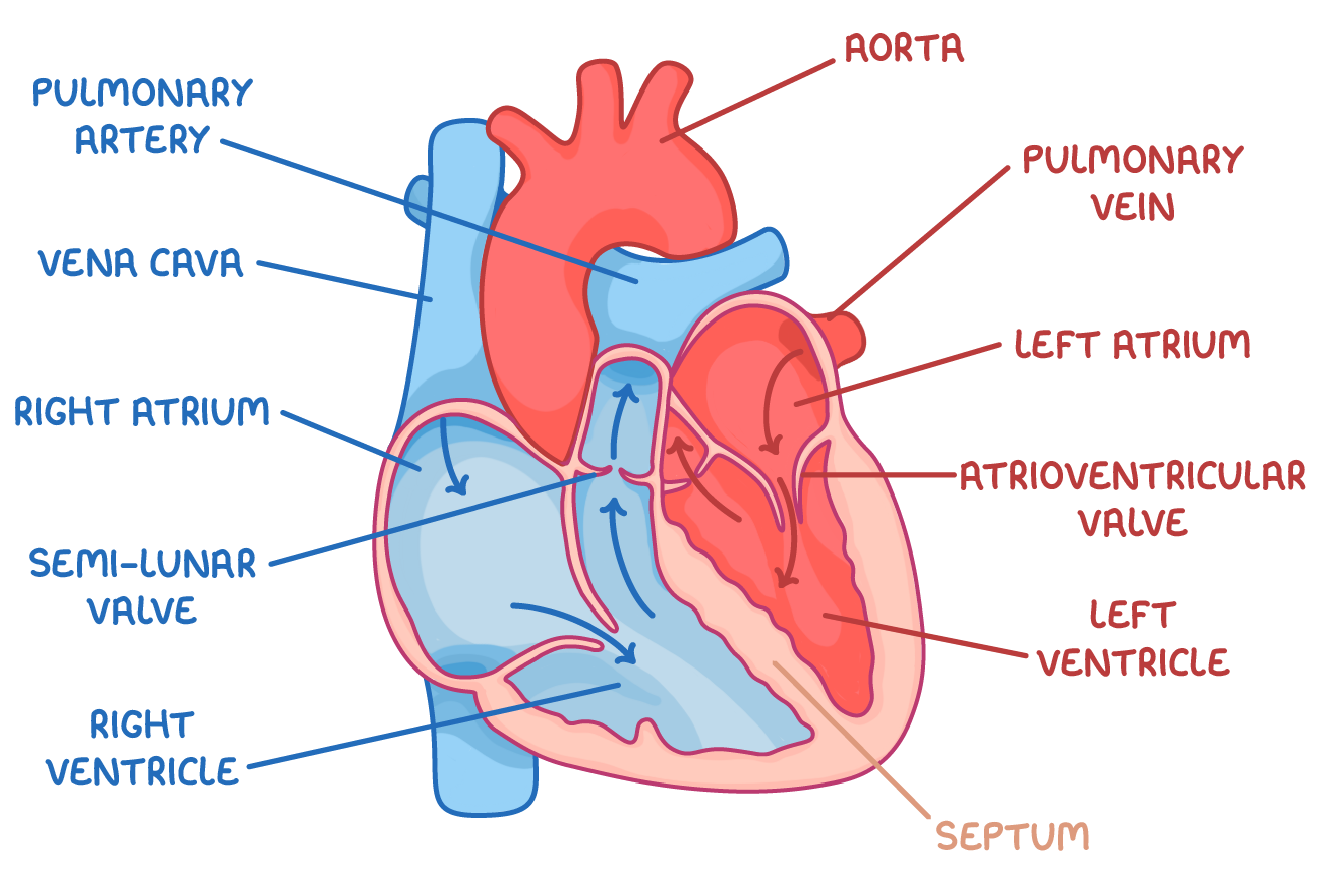
The Vena Cava pumps DEOXYGENATED blood FROM the body to the heart
The Pulmonary Artery pumps DEOXYGENATED blood TO the lungs from the heart
The Aorta pumps OXYGENATED blood TO the body from the heart
The Pulmonary Vein pumps OXYGENATED blood FROM the lungs to the heart
Blood vessels
Arteries - Carry blood AWAY from the heart
Carries at high pressure
Strong and thick elastic and muscle tissue
Small lumen
Capillaries - Really small (single cell thick)
Are permeable - allows for gas exchange to blood and nutrients
Exchange substances with cells - oxygen and nutrients
Remove waste - carbon dioxide
Low pressure
Veins - Carry blood TOWARDS the heart
At a low pressure
Thin walls
Largest lumen
Have valves - stop blood flowing wrong way
Blood
Blood is made up of red blood cells, white blood cells, plasma and platelets
Red blood cells - Make up around half of our blood by volume
Carry oxygen from lungs to cells
Contain haemoglobin
Become oxyhaemoglobin when oxygen is present, and separates so oxygen is free to diffuse into tissues
Adaptations - no nucleus so there is more space for haemoglobin
biconcave disk shape to increase surface area for diffusion
White blood cells - less than 1% of blood
Defend against infections and pathogens :(
They produce
Antibodies - bind onto pathogens and help to destroy them
Antitoxins - neutralise toxins
Perform phagocytosis - engulf pathogens so they can be destroyed by antibodies
Platelets - small fragments of cells (no nucleus)
Float about in blood until we get a cut and they act as a ‘glue’ and help us patch up
Clotting prevents blood loss and stops more pathogens entering
Plasma - around 50% of blood volume
Watery so blood can flow
Carries RBC, WBC, platelets, nutrients (glucose and amino acids), waste products (carbon dioxide and urea), antibodies and antitoxins
In a human, there is around 5 litres of blood
If blood loss is severe, the blood may not be able to efficiently supply oxygen to the tissues
New blood can be given!
New blood (ooooh…)
Artificial blood - adds volume, is mainly salt water, and contains no red blood cells so can’t transport oxygen
Can only replace 1/3 of blood
Blood transfusions - has RBC, but needs to be donated and there are certain types for different people
Coronary heart disease
A cardiovascular disease are any diseases linked to the cardiovascular system (heart and blood vessels)
Coronary heat disease is when the coronary arteries become blocked and can prevent blood supply to the heart
Is caused by a build up of fatty material (cholesterol)
Treatments - Stents
Stents are placed into the coronary arteries and are an expandable tube that ensures blood can keep flowing
A balloon is inflated in the artery and is later removes - stent is left in
Benefits - they are quick and long lasting
Drawbacks - there are risks of infection or heart attack and clots
Statins - Medication that lowers the production of fatty material and cholesterol, taken to prevent coronary heart disease
When too much CDL is made, it causes blocked arteries, which is bad :(
HDL is good fatty material
Benefits - they lower the risks of coronary heart disease, strokes and heart attacks
Drawbacks - have to be taken regularly, can cause kidney failure and headaches
Valves can be damaged over time or become infected
They can be replaced in surgery with either biological or mechanical valves
Heart failure happens when the heart can’t pump blood
This can be treated with a new heart - artificial is temporary and biological is from a donor
Risks of rejection and there is a long wait list
Health issues
Health is a state of physical and mental wellbeing
It is effected by exercise, sleep, diet and medical care
Disease is a condition that causes ill health
Communicable - infectious diseases, like colds or malaria
Viruses, bacterial, parasites and fungi
Non-communicable - can’t spread, like asthma or diabetes
Physical diseases can lead to mental health issues
Immune systems are linked to communicable diseases and our health
Effect of lifestyle on some non-communicable diseases
Risk factors are anything that increases the chance that someone will develop a disease
Lifestyle factors - Diet
Alcohol (liver disease)
Stress (mental and physical health)
Lack of exercise
Obesity from these factors can lead to diabetes, heart attacks and coronary heart disease
Environmental factors - Smoking (lung disease and cancers)
Air pollution
Radiation exposure
Plant cell organisation
Leaves are the main site of photosynthesis in a plant - requires carbon dioxide, water and sunlight
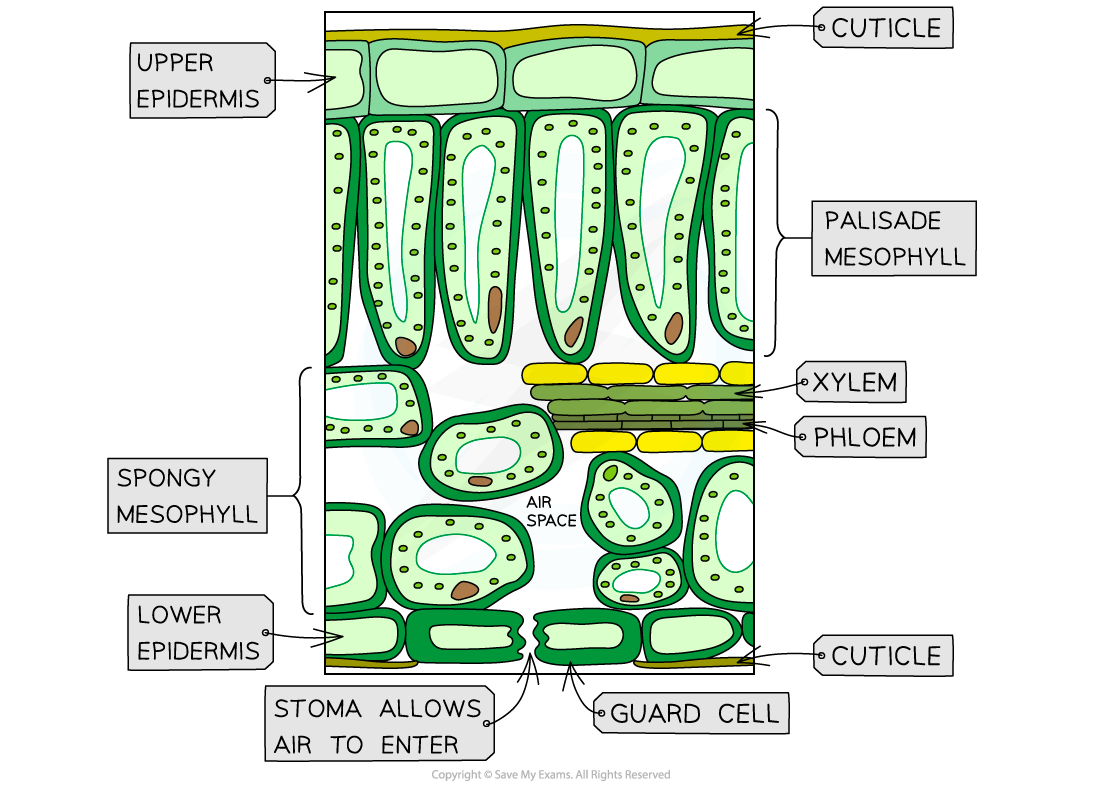
The waxy cuticle protects the surface of the leaf and prevents water loss - is transparent to allow sunlight through
The upper epidermis is almost transparent to allow sunlight through
The palisade mesophyll is where most photosynthesis occurs and therefore has lots of chloroplasts (chlorophyll absorbs sunlight)
Air space is necessary to allow carbon dioxide to easily diffuse
The spongy mesophyll has lots of air space which increases surface area and allows for efficient gas exchange
The lower epidermis allows for gas exchange via the stomata
The stomate allow carbon dioxide to enter and oxygen to leave the leaf
The guard cells control the movement of gases
Xylem transport water from the roots continuously to the palisade cells, which can be lost through the leaf (stomata and surface)
The waxy cuticle prevent water loss from the top side
Guard cells control whether the stomata are open or closed to prevent water loss
If they are well hydrated, the cells are turgid which increases the gap and allows carbon dioxide in
If they are dehydrated, they become flaccid and prevent carbon dioxide from entering
When they are open, water is able to diffuse out of the leaf, which is bad :( if the cell is dehydrated, so they close the gap to decrease this water loss
Guard cells are light sensitive, and close when there is no sunlight - water loss is prevented and no carbon dioxide is needed as photosynthesis can’t occur without light
They are on the underside of the leaf which is shaded and cooler to decrease water evaporation
Transpiration and translocation
Translocation is used to transport sugars in the plant
Transpiration transports water up the plant
Translocation is used to ensure the rest of the plant has sugars made through photosynthesis in the leaf, and transports it

Phloem are used for this translocation and allow movement in both directions
There are pores throughout the structure
They enable the movement of cell sap - sugar and water - which can be used directly for energy or stored for later
Companion cells supply phloem with the energy required to transport cell sap and nutrients - necessary for translocation
Transpiration transports water and minerals up the plant to be used in photosynthesis
Done via xylem tubes
Made of dead cells
Have no ends
Long and hollow
Strengthened by lignin
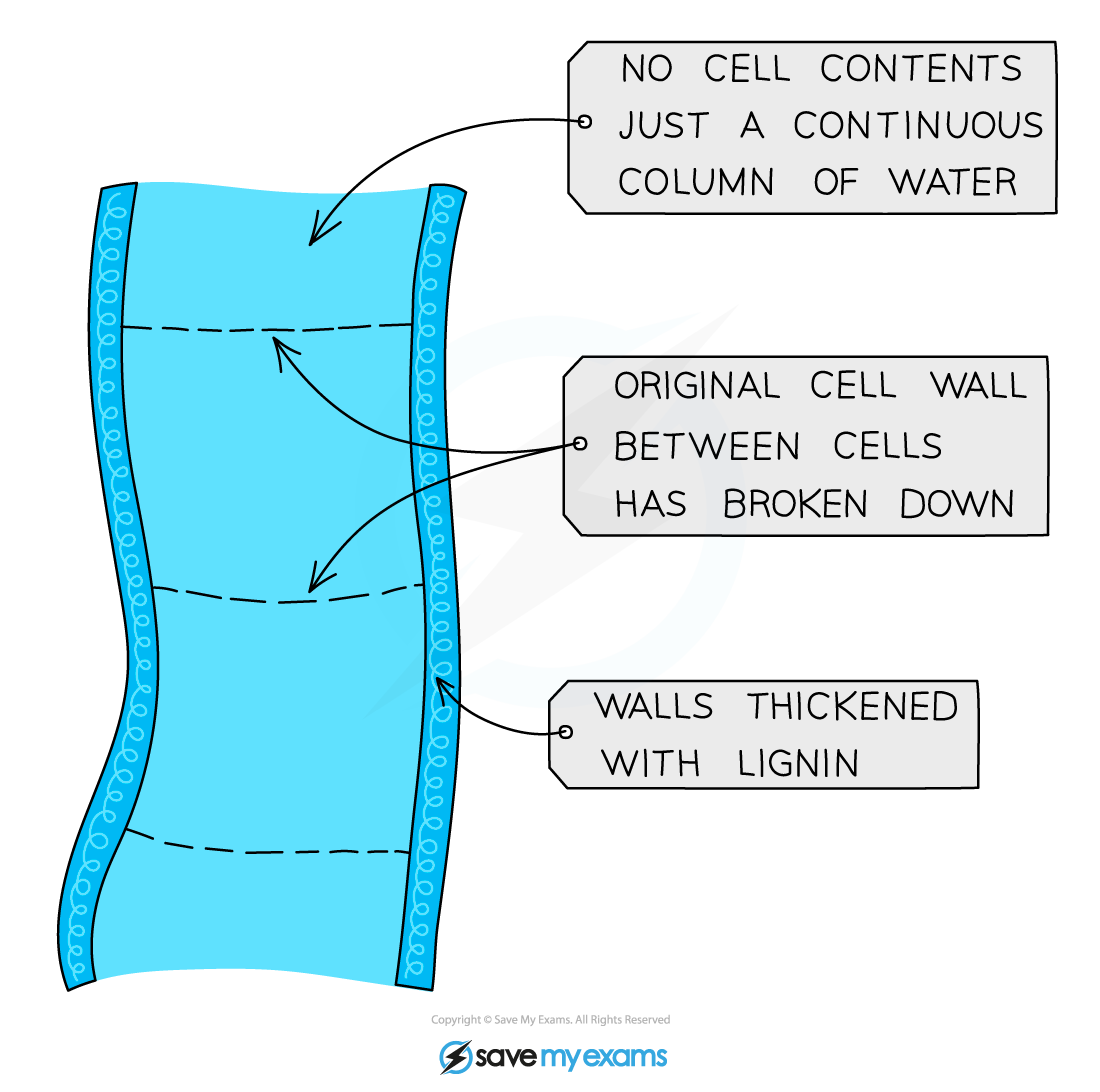
The water stream is constant as it evaporates through the stomate in the leaves when not used for photosynthesis
This stream of water molecules is called the transpiration stream
The rate of transpiration depends on:
Light intensity - more light means a higher rate of photosynthesis so the stomata are open more for carbon dioxide
Means more water is required for photosynthesis and evaporation through stomata
Temperature - the warmer it is the easier water will evaporate as it has more energy so transpiration rate is higher
Air flow - the higher the air flow is, the easier water gets ‘blown away’ so concentration gradient needs to be kept high so the transpiration rate increases
Humidity - the more humid it is, means the air has more water already, so less evaporates from the leaf, so the concentration gradient can be decreased and transpiration rate decreases
DONE!!!
BIOENERGETICS
Photosynthesis
Occurs in plants in the chloroplasts in the leaves
The leaves contain chloroplasts with lots of chlorophyll (green pigment) that absorbs sunlight - needed for photosynthesis
Carbon dioxide + water glucose + oxygen (using sunlight)
6CO2 + 6H2O C6H12O6 + 6O2
Is an endothermic reaction
Carbon dioxide diffuses through the leaf through the stomata, and water is transported up the stem from the roots by the xylem
Uses of glucose
Glucose from photosynthesis is used for:
Cellular respiration - breaks apart glucose to release energy
Makes cellulose - strengthens walls
Makes starch - long term storage of glucose
Makes oils and fats - future energy sources
Rate of photosynthesis
The rate of photosynthesis depends on light intensity, temperature, carbon dioxide concentration and chlorophyll levels
Chlorophyll levels - Is found in chloroplasts
If there is less chlorophyll, less photosynthesis will be able to carry out
Can decrease due to diseases, like tobacco mosaic virus, environmental stress and a lack of nutrients
Light intensity - The higher the light intensity, the higher the rate of photosynthesis
It will reach a point where it levels out, as either CO2 or temperature becomes a limiting factor instead
Carbon dioxide concentration - When CO2 is in excess, the rate of photosynthesis increases as it is a reactant
When it is plentiful and easily available, carbon dioxide stops becoming a limiting factor and instead light or temperature becomes limiting
Temperature - As temperature increases, so does the rate of photosynthesis as the particles have more energy so can therefore move and work faster - molecules work faster
As the temperature increases, the rate will start to drop as the enzymes begin to die and become denatured - limiting factor
At 45°, the enzymes will be fully denatured and the rate of photosynthesis will be 0.
Artificially created conditions can be created for increased rate of photosynthesis
In colder climates - crops in greenhouses to trap sun’s heat
Artificial light for photosynthesis at night
Pump for CO2
Paraffin heater for CO2 and heat
Enclosed greenhouses to prevent bugs
Fertiliser for essential minerals
Pesticides to kill unwanted bugs
Aerobic and anaerobic respiration
Respiration is the process of transferring energy from glucose and it continuously occurs in living cells
Cellular respiration is exothermic (photosynthesis is endo)
Organisms use energy for:
To build larger molecules from smaller ones - amino acids to proteins
For muscle contraction
Maintaining body temperature
Aerobic respiration takes place when there is enough oxygen as is the most efficient in animals and plants
It takes place in the mitochondria
Glucose + oxygen carbon dioxide + water
C6H12O6 + 6O2 6CO2 + 6H2O
Anaerobic respiration takes place when there is no oxygen (or limited) and only occurs when necessary
It doesn’t fully break down glucose
Lactic acid is toxic and has to be removed
Glucose lactic acid
In plants and yeast, anaerobic respiration is called fermentation and is used in bread/alcohol…
Glucose ethanol + yeast
Response to exercise
During exercise, our muscles move more, and contract more so need more energy
Therefore need more oxygen and GLUCOSE
Our rate of breathing and volume of breath increases
Our heart rate increases - both also need more energy
If there is not enough oxygen present, we anaerobically respire
Is used only in intense exercise
Produces lactic acid, which builds up in tissues
Creates a burning sensation
Is remove by reacting with oxygen - creates oxygen debt
Lactic acid is transported to the liver via the blood stream, where it reacts with oxygen to produce either
Glucose (often stored as glycogen after)
OR carbon dioxide + water
Investigating effects of exercise
Heart rate - count pulse for 60 seconds before, directly after and a while after exercise
Breathing rate - count the number of breathes per minute
Metabolism
Metabolism is all the chemical reactions in an organism’s body
Changes between person
DONE!!!
INFECTION AND RESPONSE
Communicable diseases
Microorganisms - bacteria, viruses, protists and fungi, and some can cause issues in the body
Pathogens are microorganisms that cause disease
Pathogens spread by:
Air - influenza and measles, tiny droplets that we cough or sneeze
Contaminated food - salmonella
Contaminated water - Cholera and bacteria diseases
Direct contact - athlete’s foot (fungal), through contaminated surfaces
We can stop the spread of pathogens by:
Hygiene - washing hands, clean cooking items
Killing the vectors🗡 - mosquitoes carrying malaria can be killed by insecticides
Isolation - for serious diseases
Vaccination - Can’t catch, so therefore can’t pass on
Viral diseases
Viruses aren’t cells and are not living and can’t reproduce, they are considered organisms
They go inside other cells and use them to reproduce - can burst cell and move to other cells which is damaging and dangerous
Measles
Spread by droplets in the air - from sneezes and coughs
Causes a red rash and a fever
Can be fatal
Most people are vaccinated
HIV
Spread through sexual contact and exchanging of bodily fluids (needles)
Causes an inadequate immune system
Can cause flu like symptoms (fevers, tiredness and aches), and then start to fell better though still infected
Virus damages immune system and catches unusual infections - can develop into cancers
Person can develop AIDS - a system/syndrome when an immune system can’t cope
Treated by antiretroviral drugs, which prevent the virus replicating
Tobacco mosaic virus
Affects plants (tomato and tobacco)
Causes a mosaic pattern on leaves, so photosynthesis is slowed can’t occur - a lack of sugars for growth
Bacterial diseases
Bacteria is mainly good, but there are a few bad ones that cause diseases :(
Bacteria are single celled organisms
They can reproduce by themselves
They are often in our bodies as good food supply, and they can produce toxins - cause illness
Salmonella
Causes food poisoning
Mainly from chicken (who had disease when alive)
In the UK, most are vaccinated against it
Causes fever, stomach cramps, vomiting and diarrhoea ( as it affects the intestines)
Passes in about a week and hydration is important
Gonorrhoea
Sexually transmitted disease
Causes pain when urinating and thick discharge
Prevented by barrier contraception
Treated by penicillin - however many stains are resistant to it
Instead, rarer and more expensive antibiotics are used
Fungal diseases
Fungi are eukaryotic cells, and can be unicellular (yeast) or multicellular
Multicellular can be mushrooms, often have long thread-like structures (hyphae), can penetrate skins and produce spores
Rose black spot
Causes purple/black spots on leaves
Can cause leaves to turn yellow and drop off, which causes reduced photosynthesis, leading to less growth
It spreads in the water and air
Treated by cutting of infected leaves and destroying them, or spraying with fungicide
Athlete’s foot
Causes a rash - dry red and flaky or white, wet and cracked skin
Transmitted by touching infected skin or contaminated surfaces
Treated by antifungal medication
Protist diseases
Protists are eukaryotic cells that can be multicellular or unicellular (majority)
Some are parasites and live in/on another organism
They are often transmitted by vectors (malaria and mosquitos)
Malaria
Caused by a parasitic protist and needs a host to survive
Transported by mosquitos, who feed on an animal with malaria , the mosquito ‘sucks up’ the parasite, and then feeds on another animal and spreads it to a new most
Causes fever, headaches in recurrent episodes and can be fatal in humans
Prevented by destroying mosquito breeding sites, killing with insecticides and stopped with mosquito nets and repellent
Human defence systems
Physical and chemical barriers
Skin - a physical barrier that secretes oil and antimicrobial structures that kill pathogens
Nose/mouth - The nose has lots of hairs and mucus to trap pathogens
The trachea/oesophagus has a mucus layer and cilia to waft pathogen back up to nose
Stomach kills pathogens with acid
Immune systems
White blood cells
Phagocytosis - Wbc can engulf some pathogens, so we can track the pathogens to later bind and engulf
Anti-toxins - Wbc produce and they can bind and counteract pathogens and toxins
Antibodies - Small proteins that act as a signal and bind onto pathogens so Wbc’s can come and destroy them
They are specific to certain antigens
Vaccinations
Once our bodies and immune systems have been exposed to a pathogen, they become immune to it and it’s diseases
This is why we can only catch some diseases once, like measles
To protect ourselves from pathogens, we need to be exposed to the disease without actually catching it, as it could be lethal if caught
Vaccines are a weakened or dead version of a pathogen that still contains the antigens needed to produce antibodies that lead to immunity
They can work bacterial and viral diseases
PROS - Protection against pathogens
Control over common diseases
It can prevent outbreaks and epidemics, which kill a lot of people
Herd immunity - when enough people in a community are vaccinated, the pathogen won’t have anyone to spread to, so when the host overcomes the disease or dies, the pathogen disappears
CONS - Vaccines don’t always work and don’t necessarily grant full immunity
Can cause bad reactions, like swelling or seizures, although rare
Antibiotics and painkillers
Antibiotics treat the disease by preventing growth or killing the bacteria
They can only treat bacterial diseases
They are specific to each type of bacteria and each target a different type of bacteria
Antibiotic resistance is when strains of bacteria adapt to become resistant to the antibiotic and no longer work
Painkillers only relieve symptoms and don’t help cure the problem
Discovery and development of drugs
New drugs are constantly being developed, often from plants and microorganisms
The first antibiotic made was penicillin and discovered by Alexander Fleming
He went on holiday, and when he came back there was mould growing in his petri dish that killed of bacteria that was already growing
Penicillium mould became penicillin antibiotic
Aspirin - made from willow bark and it lowers fevers
Digitalis - a heart drug that is extracted from foxgloves
Drugs can be made from plants and microorganisms - can be directly used or modified in a lab
Testing
We test for efficacy, toxicity and dosage
Stage 1 testing - pre-clinical
Testing on human cells and tissues
Cheaply test lots of possible substances
Doesn’t show effect on whole organisms or organs
Stage 2 - pre-clinical
Testing on live animals
In UK, you have to test on at least 2 mammals
Shows effects and ideas around efficacy and toxicity
Stage 3 - clinical
Testing on healthy volunteers with a low dosage, which is slowly increased to find the maximum without side effects
Testing on patients with the illness
A low dosage which is very slowly increased to find the optimum dosage (max efficacy, min toxicity)
Blind testing is when both placebo and real drugs are used and the volunteers don’t know which they are getting
Double-blind testing uses placebo and real drugs and the doctors also don’t know which is which
Both are used to avoid biases
The volunteers knowing they took the drug might report more side effects
Doctors might notice or expect more side effects, so question more
Peer reviews are where results are analysed by other scientists, to prevent false results or claims
Producing monoclonal antibodies
Monoclonal antibodies are a single clone of a specific cell made to produce antibodies
Antibodies are small proteins produced by white blood cells (lymphocytes)to help fight disease
They bind onto foreign material - antigens
They are specific to certain bacteria
They are made in a laboratory
This requires lots of B-lymphocyte clones (they don’t duplicate very quickly, so need something to increase rate)
We can combine B-lymphocyte clones with fast-dividing tumour cells - forms a hybridoma
Hybridomas - produce lots of antibodies
Divide rapidly, in a petri dish, and are them collected and purified
We collect these white blood cells and inject an animal with them with the antigen we want our antibody to bind to
This produces the lymphocytes that we can isolate and fuse
They always bind to one specific thing ,and with the right B-lymphocyte we can create antibodies that bind to anything we want
For example, protein or cells in the body, a pathogen or chemical
We can attach things to the antibody, likes to drugs, fluorescent proteins or radioactive materials, to deliver it to certain areas
Uses of monoclonal antibodies
Pregnancy tests
Pregnant women produce a hormone called HCG, which is excreted in urine
They are cheap, reliable and quick
In the test strip, there are blue beads covered in antibodies (specific to HCG) that are free to move at one end
In the middle, there are the same antibodies fixed to the test strip
If the women is not pregnant, the urine washes the blue beads down the strips and over the fixed antibodies, so it doesn’t go blue
If the women is pregnant, the urine will contain HCG, which binds to the blue beads and antibodies on them
When the urine washes over the fixed antibodies, it binds to them as well and the beads stay, so the strip appears blue
Cancer diagnosis and treatment
If a person with cancer is injected with monoclonal antibodies, they will bind to the tumour and cancerous cells and will ‘clump’ together
This makes it easier to identify tumours
We can carry drugs (attached to the antibodies) directly to the tumour
We can encourage the immune system to directly attack cancerous cells
Detection and identification of plant diseases
Plants can catch diseases from fungi, bacteria, viruses, insects and have deficiency diseases (stunted growth)
Symptoms of plant diseases could be abnormal growth or lumps, patches of decay, discolouration on leaves, malformed stem or leaves and aphids or spider mites
We can diagnose plant diseases by
Basic observation - match a gardening manual or website with findings
Take a tissue sample and send to a plant pathologist, who look at unique antigens and take DNA tests
Trial and error to treat
Plant defence systems
Physical defences
Waxy cuticle
Cellulose (cell walls)
Dead cell layers (bark)
Chemical defences
Antimicrobial
Poisons
Mechanical defences
Thorns
Hairs
Leaves dropping off or curling if insects land on them to prevent infection
DONE!!